Choosing the wrong power supply voltage can create costly problems for medical device manufacturers. It may cause unstable performance, overheating, cable loss, redesign delays, certification issues, or poor long-term reliability.
For OEM brands, engineers, and sourcing teams, selecting between 5V, 12V, 24V, and 48V power supplies is not simply about voltage—it is about matching the right power architecture to your device, market, and compliance goals.
In this guide, we explain how to choose the right voltage for medical equipment, common mistakes to avoid, and recommended certified solutions from Quankang Medical Power Supply Manufacturer.
Why Voltage Selection Matters in Medical Equipment
Medical devices often require continuous operation, low leakage current, stable output, and strict safety compliance. The correct voltage impacts:
- Device compatibility
- Energy efficiency
- Heat generation
- Cable current loss
- Connector size
- Internal PCB design
- Battery charging systems
- EMC performance
- Product lifespan
A lower voltage can increase current draw. A higher voltage may improve efficiency but require different internal conversion design. The best choice depends on the application.
Quick Comparison: 5V vs 12V vs 24V vs 48V Power Supplies
| Voltage | Typical Use | Common Medical Devices | Main Advantage |
| 5V | Low power electronics | Oximeter, sleep monitor, hearing aid | Compact and safe |
| 12V | Standard portable systems | BP monitor, ECG, small displays | Cost-effective and common |
| 24V | Medium power systems | Ventilator, nebulizer, pumps | Lower current, higher efficiency |
| 48V | Higher power platforms | Medical carts, battery systems, Oxygen Concentrator | Scalable and efficient |
When to Choose a 5V Power Supply
5V power supplies are ideal for compact healthcare electronics with low power demand.
Common Applications:
- Pulse oximeters
- Portable nebulizers
- Sleep monitoring devices
- Hearing aids
- Low-frequency electrotherapy devices
Why Choose 5V:
- Small and lightweight adapter design
- Easy PCB integration
- Suitable for portable devices
- Low operating voltage
Recommended Solution
For OEM buyers needing a compact certified solution, Quankang UE05LZ5-SPA is a 5W medical wall plug power supply with universal input, 2 MOPP isolation, and multiple global safety approvals.
For interchangeable plug requirements, UE05LCP-SPA is also a practical option for international home healthcare products.
When to Choose a 12V Power Supply
12V is one of the most common voltages in portable and home healthcare equipment.
Common Applications:
- Blood pressure monitors
- Handheld ECG devices
- Dental LED lamps
- Portable treatment systems
- Small patient monitoring accessories
Why Choose 12V:
- Mature component ecosystem
- Easy accessory compatibility
- Cost-efficient for OEM production
- Suitable for low to medium power devices
Recommended Solution
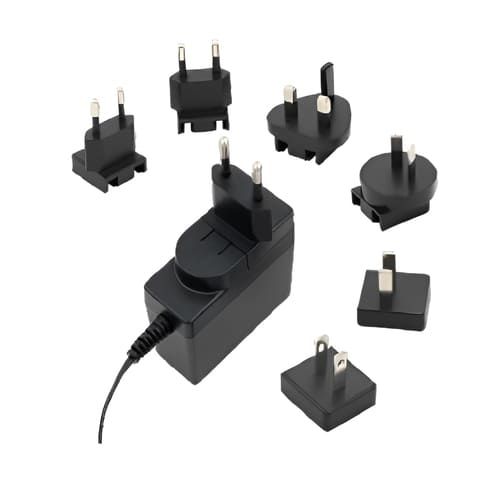
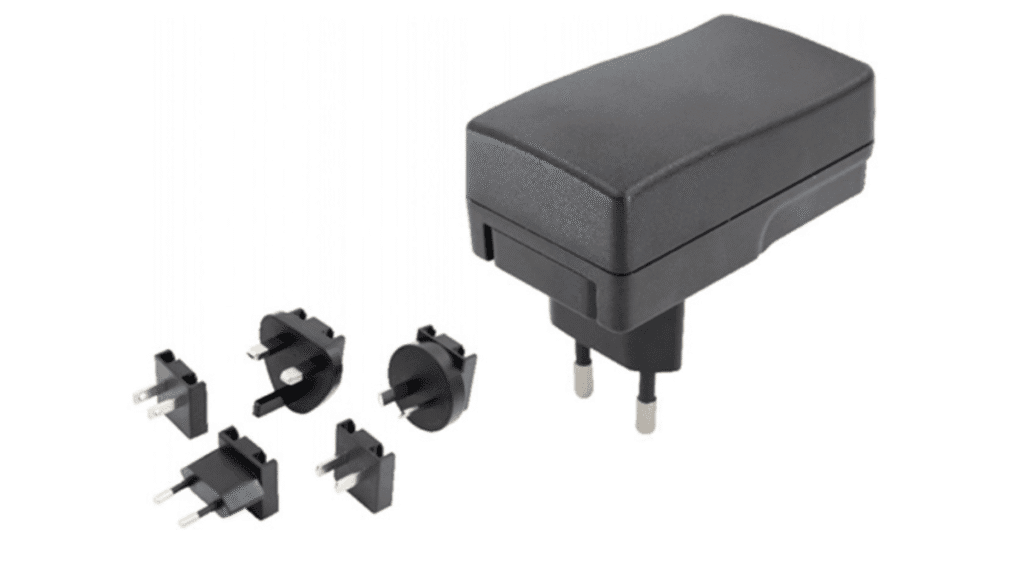
Quankang UES06WZ-SPA is a compact 6W medical wall plug adapter offering outputs from 4.2V to 12V, interchangeable AC plugs, IEC 60601 compliance, and low standby power consumption.
Well suited for portable devices sold across multiple countries, featuring interchangeable AC heads and comprehensive global safety approvals (UL, CE, UKCA, PSE, RCM), ensuring smooth customs clearance and market entry.
When to Choose a 24V Power Supply
For ventilators or pump-driven systems running continuously, many OEM engineers prefer 24V because it reduces current load and connector heating compared with 12V designs.
Common Applications:
- Home ventilators
- Oxygen concentrators
- Portable ultrasound scanners
- Electrostimulators
- Pumps and motor-driven systems
Why Choose 24V:
- Lower current than 12V at same wattage
- Reduced cable losses
- Better thermal performance
- Suitable for medium power equipment
- Mitigating Voltage Drop:Over longer DC cables (e.g., >2 meters in hospital settings), a 24V system significantly reduces voltage drop compared to 12V. According to Ohm’s law, doubling the voltage halves the current for the same power output, which slashes cable power loss (I²R) by 75%.
- EMC Compliance:Systems with higher power draws can struggle with electromagnetic interference. Transitioning to a high-quality 24V supply makes it easier to pass the stringent IEC 60601-1-2 4th Edition EMC standards required for modern medical environments.
Recommended Solution
Quankang UES48LZ1-SPA is a 48W wall plug medical power adapter supporting outputs including 12V, 15V, 19V, and 24V. It features:
- IEC 60601 compliance
- 2 MOPP isolation
- GaN technology
- Low no-load power consumption
- Full load aging test and 100% load testing
This model is well suited for oxygen concentrators, nebulizers, portable imaging devices, and treatment equipment.

When to Choose a 48V Power Supply
48V power supplies are often selected for medical equipment that requires higher efficiency, lower operating current, or future-ready system architecture.
Compared with 12V or 24V systems, 48V can reduce cable current significantly, which helps improve thermal performance and power delivery.
Common Applications:
- Portable suction devices
- Syringe pumps
- CPAP humidifier systems
- Electric dental chairs or beds
- Laser treatment equipment
- Mobile healthcare systems
Why Choose 48V:
- Lower current at the same wattage
- Better cable efficiency
- Reduced heat generation
- Easier expansion for future modules
- Suitable for modern DC architecture
- Managing Startup Surge Currents:Medical devices with motors or pumps (like suction devices) experience high inrush currents. A 48V architecture minimizes these current spikes, reducing stress on the PCB traces and preventing premature connector degradation.
Recommended Solution
Quankang UES24LU2-SPA Series is a compact 24W wall plug medical power supply offering flexible outputs from 6V to 52V, including 48V and 52V versions.
Key features include:
- Universal 90~264VAC input
- IEC 60601 / UL 60601 compliance
- 2 MOPP isolation
- Level VI efficiency
- No-load power consumption <0.075W
- Compact wall plug design for US market
This model is suitable for portable suction devices, syringe pumps, CPAP humidifiers, dental equipment, and other home healthcare applications.

When to Choose Higher Power Desktop Power Supplies
Some medical equipment requires higher wattage than standard wall plug adapters can provide.
Common Applications:
- Ophthalmology equipment
- Body composition analyzers
- Physiotherapy systems
- Electronic endoscopes
- Advanced home respiratory devices
Why Choose Desktop Power Supplies:
- Higher power capacity
- Better thermal space
- Stable continuous output
- More connector flexibility
Recommended Solution
Quankang UES65CZ-SPA is a 65W desktop medical power supply with output options from 12V to 24V and peak load up to 140W.
Key benefits include:
- 2 MOPP isolation protection
- Leakage current ≤100μA
- Level VI efficiency
- Standby power ≤0.15W
- Operating altitude up to 5000m
- Multiple AC inlet options
It is ideal for higher power medical systems requiring dependable external AC-DC conversion.
Which Voltage Is Best for Different Medical Devices?
| Medical Device | Recommended Voltage |
| Pulse Oximeter | 5V |
| Sleep Monitor | 5V |
| Blood Pressure Monitor | 12V |
| Portable ECG | 12V |
| Home Ventilator | 24V |
| Oxygen Concentrator | 24V |
| Portable Ultrasound | 24V |
| Therapy Equipment | 24V / 65W Desktop |
| Medical Cart | 48V |
5 Key Factors Before Choosing Voltage
5.1 Total Power Requirement
Higher wattage devices often benefit from 24V or desktop solutions.
5.2 Device Size
Compact handheld products usually favor 5V or 12V wall plug adapters.
5.3 Cable Length
Longer cables increase losses, making 24V more efficient.
5.4 Future Upgrades
Choose a voltage platform that supports future accessories or upgrades.
5.5 Compliance Requirements
Always choose suppliers familiar with IEC 60601 and medical EMC standards.
Common Buyer Mistakes
Choosing the Cheapest Generic Adapter
Low-cost non-medical adapters may fail EMC or reliability tests.
No Power Margin
Continuous full-load operation shortens lifespan.
Wrong Connector Selection
Connector overheating or mismatch causes field issues.
Ignoring Global Plug Needs
International sales often require interchangeable AC plug options to navigate different regional safety standards. A globally compliant medical power supply should carry specific regional certifications:
North America: UL / cUL (UL 60601-1)
Europe: CE / UKCA (EN 60601-1)
Asia-Pacific: PSE (Japan), KC (Korea), CCC (China), or RCM (Australia/New Zealand)
Why Choose Our Medical Power Supply Manufacturer
We supports global medical device brands with practical and scalable power solutions.
Key Advantages:
- 5V / 12V / 24V / 48V / higher wattage solutions
- Wall plug and desktop medical adapters
- IEC 60601-oriented designs
- 2 MOPP isolation support
- ODM / OEM customization
- Multiple AC plug versions
- Stable quality control
- Fast sample response
- Competitive factory pricing
Supported Applications:
- Home healthcare devices
- Respiratory equipment
- Portable diagnostics
- Monitoring devices
- Therapy systems
- Dental and lab equipment
Final Thoughts
Choosing between 5V, 12V, 24V, and 48V power supplies depends on your device power demand, size, cable layout, certification goals, and future expansion needs.
There is no single best voltage—only the right solution for your application.
Working with an experienced medical power supply manufacturer helps reduce redesign risk, shorten launch time, and improve product reliability.
Need help choosing 5V, 12V, 24V or 48V for your device?
FAQ
Is 24V better than 12V for medical equipment?
For higher power devices, 24V often improves efficiency and reduces cable current.
Is 5V enough for portable medical devices?
Yes, for low-power electronics such as oximeters or sleep monitors.
Should I choose wall plug or desktop style?
Wall plug is ideal for compact low-power devices. Desktop style is better for higher wattage equipment.
Can Quankang customize voltage, plug, and connector?
Yes. OEM projects can customize output voltage, branding, cable, connectors, and regional plug options.