
Professional Medical Power Supply Manufacturer
Quankang provides USB PD charger solutions for medical devices, industrial equipment, smart terminals, and other USB-C powered applications. Our USB-C Power Delivery chargers deliver stable power output, support PD 3.0/PD 3.1 and PPS protocols, and offer ODM customization for device manufacturers.
Choosing the right USB PD charger depends on output power, charging protocol, mechanical design, and application requirements. Quankang provides USB-C PD charger solutions from compact low-power models to high-power PD 3.1 chargers up to 240W, helping device manufacturers quickly match the right power solution for their products.
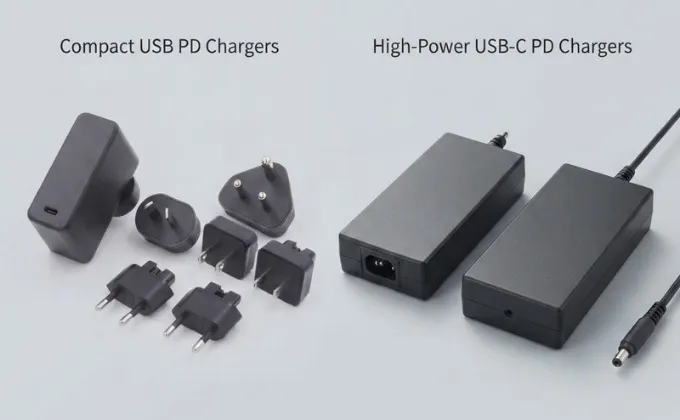
Series | Output Power | Charging Protocol | Application |
20W PD Charger | 5V/3A, 9V/2.22A | PD 3.0 | Compact devices |
30W PD Charger | Up to 30W | PD 3.0 / PPS | Portable equipment |
45W PD Charger | Up to 45W | PD 3.0 / PPS | Higher power devices |
For space-limited equipment, compact USB-C PD chargers provide a practical balance between size and charging performance. These models are commonly selected when manufacturers need reliable USB Power Delivery without increasing the overall product size.
Series | Output Power | Technology | Key Capability |
65W PD Charger | 65W | PD 3.0 / PPS | Laptop and high-power devices |
100W PD Charger | 100W | PD 3.0 / GaN | High-power USB-C charging |
140W PD Charger | 140W | PD 3.1 | Advanced fast charging |
240W PD Charger | 240W | PD 3.1 EPR | Maximum USB-C power delivery |
As USB-C power requirements continue to increase, higher wattage PD chargers are becoming important for equipment requiring faster charging and higher power delivery. Our 65W to 240W USB-C PD charger solutions are designed for applications requiring stable output performance, efficient power conversion, and higher power capability.
Many device manufacturers require more than a standard USB-C charger. Different products may have different power requirements, mechanical limitations, and charging protocols that affect how the power adapter integrates with the final device.
Quankang provides custom USB PD charger and USB-C PD power adapter solutions for customers who need flexibility beyond standard models. Our ODM development process covers electrical design, mechanical requirements, protocol configuration, and production support to help manufacturers develop reliable power solutions for their products.
During product development, the power adapter needs to match the device’s actual operating conditions rather than only meeting the rated output power.
Our engineering team supports customization of key electrical and mechanical specifications, including:
Custom Requirement | Available Options |
Output Voltage & Current | Customized voltage and current parameters according to device requirements |
Power Range | 20W, 30W, 45W, 65W, 100W,140W and 240W USB PD solutions |
USB-C PD Protocol | USB PD 3.0, PD 3.1, PPS fast charging support |
Connector & Cable | USB-C cable length, connector selection and wiring requirements |
Mechanical Design | Housing size, structure adjustment and product labeling |
For applications requiring specific charging performance, we help customers select the appropriate USB PD adapter configuration instead of adapting their device design around a standard charger.
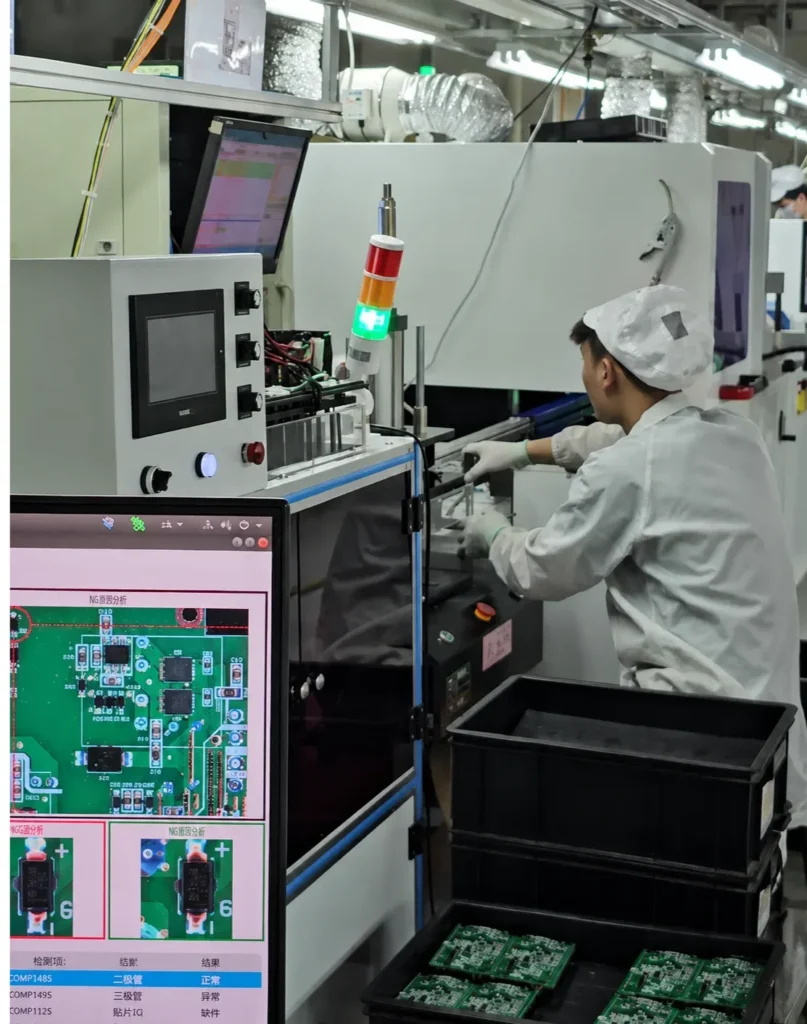
A reliable USB PD power solution requires more than electrical specifications. Device manufacturers also need a supplier who understands testing, certification requirements, and production consistency.
From initial product evaluation to final production, Quankang supports:
Product specification review before development
Engineering samples for verification
Design optimization for reliability and thermal performance
Compliance support for global market requirements
Stable production for long-term supply
With experience in medical, industrial, and smart device power applications, we help customers reduce development risks and bring USB-C powered products to market faster.
USB-C Power Delivery is changing the way modern electronic devices manage power. Compared with traditional fixed-output chargers, USB PD enables intelligent communication between the power source and the device, allowing optimized voltage and current delivery based on actual power requirements.
Quankang develops USB PD charger solutions supporting advanced charging protocols, high-power output requirements, and efficient power conversion technologies. Our solutions are designed for manufacturers looking for reliable USB-C power performance, compact design, and stable long-term operation.
USB Power Delivery allows the charger and device to communicate and determine the appropriate voltage and current level, helping avoid inefficient fixed-power charging methods.
Supporting USB PD 3.0 and PD 3.1 charging protocols, Quankang USB PD charger solutions cover power ranges from 20W to 240W, including high-power PD 3.1 solutions for demanding electronic devices.
USB-C PD technology provides a universal charging interface for different equipment, including portable devices, smart terminals, industrial equipment, and other USB-C powered systems.
Optimized power conversion design helps maintain stable output performance during continuous operation, supporting reliable device integration.
As power requirements increase, manufacturers need charging solutions that deliver higher output without increasing product size or creating additional thermal challenges.
Quankang integrates GaN and PPS technologies into advanced USB PD charger designs to improve charging efficiency and optimize overall product performance.
GaN semiconductors allow chargers to achieve higher switching efficiency compared with traditional silicon-based designs, making higher-power USB PD chargers possible in a smaller footprint.
Efficient power conversion reduces energy loss and heat generation, helping maintain stable operation during high-power charging.
Higher power density enables smaller charger designs, which is especially valuable for portable and embedded equipment.
PPS provides adjustable voltage output instead of fixed voltage steps, allowing finer power control between the charger and connected device.
USB-C Power Delivery is increasingly used in modern electronic equipment that requires flexible power input, compact design, and reliable charging performance.
For device manufacturers, the right USB PD power supply is not only about delivering higher wattage. The solution also needs to match the equipment’s operating environment, power consumption, size limitations, and integration requirements.
Quankang provides USB PD power supply solutions for medical devices, industrial equipment, and smart electronic systems, supporting manufacturers who need reliable USB-C power delivery for their products.
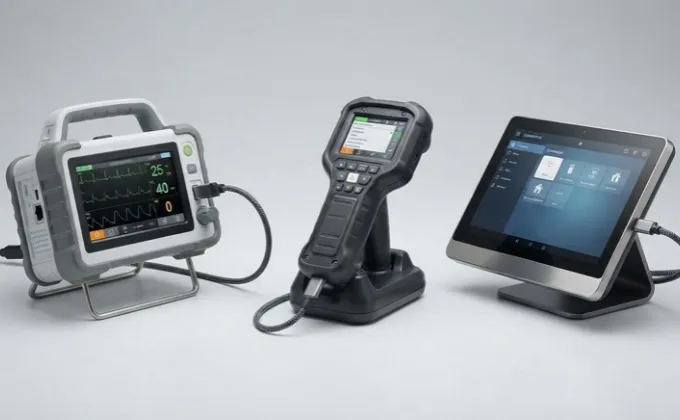
Medical device manufacturers often look for a smaller power adapter without compromising output capability and charging compatibility.
For portable equipment, USB-C PD provides a practical option when the device requires different power levels or a more flexible charging method.
Quankang supports USB PD adapter solutions for medical applications with different output requirements, helping customers select a suitable power configuration based on their device design.
Portable medical devices usually have limited space for external accessories. The adapter size, connector design, and output specification need to match the final equipment. Our USB PD chargers support different power levels and USB-C configurations for applications where compact size and easy integration are important.
Medical devices may have different power demands depending on their functions and battery capacity. USB PD technology allows the charger and device to communicate and select suitable voltage and current levels, making one product platform adaptable to different equipment requirements.
For rechargeable medical equipment, charging performance is an important part of the overall user experience. USB PD charging helps provide faster charging options while maintaining compatibility with different battery-powered device designs.
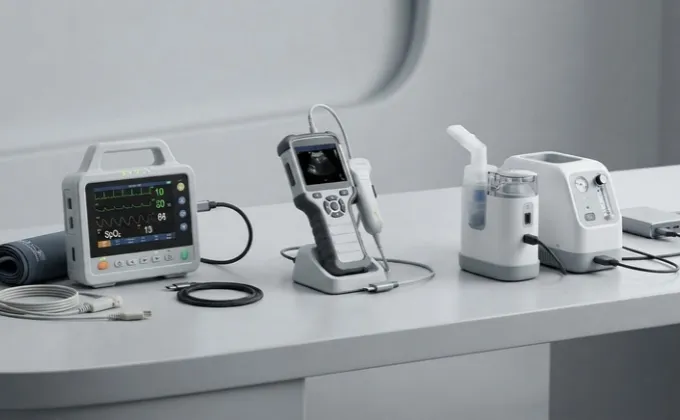
Typical Applications Include:
For communication and smart electronic products, the power adapter is often part of the overall product design rather than just an accessory. Manufacturers need to consider factors such as device size, power requirements, installation environment, and long-term operating stability when selecting a suitable power solution.
USB-C Power Delivery provides more flexibility for these applications by allowing the adapter and device to negotiate the required voltage and current. This helps manufacturers develop different product versions while using a compatible USB-C power platform.
Quankang supports USB-C PD power solutions for networking equipment, security products, and smart electronic devices that require reliable external power.
Many communication and smart devices are designed with limited installation space. The power adapter needs to provide sufficient output while fitting the overall product structure and usage environment. A compact USB-C PD adapter gives manufacturers more flexibility when developing smaller devices or products with limited enclosure space.
Different device versions may have different power demands depending on their functions and hardware configuration. USB PD supports multiple output levels and charging protocols, allowing manufacturers to select a suitable power specification for different product requirements without redesigning the entire power system.
Many networking and smart electronic products are installed and expected to operate continuously after deployment. For these applications, stable power delivery is important to maintain consistent device performance and reduce issues caused by unsuitable power input.
Typical Applications Include:
Many USB-C PD projects start with a simple requirement — finding a charger that can deliver enough power for the device.
However, during product development, manufacturers often discover that the power solution needs to match much more than the wattage. Charging protocol compatibility, peak power demand, thermal performance, connector design, and mechanical limitations can all affect the final product performance.
Our engineering team works with customers to evaluate these requirements and adjust the USB PD charger solution based on the actual application environment.
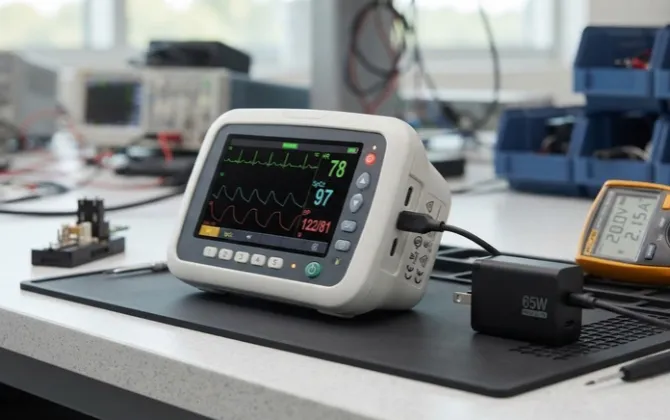
A medical device manufacturer was developing a portable monitoring device that required USB-C charging to improve product flexibility for home healthcare applications.
During system testing, the customer found that the selected charging solution could not provide consistent charging performance under different operating conditions. The device also required a smaller adapter size and customized output parameters to fit the product enclosure.
After reviewing the device power requirements and application conditions, our engineering team helped optimize the USB PD power solution.
The adjustments included:
Selecting the appropriate USB Power Delivery profile according to the device power demand
Adjusting output voltage and current parameters for system compatibility
Optimizing the adapter structure to fit the product design
Improving thermal performance during continuous operation
The final USB PD charger was integrated into the customer’s medical device platform and passed the customer’s validation process, providing a stable power solution for future product production.
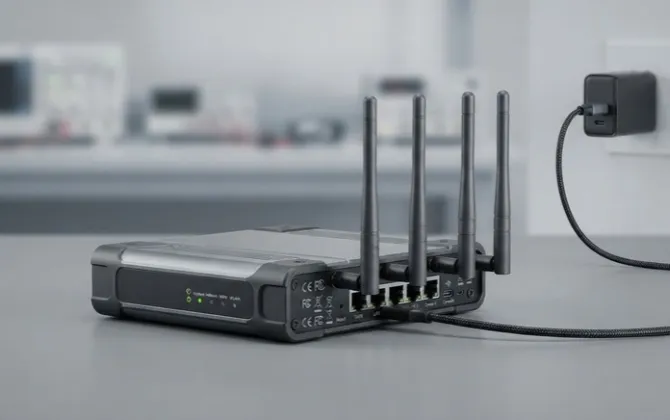
A communication equipment manufacturer approached us when developing a new generation of network devices requiring a USB-C PD power solution.
The main challenge was not only achieving higher output power, but ensuring stable operation when the equipment was running continuously. The original charger solution had limitations in power flexibility and could not fully support the customer’s updated product requirements.
Our engineering team reviewed the customer’s operating conditions, power consumption profile, and connection requirements before selecting and modifying the suitable USB-C PD charger configuration.
The final solution included:
Higher power USB-C PD output capability
PD 3.0 / PD 3.1 protocol support
Customized connector and cable options
Improved thermal design for long-term operation
By working together during the development stage, the customer successfully integrated the USB-C PD power supply into their communication equipment platform and improved product reliability for different deployment environments.
A USB PD charger may pass the first prototype review, but production is where many projects are really tested.
During development, customers usually focus on whether the charger can deliver the required power and support the right charging protocols. After approval, the concern changes to a different question — whether every production batch will perform the same as the original sample.
At Quankang, the production process follows the same specifications used during product validation. When a new USB PD charger project starts, our engineers first confirm the electrical requirements, application environment, and compliance needs with the customer before preparing samples.
After the sample is approved, the production team uses it as the reference for following manufacturing. Components, assembly processes, and final testing are controlled based on the approved design rather than being adjusted during production.
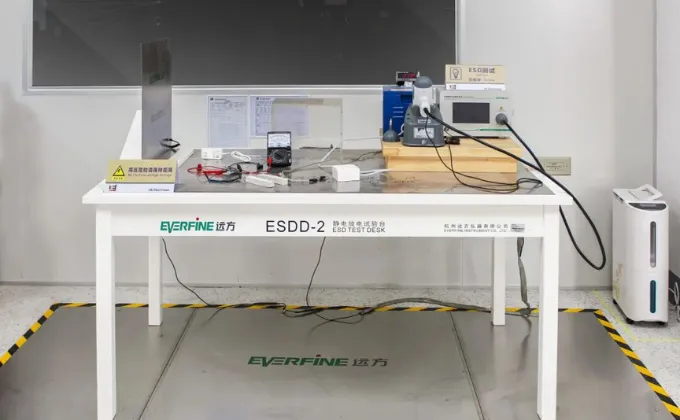
For many customers, certification is not the final step of a project. It is a checkpoint to confirm that the product design is ready for real applications.
Before certification testing, engineers review the design details that may affect safety and performance, including power conversion, protection functions, temperature rise, and charging communication.
The purpose of testing is not only to obtain compliance documents. It also helps identify problems before mass production begins.
The biggest challenge for a power supply manufacturer is not producing one good sample. It is producing the same quality repeatedly.
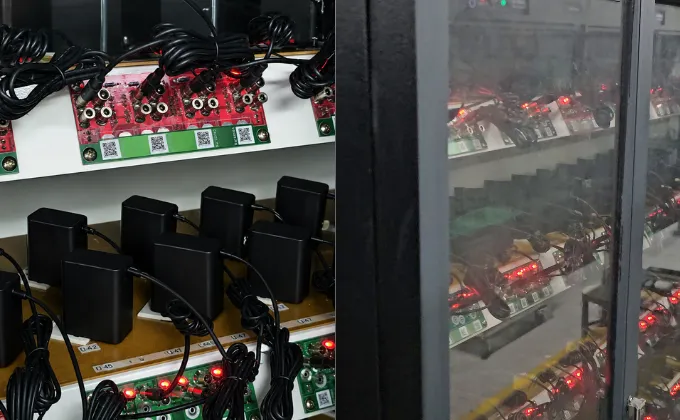
During production, each USB PD charger goes through functional testing before shipment. Production information and test results are recorded so that engineers can review the history of a batch when analysis is needed.
For reliability verification, aging tests are carried out under controlled operating conditions to observe product performance over time.
This production feedback allows engineers to improve processes and maintain stable supply for customers developing medical devices, communication equipment, and smart electronic products.
For international USB PD charger projects, delivery management is an important part of the supply process. After products complete final testing, we prepare shipment according to customer requirements, including product labeling, packaging requirements, and export documentation.

Power adapters contain electronic components that require proper protection during transportation, especially for international shipments involving different climates and handling conditions.
Before shipment, finished products are packed according to product requirements to reduce risks during storage and transportation. Packaging methods, carton specifications, and shipment documents can be adjusted based on customer requirements.
For repeat projects, production and shipment information can be maintained to support easier order tracking and future replenishment.
Selecting a USB PD charger is usually not difficult when the application requirements are already clear. The challenge often appears when different power levels, charging protocols, and device requirements need to be matched together.
During product development, customers may ask whether a 65W charger is enough, whether a higher power model is necessary, or whether the USB-C interface supports the required charging protocol.
Understanding these differences before choosing a model can help avoid unnecessary changes during testing.
A USB PD charger should be selected based on the actual power requirement of the equipment rather than simply choosing the highest wattage available.
For example, a compact smart device may work well with a lower power PD charger, while equipment with higher power consumption may require a 65W, 100W, or higher output solution.
Voltage and current requirements are also important during selection. Although USB Power Delivery allows the charger and device to negotiate the appropriate power level, the charger still needs to support the voltage and current range required by the application.
The connector type is another detail that is often overlooked. A USB-C connector does not always mean the product supports USB Power Delivery. The charger needs to support the correct PD protocol to communicate with the device.
Related article idea:
How to Select a USB PD Charger for Medical, Industrial, and Smart Devices
Many customers first notice the difference between USB PD chargers and standard USB chargers when their equipment requires more flexible power management.
A standard USB charger normally provides a fixed output, while USB PD charging allows communication between the charger and the connected device. The device can request different power levels according to its operating requirements.
This makes USB PD chargers more suitable for applications where charging performance, compatibility, and power flexibility are important.
Related article idea:
USB PD Charging Explained: What Makes Power Delivery Different from Standard USB Charging
The charger output rating should not be selected only based on the maximum power consumption of the equipment.
For example, if a device normally requires around 60W input, we usually do not recommend selecting a charger that runs continuously at its maximum output. A 65W charger may work, but the operating margin will be limited when the equipment works under high load for a long time.
For applications such as industrial handheld devices, portable terminals, or medical equipment, the power requirement, working temperature, and charging duty cycle should be checked together before selecting the charger.
The rated power is the maximum capability of the charger, not the fixed charging power.
For example, a 100W PD charger supports up to 20V/5A output under PD 3.0. However, if the connected equipment only requests 20V/3A, the actual output will be around 60W.
During compatibility testing, we check the PD negotiation result, including the voltage and current requested by the equipment, instead of checking only the charger label.
The required PD profile depends on the equipment input design.
Common PD outputs include:
5V, 9V, 15V and 20V profiles.
For higher power applications, PD 3.1 EPR adds 28V, 36V and 48V output levels, allowing power up to 240W when the charger, cable and device support EPR.Texas Instruments
For example, a 20V/5A 100W charger may be suitable for laptops and industrial devices requiring 100W input, while equipment designed for lower voltage input cannot simply use a higher wattage charger.
PPS is required only when the end device uses PPS charging.
Some smartphones use PPS to adjust voltage dynamically during charging, but many industrial and professional devices only require fixed PD voltage profiles.
When selecting a PD charger, the supported charging protocol should match the equipment requirement. Adding PPS does not automatically increase charging power if the device does not support it.
A charger operating at high output power will generate heat from the power conversion process.
For example, a 100W USB PD charger working continuously near full load has a different thermal condition compared with a charger working at 30W output.
During product verification, temperature rise is normally checked under rated load, different input voltage conditions, and the final installation environment.
If the charger is installed inside an enclosed product housing, the thermal condition should be evaluated again.
The test is not only checking whether the charger can charge the device.
The verification normally includes:
output voltage and current test;
PD protocol communication test;
protection function test;
temperature rise test;
aging test under rated load;
EMC and safety verification.
For professional applications, the charger also needs to meet the required safety standards before entering mass production.
It depends on the equipment design.
A traditional adapter normally provides a fixed voltage output, while a USB PD charger negotiates the output condition with the connected device.
Before replacement, we check the equipment input voltage range, required current, connector type, PD profile, and cable requirement.
A charger with the same wattage does not always mean it is electrically compatible.
The quality of a charger is controlled through both component selection and production testing.
During production, key parameters such as output voltage, charging communication, protection functions, and safety performance are tested according to the product specification.
For reliability evaluation, aging tests are performed with defined load conditions and test records are maintained to monitor production consistency.
The required certification depends on the application market and end equipment.
For general IT equipment, safety and EMC requirements are usually the main considerations.
For medical applications, additional requirements such as IEC 60601-1 safety compliance and isolation requirements may need to be considered.
The certification requirement should be confirmed before product design because it can affect the charger structure and testing process.