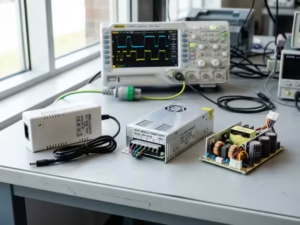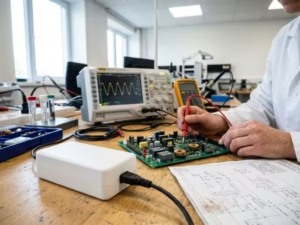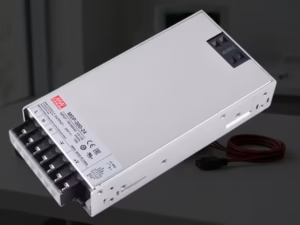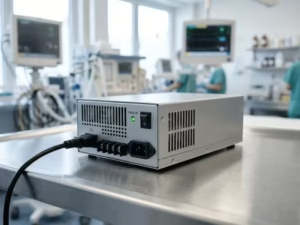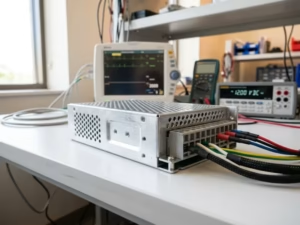
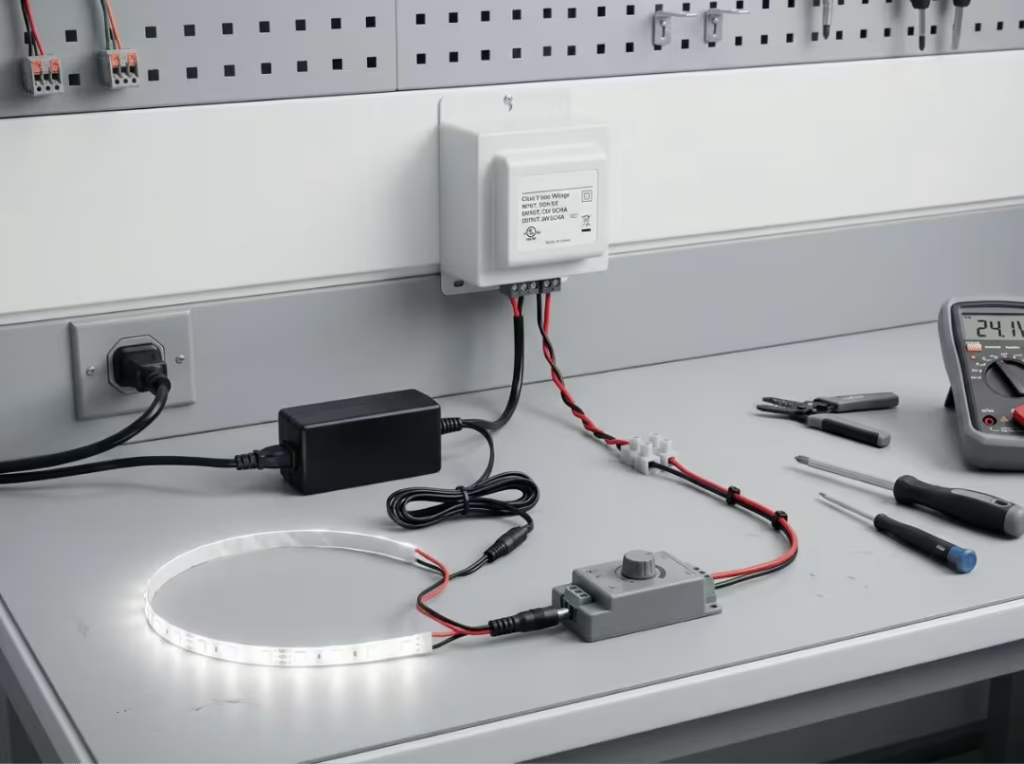
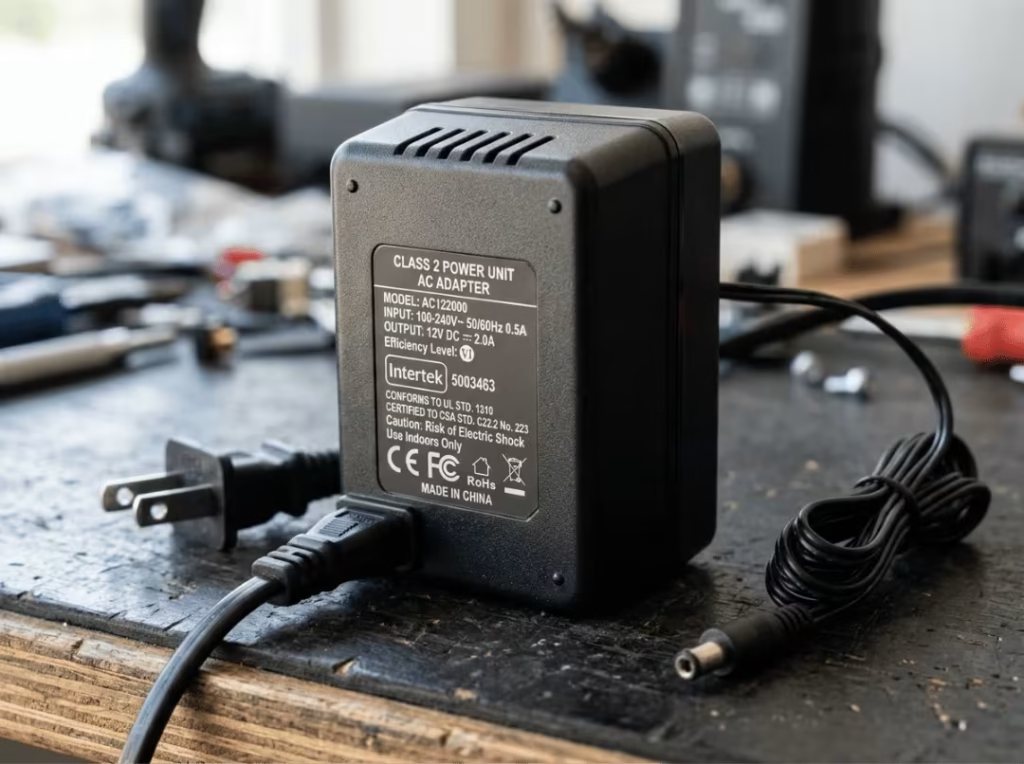
That small label on the back of an LED driver, security camera adapter, or doorbell transformer — “Class 2 power unit” — gets overlooked more often than not. It should not. It tells you something specific about how much power the supply can deliver, what it can safely run, and what installation rules apply downstream.
This guide covers what Class 2 actually means under UL 1310 and NEC Article 725, where the real-world limits bite, and how to select the right supply without undershooting or overcounting your load.
Note: This article covers Class 2 output classification — the power and energy limits that govern how a supply behaves on its output side. If you’re looking for the difference between Class 2 (Arabic numeral) and Class II (Roman numeral), which refers to insulation-based shock protection on the input side, that distinction is covered in a separate article.
What a Class 2 Power Supply Actually Means
A Practical Definition
A Class 2 power supply is a limited-output supply engineered to reduce fire and shock risk by constraining what it can deliver — under both normal and fault conditions. The classification is defined by UL 1310 in North America, which sets the output limits a supply must meet to qualify. NEC Article 725 then governs the wiring and installation rules for Class 2 circuits: any circuit fed by a supply that meets those output thresholds.
The underlying logic is simple: constrain the energy at the source, and you reduce the damage a fault can cause downstream.
The 100VA Limit Is the Number That Matters Most
The defining Class 2 threshold is 100 volt-amperes (VA) of apparent output power — voltage multiplied by current. For DC circuits and most resistive loads, VA and watts are close enough to treat interchangeably for estimation. For reactive loads, they diverge, but 100VA is still the boundary.
Under UL 1310, a Class 2 power unit cannot exceed that ceiling. It is a classification boundary, not a recommended operating point. Exceed it, and the supply does not qualify as Class 2 regardless of its other characteristics.
The reason for the 100VA ceiling: at that output level, a fault is unlikely to generate sustained heat sufficient to ignite surrounding materials or deliver a dangerous shock. That is the engineering rationale — not a marketing claim.
Voltage and Current Limits Also Apply
The 100VA ceiling gets most of the attention, but Class 2 classification depends on apparent power, open-circuit voltage, and short-circuit current staying within defined boundaries simultaneously. A supply with a low nominal output voltage can still fail to qualify if its current output pushes apparent power above 100VA. A low-current supply at higher voltage may exceed the open-circuit voltage limits. All three parameters must be within spec — not just one.
The practical implication: not every low-voltage supply is a Class 2 supply. The certification mark confirms it; the voltage rating alone does not.
Why Class 2 Power Supplies Are So Common
Simpler Installation, Safety Built In
Because Class 2 limits energy at the source, the downstream wiring and protection requirements are less demanding than those for general-purpose power circuits. NEC Article 725 codifies this directly: Class 2 circuits can use simplified wiring methods and reduced protection measures compared to standard branch circuits.
For residential and light commercial work — LED lighting, building automation, security systems, access control — this means genuine savings in conduit, protective gear, and labor. The safety engineering is in the supply itself, not distributed throughout the installation.
The Label Has Real Meaning
A “Class 2” marking is not a quality badge or generic descriptor. It signals that the supply has been tested and certified to meet the output limits in UL 1310. To carry that label legitimately, the supply must pass testing by a recognized certification body — UL, ETL, CSA, or equivalent — and that mark must appear alongside the Class 2 designation.
A supply labeled “Class 2” without a visible certification mark is a warning sign, not a reassurance.
Common Applications for Class 2 Power Supplies
LED Lighting
LED strip lights, under-cabinet fixtures, and low-voltage decorative lighting are the most common Class 2 application. Most 12V and 24V LED systems draw modest current per run, and a single zone typically falls well within the 100VA envelope.
Class 2 LED drivers are often a code requirement in residential and commercial lighting installations. The constrained output reduces fire risk when conductors run through walls, ceilings, or cabinetry — and staying within the Class 2 boundary avoids the need for heavier wiring or additional protective devices.
The limit catches up quickly when multiple runs share a single driver. Calculate actual draw before assuming one supply covers everything.

Security Cameras and Access Control
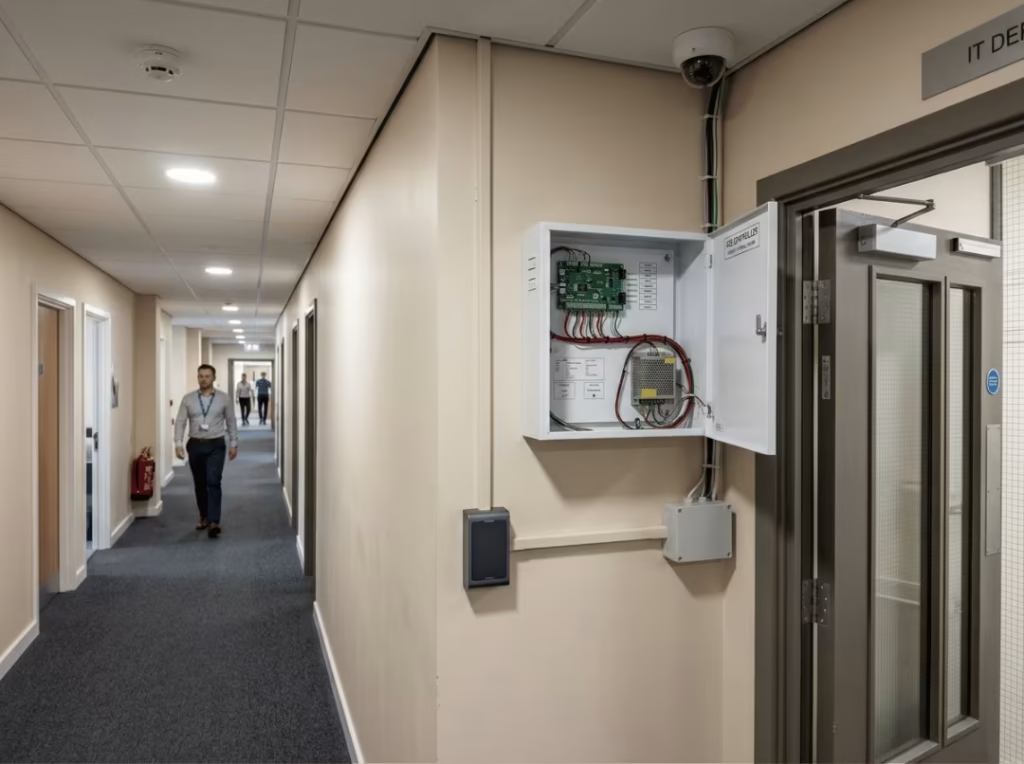
CCTV cameras, door controllers, card readers, and video intercoms routinely run on Class 2 supplies. Individual devices usually draw well under 100VA, and the wiring simplifications that come with Class 2 classification are practical for retrofit and low-voltage installation work.
As systems expand, the ceiling becomes a real constraint. A multi-camera installation drawing 15–20W per camera hits the Class 2 limit somewhere between four and six cameras, depending on supply voltage. At that point, the choice is between multiple Class 2 supplies — one per zone — or a higher-class supply that gives up the simplified wiring rules.
Thermostats, Doorbells, and 24V Control Circuits
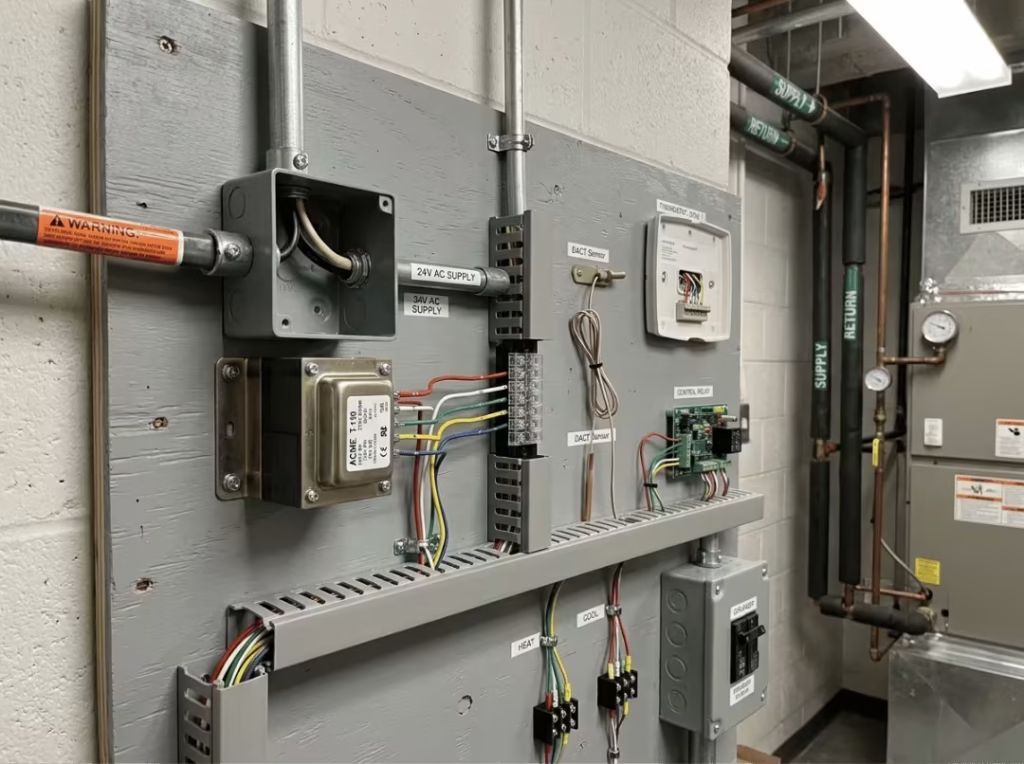
The 24V AC transformer feeding a thermostat or doorbell is one of the most established Class 2 devices in building installation. These transformers are designed to meet Class 2 output limits, which is why the low-voltage wiring connecting them to thermostats, chimes, and zone controls does not require conduit or the overcurrent protection that line-voltage wiring does.
HVAC zone controls, irrigation controllers, and low-voltage signaling systems follow the same principle. The supply constrains the energy; the installation rules reflect that constraint.
Small Electronic Devices and Sensors
Smart home hubs, motion sensors, environmental monitors, and small IoT controllers typically draw only a few watts. Most wall adapters shipped with these devices are Class 2 certified, even when the label goes unread.
For name-brand products with visible certification marks, that assumption is usually correct. For generic adapters without documentation, it is not — which is why the selection steps below matter.
The Real Limits of a Class 2 Power Supply
The 100VA Ceiling Gets Used Up Faster Than Expected
A 24V Class 2 supply rated at 100VA delivers roughly 4.2A (100 ÷ 24 = 4.17A). That sounds comfortable for a single device. In multi-device installations, the budget goes quickly.
Four 18W LED fixtures draw 72VA total — leaving 28VA on a 100VA supply. A fifth fixture puts you at 90VA, close enough to the ceiling that a startup surge can push the supply into protection. A sixth fixture exceeds the Class 2 limit entirely. The same arithmetic applies to camera systems, sensor networks, and multi-zone controls.
Class 2 is the right choice for limited loads. It does not scale indefinitely, and treating the 100VA boundary as something to approach rather than something to stay inside leads to reliability problems and potential code violations.
Low Voltage Does Not Mean Voltage Drop Is Not a Problem
Low-voltage circuits are more sensitive to line losses than most installers expect. At 12V, a 1V drop is more than 8% of supply voltage — enough to shift LED color, destabilize a camera, or cause unreliable control signaling. At 24V, the same 1V drop is under 5%, but still consequential in precision applications.
Voltage drop depends on wire gauge, run length, and current draw. Longer runs need heavier wire to hold acceptable voltage at the load. A practical starting point for 12V LED installations: limit drop to 0.5V or less across the cable run, and select wire gauge accordingly rather than defaulting to whatever is easiest to pull.
Class 2 certification says nothing about voltage drop. That is an installation design responsibility.
What Class 2 Is Not Built to Power
Electric heaters, fractional horsepower motors, pumps, large amplifiers, and power tools require sustained current delivery that exceeds the Class 2 design envelope. Connecting these loads to a Class 2 supply results in protection trips, degraded output voltage, or premature failure.
This is a design boundary, not a product limitation. Class 2 supplies are built for a specific power range. Loads outside that range need a supply from a higher class — one designed to deliver more energy, with the wiring and protection infrastructure to match.
Class 2 vs. Other Low-Voltage Power Classifications
Class 1
Class 1 power supplies operate above Class 2 output thresholds. They handle heavier loads but require stricter wiring methods, more robust overcurrent protection, and more demanding installation conditions under NEC Article 725.
The trade-off is direct: Class 1 delivers more power, but the installation is more involved. If a load fits within the Class 2 envelope, Class 2 is almost always the simpler and more practical choice for residential and light commercial work.
Class 3
NEC Article 725 also defines a Class 3 category — higher voltage and power than Class 2, but below general-purpose wiring thresholds. Class 3 rarely appears in consumer or light commercial applications; it is more common in commercial lighting control and some specialized industrial signaling. For most buyers, the practical choice is between Class 2 and Class 1.
The Short Version
If the total load fits comfortably within the Class 2 envelope — accounting for actual device draw, startup current, and a reasonable safety margin — Class 2 is the simpler, safer, and usually less expensive installation path. If the load exceeds the boundary, use a supply class designed for that power level. There is no middle ground to negotiate.
How to Choose a Class 2 Power Supply
Step 1: Match the Output Voltage Exactly
Start with the voltage. The supply’s rated output must match the nominal operating voltage of the load. A 12V LED system needs a 12V supply. A 24V thermostat circuit needs a 24V supply.
“Close enough” is not a reliable standard for low-voltage circuits. A 15V supply on a 12V LED system will overdrive the LEDs and reduce their lifespan. A 24V AC thermostat transformer cannot be swapped for a 24V DC adapter — voltage type matters as much as voltage level.
Step 2: Calculate the Real Load, Then Add Margin
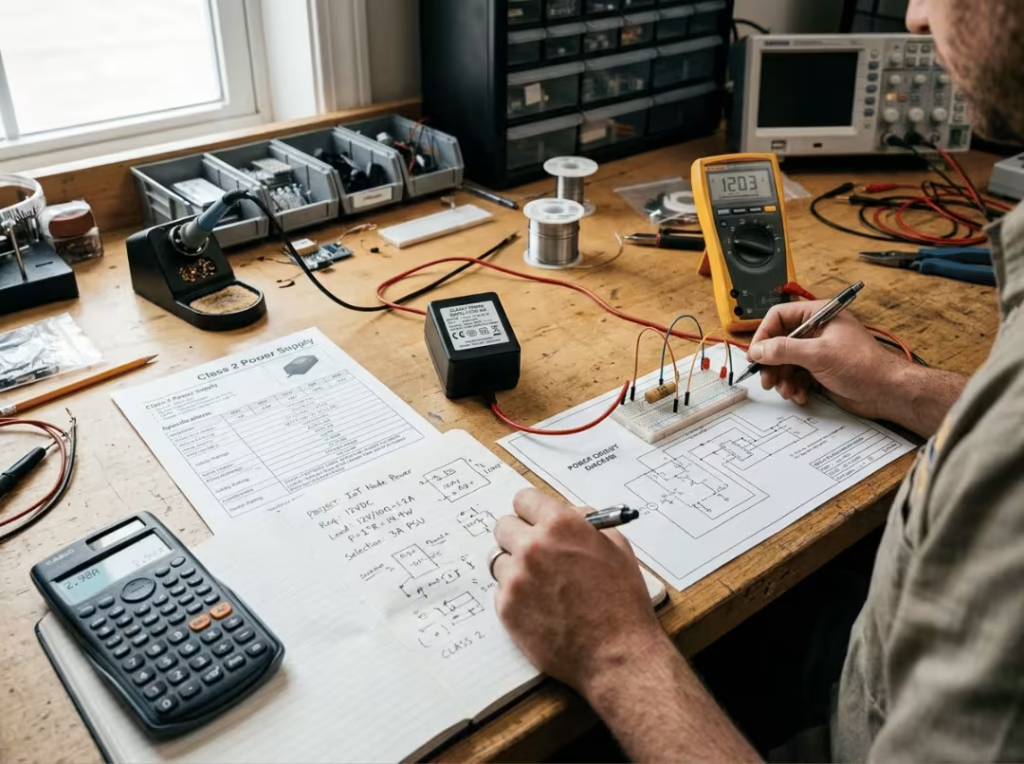
Add up the current draw of every device connected to the supply. For LED systems, sum the fixture wattages and divide by the supply voltage to get amperes. For mixed loads, pull current figures from each device’s specification sheet.
Once you have a total, add at least 20% headroom. A supply running at its rated maximum runs hotter, ages faster, and has no tolerance for load transients. For a calculated load of 3A on a 24V system, select a supply rated for at least 3.6A — and confirm that the resulting VA figure stays under 100VA.
Example: 3.6A at 24V = 86.4VA. That sits within the Class 2 limit with room to spare. If the load calculation pushes the headroom-adjusted total above 100VA, split the load across two Class 2 supplies or move to a Class 1 supply for that circuit.
Step 3: Verify the Certification, Not Just the Label
The Class 2 designation on a supply only means something when it is backed by third-party certification. Look for a UL, ETL, or CSA mark alongside the Class 2 designation. These indicate the supply has been independently tested against UL 1310 and meets the output limits that define the classification.
Generic adapters from unverified sources frequently display “Class 2” text without any certification. They may not meet the output limits, may not pass thermal testing, and may not behave safely under fault conditions. For any permanent installation, confirm the certification mark is present and from a recognized body.
Step 4: Choose the Right Form Factor
Class 2 power supplies are available in several physical formats:
- Wall plug adapters work for single-device applications with a nearby outlet
- Desktop or tabletop adapters suit equipment that moves occasionally or requires higher current
- Enclosed chassis supplies are suited for panel mounting or installation inside equipment enclosures
- DIN-rail mount supplies are standard in control panels and automation cabinets
Form factor affects heat dissipation, installation fit, and maintenance access. Choose based on where the supply will actually be installed — not just on the output spec sheet. For enclosed panel installations, Quankang’s ITE power supply range includes options across form factors suited to control and automation environments. For applications requiring specific connector types, output voltages, or non-standard enclosures, custom power adapters may be a better fit than forcing a standard unit to work.
Step 5: Match the Environment
A supply rated for indoor use does not belong in a damp utility room, an outdoor enclosure, or any location exposed to condensation. The ingress protection (IP) rating must match the installation environment.
Temperature also matters. Most Class 2 supplies are rated up to 40°C (104°F) ambient. Attics, mechanical rooms, and enclosed outdoor cabinets often exceed that threshold in summer. At elevated ambient temperatures, de-rate the supply’s output according to the manufacturer’s published curves.
Long conductor runs add voltage drop — factor that into wire gauge and supply voltage decisions before finalizing the installation design.
Step 6: Size for Reliability, Not Just Compliance
A supply chosen to barely meet the load will run close to its thermal limits, trip protection more frequently under transient conditions, and fail earlier than one with real headroom. Plan for the load you have now and the one you might add later.
Lighting systems, camera networks, and access control installations commonly grow after initial installation. A supply running at 60–70% of rated output runs cooler, lasts longer, and handles expansion without needing to be swapped out.
Common Mistakes to Avoid
Treating “low voltage” as “no design rules”
Low voltage reduces shock risk. It does not eliminate the need for load calculations, wire sizing, or thermal management. An overloaded 12V circuit with undersized wire will cause problems whether or not anyone gets shocked.
Running the supply at full rated output
Rated output is a ceiling, not a target. A supply at 100% load runs hot, degrades faster, and has no tolerance for current spikes. Size for at least 20% headroom.
Ignoring wire length and voltage drop
Longer runs mean more resistance and less voltage at the load. For 12V and 24V systems, even moderate run lengths produce meaningful drop. Calculate before choosing wire gauge, especially for LED installations where color consistency depends on stable voltage.
Assuming any small adapter is Class 2
Low output voltage and compact size do not make an adapter Class 2. The classification requires tested compliance with UL 1310 and a visible certification mark from a recognized body. Without those, the label is unverifiable.
Using a Class 2 supply for loads that need Class 1
Motors, heaters, pumps, and high-draw equipment belong on supplies designed for their power range. Connecting them to a Class 2 supply leads to protection trips, degraded performance, and potential damage. The fix is the right supply class — not a bigger Class 2 unit.
Frequently Asked Questions
What does “Class 2” mean on a power supply label?
It means the supply has been designed and tested to meet the output power, voltage, and current limits defined in UL 1310. Those limits reduce fire and shock risk by constraining how much energy the supply can deliver. NEC Article 725 connects the classification to reduced wiring and protection requirements for Class 2 circuits.
How much power can a Class 2 power supply deliver?
The UL 1310 threshold is 100VA of apparent output power. At 24V, that is approximately 4.2A of continuous output. At 12V, approximately 8.3A. Exact limits also depend on open-circuit voltage and short-circuit current boundaries — apparent power alone does not capture the full picture.
Can I use a Class 2 power supply for outdoor LED lights?
Yes, if the supply is rated for outdoor use or housed in a weatherproof enclosure with an appropriate IP rating. Class 2 classification covers output energy limits, not environmental protection. Verify the IP rating matches the installation, and check the manufacturer’s de-rating data if the enclosure will get hot in summer.
What happens if my total load exceeds 100VA?
The supply is operating outside the Class 2 boundary. It may trigger overcurrent protection, deliver degraded output, or overheat. The circuit also no longer qualifies for Class 2 wiring methods under NEC Article 725. Either split the load across multiple Class 2 supplies or move to a Class 1 supply rated for the actual demand.
Do all wall adapters qualify as Class 2?
No. Wall adapter is a form factor. Class 2 is a safety classification based on tested output limits under UL 1310. Many wall adapters do meet Class 2 requirements, but generic or uncertified units should not be assumed to qualify unless a certification mark from a recognized body is visible on the label.
Can I combine multiple Class 2 supplies to get more power?
Not for a single shared load. Combining outputs from multiple Class 2 supplies can result in apparent power that exceeds Class 2 thresholds, which means the circuit no longer qualifies for Class 2 installation treatment. Each Class 2 supply should feed its own independent load or zone. If a single load requires more than 100VA, use a supply rated and certified for that power level.
The Decision Comes Down to Load and Limits
A Class 2 power supply is the right choice when the total load stays within the 100VA output envelope, the certification is legitimate, and the form factor matches the installation environment. It simplifies wiring, reduces protection overhead, and covers a wide range of low-voltage residential and commercial applications reliably.
When the load exceeds those limits — either in power, voltage, or environment — the answer is a supply from a higher class, sized and installed for what the application actually requires.