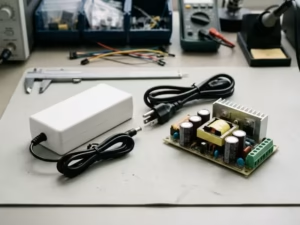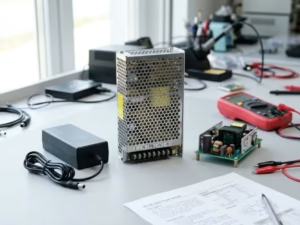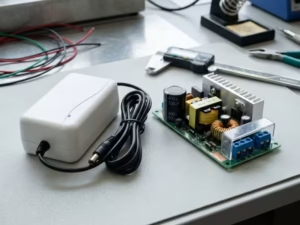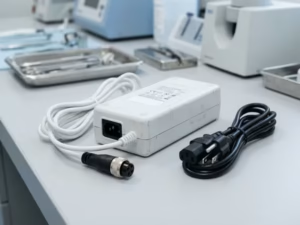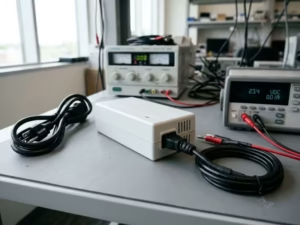
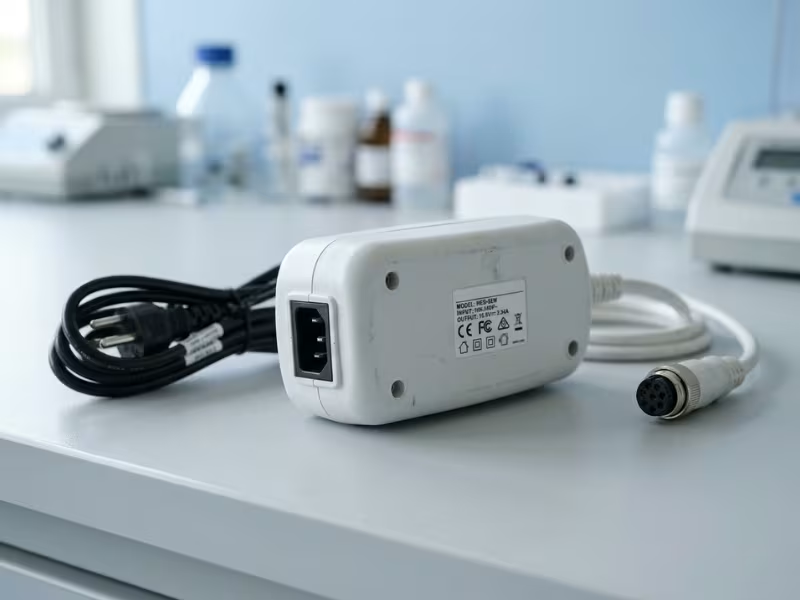
Many medical device teams pick a catalog power supply to save time. It looks like the fast, cheap choice. Then the device fails a leakage test, or the supply runs too hot inside a sealed case. A late fix like that can cost months.
The real challenge isn’t buying a power supply. You have to meet safety, certification, size, thermal, and launch targets at the same time.
I have helped many device teams build custom power supplies with ODM partners. This guide shows you when an ODM makes sense, how the process works, and how to keep certification and mass production on track.
When Does a Medical Device Need a Custom Power Supply?
Not every device needs a custom design. I often talk clients out of one. The real test is simple: can a certified catalog unit meet your safety, size, and market needs without forcing changes elsewhere in the device?
Let’s start with the projects where a standard unit does the job well.
When a Catalog Supply Works Fine
A pre-certified medical power supply is often the smart choice when your project has:
- Standard power needs. Common outputs like 12 V or 24 V, typical wattage, and no unusual peak loads.
- A roomy enclosure. A standard open-frame board or desktop adapter fits without changes to the housing or airflow.
- One target market. The unit’s existing approvals already cover your launch region.
- A simple certification path. No patient contact, or Type B parts with plenty of leakage margin.
In these cases, a custom design adds cost and months without real benefit.
When a Custom Supply Starts to Pay Off
The picture changes once the device moves closer to the patient or the design gets tighter. I recommend a custom or ODM supply for:
- Patient-connected devices. BF and CF applied parts tighten leakage limits. CF allows only 10 µA in normal conditions.
- Home-use equipment. Lay users, old wiring, and higher immunity levels raise the bar.
- Slim or portable designs. Wearables, handheld monitors, and low-profile carts need unusual shapes and careful heat control.
- Multi-market launches. Each region adds its own labels, paperwork, and tests.
- Tight system integration. The supply must match your housing, airflow, cable exits, and connectors.
Here’s a pattern I see often. A team picks a certified adapter for a portable monitor. The adapter passes on its own. Inside the device, its leakage adds to the monitor’s own and pushes the total past the limit. Now the team must redesign under schedule pressure.
A Quick Self-Check
Answer these four questions honestly:
- Do you need 2 MOPP isolation? If the supply sits near an applied part, the answer is often yes.
- Do enclosure or thermal limits restrict the supply’s size or cooling? Sealed and fanless designs count.
- Will you launch in the US and EU, or more markets? Each extra region widens the certification scope.
- Has a standard supply already failed EMC or leakage testing? Treat that as a clear warning sign.
One “yes” means you should review your options carefully. Two or more mean you should talk to an ODM before your design freezes.

What an ODM Actually Does in a Medical Power Supply Project
Many teams picture an ODM as a factory that builds to order. In medical work, that picture leaves out most of the value.
The three paths split the work differently. With an off-the-shelf supply, you buy a finished unit and design your device around it. An OEM builds to your design, so your team owns the engineering and the risk. An ODM designs, certifies, and builds a supply shaped around your device and your markets.
Here is the work a capable medical ODM takes on.
The Six Jobs a Good ODM Owns
- Requirement review. Engineers challenge your spec and catch gaps, like a missing applied part type.
- Electrical and mechanical design. They pick the topology, set 1 MOPP or 2 MOPP spacing, and fit the board to your enclosure.
- Prototyping. You get samples to test inside your real device, with your own cable and housing.
- Certification support. They prepare the safety file, work with the lab, and fix failures fast.
- Manufacturing transfer. They freeze the BOM, build test fixtures, and run the pilot build.
- Lifecycle support. They track part changes and plan for obsolescence long after launch.
These jobs don’t sit in separate boxes. A creepage choice in design shows up later in the lab report. A part swap in production can reopen that same report.
That’s why I judge an ODM on how well it manages design, compliance, and production risk together. A weak partner ships you a board. A strong one gives you a supply that passes 60601 testing and stays consistent at volume.
The Requirements That Lock In Your Project From Day One
Most delays I see start in the first two weeks. A team sends a voltage and a wattage, and marks everything else “we’ll sort it out later.” That plan almost never holds.
Isolation class, EMC environment, enclosure size, and target cost decide how hard the project is, what it costs, and which certification path it follows. Here is how each one shapes the work.
Safety and Isolation: Where the Design Boundaries Start
IEC 60601-1 sets the base rules. Your first decision is how much isolation the supply needs.
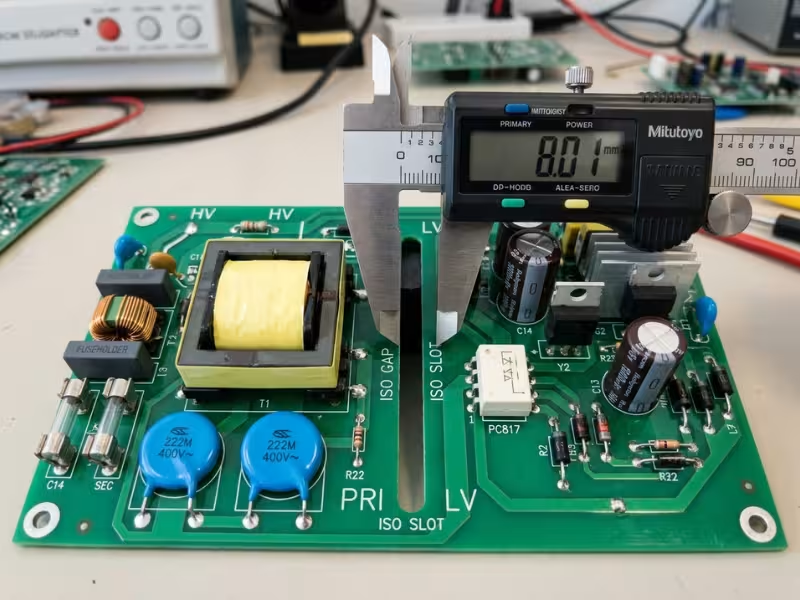
- 1 MOPP fits supplies far from the patient. A typical barrier needs a 1,500 VAC test, about 4 mm creepage, and 2.5 mm clearance.
- 2 MOPP applies near an applied part. The test jumps to 4,000 VAC, with roughly 8 mm creepage and 5 mm clearance.
Those few millimeters reshape the design. A 2 MOPP transformer needs reinforced insulation, wider spacing, and often a larger core. The board grows, and so does the unit cost.
Applied part type matters just as much. Type B and BF parts allow 100 µA of patient leakage in normal conditions. Type CF parts, used for direct cardiac contact, allow only 10 µA.
This is where leakage current redraws your options. Y-capacitors filter noise, but they also add leakage. A tight limit caps their size, so engineers must solve EMC with fewer tools. At the same wattage, a CF device can need a very different design than a BF device.
EMC and Home Use: One Pass Is Not Enough
Safety sets the insulation. EMC decides whether the device behaves in the real world, and the two often pull in opposite directions.
IEC 60601-1-2 covers emissions and immunity. Home-use devices face Class B emission limits and 10 V/m radiated immunity, compared with 3 V/m in professional settings. Patients also plug in next to Wi-Fi routers, through old power strips, on wiring nobody has checked in years.
The bigger risk comes after the lab. One good sample passes. Then mass production adds small shifts in windings, capacitor values, and cable routing. Your margin shrinks, and some units start to fail.
I ask clients to target at least 6 dB of margin below emission limits on prototypes. Anything thinner becomes a gamble at volume.
Mechanical and Thermal Limits: The Box Decides More Than You Think
A handheld device or slim cart leaves little room for 2 MOPP spacing. Every millimeter of creepage competes with board space.
Cable exits and connectors matter too. A locking connector or custom pinout can add weeks if you raise it late.
The thermal budget is the one teams underestimate most. A 65 W supply at 90% efficiency still turns about 7 W into heat. In a sealed, fanless case, that heat has nowhere to go. Fanless designs need efficient topologies, derating at 40°C ambient or higher, and surface temperatures within 60601-1 touch limits. Flag fanless needs on day one.
Commercial Targets: Cost, Volume, and Markets Steer the Engineering
Cost and volume work as a pair. At 500 units a year, an ODM usually adapts an existing platform and skips custom tooling. At 50,000 units, custom magnetics and molded housings start to pay back.
Markets set your certification scope. The US uses ANSI/AAMI ES60601-1, Canada uses CSA C22.2 No. 60601-1, and Europe uses EN 60601-1.
Launch dates tie it together. Test labs often book weeks ahead, and one late change can bump you into the next quarter.
My test is simple. If you can’t state your cost, volume, markets, and launch date in one sentence, your project isn’t ready for a quote.
The Medical Power Supply ODM Process, Step by Step
Almost every medical power supply ODM project follows six steps. Each step has its own traps, and each should end with an output you can review before you move on.
Here is how I walk device teams through it.
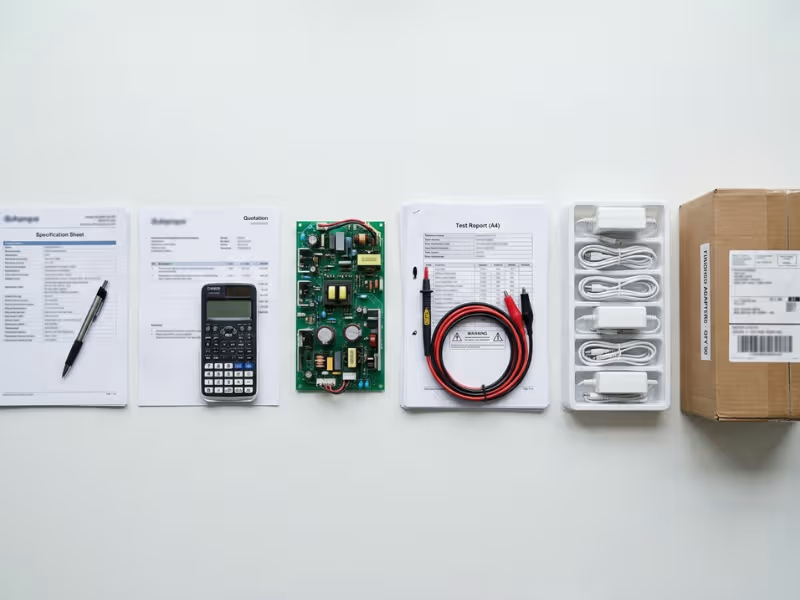
Step 1: Define the Device and Its Compliance Target
This step belongs mostly to you. Bring every output rail, the input range, intended use, applied part type, and operating setting. Add target markets, enclosure CAD, and a realistic volume forecast.
What to watch for: Your ISO 14971 risk file should support your 1 MOPP or 2 MOPP choice. Have your regulatory lead sign off, not just your hardware engineer.
A common misjudgment: “We’ll pick the markets later.” Adding Japan or China after layout can mean new tests or even a new board.
Deliverable: A signed requirement specification under version control.
Step 2: Feasibility Review and Quotation
The ODM compares your spec with its existing platforms. A close match means it can adapt a certified design. A poor match means a clean-sheet design, with more cost, time, and risk.
A useful quote separates NRE, tooling, unit price at several volume tiers, and milestone dates.
What to watch for: Ask for a written list of risk flags, such as a fanless 150 W unit in a small sealed case.
A common misjudgment: Comparing quotes on unit price alone. A low NRE figure may leave out lab fees or retests.
Deliverable: A quote with an NRE breakdown, price tiers, a milestone plan, and a risk list.
Step 3: Design and Prototype
Good ODMs work on electrical, EMC, thermal, and mechanical design at the same time. Flyback suits most supplies under about 100 W. Above that, LLC resonant designs often win on efficiency and heat.
A prototype that powers on proves very little. Samples should face efficiency, ripple, no-load power, protection, hipot, leakage, temperature rise, and EMC pre-scan checks.
What to watch for: Test samples inside your actual device. A supply that runs cool on a bench can overheat in a sealed enclosure.
A common misjudgment: Treating samples as a chance to rethink the spec. Each new sample round adds weeks.
Deliverable: Engineering samples, a full test report, and a signed design review.
Step 4: Verification and Certification
This is where schedules slip most. An accredited lab tests safety under IEC 60601-1 and EMC under IEC 60601-1-2. The CB report then supports UL, CSA, and CE approvals.
One failure starts a slow chain: diagnose, fix, retest, and wait for a new lab slot. Common triggers include late spec changes, unlisted component swaps, and system coupling, where the supply passes alone but fails inside your device.
What to watch for: The safety report names every critical part. Change one, and you change the paperwork.
A common misjudgment: Testing the supply alone and assuming the system will pass. Run a system-level pre-scan first. It costs a day and can save a month.
Deliverable: CB and EMC test reports, plus a locked critical components list.
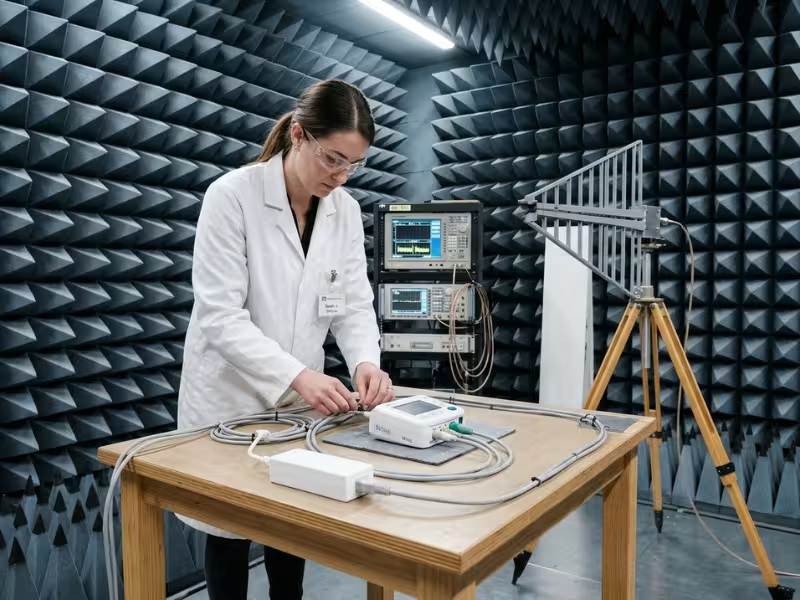
Step 5: Pilot Build and Manufacturing Transfer
The ODM freezes the BOM, builds fixtures for hipot, functional testing, and burn-in, then runs a pilot batch of a few hundred units.
What to watch for: Ask for first-pass yield and Cpk data on output voltage, leakage, and efficiency. Wide variation now becomes field returns later.
A common misjudgment: Treating the pilot as a formality. It’s your last cheap chance to fix process problems.
Deliverable: A pilot report, frozen BOM, production test spec, and first article inspection record.
Step 6: Mass Production and Lifecycle Support
Every unit should pass 100% hipot and functional testing. Traceability should link each serial number to its component lots, because auditors will ask.
After launch, most of the work is change control. Your contract should require written notice before any critical part changes. I push for at least 90 days.
What to watch for: A new transformer or Y-capacitor may need an updated safety report. Qualify backup parts early.
A common misjudgment: Assuming certification ends at launch. Every critical change can reopen the file.
Deliverable: A quality agreement, a change notification process, and full traceability records.
Where Medical Power Supply ODM Projects Usually Go Wrong
Bad circuit design rarely sinks a project. Most stall because of choices made in the first month. I see the same five mistakes again and again.
Treating Certification as the Last Step
The lab measures 6 mm of creepage on a path that needs 8 mm for 2 MOPP. The fix means a new layout, fresh samples, and a new lab slot. That one gap can cost eight to twelve weeks.
Do this instead: Have your ODM review creepage, clearance, and insulation at the schematic stage.
Sending an Incomplete Spec
Gaps force the ODM to guess. Teams most often skip target markets, applied part type, enclosure height or venting limits, and cable length. A 3 m cable instead of 1.5 m adds voltage drop and can act as an antenna in EMC tests.
Do this instead: Write “TBD, decision by [date]” rather than leaving a blank.
Cutting Costs Before Margins Are Proven
I once watched a team remove a common-mode choke to save about $1.20 per unit, or $6,000 a year. The supply then failed conducted emissions. The redesign cost more than three years of savings and six weeks of launch time.
Do this instead: Run cost-down reviews only after prototypes pass pre-scans with room to spare.
Using a Catalog Supply as a “Temporary” Stand-In
A certified adapter passes alone, but its leakage adds to your device’s and pushes the total over the limit. Worse, your verification data now depends on that stand-in, so a later swap means repeat testing.
Do this instead: Test any temporary supply inside the full device early, and budget for the swap.
Ignoring the Product’s Long Life
Medical devices often ship for seven to ten years. Components don’t. An end-of-life notice for one optocoupler can trigger a safety report update while your stock runs out.
Do this instead: Check lifecycle status at BOM freeze, qualify second sources before certification, and require 90 days’ change notice.
How Long Does a Medical Power Supply ODM Project Take?
Most projects take 6 to 12 months from first spec to mass production. Platform reuse lands you near the short end. A clean-sheet design with wide certification scope can run past a year.
Where the Time Goes
Phase | What Happens | Typical Duration | Common Delay Risks |
|---|---|---|---|
Requirements & feasibility | Spec review, platform match, risk flags, quote | 2–4 weeks | Missing markets or applied part type |
Design & prototype | Topology, layout, samples, in-device tests | 6–12 weeks | Spec changes after first samples |
Safety & EMC testing | 60601-1 and 60601-1-2 tests, CB report, approvals | 8–16 weeks | Failed tests, lab booking gaps |
Pilot to production | BOM freeze, fixtures, pilot run, ramp-up | 4–8 weeks | Low yield, long-lead parts |
I watch the testing phase most closely. One failed test can add six weeks or more.
What Moves the Schedule
- Platform reuse can cut design and testing time roughly in half.
- Each added market brings more documents and lab time.
- 2 MOPP and CF requirements raise the odds of a retest.
- Custom housing molds often add 4 to 6 weeks.
- Long-lead magnetics and controllers can quote 12 weeks or more.
Example: One 65 W Adapter, Two Timelines
Take a 65 W, 2 MOPP adapter for a home-use device sold in the US and EU.
Platform reuse: The ODM changes the output voltage, cable, and label on a certified platform, then amends the CB report. Expect 4 to 6 months.
Clean-sheet: The device needs a slim custom housing and serves a CF applied part. The client adds Canada, Japan, and China. Expect 10 to 14 months, longer if a test fails.
Same wattage, more than half a year apart. Ask your ODM which path your spec puts you on, and build one retest into the plan.
ODM vs OEM vs Off-the-Shelf: Which Option Fits Best?
Most teams compare options by unit price. I start with a different question: when something fails, who pays to fix it?
How the Three Paths Stack Up
Factor | Off-the-Shelf | OEM (Your Design) | ODM |
|---|---|---|---|
Upfront cost | Lowest, no NRE | Highest, your engineers plus tooling | Moderate, lower with platform reuse |
Development speed | Samples in days | Slowest, limited by your team | 4–14 months |
Regulatory fit | Only if specs match exactly | Depends on your 60601 skill | Built around your applied part and markets |
Form-factor flexibility | None | Full | High |
Design control | None | Full | Shared through spec and IP terms |
Supply continuity | Vendor controls changes | You manage sourcing | Contract sets change notice |
Certification risk | Higher at system level | Highest | Lower, shared fix work |
The OEM path suits only teams with in-house power engineers who have taken supplies through IEC 60601-1. For most companies, the real choice is catalog or ODM.
When Each Path Wins
Off-the-shelf fits low volume, Type B or no patient contact, standard outputs, and one or two markets. Still, test it inside your full device early.
An ODM fits BF or CF devices, multi-market launches, slim or fanless enclosures, and long product lives. If your device needs a non-standard form factor or tighter leakage control, review custom power adapter solutions before your design freezes.
A Rule of Thumb You Can Use Today
Count the changes you’d make to your device just to fit a catalog supply: housing tweaks, extra filtering, new cooling, cable workarounds.
- Zero changes: Stay with off-the-shelf.
- One change: Get an ODM quote for platform reuse and compare total cost.
- Two or more: You already pay for customization, in the most expensive way. Talk to an ODM now.
What to Prepare Before Contacting an ODM
Some teams arrive at a first call with clear numbers, and we discuss a real design within twenty minutes. Others bring an idea and a wattage, then spend a month trading emails. Use this checklist to be the first kind of team.
Electrical Basics
- Output voltage, current, and power. List every rail with continuous and peak loads. A pump drawing 120 W for two seconds on a 60 W supply changes the magnetics.
- Input range. State universal 90–264 VAC, DC input, or battery backup.
Safety and Compliance
- Applied part classification. Name B, BF, or CF. This sets your leakage limit and often your isolation level.
- Target standards and markets. List launch countries plus any planned within three years. Include IEC 60601-1-11 for home use or your 60601-2-x standard.
Physical Fit
- Enclosure dimensions. Send 3D CAD with mounting points and keep-out zones.
- Cooling constraints. State fanless, sealed, or vented, plus maximum internal ambient temperature.
- Connectors and cables. Specify type, pinout, length, wire gauge, and Class I or Class II.
Business Targets
- Annual volume. Give year-one and peak figures.
- Target unit cost. Share a real range. A hidden budget leads to the wrong design.
- Launch timeline. Name the date for certified samples and the production start date.
Turn the Checklist Into Your RFQ
Fit it on one or two pages, with a block diagram and enclosure CAD. Mark open items “TBD, decision by [date].” Send it with your NDA. A capable ODM will reply within days with sharp questions, and that reply shows you how the team thinks.
Questions to Ask a Medical Power Supply ODM Before Signing
Your spec tells the ODM what you need. Now reverse the roles. Ask for proof, not promises.
Experience
- “Which 60601 supplies have you certified at a similar power level?” Ask for verifiable CB report numbers and first-pass test rates.
- “Which existing platform would you adapt?” A new output voltage is a small change. A new transformer and housing is nearly a fresh design.
- “Which labs do you work with?” Look for TÜV, UL, Intertek, or SGS, plus in-house EMC pre-scans.
Quality
- “Walk me through your change control process.” Expect a written procedure with at least 90 days’ notice.
- “How do you trace critical components?” On a factory visit, ask them to trace a real unit while you watch, and review their production and testing facilities in person.
- “What are your failure rates and outgoing tests?” Request field return rates in ppm and confirm 100% hipot testing.
Ownership
- “How does the contract define IP?” Secure exclusive rights to your version, a ban on selling it to competitors, and access to manufacturing files if supply stops.
Treat vague answers as a warning. A partner who dodges now will dodge again when a test fails.

FAQs About the Medical Power Supply ODM Process
What does ODM mean in medical power supply manufacturing?
ODM stands for Original Design Manufacturer. A medical power ODM designs the supply, takes it through IEC 60601 testing, and builds it at volume. You provide the requirements. An OEM, by contrast, builds your own design, so your engineers carry the risk.
How long does a custom medical power supply project take?
Most projects run 6 to 12 months. Adapting a certified platform can take 4 to 6 months. A clean-sheet design often takes 10 to 14. Testing causes most of the variation, so plan for one retest.
What standards usually apply to medical power supplies?
IEC 60601-1 covers safety, and IEC 60601-1-2 covers EMC. Home-use devices add IEC 60601-1-11. Regional versions include ANSI/AAMI ES60601-1 in the US, CSA C22.2 No. 60601-1 in Canada, and EN 60601-1 in Europe. Your ISO 14971 risk file ties them together.
Can a standard power supply be modified for medical use?
Rarely the way teams hope. Most industrial supplies certify to IEC 62368-1 and lack 2 MOPP spacing and low leakage. Closing those gaps usually means a redesign. Adapting a 60601-certified platform gets you there faster.
How much does custom development usually cost?
Platform adaptation typically runs $10,000 to $30,000 in NRE, including lab fees. Clean-sheet designs run $50,000 to $150,000 or more. Custom housing molds add $10,000 to $50,000. Ask every ODM what its NRE covers.
Who typically owns the design IP in an ODM project?
The contract decides. Many ODMs keep base platform IP and grant exclusive rights to your version. Others transfer the full design after payment. Either works if you secure exclusivity, competitor restrictions, and access to manufacturing files in writing.
Get the Spec Right, and the Rest Follows
Medical power projects rarely slip because a lab tested too hard or a factory moved too slowly. They slip because of choices teams made, or skipped, in the first few weeks.
Three early decisions shape almost every outcome I see. A complete spec gives your ODM a clear target. A defined certification target, with applied part type and markets locked in, sets the test path. The right development path keeps your budget and schedule realistic.
So start with one document. Build a complete requirement sheet before you contact any ODM. List every output rail, the applied part type, and all target markets. Add enclosure and cooling limits, annual volume, target unit cost, and launch date. Mark each open item “TBD, decision by [date].”
That sheet will protect your schedule better than any fix you make later.