UL Listed vs. UL Recognized comes down to one question: what was evaluated? A UL Listed mark covers a complete product evaluated for standalone end use. A UL Recognized Component mark covers a part evaluated for use inside another product, under specific conditions. The difference is scope. It is not quality, and it is not rank.
Getting this wrong is expensive. An inspector can flag equipment on site. A retailer can reject a shipment. An engineering team can discover after design freeze that a “pre-approved” component still needs re-evaluation.
This guide defines both marks, compares them side by side, and shows how they work together. It also gives you a practical way to decide which one your product needs.
What Does UL Listed Mean?
A UL Listed product has been evaluated as a complete, standalone product against the safety standard for its intended end use. The evaluation asks one direct question: is this product, as sold, reasonably safe for the person who will plug it in, install it, or operate it?
The Listing evaluation covers:
- The whole product: enclosure, internal construction, electrical spacings, and heating under normal and fault conditions.
- Markings and instructions: ratings labels, warnings, and installation guidance the end user relies on.
- Ongoing production: factory follow-up inspections that check continued compliance, not just a one-time test.
Typical Listed products include wall-plug power adapters, power strips, appliances, and luminaires. An end user handles each of these directly.
Inspectors, retailers, and installers look for this kind of mark. When an electrical inspector checks a building, or a large retailer screens a vendor, they want to know that the finished item was evaluated as a finished item.

What Does UL Recognized Mean?
A UL Recognized Component has been evaluated for use inside another product, not as something an end user handles on its own. Its evaluation answers a narrower question: is this component suitable for installation in an end product, if certain conditions are met?
The component’s UL report spells out those conditions as Conditions of Acceptability. A report might require that the component sit inside a fire enclosure or stay below a maximum ambient temperature. It might also set specific spacings to nearby parts, or limit use to end products evaluated to a particular standard. The Recognition is valid only when the end product meets those conditions. This is the most important concept in the whole topic, and it comes up again below.
Typical Recognized Components include open-frame and embedded power supplies, internal transformers, printed circuit boards, switches, internal wiring, and plastics. Like Listed products, Recognized Components are covered by factory follow-up inspections. The Recognized Component Mark is traditionally the small, reversed “UR” symbol, printed on the component or its packaging. UL has also introduced newer certification mark formats, but the scope behind them is the same. Most end users never see this mark.
Recognition does not mean:
- The component has been evaluated for standalone, end-user use.
- The finished product that contains it is compliant.
- The conditions in its report are optional.
UL Listed vs. UL Recognized: Side-by-Side Comparison
Scope drives every other difference between the two marks.
Factor | UL Listed | UL Recognized Component |
|---|---|---|
What it covers | Complete, standalone product | Component intended for installation in another product |
Evaluated for | Intended end use by the end user | Specific use within an end product, under defined conditions |
Conditions of use | Built into the product design and instructions | Stated as Conditions of Acceptability the end-product maker must meet |
Who relies on the mark | Inspectors, retailers, installers, end users | End-product engineers and the evaluating lab |
Mark visibility | Usually on the product label | Often small, on the component or packaging |
Power supply example | External wall-plug or desktop adapter | Open-frame or embedded internal power supply |
Covers the finished product on its own? | Yes, for the Listed product itself | No. The end product needs its own evaluation if a Listing is required |
The two marks answer different questions. Listed asks, “Is this product safe for end use?” Recognized asks, “Is this component suitable inside an end product, under these conditions?” Neither replaces the other.
How UL Listed Products and Recognized Components Work Together
Many UL Listed end products contain UL Recognized components. A Listed medical cart, server, or appliance is often built around a Recognized power supply, Recognized switches, and Recognized wiring. The marks complement each other.
That’s why OEMs specify Recognized parts. When the evaluating lab reviews the end product, it can usually accept the component’s existing evaluation instead of testing the component again, as long as the Conditions of Acceptability are met. That can shorten the end-product evaluation and cut cost.
The catch is in the phrase “as long as.” If the end product breaks a condition, that part of the evaluation may need to be repeated. Running the component hotter than its rating, mounting it without the required enclosure, or using it under a different end-product standard all undo the shortcut.
Scenario: the sealed housing problem
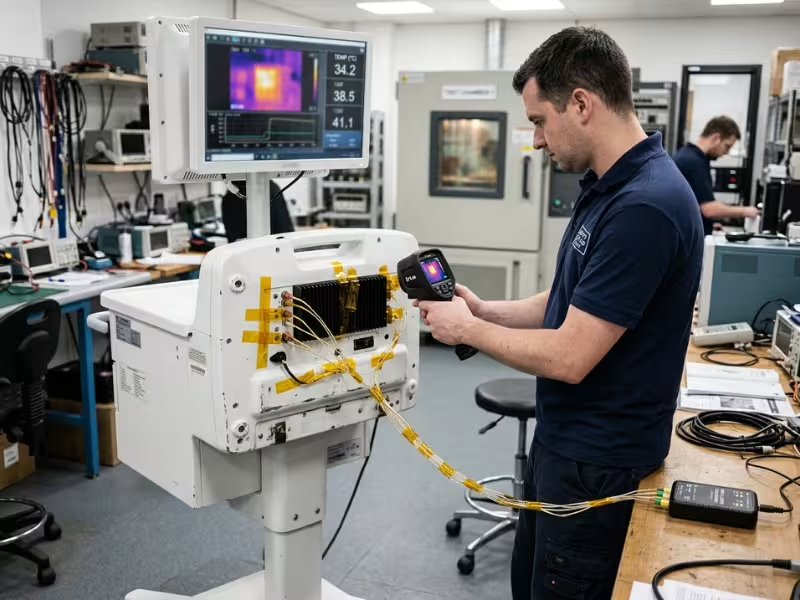
An OEM designs a medical cart display around an embedded medical power supply Recognized to ANSI/AAMI ES60601-1. The supply’s report limits ambient temperature and specifies the enclosure it must sit in. The cart’s sealed, fanless housing runs hotter than the report allows. The lab can’t rely on the supply’s existing evaluation, so the supply must be tested again inside the cart. The schedule slips by weeks, and a thermal redesign may follow.
The fix is simple, yet teams rarely apply it. Ask your supplier for the Conditions of Acceptability, or the relevant section of the report, before design freeze. Compare them against your enclosure, airflow, and thermal profile while changes are still cheap.
Which Mark Does Your Product Need?
Start with two questions: who uses the item, and where does it end up?
- Sold to or used directly by an end user or installer as a complete product: plan for a Listing.
- Built into another manufacturer’s product and never used on its own: Recognition is usually the right fit.
- Sold both ways: it may need both, under separate evaluations and markings.
Your Product | Typical Path | Why |
|---|---|---|
External wall-plug adapter shipped with consumer or office equipment | Listed | The end user handles it as a standalone product |
Listed, commonly to UL 62368-1 | Standalone end-use product | |
PoE injector sold as a standalone accessory | Listed | Installed and used by end users or IT staff |
Open-frame power supply for OEM equipment | Recognized | Installed inside another product’s enclosure |
Embedded medical power supply for a device maker | Recognized, to ANSI/AAMI ES60601-1 | Becomes part of the medical device’s own evaluation |
Custom adapter supplied in both formats | Possibly both | Different scope means separate evaluations |
Worked example: one voltage, two answers
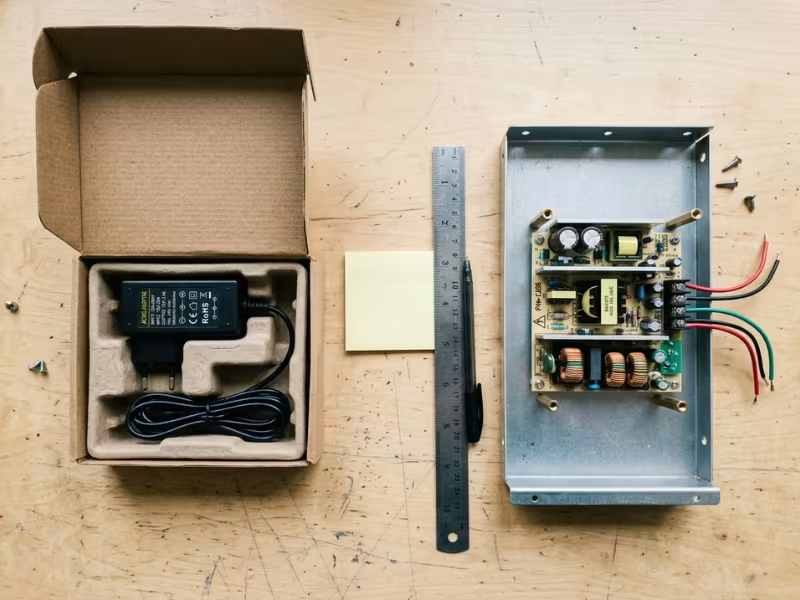
A device maker needs a 24 V power supply. If the supply ships in the box and the customer plugs it into a wall outlet, specify a Listed external adapter. If the same 24 V output must be mounted on a chassis inside the device, specify a Recognized open-frame supply. Then check its Conditions of Acceptability against your enclosure’s airflow and maximum internal temperature. The electrical spec is the same. The mark is different, because the scope is different.
At quankang, we supply external adapters, internal power supplies, and custom power adapters built for a defined use. For any model, confirm which mark applies to that specific part number and intended use before you finalize the design.
Common Mistakes When Specifying or Reading UL Marks
Most UL problems come from misreading scope, not from failed tests. These are the errors that show up most often:
- “All our parts are Recognized, so our product is UL Listed.” Recognized components don’t add up to a Listing. The end product needs its own evaluation.
- “Recognized is just a cheaper Listing.” It covers a different scope. It isn’t a lower tier of the same thing.
- Ignoring Conditions of Acceptability. This is the most expensive mistake on the list. Review the conditions before design freeze, as described above.
- Using a Recognized open-frame supply as an external power source. Its Recognition doesn’t cover standalone, end-user use. Putting it in a plastic box doesn’t change that.
- Writing “UL approved,” or “UL certified” with no qualifier. UL doesn’t “approve” products, and “certified” alone hides whether the claim covers a finished product or a component. In datasheets and marketing, state which mark applies and to which item.
- Taking a supplier’s claim at face value. Search the file number in UL’s Product iQ database and confirm that the model listed matches the exact part you’re buying.
Verify every mark claim at the model level, every time.
UL Listed vs. UL Recognized FAQs
Can a UL Recognized component replace a UL Listed product?
No. Recognition covers use inside another product under defined conditions. It doesn’t cover standalone end use. If an application calls for a Listed product, a Recognized component can’t fill that role, even if the electrical ratings match.
Is UL Listing required by law?
Not UL specifically. US electrical codes and workplace safety rules commonly require listing by a Nationally Recognized Testing Laboratory (NRTL), and UL is one of several. Retailers, insurers, and local inspectors may set their own expectations on top of that.
Is ETL Listed the same as UL Listed?
Not exactly, but inspectors generally treat them the same way. Both are NRTL listings, and both labs can test to the same published standards. The difference is the testing lab. Confirm that your customer, retailer, or target market accepts the specific mark.
What is UL Classified?
It’s a separate program. UL Classified products are evaluated for specific properties, limited hazards, or particular uses rather than complete product safety. It isn’t interchangeable with Listed or Recognized, so don’t treat it as a substitute for either.
How do I verify a UL mark?
Search the file number or company name in UL’s Product iQ database. Then confirm the exact model number, the product category, and whether it appears as a Listed product or a Recognized Component. Recognized Component categories typically carry a category code ending in “2.” A matching company name alone isn’t enough.
Conclusion
UL Listed covers complete products evaluated for end use. UL Recognized covers components evaluated for use inside other products, under stated conditions. They answer different questions, and in most finished equipment they work together. The safe default is simple. Specify Listed for anything an end user plugs in or installs. Specify Recognized for anything built into your product, and check its conditions early.
Before you source, do three things. Confirm the intended use. Request the mark details and Conditions of Acceptability. Verify the model in Product iQ. Our team at quankang can provide mark details for the power supplies we supply, so you can make that call before design freeze, not after.