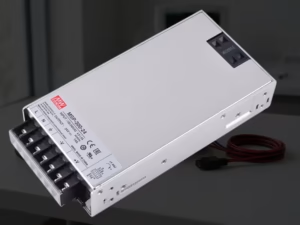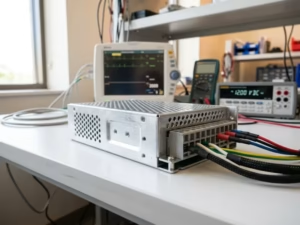
Power over Ethernet (PoE) allows Ethernet cables to carry both network data and electrical power to compatible devices. This technology has become widely used in IP cameras, wireless access points, VoIP phones, access control systems, IoT equipment, and other network-connected devices.
However, not all PoE systems provide the same amount of power.
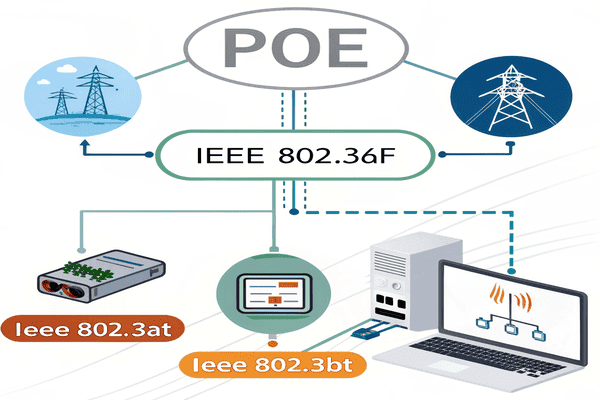
When selecting a PoE switch, PoE injector, PoE adapter, or PoE power supply, you may encounter standards such as IEEE 802.3af, IEEE 802.3at, and IEEE 802.3bt. These standards define different power delivery capabilities and are designed for devices with different power requirements.
So, what is the difference between 802.3af, 802.3at, and 802.3bt? How much power does each standard provide? What are Type 1, Type 2, Type 3, and Type 4 PoE? And which PoE standard should you choose for your application?
This guide explains the differences between 802.3af, 802.3at, and 802.3bt, including power levels, PoE types, power classes, 2-pair vs. 4-pair power delivery, typical applications, compatibility, and how to select the right PoE power solution.
Quick Comparison: 802.3af vs. 802.3at vs. 802.3bt
The simplest way to understand the three PoE standards is to compare their power capabilities.
| PoE Standard | Common Name | PoE Type | Power Pairs | Maximum PSE Output | Maximum PD Input | Typical Applications |
| IEEE 802.3af | PoE | Type 1 | 2-pair | 15.4W | 12.95W | VoIP phones, basic IP cameras |
| IEEE 802.3at | PoE+ | Type 2 | 2-pair | 30W | 25.5W | PTZ cameras, wireless access points |
| IEEE 802.3bt | PoE++ | Type 3 | 4-pair | 60W | 51W | High-performance APs, advanced cameras |
| IEEE 802.3bt | PoE++ | Type 4 | 4-pair | 90W* | 71.3W* | High-power network devices |
*Actual power levels may vary depending on implementation and equipment specifications. Always verify the manufacturer’s published ratings for the specific PSE and PD.
The most important point to remember is:
PSE output power is not the same as power available at the PD.
For example, an IEEE 802.3af PSE can provide up to 15.4W, but the powered device may receive up to approximately 12.95W after accounting for power loss over the Ethernet cable.
This distinction is critical when selecting a PoE power supply or PoE adapter.
What Is IEEE 802.3af?
IEEE 802.3af is the original widely adopted IEEE PoE standard and is commonly referred to as PoE or Type 1 PoE.
It was designed to provide power to relatively low-power network devices through standard Ethernet cabling.
Key Specifications
- IEEE Standard:3af
- Common Name:PoE
- PoE Type:Type 1
- Maximum PSE Power:4W
- Maximum PD Power:Approximately 12.95W
- Power Delivery:2-pair
- Typical Voltage Range:Approximately 44–57V DC at the PSE
- Typical Applications:Low-power network devices
Typical 802.3af Applications
802.3af is commonly suitable for:
- Basic IP cameras
- VoIP phones
- Simple wireless access points
- Network sensors
- Other low-power Ethernet devices
For example, if an IP camera requires less than approximately 13W at the powered device, an 802.3af-compatible PoE solution may be sufficient.
However, engineers should always check the actual power consumption of the device rather than selecting a standard based only on the application category.
A modern IP camera may have additional features such as infrared illumination, motorized movement, heating, or advanced image processing. These features can increase power consumption beyond the capability of standard 802.3af.
What Is IEEE 802.3at?
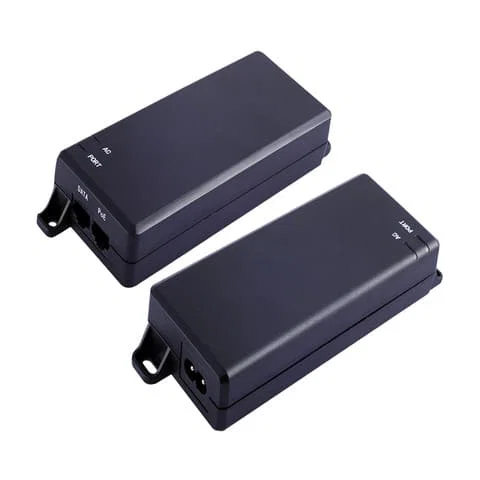
IEEE 802.3at is commonly known as PoE+ or Type 2 PoE.
It was developed to support network devices that require more power than IEEE 802.3af can provide.
Key Specifications
- IEEE Standard:3at
- Common Name:PoE+
- PoE Type:Type 2
- Maximum PSE Power:30W
- Maximum PD Power:Approximately 25.5W
- Power Delivery:2-pair
- Typical Applications:Higher-power IP cameras and wireless access points
Typical 802.3at Applications
PoE+ is commonly used for:
- PTZ IP cameras
- Advanced IP cameras
- Wireless access points
- Video conferencing equipment
- Advanced VoIP devices
- Other medium-power network equipment
For example, a PTZ camera may require additional power to operate its motorized pan, tilt, and zoom functions. A higher-power wireless access point may also require more energy for multiple radio channels and advanced wireless functionality.
In these cases, 802.3at may be more appropriate than 802.3af.
What Is IEEE 802.3bt?
IEEE 802.3bt is the newer generation of PoE technology designed to support higher-power network devices.
Unlike 802.3af and 802.3at, which primarily use two pairs of Ethernet conductors for power delivery, 802.3bt can use all four twisted pairs in the Ethernet cable.
IEEE 802.3bt includes two major PoE categories:
- Type 3
- Type 4
IEEE 802.3bt Type 3
Type 3 PoE is commonly associated with PoE++ and can provide up to approximately 60W of power at the PSE.
Key Specifications
- IEEE Standard:3bt
- PoE Type:Type 3
- Common Name:PoE++
- Maximum PSE Power:Up to 60W
- Maximum PD Power:Up to approximately 51W
- Power Delivery:4-pair
- Typical Applications:High-power wireless APs, advanced cameras, IoT devices
Type 3 can support applications that require more power than PoE+ can provide.
Typical examples include:
- High-performance wireless access points
- Advanced PTZ cameras
- Multi-function network devices
- IoT gateways
- Certain industrial Ethernet devices
IEEE 802.3bt Type 4
Type 4 is the highest-power category within IEEE 802.3bt.
It is designed for network devices that require significantly more power than earlier PoE standards.
Key Specifications
- IEEE Standard:3bt
- PoE Type:Type 4
- Common Name:Higher-power PoE++
- PSE Power:Up to approximately 90W or higher depending on implementation
- PD Power:Up to approximately 71W or higher depending on implementation
- Power Delivery:4-pair
- Typical Applications:High-power network devices
Potential applications include:
- High-power wireless access points
- Advanced network devices
- Digital signage
- High-performance IoT equipment
- Specialized industrial equipment
For Type 4 applications, engineers should pay particular attention to power budget, cable specifications, thermal performance, and system efficiency.
802.3af vs. 802.3at vs. 802.3bt: What’s the Difference?
The most important differences can be summarized in five areas:
1. Power Output
The primary difference is the amount of power each standard can provide.
802.3af → 802.3at → 802.3bt
As the PoE standard advances, it supports higher-power devices.
2. Number of Power Pairs
802.3af and 802.3at typically use two pairs for power delivery.
802.3bt uses all four pairs, allowing more power to be delivered through the Ethernet cable.
3. Supported Devices
Lower-power devices may work with 802.3af, while higher-power equipment may require 802.3at or 802.3bt.
4. Power Budget
Higher-power PoE systems require more attention to total power availability.
This is particularly important when multiple devices are connected to the same PoE switch or centralized power system.
5. System Design
Higher-power PoE applications may require more careful consideration of:
- Cable quality
- Cable resistance
- Connector performance
- Heat generation
- Power supply capacity
- Installation environment
What Are PoE Type 1, Type 2, Type 3, and Type 4?
The terms “Type 1,” “Type 2,” “Type 3,” and “Type 4” are another way to classify PoE technologies.
| PoE Type | IEEE Standard | Common Name | Typical PSE Power | Power Pairs |
| Type 1 | 802.3af | PoE | Up to 15.4W | 2-pair |
| Type 2 | 802.3at | PoE+ | Up to 30W | 2-pair |
| Type 3 | 802.3bt | PoE++ | Up to 60W | 4-pair |
| Type 4 | 802.3bt | Higher-power PoE++ | Up to 90W* | 4-pair |
The terminology can sometimes be confusing because product manufacturers may use terms such as “PoE++” differently in marketing materials.
Therefore, when evaluating a PoE product, it is better to check the actual IEEE standard, power rating, and compatibility specifications rather than relying only on terms such as PoE+ or PoE++.
What Is PoE Class?
In addition to PoE types, PoE systems also use power classes to identify different power requirements.
Power classes help the PSE determine how much power a connected PD requires.
Depending on the PoE standard, different classes correspond to different maximum power levels.
For example:
- 3af includes lower-power classes
- 3at extends power classification for higher-power devices
- 3bt introduces additional classes to support higher-power applications
The exact power available to the PD depends on the standard, class, PSE capability, and cable losses.
For system designers, it is important to distinguish between:
- PoE Type
- PoE Class
- PSE output power
- PD input power
These terms describe different aspects of the PoE system and should not be treated as interchangeable.
2-Pair PoE vs. 4-Pair PoE
One of the most important technical differences between earlier PoE standards and IEEE 802.3bt is the number of Ethernet pairs used for power delivery.
2-Pair PoE
IEEE 802.3af and 802.3at typically deliver power over two pairs of the Ethernet cable.
This approach is sufficient for lower-power applications.
4-Pair PoE
IEEE 802.3bt uses all four pairs of the Ethernet cable for power delivery.
Using four pairs allows the system to transfer more power while distributing the electrical load across the cable.
This makes 4-pair PoE suitable for higher-power applications.
For high-power installations, cable selection becomes increasingly important because higher current levels can result in greater heat generation and power losses.
Engineers should therefore consider cable category, conductor size, installation conditions, and ambient temperature when designing higher-power PoE systems.
How Much Power Does the PD Actually Receive?
One of the most common mistakes when selecting a PoE system is assuming that the PSE output rating is equal to the power available to the powered device.
It is not.
The power path can be simplified as:
PSE → Ethernet Cable → PD
Some power is lost as it travels through the cable.
Therefore:
PSE Output Power > PD Available Power
For example:
- 3af PSE: up to 15.4W
- PD: up to approximately 12.95W
Similarly, the maximum power available to a PD under higher PoE standards is lower than the maximum PSE output.
This difference is important when selecting a PoE adapter or power supply.
Example
Imagine that a powered device requires 24W.
An 802.3at PSE can provide up to 30W, while the PD may receive up to approximately 25.5W under the standard.
In this situation, 802.3at may be sufficient under normal conditions.
However, if the device requires more than the available PD power, the system may need to move to a higher PoE standard.
The correct approach is therefore to compare the PD’s actual power requirement with the available power at the PD, not simply compare it with the PSE’s maximum output.
Which PoE Standard Do You Need?
The right PoE standard depends on the power requirements of the powered device.
A simple selection process is:
Step 1: Check the Device Power Requirement
Determine the maximum power consumption of the PD.
Do not rely only on average power consumption.
Step 2: Check the Required PoE Standard
Confirm whether the device requires:
- 3af
- 3at
- 3bt
Step 3: Check the PD Power
Make sure the selected PSE can deliver sufficient power to the PD after cable losses.
Step 4: Check the Total Power Budget
If multiple devices are connected, calculate the total power demand.
Step 5: Consider Future Expansion
If the network may add more devices later, select a power system with sufficient reserve capacity.
Which PoE Standard Is Best for IP Cameras?
The correct standard depends on the camera’s power requirements.
Basic IP Cameras
Many basic IP cameras can operate with:
802.3af / PoE
Advanced IP Cameras
Cameras with additional functions may require:
802.3at / PoE+
PTZ Cameras
PTZ cameras often require additional power for motorized movement.
Depending on the camera design, they may require:
802.3at or 802.3bt
High-Power or Advanced Cameras
Advanced cameras with multiple functions may require:
802.3bt
Before selecting a PoE adapter or power supply, always check the camera manufacturer’s specifications.
Which PoE Standard Is Best for WiFi Access Points?
Wireless access points can have significantly different power requirements.
A basic access point may operate with:
802.3af
More advanced wireless access points may require:
802.3at
High-performance access points with multiple radios or advanced features may require:
802.3bt
As WiFi technologies continue to evolve, higher-performance access points may require more power.
Therefore, when designing a network infrastructure, it is important to consider not only the access point’s current requirements but also potential future upgrades.
802.3af vs. 802.3at vs. 802.3bt: Which One Should You Choose?
The following table provides a simplified selection guide.
| Application | Recommended PoE Standard |
| Basic VoIP Phone | 802.3af |
| Basic IP Camera | 802.3af |
| Standard Wireless AP | 802.3af / 802.3at |
| Advanced IP Camera | 802.3at |
| PTZ Camera | 802.3at / 802.3bt |
| High-Performance WiFi AP | 802.3at / 802.3bt |
| Advanced IoT Device | 802.3bt |
| High-Power Network Equipment | 802.3bt |
However, these recommendations are only general guidelines.
The best approach is always to start with the powered device’s actual electrical requirements.
Are 802.3af, 802.3at, and 802.3bt Backward Compatible?
In many cases, newer PoE standards are designed to support backward compatibility with earlier compatible PoE devices.
For example, a higher-capability PoE system may be able to power a lower-power compatible device.
However, compatibility should not be assumed solely based on the terms “PoE+” or “PoE++.”
Before installation, verify:
- IEEE standard compliance
- PSE capability
- PD compatibility
- Power class
- Power requirements
- Cable requirements
For non-standard or passive PoE products, compatibility may be different.
This is why system designers should always check the detailed product specifications before connecting equipment.
Active PoE vs. Passive PoE
Another important consideration is the difference between active and passive PoE.
Active PoE
Active PoE generally refers to standards-based PoE systems that use detection and negotiation mechanisms before delivering power.
Common standards include:
- IEEE 802.3af
- IEEE 802.3at
- IEEE 802.3bt
These solutions are commonly preferred for standardized network equipment.
Passive PoE
Passive PoE supplies power without the same standardized detection process used by IEEE-compliant active PoE systems.
Because passive PoE may supply power continuously, the voltage and wiring configuration must match the connected device.
Using an incompatible passive PoE solution can potentially damage equipment.
For professional network deployments, engineers should verify whether the equipment requires IEEE-standard PoE or a proprietary/passive implementation.
How to Choose a PoE Adapter or PoE Power Supply
When selecting a PoE adapter or PoE power supply, the IEEE standard is only one part of the decision.
Consider the following factors.
1. PoE Standard
Determine whether the application requires:
- 3af
- 3at
- 3bt
2. Output Power
Check the maximum required power at the PD.
3. Input Voltage
Verify the AC or DC input requirements of the power supply.
4. Power Budget
For multiple devices, calculate the total power demand.
5. Cable Length
Longer cables can result in greater voltage drop and power loss.
6. Operating Environment
For industrial or outdoor applications, consider:
- Operating temperature
- Humidity
- Dust
- Vibration
- Electrical noise
7. Protection Functions
Depending on the application, the power solution may require:
- Overvoltage protection
- Overcurrent protection
- Short-circuit protection
- Overtemperature protection
- Surge protection
8. Safety and Compliance
For OEM and commercial applications, confirm applicable safety, EMC, and regulatory requirements.
9. Product Reliability
For professional applications, consider:
- Long-term availability
- Product lifecycle
- Reliability
- Thermal performance
- Manufacturer support
A suitable PoE power supply should provide sufficient power capacity while maintaining reliable operation under the expected environmental and electrical conditions.
PoE Selection Checklist
Before choosing a PoE adapter, injector, switch, or power supply, verify:
IEEE PoE standard
PoE Type
PoE Class
PSE output power
PD input power
Device power consumption
Total power budget
2-pair or 4-pair power delivery
Ethernet cable specification
Cable length
Input voltage
Output voltage
Operating temperature
Protection functions
Safety and EMC requirements
Certifications
Long-term product availability
Frequently Asked Questions
Is 802.3at better than 802.3af?
Not necessarily.
802.3at provides more power than 802.3af, but that does not mean it is always the better choice. If the powered device only requires the power available from 802.3af, using a higher-power solution may not provide a practical benefit.
Choose the PoE standard based on the actual device requirements and system design.
Is 802.3bt better than 802.3at?
802.3bt supports higher power levels and is suitable for more demanding devices. However, it is not necessary for every application.
For low-power IP cameras or VoIP phones, 802.3af may be sufficient. For higher-power access points or advanced cameras, 802.3at or 802.3bt may be more appropriate.
Can an 802.3bt switch power an 802.3af device?
A standards-compliant higher-power PoE system may support compatible lower-power devices, but compatibility should always be confirmed in the manufacturer’s specifications.
What is the difference between PoE Type and PoE Class?
PoE Type generally identifies the IEEE PoE technology, such as Type 1, Type 2, Type 3, or Type 4.
PoE Class identifies the power classification of the connected device.
They describe different aspects of the PoE system.
Does 802.3bt require four-pair Ethernet cabling?
802.3bt is designed to use four pairs for higher-power delivery. The actual installation should use cabling and components that meet the requirements of the selected PoE implementation.
Can I use a PoE adapter with any Ethernet device?
No.
The PoE adapter must be compatible with the device’s input requirements and supported PoE standard.
Always verify:
- Voltage
- Power
- PoE standard
- Connector
- Polarity where applicable
- Device compatibility
What happens if a PoE device needs more power than the PSE can provide?
The device may fail to operate correctly, may not start, or may experience unstable operation.
For reliable operation, the PSE should provide sufficient power for the PD under the expected operating conditions.
How do I calculate PoE power requirements?
For multiple devices, start by adding the maximum expected power consumption of all connected PDs.
Then consider:
- Cable losses
- Startup power
- Environmental conditions
- Future expansion
- Power reserve
The resulting requirement should be compared with the available PoE power budget.
Conclusion: Choosing the Right PoE Standard
The main difference between 802.3af, 802.3at, and 802.3bt is their power delivery capability and the types of network devices they are designed to support.
In simple terms:
- 3af / PoE / Type 1is suitable for lower-power devices.
- 3at / PoE+ / Type 2supports medium-power applications.
- 3bt / PoE++ / Type 3 and Type 4is designed for higher-power network equipment.
However, choosing the correct PoE solution involves more than comparing maximum wattage.
Engineers and purchasing teams should consider the complete power delivery system, including:
PoE Standard → PoE Type → PoE Class → PSE Power → PD Power → Cable Loss → Total Power Budget → Operating Environment
For ODM/OEMs, system integrators, and equipment manufacturers, selecting the right PoE adapter or PoE power supply is particularly important. A suitable solution should provide sufficient power for the target device, maintain reliable operation under expected conditions, and meet applicable safety and compliance requirements.
If you are developing a network device or looking for a PoE adapter or PoE power supply for a specific application, Quankang can help evaluate the required PoE standard, input and output specifications, power requirements, and application conditions to identify a suitable power solution.
Contact Quankang to discuss your PoE power requirements and OEM/ODM project needs.