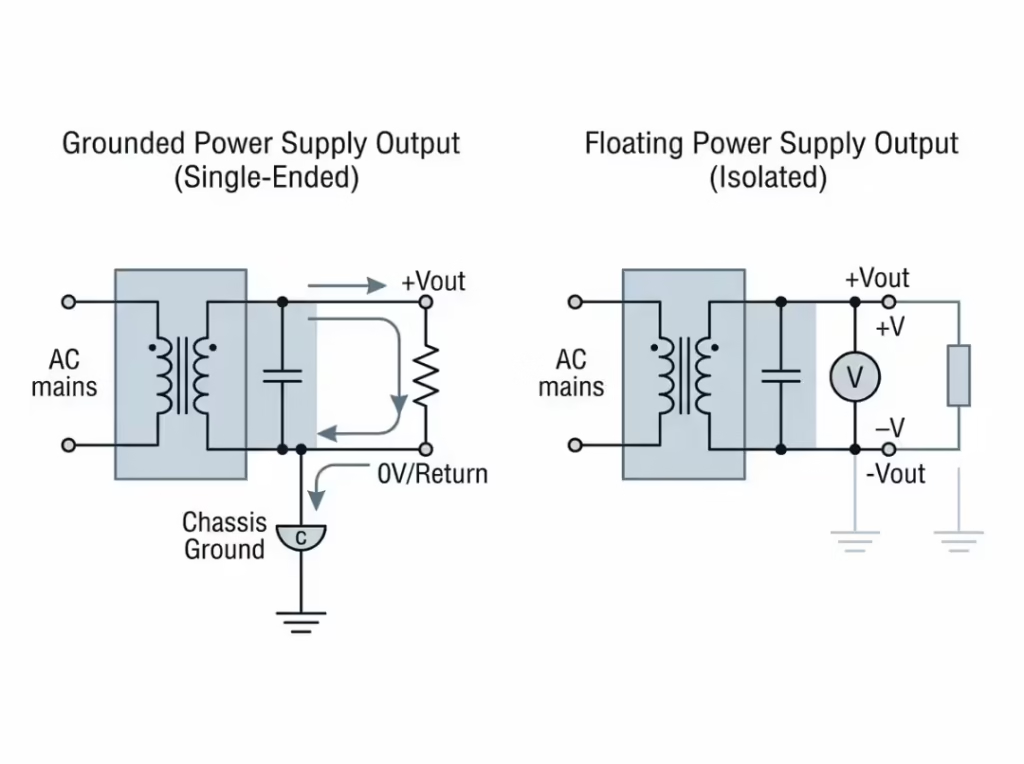
A grounded power supply bonds its output return to protective earth, giving both terminals a fixed potential and a defined fault path. A floating power supply defines only the voltage between its two terminals, with no fixed earth reference. Choose grounded for earth-referenced systems and safety compliance; choose floating for isolation, series stacking, or breaking ground loops.
You set up a bench supply, clip a grounded oscilloscope probe to the return terminal, and suddenly the readings make no sense—unexplained noise, a tripped breaker, or a dead component. Nine times out of ten, the supply isn’t the problem. The mismatch is between how the supply references ground and how the rest of your setup does. This guide walks through what “grounded” and “floating” actually mean in real circuits, why the distinction shapes safety and measurement, and how to pick the right type for your load.
What Really Separates Grounded and Floating Supplies?
The core distinction concerns who defines the ground and how it relates to the earth. A grounded power supply has a fixed earth reference: its output return connects to protective earth, so both terminals sit at a known potential relative to the building’s ground. A floating power supply has no such tie. It defines only the differential voltage between its positive and negative terminals and lets you decide where—if anywhere—that pair connects to earth.
Put simply, a grounded supply answers the question “what is my output voltage relative to earth?” A floating supply refuses to answer until you wire it into a circuit. Everything else in this comparison follows from that single point.
How Does a Grounded Power Supply Behave in Real Circuits?
What “grounded” means in practice
In a grounded supply, the output negative (or a designated return) is bonded to protective earth, usually through the chassis. The return, the enclosure, and the earth pin on the mains plug share the same reference. Measure the output negative against a nearby earth point and you read close to zero volts, because they’re electrically the same node.

What this changes electrically
Tying the return to earth fixes the output’s potential relative to your grounded world, and three practical effects follow. Both terminals now have a defined voltage to earth, which makes debugging predictable. Fault current gains a clear, low-impedance path back to earth, so breakers and fuses trip when they should. And the supply plays cleanly with other earth-referenced equipment because everything shares a single reference.
Where you commonly see grounded supplies
Grounded supplies dominate earth-referenced environments: standard lab-bench supplies, ATX computer power supplies, and industrial 24V rails that feed PLCs and sensors. Metal-enclosure systems that must meet safety and EMC rules almost always ground the supply return. Many ITE power supplies used in networking, industrial control, and communications equipment follow this earth-referenced approach because it simplifies system-level compliance.
How Does a Floating Power Supply Behave in Real Circuits?
What “floating” really means
A floating supply has neither output terminal bonded to earth. The only quantity it guarantees is the voltage between its two terminals. Where those terminals sit relative to earth stays undefined until your circuit defines it. That freedom is the whole point—you can place the output anywhere in a larger system without forcing an earth connection.
Why floating outputs still show voltage to earth
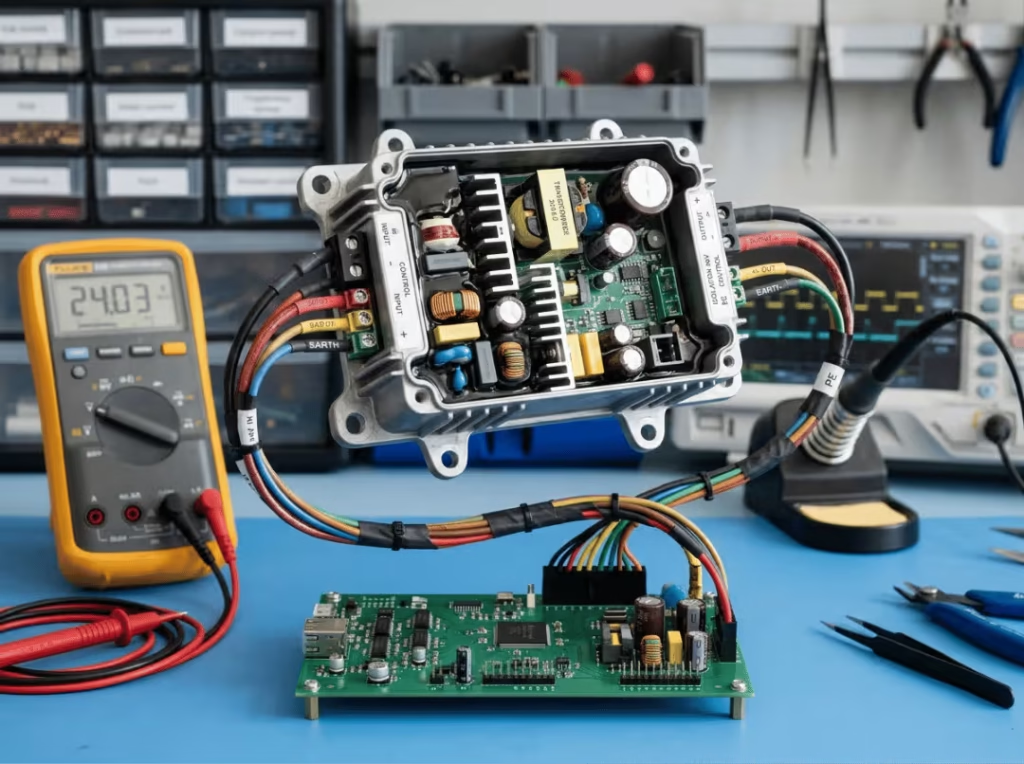
Here’s the part that catches people off guard: a floating output is rarely at zero volts to earth. Parasitic capacitance between the internal windings and the chassis, plus small leakage currents, couple the output to earth through high impedance. Measure a floating terminal against earth with a high-impedance meter, and you’ll often see tens or even hundreds of volts of AC. Switching supplies are worse because fast-switching edges drive more current through parasitic capacitances. The voltage is real, though it usually can’t source much current—cold comfort if it damages a sensitive input.
Where floating supplies are useful
Floating outputs shine wherever isolation matters. Battery systems and isolated DC-DC converters depend on it. Medical devices require that patient-connected circuits be kept separated from earth—a requirement codified in standards such as IEC 60601-1, where medical power supplies use reinforced isolation to strictly limit leakage current. Communications gear, distributed sensing, and any design that stacks supplies in series to build higher voltages all rely on the floating property.
Grounded vs Floating: Which Differences Actually Matter?
Reference point and system behavior
A grounded supply holds a fixed earth reference. A floating supply either drifts—settling wherever parasitics and leakage put it—or sits wherever your circuit defines its reference. Need a stable, known potential to earth? Grounded gives it to you for free. Need freedom to place the output anywhere? Floating gives you that instead.
Fault current and safety behavior
This is where misconceptions cause real harm. A grounded supply provides a defined fault path, so overcurrent protection can react to a fault to earth. A floating supply does not—and floating does not mean safe. Touch one terminal, and nothing may happen, because there’s no return path. But touch both terminals, or accidentally earth one terminal while touching the other, and you complete a circuit through your body. A floating high-voltage supply remains dangerous.
Noise and ground loops
Grounded systems are more prone to ground loops. When several earth-referenced devices connect through signal cables, small differences in their earth potentials drive circulating currents that surface as noise. Floating a supply breaks that loop, which is often why engineers reach for isolation in the first place. The trade-off: a floating section can accumulate common-mode noise, because its reference isn’t clamped to anything stable.
Measurement behavior with oscilloscopes and test gear
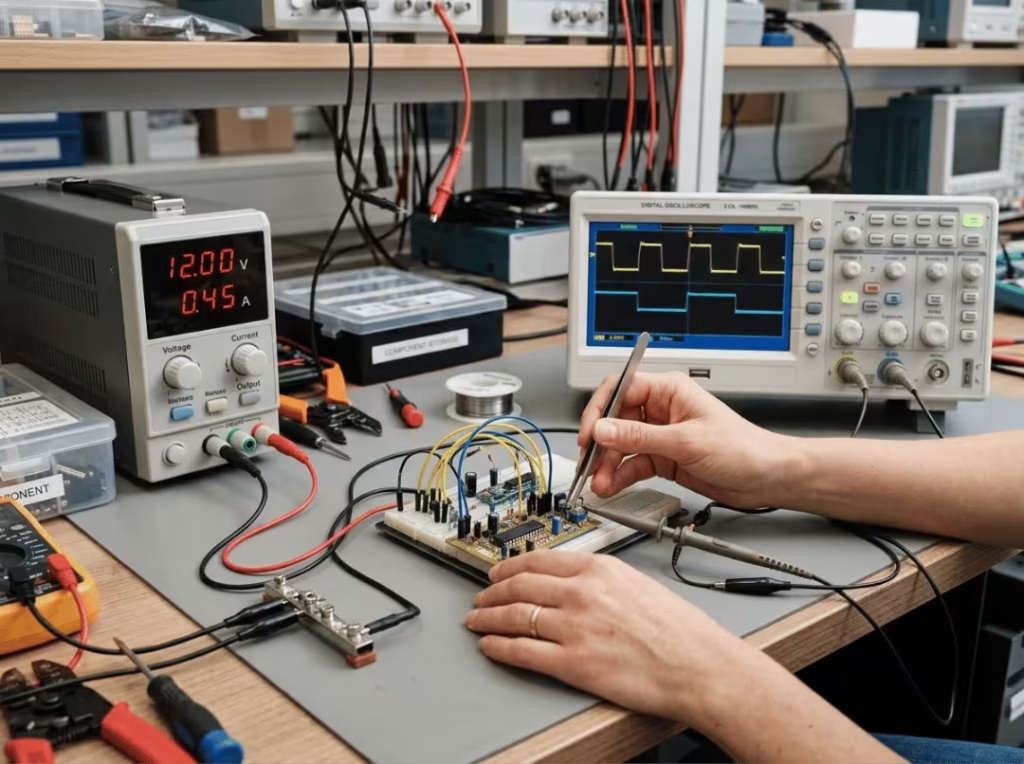
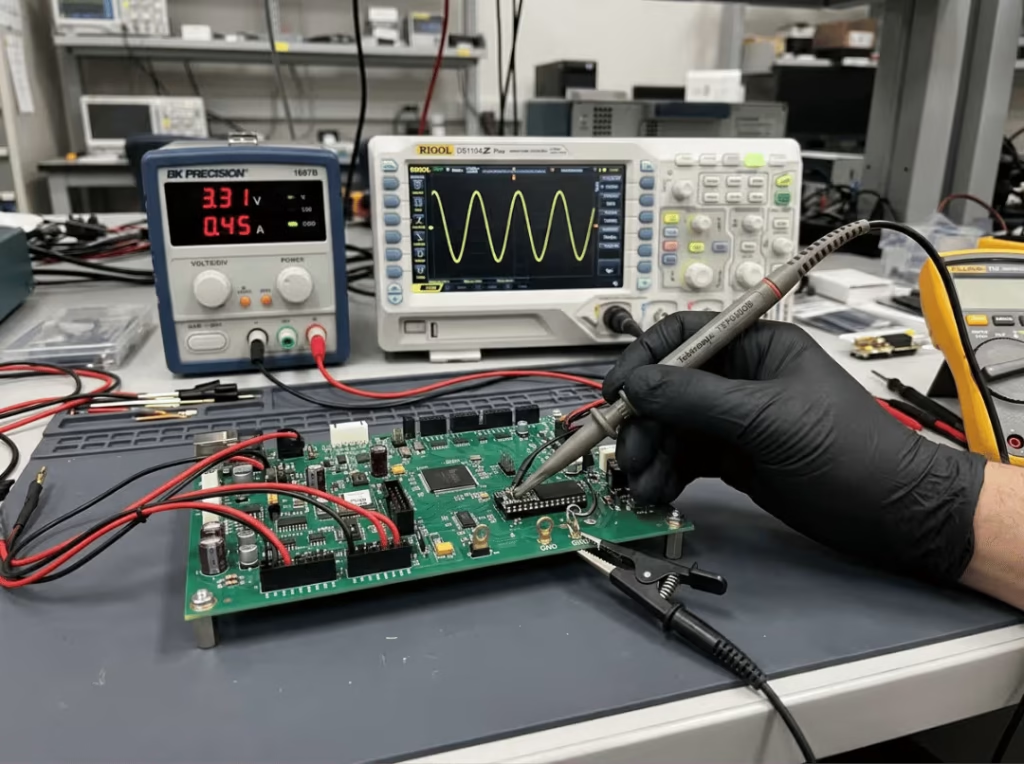
A standard oscilloscope ground clip is connected to earth through the mains plug. Clip it to a floating terminal and you instantly earth that terminal—collapsing the floating state and potentially forcing large currents through the clip, the probe, or your circuit. This is a classic way to destroy hardware. To measure across a floating node safely, use a differential probe or an oscilloscope with isolated channels. Never “float the scope” by defeating its earth pin; that puts the whole chassis at a dangerous potential.
Factor | Grounded supply | Floating supply |
|---|---|---|
Earth reference | Fixed (return bonded to earth) | Undefined until circuit sets it |
Fault current path | Clear path; protection trips | No inherent path; not auto-safe |
Ground loops | More prone | Breaks loops |
Common-mode noise | Lower | Can accumulate |
Scope ground clip | Safe to earth-referenced return | Earths the terminal; needs diff probe |
Series stacking | Not practical | Supported |
When Is a Grounded Supply Usually the Better Choice?
Reach for a grounded supply when your system already lives in an earth-referenced world. Good indicators:
- Your load or its enclosure is already tied to protective earth.
- You’re working inside a metal enclosure that must meet EMC and electrical-safety regulations.
- Multiple controllers, sensors, or I/O modules need to share one common reference.
- You want a stable, known reference to earth that simplifies debugging and measurement.
The main trade-off is ground-loop risk. Once several earth-referenced devices are interconnected via signal wiring, you may need to manage circulating currents with a careful grounding topology or isolation on the signal lines.
When Is a Floating Supply Usually the Better Choice?
Choose floating when isolation is the goal, or when a fixed earth reference would cause problems. Good indicators:
- A subsystem must be electrically isolated from the rest of the design.
- You’re chasing down ground loops and need to break the earth connection.
- Different nodes in your system sit at different common-mode potentials.
- You need to stack supply outputs in series to reach a higher total voltage.
- Your application is medical, communications, or distributed sensing, where isolation is a design requirement.
The trade-off is responsibility. With a floating supply, you must define the reference yourself. Leave it undefined, and the output can drift to an unexpected potential relative to earth.
How Do You Choose Between Grounded and Floating Supplies?
Start with the load
Begin by asking what the load already does with ground. Is the load itself tied to earth? Does its enclosure bond to protective earth? Does the signal chain connect to other grounded equipment—such as a scope, a DAQ, or a PC? If so, a grounded supply usually fits the existing reference without issue.
Check safety and compliance requirements first
Before optimizing for noise or convenience, confirm the rules. What does your protective-earth scheme require? What isolation class or safety standard applies to your product? Medical, industrial, and IT equipment each carry different grounding and isolation expectations. In regulated designs, the standard often dictates the answer before performance ever enters the discussion.
Think through noise and measurement
Next, consider how you’ll observe and operate the circuit. Will you probe it with a grounded oscilloscope? Do multiple ground-referenced devices connect through signal cables? Is the environment electrically noisy? These questions decide whether you’ll fight ground loops—favoring isolation—or whether a shared earth reference keeps things simple.
A practical decision path
Put it together into a quick sequence:
- Load already earth-referenced → use a grounded supply.
- Need subsystem isolation → use a floating supply.
- Need to stack outputs in series or break a ground loop → use a floating supply.
- Enclosure and safety compliance require a defined earth reference → use a grounded supply, or a floating supply bonded at a single point.
How Do You Safely Ground a Floating Supply When Needed?
Many floating supplies let you convert to grounded behavior by bonding one output terminal to earth at a single point. This is the standard technique, and single-point grounding is standard for good reason: it defines the reference without creating multiple earth paths that could carry circulating currents.
Before you do it, check two things in the datasheet. First, confirm the supply actually permits an output-to-earth connection—not every isolated output tolerates it. Second, check the isolation rating so you know the voltage the barrier can withstand. Bond at exactly one point. Multiple ground points defeat the purpose and reintroduce the ground loops you were trying to avoid.
What Are the Most Common Mistakes and Misconceptions?
Floating does not mean safe. A floating high-voltage output can still shock you if you bridge both terminals or earth one while touching the other. Isolation limits fault paths; it does not eliminate hazard.
Grounded does not mean noise-free. Grounding fixes the reference, but it also opens the door to ground loops when multiple earth-referenced devices interconnect. A grounded supply can be noisier in the wrong topology.
Floating does not mean zero volts to earth. Parasitic capacitance and leakage couple a floating output to earth. Measure it, and you may find substantial AC voltage, particularly with switching designs.
Not every isolated output can be grounded arbitrarily. Some isolated outputs are rated for grounding at one terminal; others are not. Always verify the datasheet’s isolation rating and grounding guidance before bonding anything to earth.
Frequently Asked Questions
What is the difference between earth ground, chassis ground, and signal ground?
Earth ground is the physical connection to the building’s protective earth through the mains system. Chassis ground is the metal enclosure of a device, often bonded to earth for safety. Signal ground is the reference node your circuit measures voltages against. They’re frequently connected, but not always—and treating them as identical is a common source of noise and safety errors.
Is a floating power supply safe to touch?
Not inherently. A floating supply removes the guaranteed fault path to earth, but touching both terminals completes a circuit through your body. At low voltages, the risk is small; at higher voltages, a floating output remains dangerous. Never assume “floating” means “harmless.”
Can I ground a floating power supply?
Often, yes. Many floating supplies allow you to bond one output terminal to earth at a single point, converting them to grounded behavior. Check the datasheet first to confirm the output permits earthing and to verify the isolation rating before wiring it.
Are all benchtop power supplies floating?
No. Many bench supplies are floating by default so you can define the reference yourself, but plenty are earth-referenced. Some offer a rear ground terminal so you can bond the output to earth when you want. Always confirm your specific model rather than assuming.
Can I connect two floating power supplies in series?
Yes—series stacking is one of the main reasons floating supplies exist. Because neither output is tied to earth, you can connect them in series to build a higher total voltage. Confirm each supply’s isolation rating is high enough for the combined voltage relative to earth.
Why does an oscilloscope ground clip change a floating measurement?
The scope’s ground clip is connected to earth through its mains plug. Clipping it to a floating terminal instantly earths that terminal, collapsing the floating state and possibly forcing damaging current through the clip. Use a differential probe or isolated-channel scope to measure floating nodes safely.
How do I tell whether an output is grounded or floating?
Check the datasheet for an earth symbol on the output and for an isolation rating. Before wiring, measure the output-to-earth voltage with a high-impedance meter: a grounded return reads near zero, while a floating output often shows a drifting AC voltage. That quick measurement confirms what the paperwork tells you.
Making the Right Call for Your Design
The distinction is easy to state and easy to get wrong: a grounded supply fixes the output return to earth, while a floating supply defines only the voltage between its terminals. The right choice depends on more than the definition. It hinges on whether your load is already earth-referenced, what safety and isolation standards apply, how noise moves through your system, and how you plan to measure it.
Two habits will save you grief. Check the datasheet for the earth symbol and the isolation rating before you wire anything. Then measure the output-to-earth voltage with a high-impedance meter before connecting a grounded instrument. If you’re specifying supplies for a regulated product—medical, industrial, or IT—matching the grounding scheme to the standard early prevents costly redesigns later. Explore the full product range to match a supply’s isolation and grounding characteristics to your application.