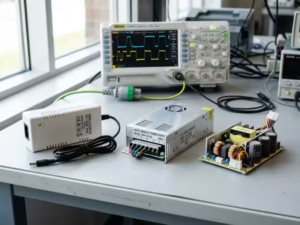
A device that randomly reboots. A sensor whose readings drift for no clear reason. An audio system with a faint hum you can’t track down. In many of these cases, the part everyone blames last is actually the cause: the power supply.
Power isn’t just “on or off.” Real-world power sags, spikes, and carries noise. Mains voltage dips when a nearby motor kicks in. A circuit pulls more current the moment it wakes up. Left unmanaged, these swings degrade performance, shorten component life, and cause intermittent faults that waste hours of troubleshooting.
A regulated power supply exists to absorb those swings so your electronics don’t have to. This guide covers what it does, when you genuinely need one, how linear and switching designs differ, which specs actually matter, and how to pick the right unit for your application.
What Is a Regulated Power Supply?
A regulated power supply holds its output voltage (or current) steady within a defined tolerance, even when the input power fluctuates or the connected load changes.
That last part is the whole point. An unregulated supply is essentially a transformer, rectifier, and filter capacitor. Its output follows whatever the input and load are doing:
- Draw more current, and the voltage sags.
- Draw less, and the voltage climbs higher than its nominal rating.
- Ripple and fluctuation ride along on the output because nothing is actively correcting them.
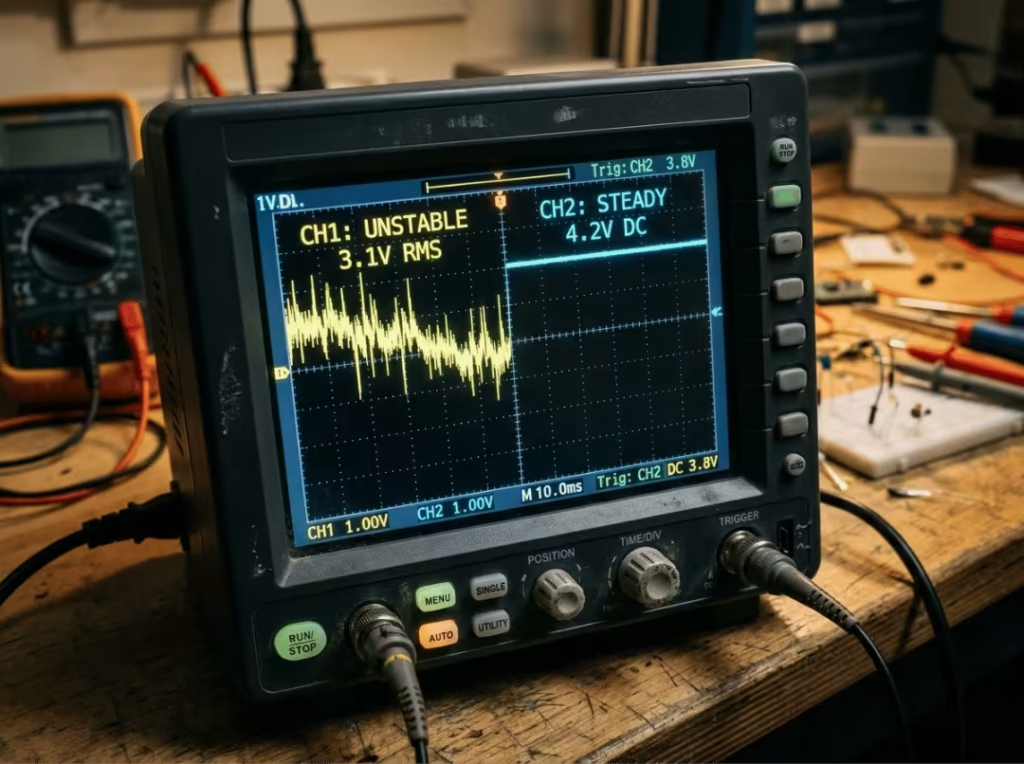
A regulated supply adds a control loop that constantly measures the output and adjusts internally to keep it on target. Plug in a 12V regulated supply, and it delivers 12V whether your device is idling or running hard.
The practical rule is simple: if your device cares about voltage stability, low noise, or reliable operation, you want a regulated supply. If it’s a rugged, forgiving load — a basic heater, some incandescent lighting, a simple motor — an unregulated supply may be perfectly fine.
When Do You Actually Need One?
Not every load justifies the cost and complexity of regulation. These three categories almost always do.
Sensitive electronics
Anything with precise logic thresholds or low-level analog signals needs clean, stable power:
- Microcontrollers and embedded boards
- Communication and RF modules
- Sensors and measurement front-ends
- Audio preamps, DACs, and analog signal chains
For these, a few hundred millivolts of droop or noise isn’t cosmetic. It can flip a logic state, corrupt a sensor reading, or add audible hiss.
Loads with changing current demand
Some devices swing between low and high current draw in milliseconds:
- Motor control boards
- Wireless modules during transmit bursts
- LED systems that dim and brighten
- Embedded systems at startup
If the supply can’t hold voltage during those jumps, you get brownouts, resets, and glitches that only appear “sometimes” — the hardest kind to chase down.
Systems that must be predictable and repeatable
When consistency is the requirement, regulation is non-negotiable:
- Industrial control and automation
- Lab test and measurement setups
- Medical and monitoring equipment
- Product development and validation
In these environments, an output that drifts with room temperature or line conditions undermines the entire result.
How a Regulated Power Supply Keeps Output Stable
You don’t need to trace every transistor to choose well. What matters is understanding the four jobs a good regulated supply performs.
It compensates for input voltage changes. When the mains voltage dips or surges, the control loop adjusts to keep the output steady. This is what keeps your gear alive through a rough power environment.
It responds to load changes. When your device suddenly demands more current, the supply must ramp up fast enough to prevent the voltage from collapsing. A slow response is exactly what causes an MCU to reset the instant its radio transmits.
It suppresses ripple and electrical noise. The output isn’t a perfectly flat DC line — there’s always some residual AC riding on it. A quality supply keeps that small. For analog, RF, and measurement systems, this often matters more than any other spec.
It protects both itself and the load. Current limiting, overvoltage, overtemperature, and short-circuit protection prevent a fault from cascading into hardware damage.
Linear vs. Switching: Which One Should You Choose?
Most people searching for a regulated supply are really comparing these two families. Here’s how to tell them apart and pick.
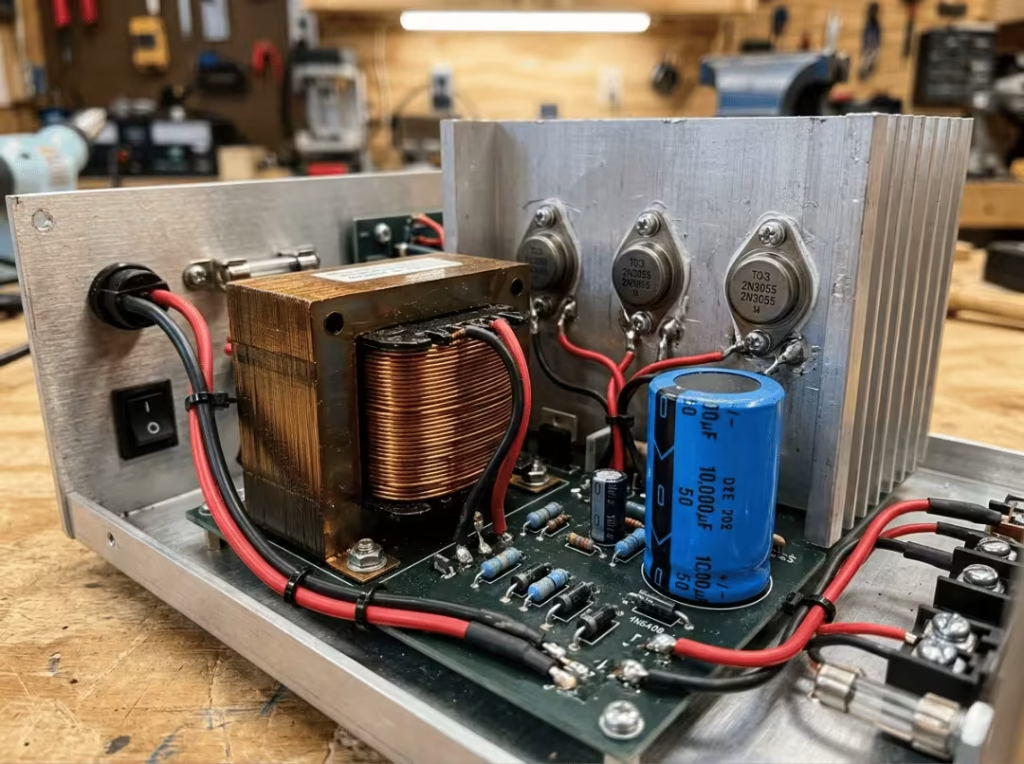
Linear regulated supplies
A linear regulator dissipates excess voltage as heat through a pass element. Simple, but that heat is the trade-off.
Strengths: very low noise, very low ripple, fast and clean transient response. Ideal for sensitive analog work.
Weaknesses: low efficiency, significant heat, bulky and heavy (due to larger transformers and heatsinks).
Best fit: audio front-ends, precision instruments, lab reference setups, and any analog system with near-zero noise tolerance.
Switching regulated supplies
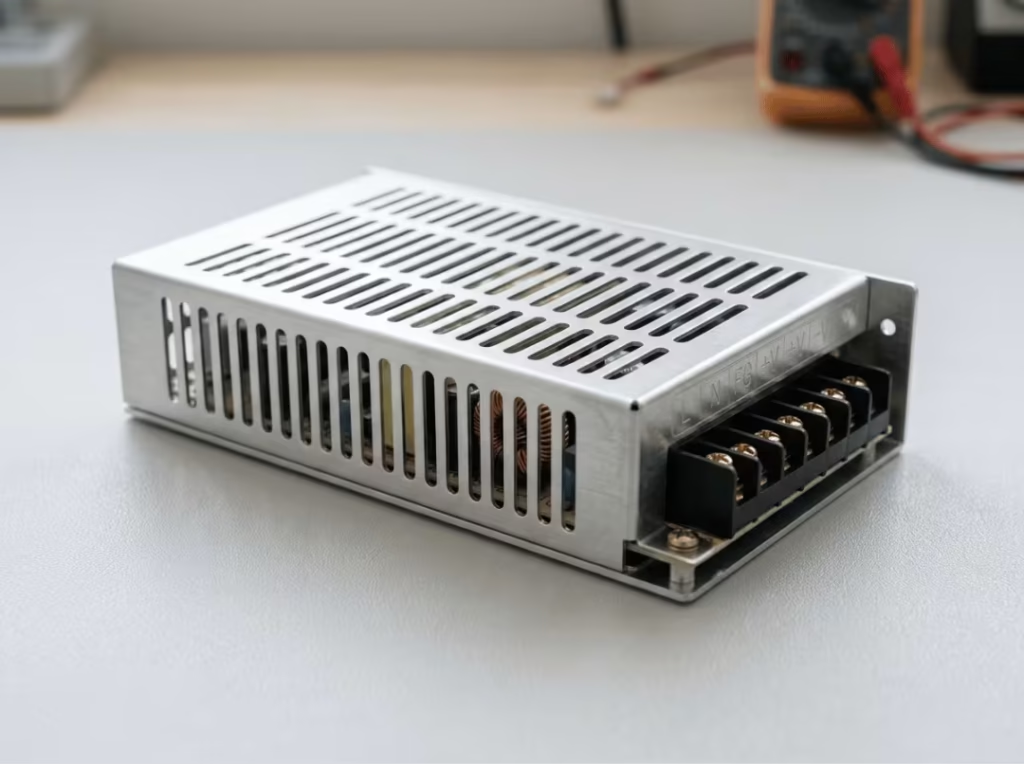
A switching supply rapidly switches power on and off at high frequency, then stores and releases energy through inductors and capacitors to produce a stable output. This is how nearly all modern electronics are powered.
Strengths: high efficiency (often 85–95%), compact, lightweight, wide input voltage range.
Weaknesses: switching noise and ripple, and the need for greater attention to EMI management.
Best fit: consumer electronics, industrial equipment, battery chargers, and the vast majority of digital systems.
A comparison at a glance
Factor | Linear | Switching |
|---|---|---|
Efficiency | ~30–60% | ~80–95% |
Ripple & noise | Very low | Measurable; needs management |
Size & weight | Large, heavy | Compact, light |
Heat output | High | Low |
Input range | Narrow | Wide |
Typical cost to ship | Higher (heavy) | Lower |
The practical rule
- Prioritizing low noise and precision? Start with linear.
- Prioritizing efficiency, size, cost, and versatility? Start with switching.
- Building a mixed-signal system? It’s usually not either/or. Use a switching supply for the bulk of the work, then add post-regulation or filtering for the sensitive analog rails.
That last point saves a lot of grief. You don’t have to choose one philosophy for the whole board.
The Most Important Specs to Check
A datasheet lists dozens of numbers. These are the ones that actually drive your decision.
Output voltage and current
Confirm the voltage matches your device, and decide whether you need a fixed or adjustable output. Then focus on current — and here’s where people slip up:
- Size for continuous (steady-state) current, not just peak.
- Account for inrush current at startup, which can briefly exceed running current by a wide margin.
- Leave 20–30% headroom on current. A supply that runs constantly at its limit gets hot and ages faster.
Ripple and noise
Usually specified in millivolts peak-to-peak (mVpp). This is one of the most under-appreciated specs.
Why it matters in practice:
- Analog systems pick it up directly as noise.
- Sensor readings drift and jitter.
- Audio gains a noticeable noise floor.
- Some digital systems throw intermittent errors when ripple gets high.
For a rugged digital load, moderate ripple may be irrelevant. For a 16-bit ADC or a phono preamp, it’s decisive.
Line regulation and load regulation
These two numbers tell you how tightly the output holds:
- Line regulation — how much the output shifts when the input voltage changes.
- Load regulation — how much the output shifts when the load current changes.
A spec like “0.05% load regulation” means the output barely moves across the full load range. If your load current varies a lot, weight load regulation heavily. If your input environment is unstable, prioritize line regulation.
Protection features
For anything that runs unattended or lives inside a larger system, protection ranks alongside the core ratings:
- Overvoltage protection (OVP) — shields the load from a supply fault.
- Overcurrent protection (OCP) — limits current during overload.
- Overtemperature protection (OTP) — shuts down before heat causes damage.
- Short-circuit protection — survives an accidental short without failing.
Transient response
This is how fast the supply recovers when the load suddenly jumps. It’s closer to real operating conditions than any static number, and it’s the spec that determines whether:
- A microcontroller survives its radio’s transmit burst
- A motor driver holds voltage under a load spike
- An RF module stays stable during peak draw
If your load is bursty, transient response deserves as much attention as the voltage and current ratings.
Choosing by Application
Specs mean more when tied to a real use case. Here’s how the priorities shift.
Microcontrollers and digital electronics
A switching supply is usually the right call. Watch:
- Output stability under normal operation
- Transient response for wake-up and transmit bursts
- Ripple within the device’s acceptable range
- Startup current headroom
If the board carries a sensitive ADC or RF section, add local filtering or a small secondary regulator on those rails rather than upgrading the whole supply.
Audio and sensitive analog circuits
Here, low ripple and low noise dominate. Linear regulation is common for preamps and DACs, but it isn’t automatic. A well-designed switching supply can work if you address noise, shielding, and post-filtering. The real question isn’t “which is more premium” — it’s whether the noise is low enough that you can’t measure or hear it in your specific circuit.
Industrial automation and control cabinets
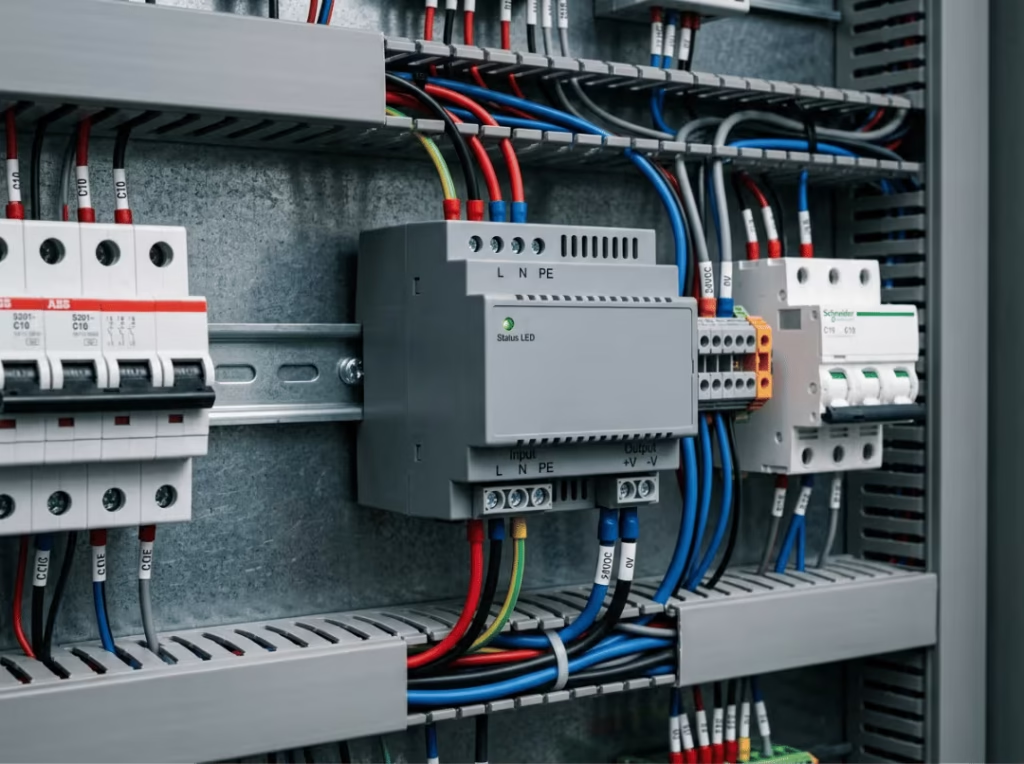
Switching supplies on DIN-rail mounts dominate factory floors for good reason. Prioritize:
- Wide input range to ride out unstable plant power
- Temperature tolerance for hot enclosures
- Strong protection features for continuous duty
- Long-term reliability
Where heavy machinery generates interference, EMI handling and clean grounding matter as much as the supply itself.
Lab testing and prototyping
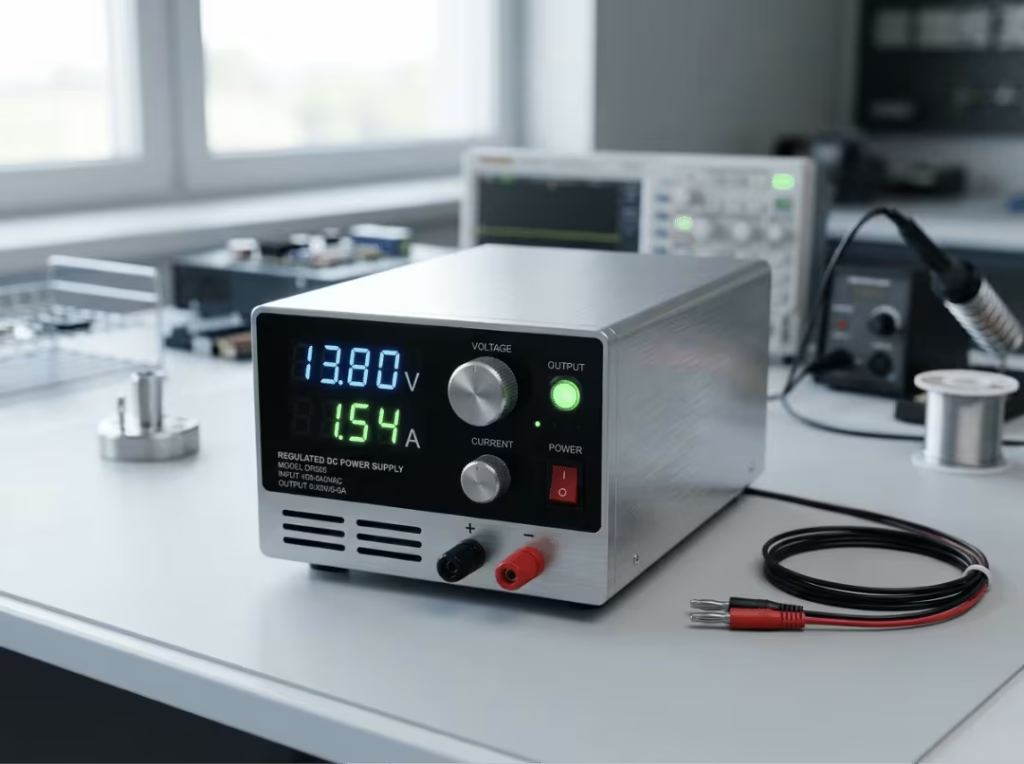
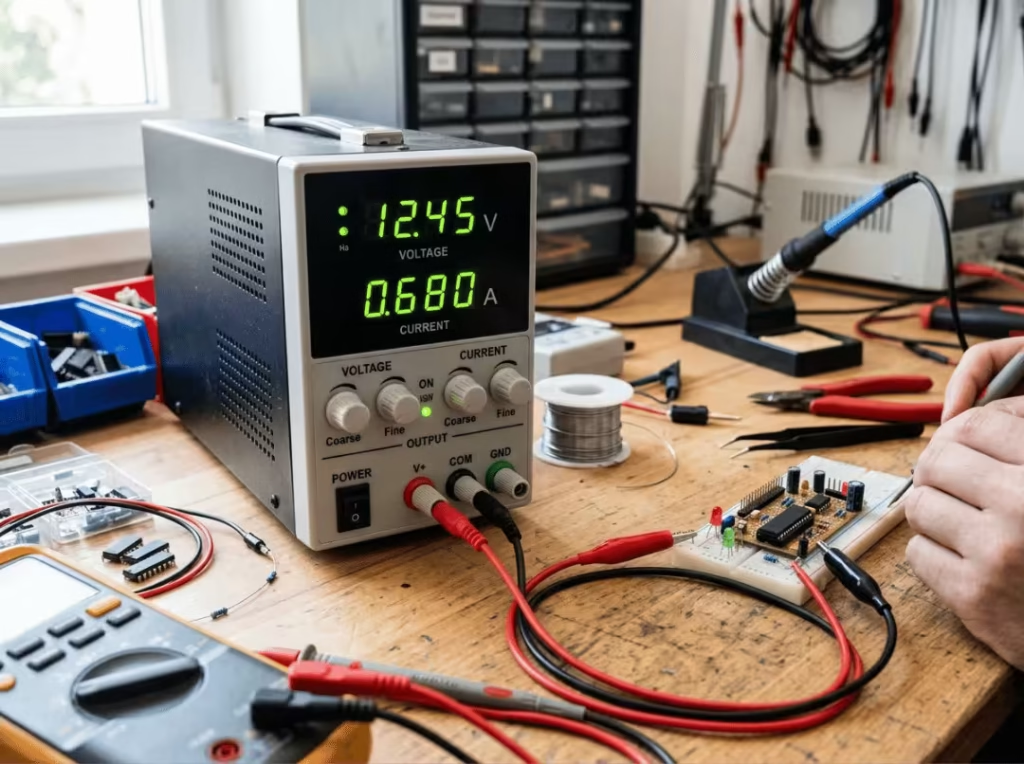
A bench supply needs both constant-voltage and constant-current modes, plus adjustable output, accurate readouts, and a dependable current limit. Wattage alone tells you nothing here. The ability to set a current limit and protect a prototype from your own wiring mistake is often the most valuable feature on the unit.
Battery charging and power management
Regulated supplies play a specific role in charging: delivering constant current to bring a battery up, then switching to constant voltage as it approaches full. That said, a general-purpose regulated supply isn’t automatically a safe charger. Proper charging often needs dedicated charge management, especially for lithium chemistries. Use the supply as the power source, but don’t assume it replaces a real charging circuit.
Common Mistakes to Avoid
- Sizing by voltage only, ignoring current behavior. The voltage may match perfectly while the supply still can’t handle the load’s current swings.
- Looking at maximum wattage, not inrush or transients. A supply rated well above average draw can still stumble on startup surge.
- Assuming more wattage is always safer. A higher-current supply won’t force extra current into a device, but oversizing wastes money and can worsen light-load performance on some designs.
- Overlooking ripple and noise. Fine for a heater, potentially ruinous for analog or RF.
- Using one standard across all scenarios. Lab, industrial, and audio needs are genuinely different. A great industrial supply can be a poor audio supply.
- Ignoring cooling and mounting. Heat and airflow decide long-term reliability as much as the ratings do.
- Believing the stereotypes. Switching isn’t automatically unfit for audio, and linear isn’t automatically “better.” Judge by the actual specs and your actual load.
Troubleshooting: When the Power Supply May Be the Problem
Before you replace hardware, use these symptoms to narrow things down.
Output voltage reads low. Likely an overload pulling the supply into current limit, an input voltage that’s out of spec, or a degraded pass element or switching stage. Start by reducing the load and re-measuring.
Ripple or noise seems too high. Check whether the supply is running near full load, inspect the output capacitors for age or damage, and look for ground loops or poor wiring layout on the output side.
The supply shuts down intermittently. Common causes include thermal protection tripping due to poor ventilation, marginal input voltage triggering an undervoltage lockout, or loose output terminals creating an unstable connection.
The pattern is usually load, input, or connection — check those before assuming the unit is dead.
Frequently Asked Questions
What’s the difference between a regulated and unregulated power supply?
A regulated supply actively holds its output steady when input or load changes. An unregulated supply lets the output sag under load and rise when the load drops, with more ripple along the way.
Is a switching power supply good enough for sensitive electronics?
Often, yes — most modern electronics run on switching supplies. For very noise-sensitive analog or audio work, either choose a low-noise design with good shielding and filtering, or add post-regulation on the sensitive rails.
How much current headroom should I leave?
Around 20–30% above your continuous draw. That keeps the supply cool, covers transients and inrush, and extends its life.
What matters more: wattage, ripple, or regulation?
It depends on the load. Digital gear cares most about current capability and transient response. Analog and RF care most about ripple and noise. Wattage alone rarely tells the full story.
Can I safely use a higher-current regulated supply?
Generally yes. A device only draws the current it needs, so a supply with a higher current rating (at the correct voltage) is safe. Just match the voltage exactly.
What’s the difference between constant voltage and constant current?
In constant-voltage mode, the supply maintains a fixed voltage and allows current to vary with the load. In constant-current mode, it holds the current fixed and lets the voltage vary — useful for charging and protecting delicate loads.
Can two regulated supplies be connected in series or parallel?
Sometimes, but not blindly. Series connection can raise total voltage; parallel can raise available current. Both require supplies designed or configured for it, otherwise you risk uneven sharing or damage. Check the manufacturer’s guidance first.
Conclusion
A regulated power supply isn’t about being “higher-end.” Its value is a controlled, predictable output that matches the real behavior of your load — something an unregulated supply simply can’t guarantee.
When you’re choosing one, look past voltage and wattage. The decision really comes down to five things:
- The load’s actual current behavior, including inrush and transients
- How sensitive it is to noise and ripple
- The quality and stability of your input power
- The protection your system needs to run safely
- Where and how the unit will be mounted and cooled
If you’re not sure where to start, answer one question first: does your device care more about low noise or more about efficiency and size? That single choice narrows the field between linear and switching immediately — and from there, the specs tell you the rest.