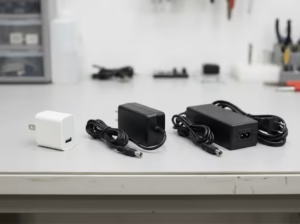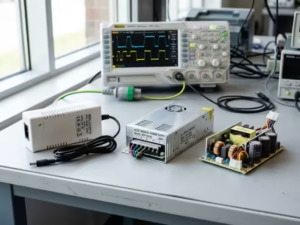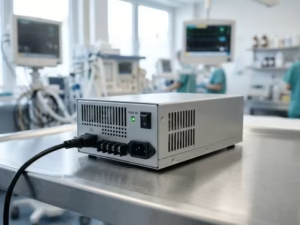
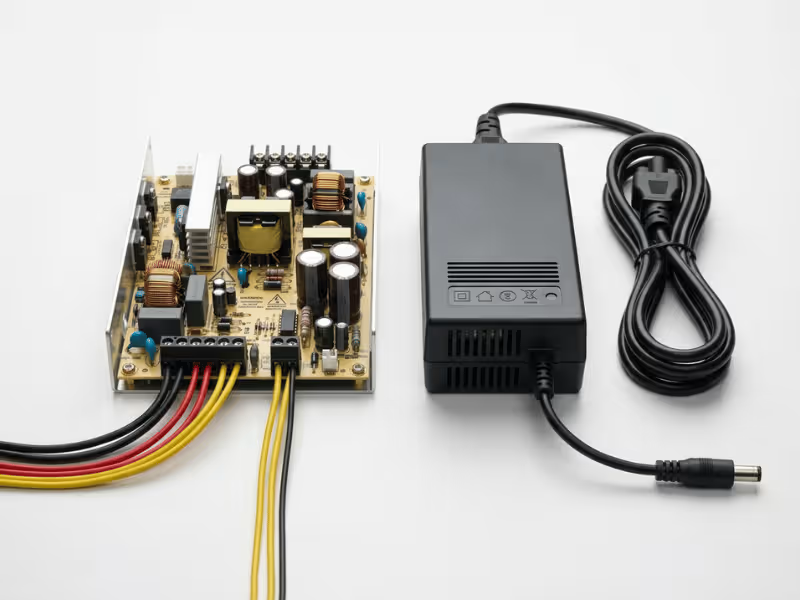
Choosing between an internal power supply and an external switching adapter is one of the earliest decisions in a product design, and one of the most consequential. It shapes your enclosure, your thermal budget, your certification path, and how easily the unit gets serviced in the field. Neither option is universally better. An internal PSU can deliver tighter mechanical integration and a cleaner form factor, while an external adapter can simplify compliance, shift heat outside the product, and speed up field replacement.
This guide is written for sourcing managers, hardware and power engineers, product managers, and OEM/ODM buyers who need a defensible answer, not a textbook definition. Below, we compare the two approaches across engineering, certification, cost, and application fit, then give you a selection framework you can apply directly. As a manufacturer of AC-DC adapters and battery chargers, Quankang sees this trade-off resolved across industrial, medical, and electronics programs every week.
Quick Answer: When Internal PSUs Win and When External Adapters Win
Lean toward an internal power supply when the product needs a single sealed unit, a clean external appearance, or tighter mechanical integration, and when you can manage the added heat and certification scope inside the enclosure. Internal designs often suit higher-power, fixed-install equipment where a dangling adapter is impractical.
Lean toward an external adapter when you want faster time to market, a narrower end-product safety scope, easier thermal management, and quick field replacement. External adapters also give you global SKU flexibility, since you can swap input cords or plug types per region without redesigning the product.
The decision rarely comes down to preference. It comes down to power level, heat tolerance inside the housing, certification strategy, serviceability expectations, and how the product ships and deploys across regions. Teams that skip this analysis often pay for it later in redesign cycles or field returns.
Bottom line: Internal tends to favor integration and form factor; external tends to favor speed, serviceability, and a lighter certification burden. Match the choice to your system constraints, not to habit.
Side-by-Side Comparison: Internal vs. External Power Supplies
The table below maps the core trade-offs to their operational consequences. Read each row as a decision driver, not a label.
Factor | Internal Power Supply | External Adapter | Why It Matters |
|---|---|---|---|
Enclosure impact | Consumes internal volume; drives layout and spacing | Frees internal space; smaller end-product housing | Determines board area, component spacing, and overall product size |
Thermal management | Adds heat inside the enclosure; needs airflow planning | Shifts most conversion heat outside the main housing | Directly affects component life and derating decisions |
EMC/EMI burden | Higher; mains switching noise sits inside the device | Often lower; adapter is pre-shielded and separately tested | Influences shielding cost and time spent passing emissions testing |
Certification scope | Whole product typically needs mains-level safety approval | Adapter carries its own approvals; can narrow end-product scope | Impacts test cost, documentation, and approval timeline |
Maintenance | Requires opening the unit; slower field service | Swap in seconds; no enclosure access needed | Drives warranty cost and field downtime |
Cabling | Cleaner single-cord look | Extra brick and cord to manage | Affects user experience and installation aesthetics |
Power range | Scales well for higher wattage in many designs | Best for low-to-mid power; less practical at high wattage | Sets a practical limit on form factor and heat handling |
Ruggedness/sealing | Easier to reach high IP ratings in one housing | Cord entry and adapter add sealing challenges | Critical for outdoor and washdown environments |
BOM/system cost | Lower part count, but higher compliance and tooling cost | Higher unit cost, but lower certification and rework cost | Shifts where cost lands across the lifecycle |
Global deployment | Requires wide-input design or regional variants | Change cord or adapter per region, no product redesign | Simplifies multi-market logistics and stocking |
No single column wins outright. Internal reduces clutter and scales power; external reduces certification scope, thermal load, and service time. The right answer depends on which of these constraints dominates your program.
What Actually Changes at the Product Level
Once you pick a power strategy, the downstream design consequences ripple through the entire product. Understanding those consequences early prevents expensive rework.
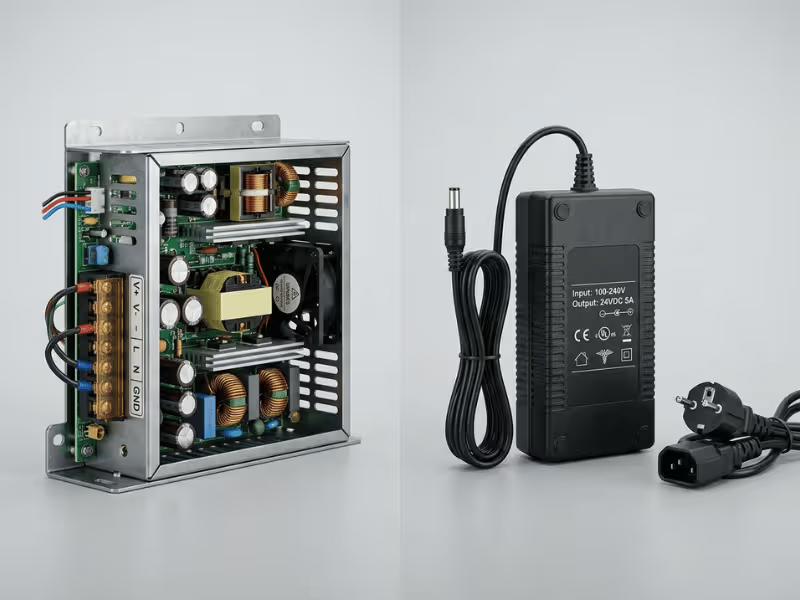
An internal PSU claims volume inside the housing, which forces decisions on component placement, creepage and clearance distances, and airflow routing. You need an insulation barrier between mains and low-voltage sections, and you often add vents or a fan, which then affects your ingress protection rating. Weight goes up, and every service call means opening a live-mains enclosure, so service design must account for safety.
An external adapter shifts most of that complexity out of the product. Your connector strategy becomes the focus instead: barrel jack versus locking connector, cable strain relief, and how the input port survives repeated plug cycles. The end product gets lighter and smaller, and technicians can replace a failed adapter without opening the unit.
Power architecture also drives manufacturing complexity. Internal designs add high-voltage assembly steps and safety testing to your line, while external designs let you buy a certified adapter and keep your own assembly low-voltage. That single distinction often changes your factory tooling, test fixtures, and operator training requirements.
Thermal, Safety, and EMC Trade-Offs That Drive the Decision
For most engineering teams, thermal, safety, and EMC realities decide the outcome, so treat this section as the technical core.
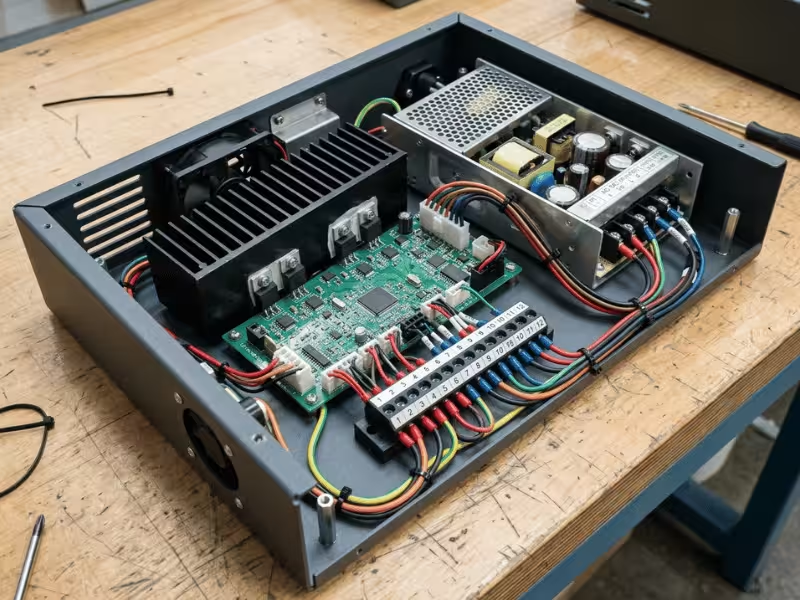
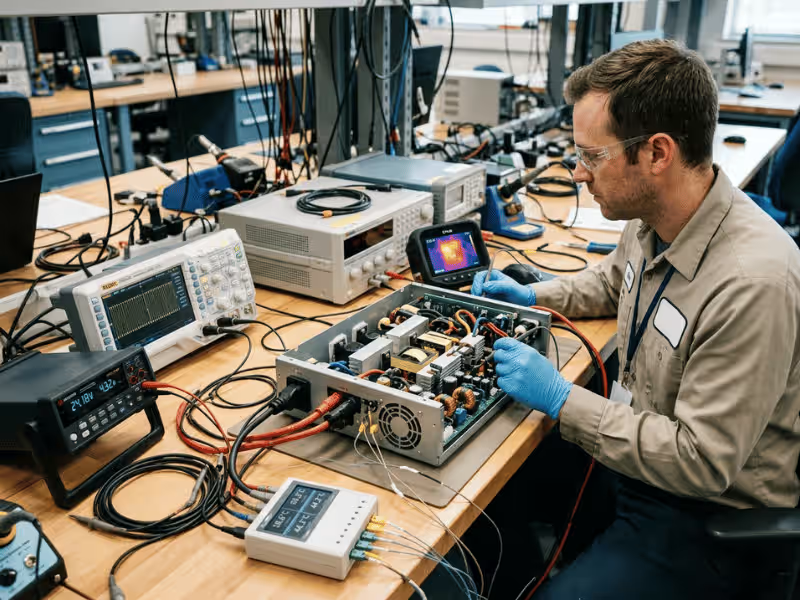
Heat is the first fault line. An internal PSU dissipates its losses inside the same enclosure that holds your sensitive electronics. A typical switching supply runs at roughly 85–92% efficiency, so a 100W internal unit may dump on the order of 8–18W of heat into the housing, depending on load and design. That raises ambient temperature around processors and capacitors, shortening component life unless you add airflow, heatsinking, or derating. An external adapter exports most of that heat, which can significantly ease your internal thermal budget.
Certification scope is the second. When mains voltage enters the product, the end device typically falls under mains-level safety standards such as IEC 62368-1, or IEC 60601-1 for medical equipment. That broadens your test scope, documentation, and approval timeline, though the exact pathway depends on end-use category, market, and system architecture. An external adapter usually arrives pre-certified, so your end product often qualifies under lower-voltage requirements, which can shorten the compliance path and reduce test cost.
EMI is the third. Internal switching converters inject switching noise directly inside your enclosure, so you carry more of the burden of shielding, filtering, grounding, and layout discipline to pass conducted and radiated emissions. An external adapter is tested and shielded on its own, reducing the EMC risk you inherit. For sealed or high-IP designs, internal supplies can also complicate insulation spacing, since you must maintain creepage distances in a confined, sometimes potted, space.
Use-Case Fit: Matching the Strategy to Real Decisions
Application context usually breaks the tie, so match the power strategy to how the product is built, certified, and serviced. The scenarios below show how the choice plays out in practice.
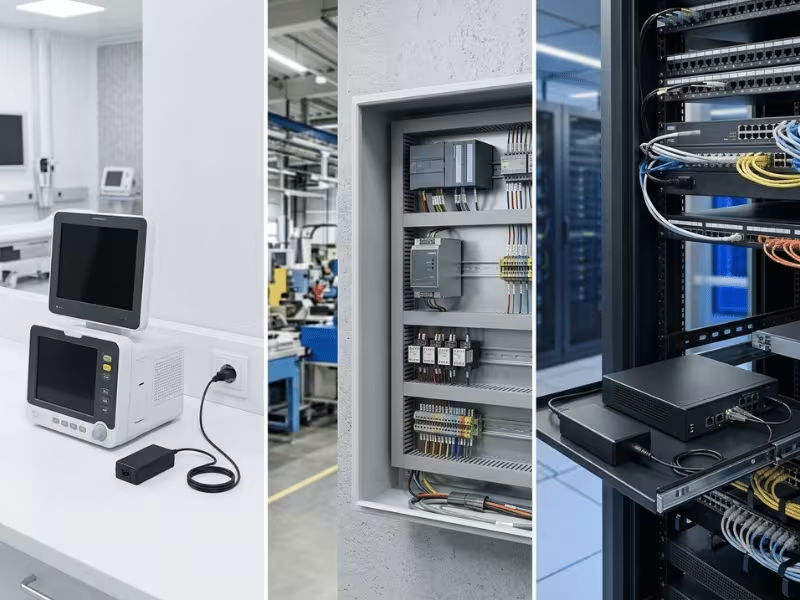
A desktop diagnostic device targeting North America and the EU, launching in small volumes on a tight timeline. An external medical-grade adapter often wins here, because it can simplify the isolation and leakage-current picture and narrow the end-product approval scope. Pairing the device with a certified medical power supply shortens the compliance path when speed to market matters. Internal supplies tend to appear in larger fixed medical equipment where isolation is engineered in from the start.
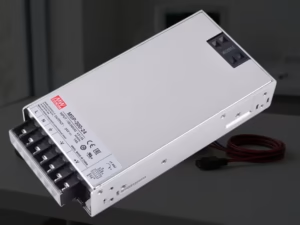
A DIN-rail industrial controller running 24/7 inside a sealed metal cabinet, serviced by trained technicians. An internal PSU is often preferred, because integration and dust or moisture sealing outweigh the convenience of a swappable brick, and infrequent service by qualified staff offsets the harder maintenance. An enclosed ITE power supply rated for the cabinet’s thermal profile suits this profile well.
Networking gear shipped worldwide, where operators want slim devices and standardized spares. External adapters fit routers, switches, and access points, since they keep the device cool, keep the housing thin, and let field teams standardize replacements across a fleet without opening hardware.
A sealed outdoor fixture that must hold a high IP rating. Integrating the power stage internally can make ingress protection easier to manage, because every cable entry point is a sealing risk. If an external adapter is used, the connector and cord entry must be engineered to the same ingress standard.
An OEM product line sold across multiple regions from a single core design. External adapters are attractive here. Swap the input cord or plug per region and skip a wide-input internal redesign, keeping one core SKU across markets.
Smart control features add another layer. Dimming, sensors, and remote management can be integrated with either approach, but internal designs must budget for the extra board area and heat, while external designs keep those functions cleanly separated from the mains stage.
Cost Beyond BOM: Total Ownership Trade-Offs
Unit price is the wrong lens, so evaluate cost across the full lifecycle before deciding.
An external adapter usually carries a higher per-unit cost, but it can remove cost elsewhere. Its self-contained certification narrows your end-product test scope, which may save weeks of lab time and meaningful approval fees. It can also cut assembly cost, because your line stays low-voltage, and it reduces service cost, since a field swap takes seconds instead of a bench repair.
An internal PSU lowers part count and eliminates the external brick, which looks cheaper on paper. But it typically adds mains-level certification, high-voltage tooling and test fixtures, and safety documentation. Field failures mean opening the enclosure, so warranty and downtime costs can climb, especially for equipment that must stay in service.
Logistics matters too. A single product with regional cords ships and stocks more simply than multiple internal variants tuned to regional mains. When you tally certification, tooling, replacement, warranty, and logistics, the “cheaper” option often flips. Score total cost of ownership, not the BOM line alone.
Common Selection Pitfalls
Even experienced teams stumble on the same traps. Watch for these before you commit.
- Treating adapter unit price as the only cost. Certification, assembly, service, and logistics savings often outweigh the higher sticker price of an external unit.
- Underestimating internal thermal rise. A supply that passes on the bench can shorten capacitor life once it sits inside a warm, enclosed housing.
- Assuming certifications transfer automatically. A certified adapter narrows scope but does not eliminate your end-product testing obligations.
- Ignoring connector durability. External designs live or die on the input port; repeated plug cycles and strain relief deserve real engineering.
- Forgetting regional deployment early. Choosing internal without planning input range can force costly regional variants later.
Summary: Most late-stage redesigns trace back to cost tunnel vision, thermal optimism, or skipping regional planning. Address these upfront.
A Practical Selection Framework for OEM and Product Teams
Use this checklist to reach a defensible decision quickly. Weight the factors that matter most to your program.
Lean toward an internal power supply when:
- Power demand is high (often around 100W and up) where an external brick becomes bulky
- The product is fixed-install and a clean, single-unit form factor matters
- You need a high IP rating and want to avoid extra cable entry points
- You can absorb the added heat, EMC work, and mains-level certification scope
- Field service is infrequent or performed by trained technicians
Lean toward an external adapter when:
- Power demand is low to mid-range and thermal headroom inside the housing is tight
- You want a faster, narrower certification path for the end product
- The product ships globally and needs regional plug or cord flexibility
- Fast field replacement and minimal downtime are priorities
- You want to keep assembly and testing at low voltage
If several drivers point in opposite directions, let certification timeline and thermal budget cast the deciding votes. Those two constraints are the hardest and most expensive to fix late in development. Where standard parts don’t fit, custom power adapters can align output, connector, and input configuration to your exact application.

Where Quankang Adds Value
Quankang designs and manufactures both external AC-DC adapters and internal switching power supplies, along with battery chargers, on an OEM/ODM basis, with solutions spanning roughly 5W to 500W. That range lets us match the power strategy to your product instead of pushing a single format.
Our engineering support covers output specification, safety and certification alignment (including IEC 62368-1 for ITE and IEC 60601-1 for medical equipment), thermal and EMC considerations, and enclosure or connector constraints. For buyers deploying across regions, we help structure input and cord or plug options so one core design can serve North America, the EU, the UK, Australia, and other markets. The goal is a power solution engineered to your application environment and compliance targets, not a generic catalog part that forces compromises on your end product.
FAQ: Internal vs. External Power Supplies
What is the difference between an internal power supply and an external adapter?
An internal power supply sits inside the product housing and converts AC mains to DC on board, while an external adapter converts power in a separate enclosure and feeds low-voltage DC through a cable. Internal favors integration and sealing; external favors serviceability and a narrower certification scope.
Is an external power adapter more efficient than an internal PSU?
Efficiency depends on the specific design, not the format. Both typically run around 85–92% efficiency. The practical difference is where the heat goes: an external adapter exports most losses outside the product, protecting temperature-sensitive components inside the housing.
Which is easier to certify for UL, CE, or IEC standards?
An external adapter usually is, because it carries its own approvals and lets your end product qualify under lower-voltage requirements. That can narrow test scope and shorten timelines, though your device still needs its own testing appropriate to its category and market.
When is an internal PSU better for industrial equipment?
Internal supplies often suit fixed-install, higher-power industrial gear (frequently 100W and above) where a dangling brick is impractical and dust or moisture sealing is required. Panel-mounted and DIN-rail equipment commonly integrate the supply for ruggedness and clean installation.
Do external adapters limit maximum power output?
They become less practical as wattage rises. Through low-to-mid power ranges, external adapters stay efficient and convenient. At higher wattage the brick grows large and heavy, so internal integration often makes more sense for heat dissipation and mechanics. The crossover point depends on the application rather than a fixed threshold.
What are the disadvantages of a built-in power supply?
A built-in supply adds heat inside the enclosure, expands your safety and EMC scope to mains level, and requires opening a live-mains unit for service. It also complicates global deployment unless you design for wide input or build regional variants.
Conclusion: Match the Power Strategy to Your System Priorities
There is no universal winner between internal and external power supplies. Internal designs reward you with tighter integration, higher IP protection, and better high-power scaling, at the cost of added heat, EMC work, and mains-level certification. External adapters reward you with faster compliance, cleaner thermal budgets, easy field replacement, and global SKU flexibility, at the cost of a visible brick and higher per-unit price.
Use this decision shortcut: if certification speed and thermal simplicity matter most, start by evaluating external. If sealing, integration, and higher power density matter most, evaluate internal first. Then validate the final choice against power level, service model, and market-entry requirements before you lock the design.
To specify a power solution matched to your application, compliance targets, and deployment regions, contact Quankang for OEM/ODM support.