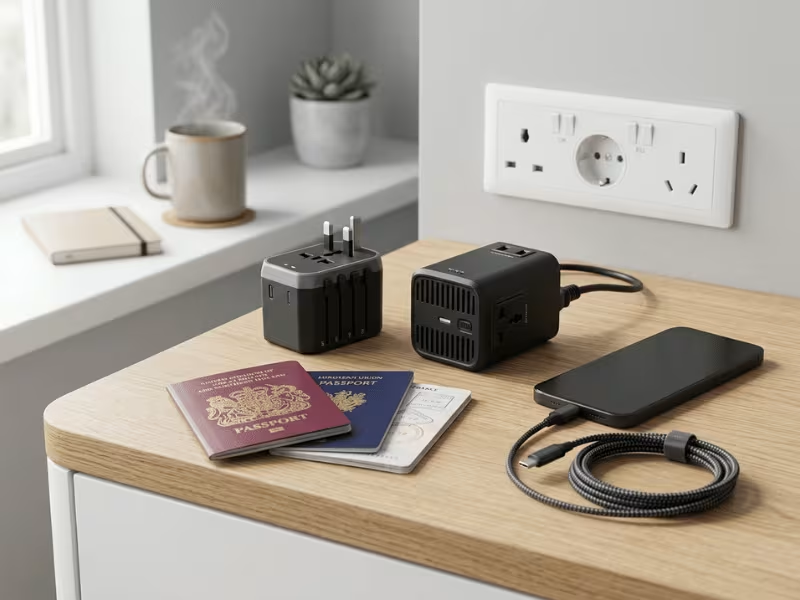
Pack the wrong device for your trip, and you could damage your favorite gadget in moments. The adapter vs converter mix-up is one of the most common—and costly—travel mistakes. Many people assume a small plug adapter will protect their electronics abroad, plug in a device, and end up with an overheated charger or a ruined appliance.
Here’s the root of the confusion: an adapter and a converter look similar and often sit next to each other on the shelf, but they do completely different jobs. One changes the shape of your plug. The other changes the electricity itself. Grab the wrong one and you risk a damaged charger, a burned-out hair dryer, or a real safety hazard.
This guide clears up the confusion for good. You’ll learn exactly what each device does, how to tell which one you need in under a minute, and what to check before you buy. By the end, you’ll know when a simple adapter is enough, when a voltage converter is essential, and how to protect both your devices and your safety on any trip.
What Is a Travel Adapter?
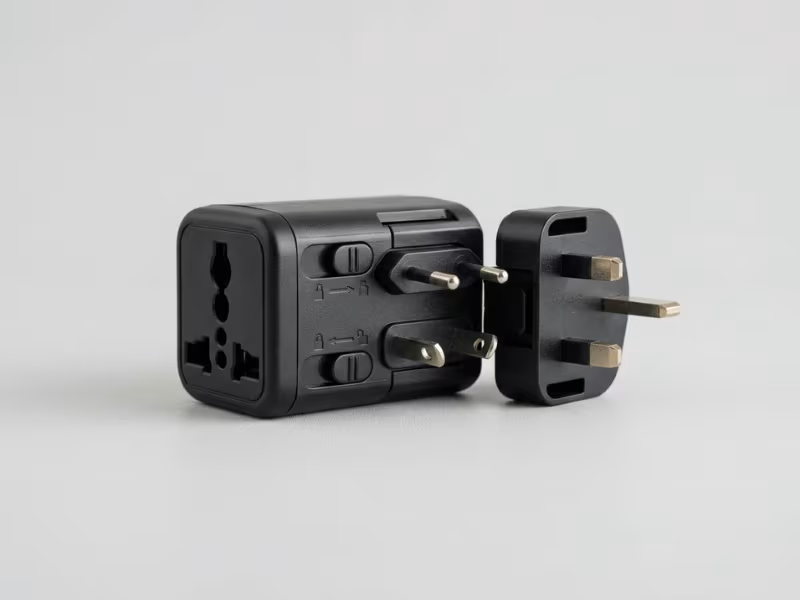
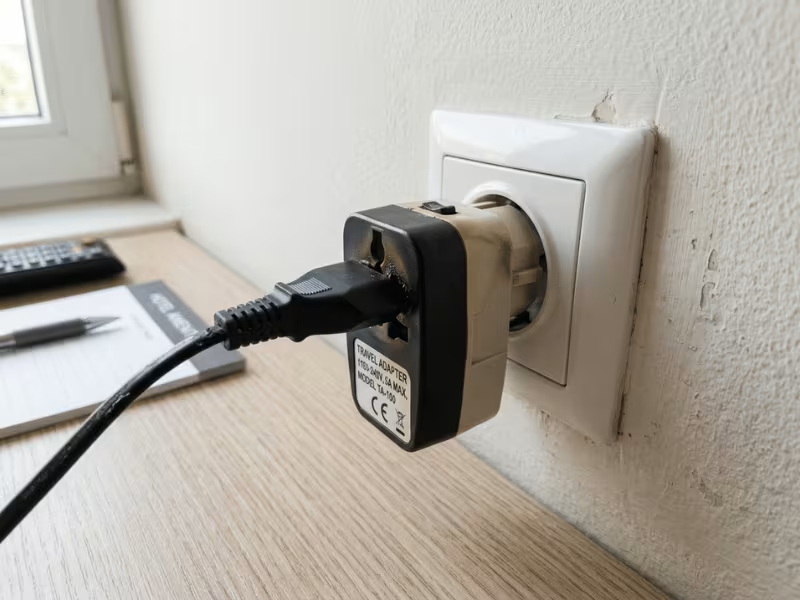
A travel adapter changes only one thing: the shape of your plug. It lets your device’s prongs fit into a foreign wall socket. That’s it.
An adapter does not change voltage. It simply bridges the physical gap between your plug and a differently shaped outlet. The electricity flowing through it stays exactly the same as what comes out of the wall.
Here’s a plain example. You fly from the US to the UK with your laptop charger. The UK uses three rectangular pins, while your charger has two flat prongs. A plug adapter reshapes that connection so your charger physically fits the British socket. The power passing through, however, is untouched—so your device must be able to handle the local voltage on its own.
What Is a Voltage Converter?
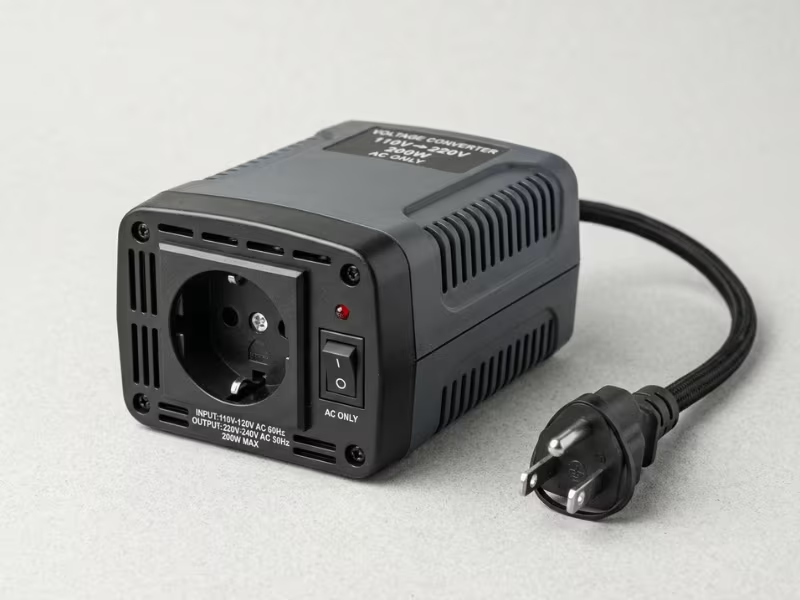
A voltage converter changes the electrical power itself. It steps voltage up or down so your device receives the level it was built for.
Countries run on different power standards. The US and Canada use around 110–120V, while much of Europe, Asia, and Africa use 220–240V. A converter bridges that gap. If you bring a 120V device to a 230V country, the converter drops the incoming voltage to a level your device can handle.
Mechanically, a converter either transforms the voltage using internal coils (a transformer) or uses electronic circuits to regulate it. Some converters also switch the plug shape, but that’s a bonus feature—their core job is to adjust voltage so your device receives compatible power.
One important caveat: not every converter suits every device. Many travel converters are rated for specific wattage ranges or short-term use only, and some are not a good match for sensitive electronics. Safe use always depends on the converter’s rating, quality, and compatibility with your specific device.
Adapter vs Converter: The Core Difference at a Glance
The fastest way to lock in the difference is a side-by-side view.
Feature | Travel Adapter | Voltage Converter |
|---|---|---|
Function | Fits your plug into a foreign socket | Changes electrical voltage |
Changes voltage? | No | Yes |
Changes plug shape? | Yes | Sometimes |
Typical use | Dual-voltage devices (phones, laptops) | Single-voltage devices (some hair dryers, kettles) |
When needed | Whenever plug shapes differ | When your device’s voltage doesn’t match the country’s |
Here’s the one sentence to remember: an adapter changes the plug, while a converter changes the power. Get that straight and you’ll rarely confuse the two again.
Quick Rule
- If your device label reads 100–240V, you usually need only an adapter.
- If it shows a single voltage and you’re traveling to a country with a different standard, you may also need a converter.
- Always check both voltage and wattage before you plug in.
Which One Do You Need? A Quick Decision Guide
You can decide in three quick steps.
- Check your device’s voltage rating. Look at the label or charger.
- Find your destination’s power standard. Know the local voltage.
- Match them. If they align, you need only an adapter. If they don’t, you likely need a converter too.
Check Your Device’s Voltage Rating First
Flip your device or charger over and read the small print near the plug. Look for a line like “INPUT: 100–240V.”
That range is the key. If your device says 100–240V, it’s dual-voltage—meaning it works on power standards worldwide. You only need a plug adapter to make it fit.
If it lists a single number, like “120V” only, your device handles just one voltage. In a higher-voltage country, you’ll need a converter to bring the power down safely.
Match the Destination’s Power Standard
Next, check the voltage where you’re headed. A quick search for “[country] voltage” gives you the answer in seconds.
- 110–120V regions: US, Canada, Mexico, Japan
- 220–240V regions: UK, most of Europe, Australia, China, India
Now compare. A dual-voltage device meeting a matching or wider range? Adapter only. A single-voltage device meeting a different grid? You need a converter. Even then, confirm the converter’s wattage capacity covers your device—voltage alone isn’t the whole picture.
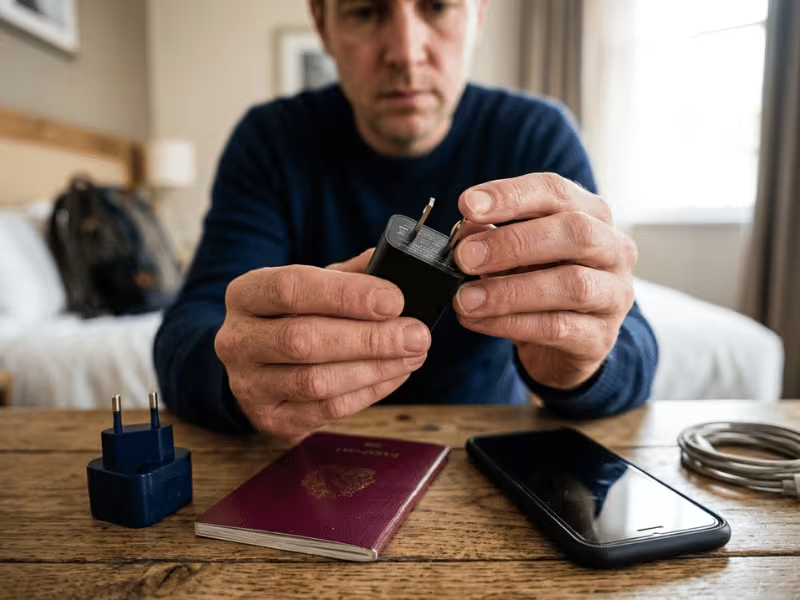
Real Scenarios: Adapter, Converter, or Both
Let’s apply the logic to devices you actually pack.
Phones, laptops, and tablets. Many modern chargers are dual-voltage (100–240V), but always confirm by reading the label. If yours is dual-voltage and you’re traveling from New York to Paris, the verdict is adapter only—your charger handles the 230V grid on its own, so you just need the plug to fit.
Camera chargers and electric shavers. Most are dual-voltage too, but read the label to be sure. Verdict: usually adapter only, unless the label shows a single voltage.
Hair dryers, curling irons, and travel kettles. These are the danger zone. Many are single-voltage and draw high power. A 120V hair dryer in a 230V country can overheat quickly. Verdict: converter required, plus an adapter if the plug shape differs.
Straighteners with a voltage switch. Some appliances have a small switch to toggle between 120V and 240V. Set it correctly and you need only an adapter. Verdict: adapter only, once the switch is set right.
The pattern is simple: dual-voltage electronics usually need an adapter, while single-voltage appliances often need a converter.
Common Mistakes to Avoid
A few misunderstandings cause most adapter and converter failures. Watch for these:
- Assuming an adapter changes voltage. It never does. It only reshapes the plug.
- Thinking every USB charger is dual-voltage. Most modern ones are, but cheaper or older units may not be. Check the label first.
- Ignoring wattage limits. A converter rated below your appliance’s draw will overheat or shut down.
- Treating combo units as universal. Adapter-converter combos are handy, but they still have voltage and wattage limits.
- Using a converter for sensitive electronics without checking suitability. Some converters deliver a rough output that isn’t ideal for delicate circuits.
What to Check Before You Buy
Before you buy, run through this checklist to avoid costly mistakes.
- Voltage range. Confirm your device’s input rating and match it to your destination’s grid. This decides whether you need a converter at all.
- Wattage headroom. Match the converter’s wattage to your device, then add a buffer. High-draw appliances like hair dryers need a converter rated well above their listed watts—aim for at least 25% headroom.
- Device type suitability. Heating appliances (dryers, kettles) and sensitive electronics (chargers, cameras) have different needs. Make sure the converter is designed for your device category.
- Continuous vs. short-term use rating. Some converters are built only for brief use. If you need steady power over time, choose a model rated for continuous operation.
- Safety certifications. Look for marks like CE, RoHS, or FCC. These show the product passed real safety testing.
- Built-in protection and ports. Surge protection, fuses, and overheating cutoffs add peace of mind. If you carry several devices, pick a model with multiple outlets or USB ports.
Checking these points takes a couple of minutes and saves you from buying the wrong gear.
The Risks of Choosing Wrong
Using the wrong device isn’t a minor slip—it has real consequences.
Plugging a single-voltage device into a higher grid without a converter sends far more power than your device expects. A 120V hair dryer in a 230V outlet can overheat, damage its internal parts, or become a fire risk.
Relying on an adapter alone for a single-voltage appliance offers zero electrical protection. The adapter passes the full local voltage straight through, and your device takes the hit.
Undersized converters fail too. Run a 1,600W hair dryer through a 500W converter, and the converter may overheat, shut down, or burn out.
The result is often a dead device, a tripped circuit, or a safety hazard in your hotel room. A few dollars spent on the right converter protects both your electronics and your safety.
Finding the Right Solution with quankang
Once you know whether you need an adapter, a converter, or both, the next step is choosing gear you can trust. That’s where quankang comes in.
quankang designs and manufactures power solutions built around the exact concerns covered in this guide—plug standards, voltage differences, device compatibility, and safety. Its range spans clearly rated products for both everyday electronics and specialized needs.
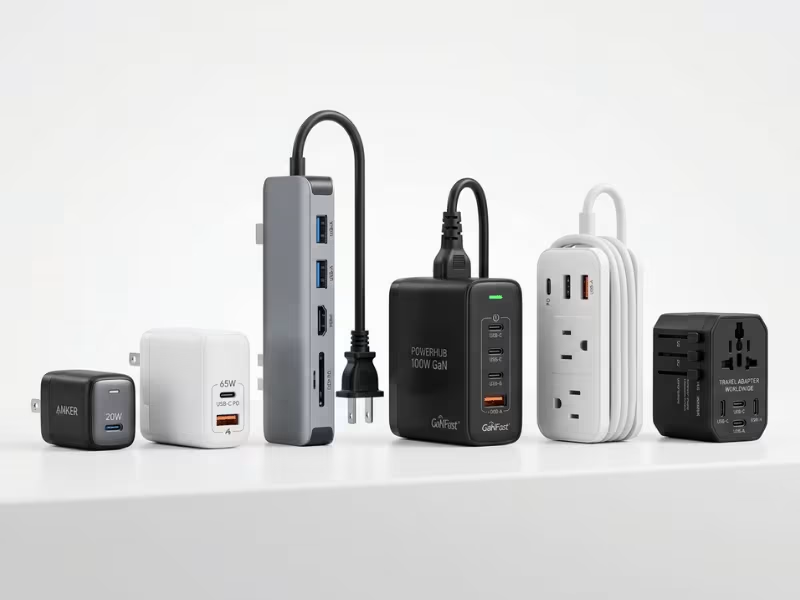
For dual-voltage electronics like phones, tablets, and laptops, USB PD Chargers deliver fast, stable charging with wide input support, so they travel well across regions. For businesses and specialized setups, Custom Power Adapters let you match voltage, wattage, plug type, and certifications to a specific device or market. quankang also produces POE adapters, ITE power supplies, and medical-grade power supplies for more demanding applications.
Across the range, you get clearly labeled voltage and wattage ratings, recognized safety certifications, and built-in protection—so you can plug in with confidence. No more guessing at labels or risking your devices to save a few dollars.
Ready to travel and work worry-free? Explore quankang’s full product range to find the right match for your devices and destination.
Frequently Asked Questions
Can I use a plug adapter with any device abroad?
Only if your device is dual-voltage (100–240V). An adapter changes the plug shape, not the power. Single-voltage devices need a converter as well, or they risk damage.
Do I need a converter for my phone or laptop charger?
Usually not. Many phone and laptop chargers are dual-voltage, so they handle grids worldwide. A simple plug adapter is often all you need. Always confirm by checking the label for “100–240V.”
What happens if I plug a 110V device into 220V without a converter?
The device receives far more voltage than it’s built for. It can overheat, spark, or fail within a short time. Single-voltage devices need a converter to step the power down safely.
Can a converter still damage electronics even if the voltage is correct?
Yes, it can. An underpowered or low-quality converter may deliver an unstable or rough output, which can harm sensitive electronics even when the voltage number looks right. Match the converter’s wattage and type to your device, and choose a certified model for delicate equipment.
Are adapter-converter combo units safe?
Yes, when they’re properly rated and certified. Combo units handle both plug shape and voltage in one device. Just confirm the wattage rating matches your device and look for safety marks like CE or FCC.
How do I know if my appliance is dual-voltage?
Check the label near the plug or on the charger. If it reads “100–240V,” it’s dual-voltage and needs only an adapter. A single number, like “120V,” means it’s single-voltage and requires a converter abroad.