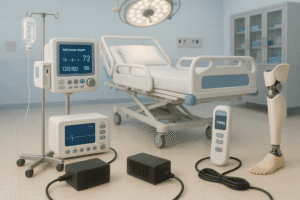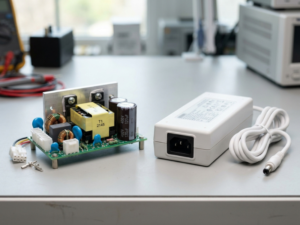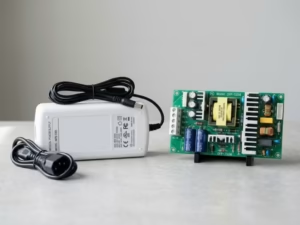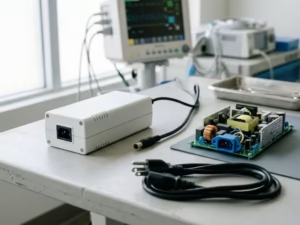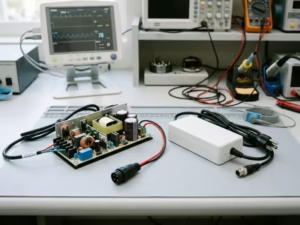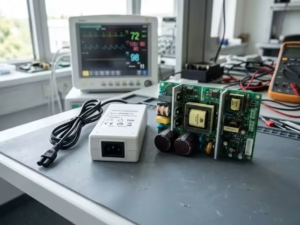
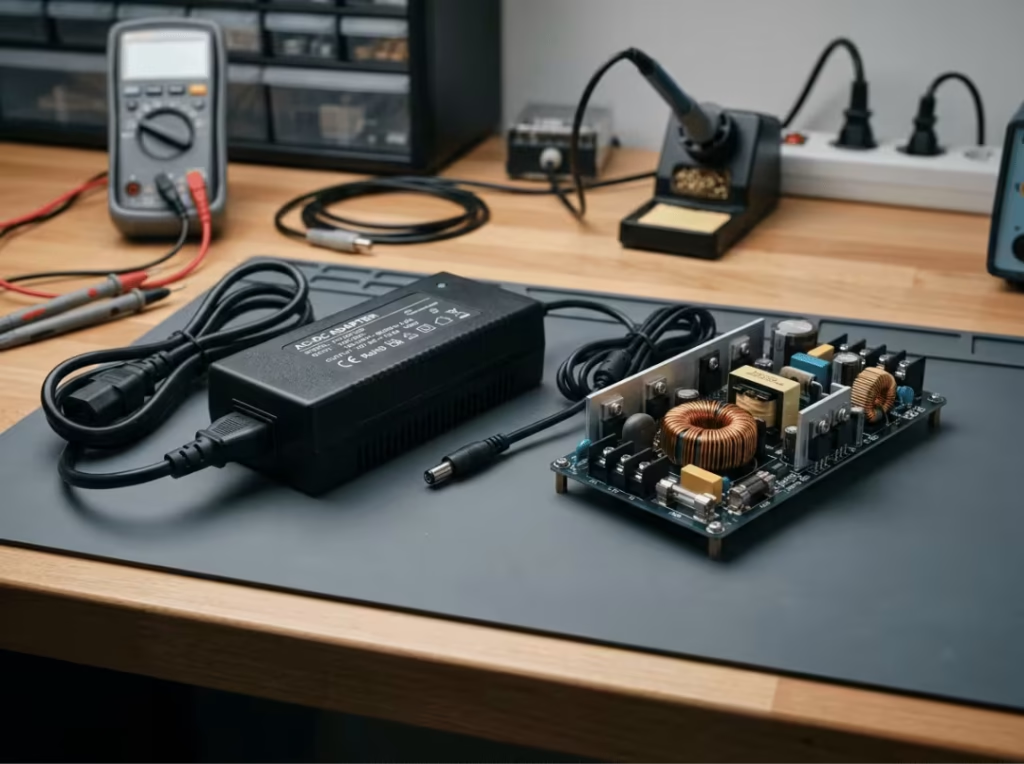
Pick the wrong power supply mark, and you can pay for it twice—once in redundant testing, and again when your end product stalls at final inspection. For OEMs and procurement teams, the choice between a Listed and a Recognized power supply is never just a label on a datasheet. It shapes your enclosure design, your test scope, your certification budget, and how much safety responsibility stays on your shoulders versus the component maker’s.
This guide walks through what actually separates the two marks, how UL, ETL, and TÜV fit together, and—most importantly—how to decide which one your specific project needs.
The Core Difference in One Line
A Listed power supply is certified as a complete, standalone product that’s safe to use on its own. A Recognized power supply is certified as a component intended to be built into a larger end product, in which the final system still requires its own safety evaluation.
Both marks trace back to the same rule: OSHA requires electrical equipment used in U.S. workplaces to be tested by a Nationally Recognized Testing Laboratory (NRTL). UL, Intertek (ETL), and TÜV are three of roughly 20 accredited NRTLs, and all three evaluate against the same underlying safety standards—such as IEC/UL 62368-1 for IT and AV equipment.
So neither mark is “safer” than the other. They describe different stages in a product’s life:
- Listed — the lab evaluates the whole device: enclosure, cords, connectors, internal parts, under real operating and fault conditions.
- Recognized — the lab evaluates the part within defined conditions of acceptability, leaving the rest of the safety checks to the end-product manufacturer.
A simple rule of thumb: if a technician or consumer plugs it in and uses it directly, it needs to be Listed. If an engineer mounts or wires it inside a bigger machine, it’s usually Recognized.
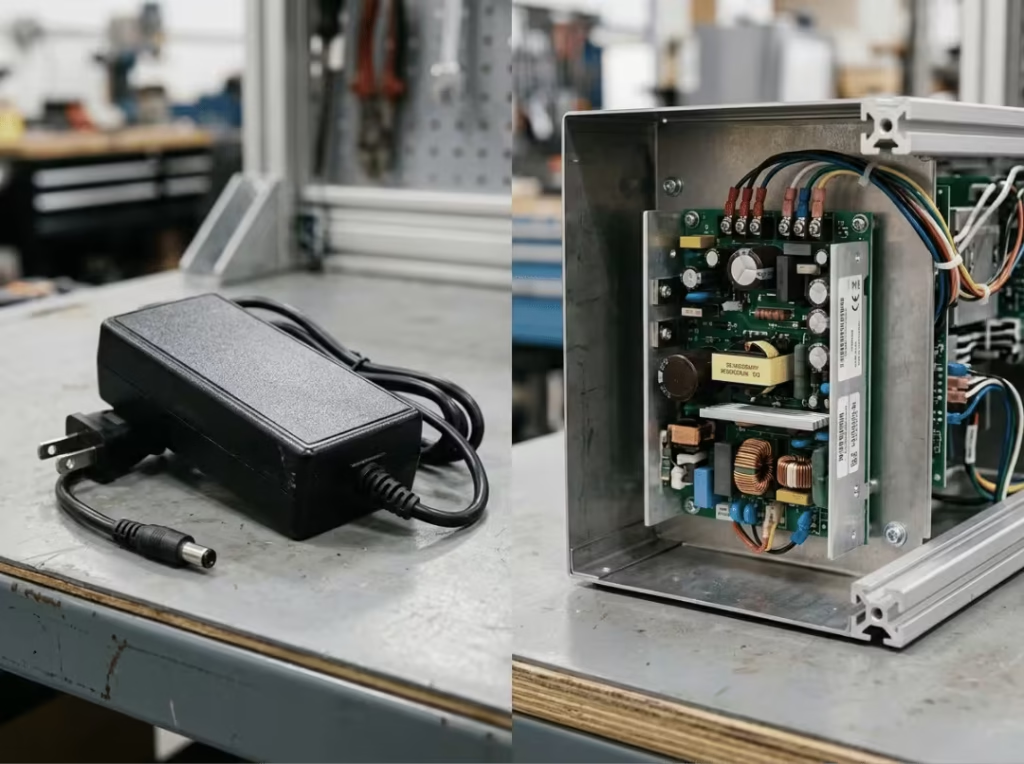
UL Listed vs. UL Recognized: What Each Mark Covers
UL is the most familiar NRTL, though it’s far from the only one. Here’s how each mark applies to a power supply.
UL Listed power supplies
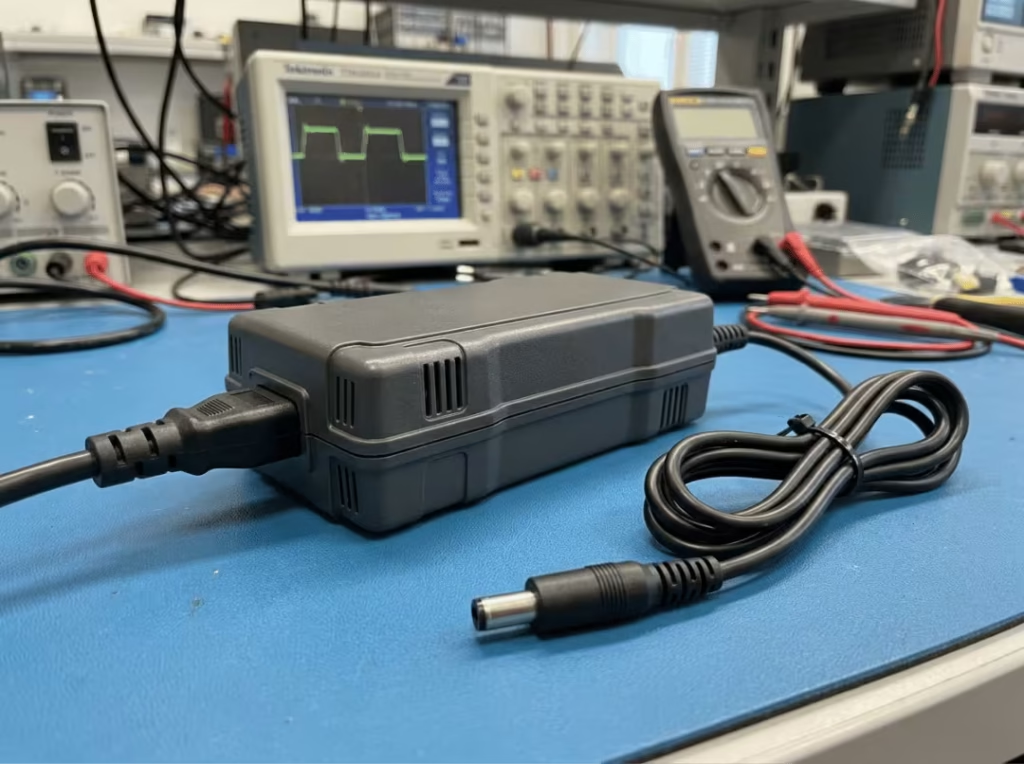
A UL Listed power supply is a finished product ready for standalone use—think of the desktop AC/DC adapter shipped with a laptop, or a wall-mount adapter for a router. Because it carries a complete enclosure, UL tests it for:
- Electrical shock protection
- Fire and thermal hazards under fault conditions
- Mechanical strength of the housing
- Cord, plug, and strain-relief integrity
The Listed mark indicates that the product meets safety requirements as-is. External adapters, medical adapters sold as accessories, and many power distribution units fall under this category.
UL Recognized power supplies
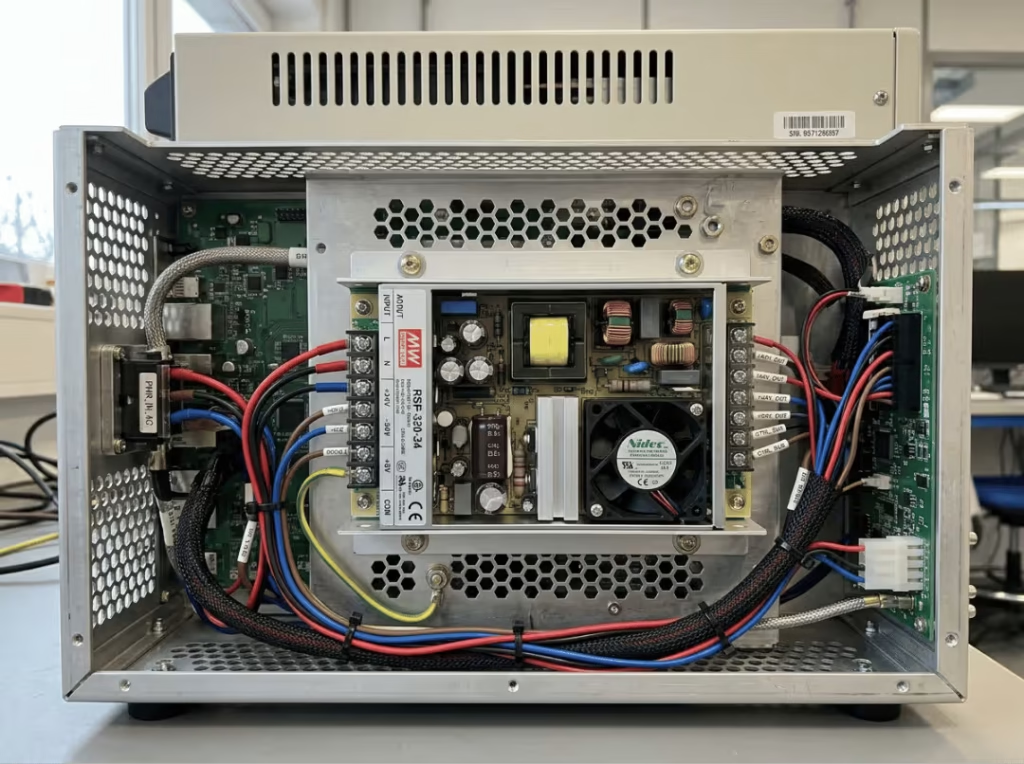
A UL Recognized power supply—marked with the backward “RU” symbol—is an open-frame or embedded component built to live inside another product: a medical device, an industrial controller, a server.
Because it sits inside a larger enclosure, UL skips the full enclosure, fire, and mechanical evaluation. Instead, it publishes conditions of acceptability: spacing requirements, temperature limits, required end-product enclosures, and creepage/clearance rules the integrator must respect.
A quick example: an open-frame 250 W supply mounted inside a lab instrument would be UL Recognized. The instrument itself, once fully assembled, then earns its own UL Listing—and that Recognized component makes the final approval faster and cheaper.
Listed vs. Recognized at a Glance
Factor | UL Listed | UL Recognized |
|---|---|---|
Product type | Complete, standalone product | Component inside an end product |
Mark | Circle “UL” | Backward “RU” (UR) |
Enclosure evaluation | Yes—full mechanical/fire testing | No—relies on end-product enclosure |
Testing scope | Broadest; real use and fault conditions | Component-level only |
Conditions of acceptability | Rarely applies | Always defined; integrator must follow |
Typical products | External adapters, PDUs, bench supplies | Open-frame/embedded supplies, EMI filters |
Who relies on it | End users and consumers | Manufacturers and integrators |
End-product re-testing | Not required for the supply itself | End product still needs its own evaluation |
Testing cost/time | Higher | Lower |
Which One Does Your Project Need?
This is where most sourcing decisions are actually made or lost. Rather than rules in the abstract, work through the real scenarios below.
Choose a Listed power supply when:
- You ship an external wall or desktop adapter with your device. The adapter is a finished, standalone product a customer handles directly, so it needs its own end-use certification.
- Non-technical staff or consumers touch the unit. No surrounding enclosure protects them, so the supply itself has to pass the full evaluation.
- You’re selling the power supply as the product. A bench supply on a lab shelf is the end product—there’s nothing else to certify.
Choose a Recognized power supply when:
- The unit is embedded in equipment you also build. An open-frame PSU bolted inside a lab instrument gets evaluated as a component; your finished instrument then carries the system-level Listing.
- You control the enclosure, airflow, and layout. Recognition assumes your design honors the component’s conditions, which only works if your engineers own that design.
- You’re a medical device OEM integrating an internal supply. A patient monitor or infusion pump typically uses a Recognized medical-grade PSU, with the finished device evaluated to the applicable end-product standard.
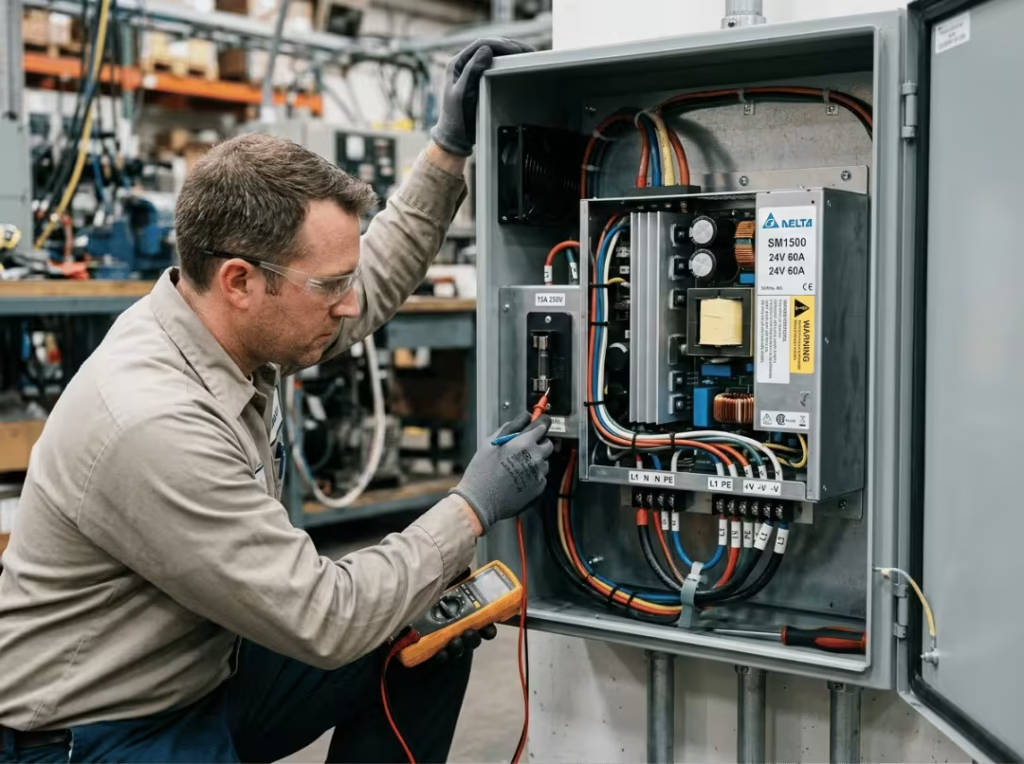
- You’re building an industrial control cabinet. A DIN-rail or open-frame module inside the cabinet is almost always Recognized; the cabinet or end machine handles final compliance.
One exception cuts across all of this: if a customer’s procurement spec explicitly demands “UL Listed,” follow that spec—even when an ETL or TÜV equivalent would legally satisfy the same requirement.
The procurement angle: Recognized components usually lower both unit cost and total certification time, because heavy enclosure testing shifts to the end-product stage. Those savings only materialize if your team meets every condition of acceptability. Miss one—an airflow limit, a spacing rule—and your final Listing stalls.
What “Conditions of Acceptability” Really Mean
For a Recognized component, the conditions of acceptability are the fine print that decides whether its recognition actually carries into your product. They spell out the exact limits under which the part was tested: temperature range, required enclosure, spacing, fusing, and orientation.
Here’s how it goes wrong in practice.
Suppose you specify a Recognized open-frame supply that was approved only when mounted inside a metal enclosure, operated at an ambient temperature below 50 °C, and protected by a defined input fuse. Your engineers build it into a sealed plastic housing with no forced airflow, and internal temperatures climb past that limit. At the final evaluation, the NRTL flags it: the component’s recognition no longer applies because your end product violated the conditions under which it was granted. Now you’re re-testing—or redesigning—late in the schedule.
The lesson is blunt: a Recognized component is only as valid as your compliance with its conditions. Read them before you design around the part, not after.
UL vs. ETL vs. TÜV: Are They Equivalent?
Yes—for U.S. compliance, an ETL Listed or TÜV Listed mark carries the same legal and safety weight as UL. The distinction is the certifying body, not the standard.
- ETL (Intertek) issues ETL Listed and ETL Recognized marks against the identical UL/IEC standards. It’s often chosen for faster turnaround and competitive pricing, and it’s widely accepted by North American retailers and inspectors.
- TÜV (TÜV Rheinland, TÜV SÜD) marks are respected globally and especially strong for products headed to both North American and European markets. A TÜV mark can pair with the IEC CB Scheme to smooth multi-country approvals.
Don’t assume “UL” is mandatory. Unless a contract or spec explicitly names it, an equivalent ETL or TÜV mark satisfies the same OSHA and NRTL requirements.
One warning for teams importing European designs: CE and ATEX marks are not accepted by OSHA as proof of U.S. compliance. A product carrying only a CE mark still needs testing by a U.S. NRTL before it can be sold for workplace use here. Plan for that early.
Common Mistakes That Cost Teams Time and Money
These are the errors I see derail projects most often:
- Treating CE as U.S. approval. CE is a European self-declaration. It doesn’t satisfy OSHA, and discovering that during final validation means weeks of unplanned NRTL testing.
- Ignoring the conditions of acceptability. Teams specify a Recognized part, design around a datasheet number, and never read the constraints that make the recognition valid.
- Using a Recognized supply in a standalone product. A Recognized component can’t ship on its own for regulated use. If the surrounding device isn’t itself certified, you can’t sell it.
- Assuming ETL is “weaker” than UL. It isn’t. ETL and UL test to the same standards, and both meet OSHA. Rejecting an ETL mark out of habit can cost you a faster, cheaper path with no safety trade-off.
- Over-specifying a Listed unit for an internal role. If the supply is inside your equipment, a Recognized component often does the job at a lower cost—paying for a full Listing you don’t need is a waste.
What This Means for OEM and ODM Projects
For an OEM or ODM device maker, the Listed-versus-Recognized decision ripples across the whole program, not just the datasheet.
- BOM cost. A Recognized open-frame or embedded supply typically costs less than a fully enclosed Listed unit. When it’s going inside your equipment anyway, that’s the efficient choice.
- Test scope. Specifying Recognized subcomponents shrinks what your end product must prove during its own Listing. Enclosure and fire testing move to the system level, where you’re already doing the work.
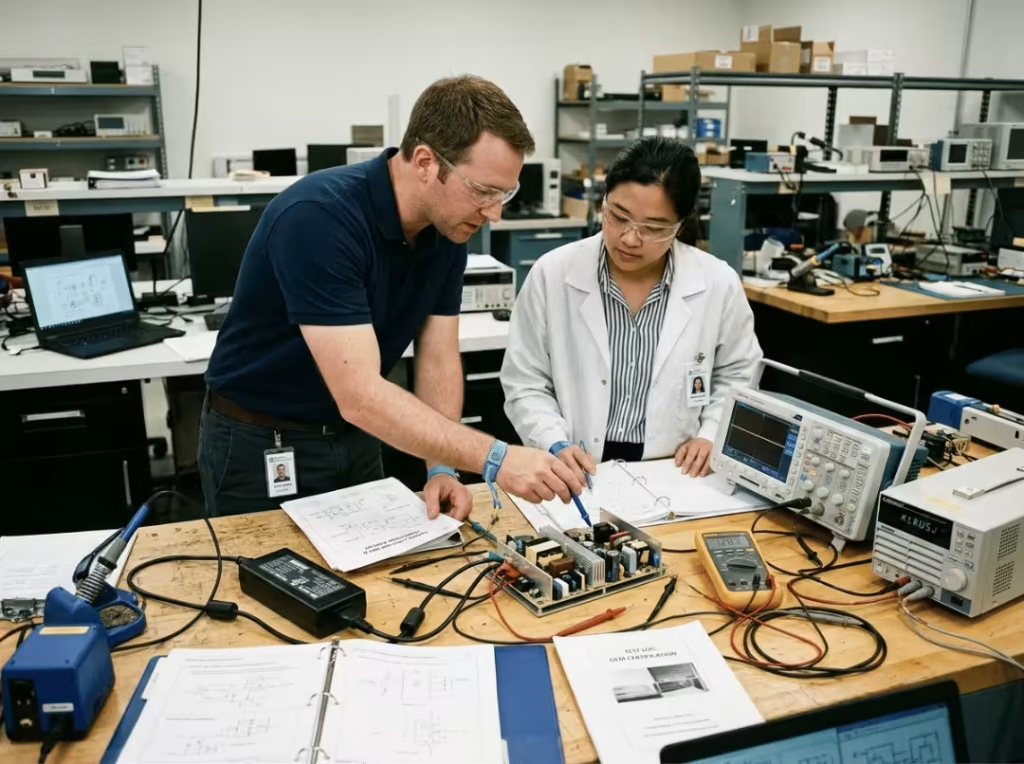
- Documentation. Your compliance team needs the component’s certification reports and its conditions of acceptability up front. A supplier that ships full dossiers—TÜV or Intertek reports — before the purchase order removes a major source of delay.
- Final certification coordination. The smoothest programs treat the power supply and the end product as a single workflow: the component’s recognition feeds directly into the system evaluation, so nothing is retested.
If you’re weighing supply options for a regulated device, it helps to understand the electrical fundamentals first—our Switching Power Supply (SMPS) guide covers the operating principles and selection factors that underlie any certification decision. For medical programs specifically, the AC DC Power Supplies for Medical Applications selection guide maps how safety, EMC, and system stability come together in device design.
How Certification Works in Practice
The path is similar for both marks; the depth of testing is what differs.
- Identify the correct standard. Common ones for power supplies include IEC/UL 62368-1 (IT and AV), IEC/UL 60601-1 (medical), and IEC/UL 61010-1 (lab and measurement). Match your product early.
- Decide Listed or Recognized. Standalone points to Listed; embedded points to Recognized. This choice shapes the entire test plan and cost.
- Design for compliance from day one. Build creepage, clearance, insulation, and thermal margins in from the start. Retrofitting a non-compliant design is far more expensive than getting it right the first time.
- Prepare documentation and samples. Complete the lab’s application, provide schematics and a bill of materials, and ship representative samples.
- Undergo testing. A Listing brings the full battery—electrical, fire, mechanical enclosure, fault conditions. Recognition covers component-level electrical and constructional evaluation, then defines the conditions of acceptability.
- Earn and maintain the mark. Certification doesn’t end at approval. NRTLs run unannounced follow-up audits, pulling random units to confirm ongoing compliance. Change your design or a supplier without notifying the lab, and you risk losing the mark.
Using already-Recognized subcomponents inside your design is one of the fastest ways to shorten a final Listing, per UL’s own guidance.
Frequently Asked Questions
Is a UL Recognized power supply less safe than a Listed one?
No. Both meet the same safety standard. Recognized simply splits the evaluation between the component and the end product it goes into.
Can I sell a product using only a Recognized power supply?
Not on its own. A Recognized component must be contained within an end product that carries its own certification. If the surrounding device isn’t Listed or Recognized, you can’t ship it for regulated use.
Do ETL and TÜV marks satisfy OSHA the same way UL does?
Yes. All three are accredited NRTLs, so an ETL or TÜV mark meets OSHA requirements identically—unless a customer specifically demands UL.
We only have a CE mark. Are we good for the U.S. market?
No. CE is a European self-declaration and isn’t recognized by OSHA. You’ll need testing by a U.S. NRTL to earn a Listed or Recognized mark.
What are the “conditions of acceptability”?
They’re the specific limits a Recognized component was tested under—temperature ranges, required spacing, needed enclosures, fusing. Your end product must honor every one to pass final certification.
Which mark is cheaper and faster?
Recognition generally costs less and moves faster because it skips enclosure and fire testing—but your end product still needs its own evaluation.
Does certification expire?
The mark stays valid as long as you maintain compliance and pass follow-up audits. Undocumented design or supplier changes put it at risk.
The Bottom Line
The decision comes down to one question: is your power supply a finished product or a building block? Listed means standalone and fully tested, enclosure included. Recognized means it’s a component, evaluated at the part level with conditions your end product must satisfy—and an ETL or TÜV mark meets U.S. requirements just as well as UL.
Match the mark to how the unit is actually used, design for compliance from the start, and lean on Recognized subcomponents to speed up any end-product Listing. If your device carries patient-contact requirements, get the isolation classification right too—our MOOP vs. MOPP guide for IEC 60601-1 breaks down where each applies.
Ready to source a power supply with the right mark and a complete certification dossier behind it? Request a factory quote from Quankang and get certified components with full traceability for your next project.