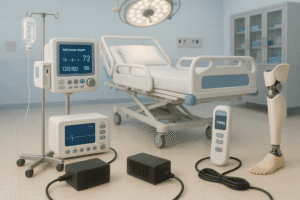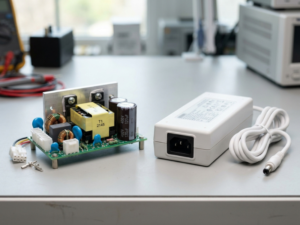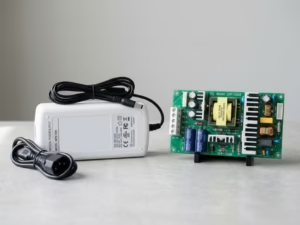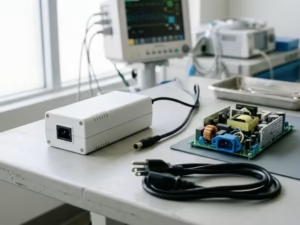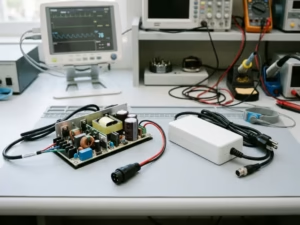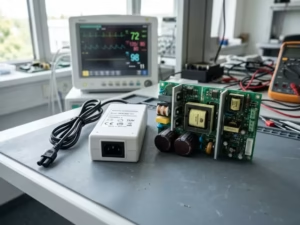
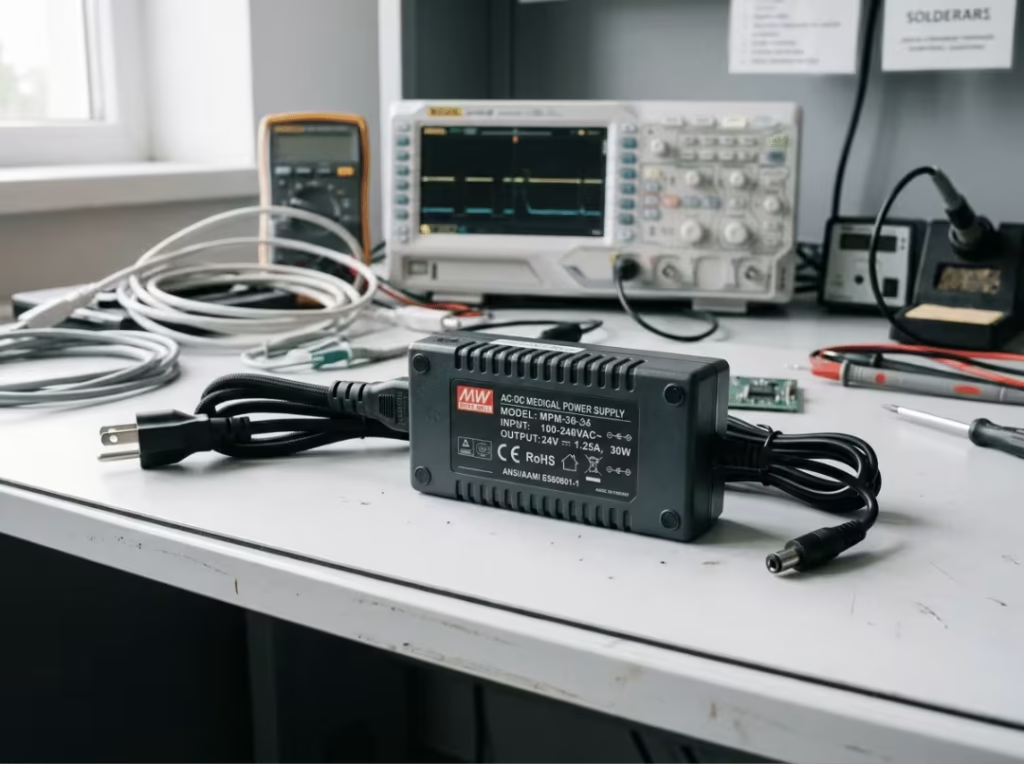
A power supply that runs a router or a factory sensor won’t survive inside a patient monitor. The safety bar is higher, the insulation is built differently, and the certification behind it answers to a different standard. Once a device touches a patient — or shares a room with one — the power supply stops being a background component and becomes part of the safety case.
The practical problem is this: not every unit marked “medical” fits every medical device. The applied-part classification, the leakage limits, and the required means of protection change what you can specify, and getting the order of those decisions wrong is what sends a design back for rework late in the program. This guide walks through what actually separates a medical grade power supply from a standard one, and how to select the right one without missing the constraints that fail a design during certification.
What Is a Medical Grade Power Supply?
A medical grade power supply is an AC-DC or DC-DC unit designed and certified to IEC 60601-1, the safety standard for medical electrical equipment. It carries tighter insulation, controlled leakage current, and defined means of protection so that a single fault cannot expose a patient or operator to a dangerous voltage.
The contrast with an ITE or industrial supply is concrete. An ITE unit certified to IEC 62368-1 typically holds around 3000 Vac isolation between primary and secondary. A medical unit built for patient protection holds up to 4000 Vac across the same barrier, with wider creepage and clearance distances and far lower permitted leakage. Those figures come from different standards written for different risk profiles, and the gap between them lives in the hardware — not in the paperwork.
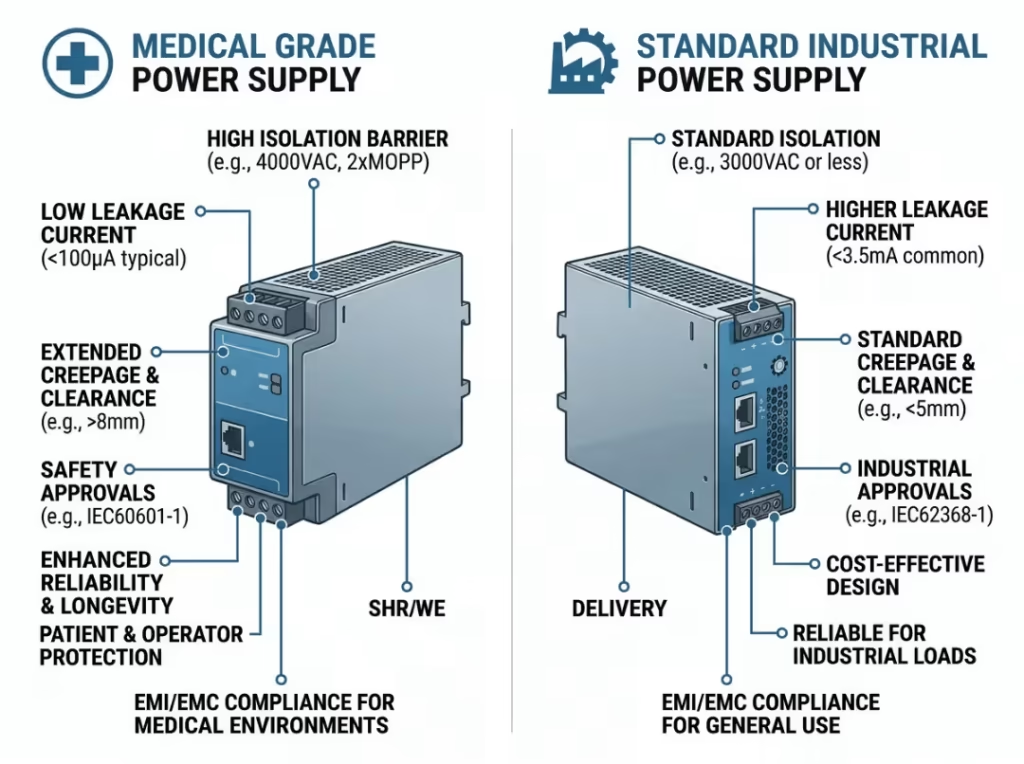
That distinction matters at selection time because it rules out a shortcut teams keep trying: taking an industrial supply that hits the voltage and power target and assuming a certificate will close the gap. The isolation transformer, the PCB spacing, the Y-capacitor selection, and the earthing scheme all have to be designed for patient-protection limits from the start. A medical supply is engineered as a separate product family for exactly this reason.
Why Medical Devices Need Special Power Supplies
The core reason is direct physical contact. A patient connected to an ECG, or lying on a powered hospital bed, has a low-resistance path to ground through their body. A leakage current a factory operator would never feel through insulated gloves can be hazardous to a patient with an exposed conductive connection.
Four requirements follow, and each one narrows the field of supplies you can choose:
- Higher insulation — two independent barriers between mains and the patient, so one insulation failure still leaves protection intact.
- Low leakage current — current escaping to the enclosure or patient connection held to microamp limits, well below what standard supplies target.
- Two-way EMC — the supply must not emit interference that corrupts a sensor reading, and must keep working correctly when other equipment interferes with it. A distorted waveform in a pulse oximeter is a safety issue, not a nuisance.
- Reliability under continuous duty — ventilators and monitors run for hours or days, so the supply has to hold stable output across that duty cycle and the thermal load of a sealed enclosure.
Together these push the design toward margins a general-purpose supply isn’t built to hold, which is why substitution rarely works even when the electrical ratings appear to match.
IEC 60601-1 Basics: What the Standard Means for Selection
IEC 60601-1 is the general standard for the basic safety and essential performance of medical electrical equipment. For power supply selection, four areas of it do most of the work — and each one maps to a decision you’ll make.
Insulation and isolation. The standard defines how many barriers sit between mains and accessible or patient-connected parts, and how strong each must be. This is where the 4000 Vac patient-protection figure originates, and it sets the isolation rating you have to specify.
Creepage and clearance. Creepage is the distance across a surface between two conductors; clearance is the shortest path through air. Medical spacing is larger than industrial spacing because a breakdown carries worse consequences. In practice this affects which physical package can even hold the required distances at your power level.
Leakage current. The standard caps earth, enclosure, and patient leakage under both normal and single-fault conditions. These limits drive component choices — most directly the Y-capacitor value in the EMI filter.
Means of protection (MOP). Each barrier that reduces electric-shock risk counts as one means of protection, and the standard separates operator protection from patient protection. This is the decision that most tightens everything downstream.
Reading the standard this way is more useful than memorizing clause numbers. Every selection call — isolation voltage, spacing, filter design, earthing — traces back to one of these four areas.
What Is the Difference Between MOOP and MOPP?
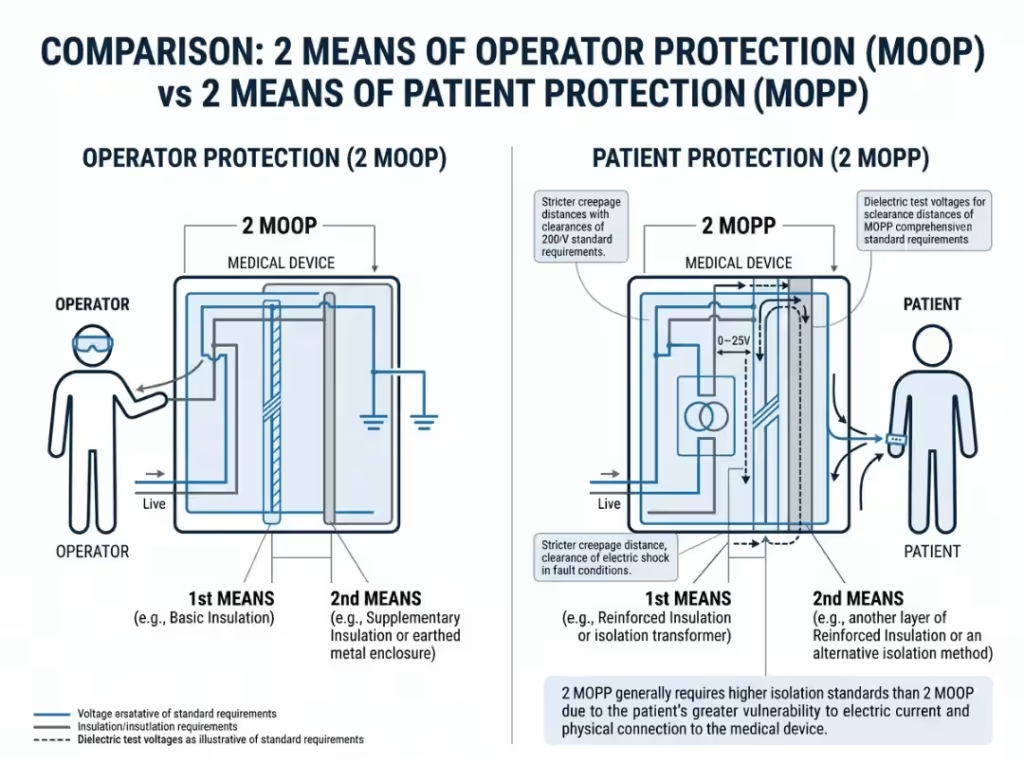
A means of protection (MOP) is any barrier that guards against electric shock. IEC 60601-1 splits these into two categories based on who is being protected, and the choice between them changes the isolation and spacing you must specify.
MOOP — Means of Operator Protection. This protects the operator: a nurse, technician, or clinician handling the equipment. The requirements sit close to those for ITE equipment, because an operator is assumed to be a healthy adult who is not electrically connected to the device and can let go of a fault.
MOPP — Means of Patient Protection. This protects the patient, who may be unconscious, connected to the device through applied parts, or otherwise unable to react. Because the risk is higher, MOPP demands greater isolation voltage and wider creepage and clearance than MOOP at the same insulation level.
The distinction matters because it decides how much isolation you have to design in, and the two are not interchangeable. A supply qualified for 2 MOOP will not automatically meet 2 MOPP — the patient path requires more. Most devices with patient contact are specified to 2 MOPP, meaning two independent means of patient protection, so no single fault removes patient safety.
Insulation | Classification | Isolation (Vac) | Creepage (mm) / Clearance (mm) |
|---|---|---|---|
Basic (B) | 1 MOOP | 1500 | 2.5 / 2.0 |
Basic (B) | 1 MOPP | 1500 | 4.0 / 2.5 |
Double (D) | 2 MOOP | 3000 | 5.0 / 4.0 |
Double (D) | 2 MOPP | 4000 | 8.0 / 5.0 |
Read the table by column, not row. At every insulation level, patient protection demands more isolation voltage and more physical spacing than operator protection at the same level. That gap — 3000 Vac versus 4000 Vac at double insulation, 5 mm versus 8 mm creepage — is precisely why a supply pulled from an industrial line can’t be dropped into a patient-contact device. This is where selection often goes wrong: a team confirms “2 MOOP” on a datasheet, assumes it covers the patient case, and discovers the shortfall only at test.
Why Leakage Current Matters in Medical Power Supplies
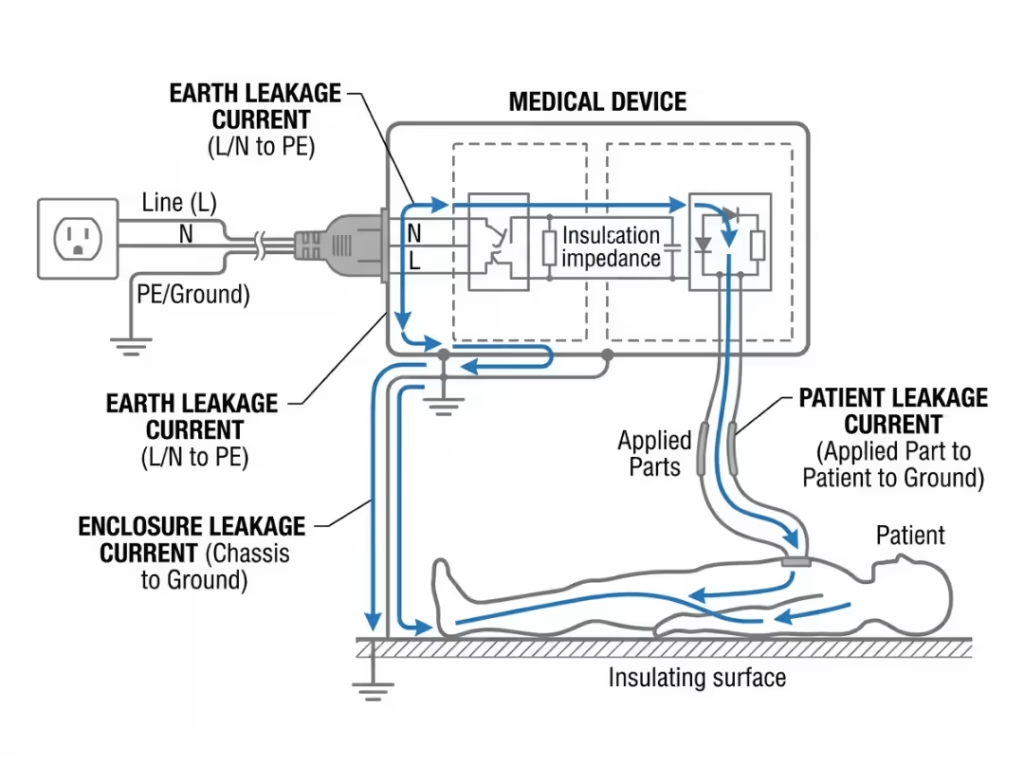
Leakage current is the small, unintended current that flows to earth, to the enclosure, or to a patient connection during normal operation. In most equipment it’s harmless. In a device physically connected to a patient, it can pass through the body — and near the heart, currents that would be imperceptible on the skin become dangerous.
IEC 60601-1 controls three leakage paths, and each has a limit under normal conditions (NC) and single-fault conditions (SFC), so the device stays safe even when one protective element has already failed:
- Earth leakage — current through the protective earth conductor.
- Enclosure (touch) leakage — current that flows if a person touches the enclosure.
- Patient leakage — current through an applied part connected to the patient.
Here is the part that catches engineers out: leakage current and EMC pull against each other. The Y-capacitors that suppress conducted emissions also provide a path for leakage, so a filter tuned aggressively for EMC compliance can push leakage over the limit — and a filter trimmed to hold leakage down can fail emissions. A medical supply’s EMI filter is a deliberate balance between the two, which is why you can’t scale an industrial filter design up and expect it to pass. From a compliance standpoint, this is why leakage has to be a front-end requirement set alongside EMC, not a figure you verify after the layout is frozen.
The applied-part classification then decides how tight the patient leakage limit gets — and that’s the decision to make before anything else, as the next section shows.
Type B, BF, and CF: How Application Category Drives Selection
Applied parts are the sections of a device that contact the patient. IEC 60601-1 classifies them by contact risk, and that classification directly sets the leakage limit your supply has to hold.
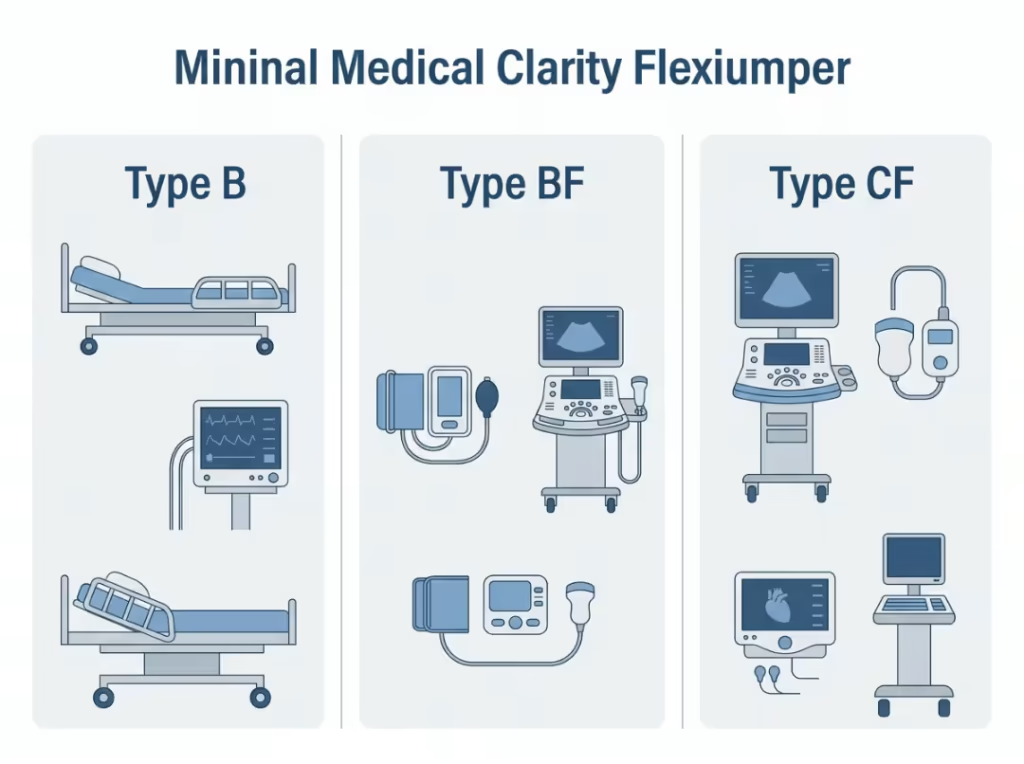
- Type B (Body) — the least strict class, for applied parts that are usually non-conductive and can be removed from the patient quickly. Type B parts may be earth-referenced. Examples: monitor screens, hospital beds, operating tables.
- Type BF (Body Floating) — for parts with medium or longer-term contact, isolated (“floating”) from earth. Examples: ultrasound probes, blood-pressure cuffs, thermometers.
- Type CF (Cardiac Floating) — the strictest class, for parts that may contact the heart directly. Examples: pacemakers, defibrillators, dialysis machines.
Leakage path | Type B (NC / SFC) | Type BF (NC / SFC) | Type CF (NC / SFC) |
|---|---|---|---|
Earth leakage | 500 µA / 1000 µA | 500 µA / 1000 µA | 500 µA / 1000 µA |
Enclosure (touch) leakage | 100 µA / 500 µA | 100 µA / 500 µA | 100 µA / 500 µA |
Patient leakage | 100 µA / 500 µA | 100 µA / 500 µA | 10 µA / 50 µA |
Read the patient leakage row. Type CF drops to 10 µA under normal conditions — an order of magnitude below Type B and BF. A supply that clears Type B and BF can still fail Type CF outright, so the applied-part class has to be fixed before you shortlist any supply, not confirmed afterward. Lock the classification first, and every downstream requirement falls into place; get it wrong, and the whole selection unwinds.
Medical Power Supply Formats: Adapter, Open-Frame, and Enclosed
The electrical requirements stay constant across formats — the packaging is what changes, and it should follow the device’s mechanical and thermal reality.
External adapters (desktop and wall-mount) sit outside the device housing, keeping mains voltage and its heat out of the enclosure. This simplifies the device’s own safety case and suits portable and home-use equipment. Interchangeable-plug versions cover multiple regions from one SKU.
Open-frame supplies are a bare PCB assembly built into the device — compact and cost-efficient where the equipment already provides its own enclosure and airflow, such as bench diagnostics or imaging subsystems.
Enclosed and baseplate-cooled supplies are fully cased or designed to conduct heat into a metal baseplate rather than rely on airflow. Baseplate cooling suits sealed or fanless equipment where a fan would add noise, draw in contaminants, or wear out. Both formats fit higher-power or ruggedized designs.
Fix the compliance targets first, then match the format to the layout. Choosing a package before the isolation and leakage requirements are set is a routine source of late redesign.
Home Healthcare vs Hospital Equipment: Why the Assumptions Break Down
A hospital is a controlled environment, and hospital-grade design quietly relies on that. The mains is stable. Staff are trained. Temperature and humidity stay within known bounds. There’s a solid protective earth. Move the same device into a patient’s home and every one of those assumptions weakens at once — which is exactly what IEC 60601-1-11 exists to address.
Consider what actually changes when a ventilator or oxygen concentrator leaves the ward:
- The mains is no longer dependable. Domestic power sags, spikes, and drops out. The supply has to ride through wider swings — down to −15% of minimum rated voltage, and −20% for life-supporting equipment — because a brownout that a hospital feed would never see is an ordinary evening at home.
- Protective earth may not exist. Many homes have two-prong outlets or questionable wiring, so you can’t lean on earthing for safety. Devices are typically built Class II, with protection resting on double or reinforced insulation instead.
- The environment is dirty and wet. Dust, spills, and dripping water are realistic. Enclosures must meet at least IP21, and transit-operable, handheld, or body-worn devices at least IP22.
- The device gets moved, stored, and mishandled. Storage temperature specs broaden — commonly −25 °C to +70 °C — to survive a car trunk in summer or a closet in winter.
- It shares a room with consumer electronics. Emissions are held to Class B so the device doesn’t disrupt a nearby television or Wi-Fi router.
The takeaway for selection: a supply carrying only plain IEC 60601-1 approval is not enough for a home device. It needs 60601-1-11 compliance as well, and treating that as an optional extra rather than a core requirement is one of the most common ways a home healthcare program stalls at validation.
How to Choose the Right Medical Grade Power Supply
Work the requirements in order. Fixing the hard constraints early — patient contact, leakage, insulation — keeps you from shortlisting supplies that can’t meet the safety case no matter how well they hit the other specs. The sequence below is deliberately front-loaded with the decisions that eliminate the most options.
Step 1: Define the Device Environment
Decide where the device operates — hospital, clinic, or home. This settles whether plain IEC 60601-1 is enough or whether IEC 60601-1-11 also applies, and it drives IP rating, mains tolerance, and temperature range. Get this wrong and you’ll qualify a supply against the wrong standard entirely.
Step 2: Identify the Patient Contact Classification
Determine the applied-part type — B, BF, or CF — from how the device contacts the patient. This is the single decision that most tightens the leakage and isolation requirements, so make it before any electrical selection. A Type CF requirement discovered late invalidates a Type B or BF shortlist completely.
Step 3: Check the Leakage Current Limits
Read the patient, earth, and enclosure limits for your classification under both normal and single-fault conditions. A Type CF device holding patient leakage to 10 µA needs a supply engineered for that target — not one merely labeled “medical.” Confirm the actual figures on the datasheet against your class, not the marketing line.
Step 4: Confirm the Insulation and MOPP Level
Match isolation voltage, creepage, and clearance to the required means of protection. Patient-contact devices generally need 2 MOPP — up to 4000 Vac isolation with 8 mm creepage and 5 mm clearance — and a 2 MOOP unit will not cover it. Verify the MOPP rating explicitly rather than inferring it from an isolation figure alone.
Step 5: Select the Package Type
Choose adapter, open-frame, or enclosed/baseplate-cooled based on the device’s mechanical layout, cooling method, and power level. Then confirm the chosen format can actually carry the isolation and leakage specs you fixed in the earlier steps — spacing gets harder to hold as packages shrink.
Step 6: Verify Certifications and Regional Approvals
Check for active, verifiable IEC/EN/UL 60601-1 certification, plus the regional marks your markets demand — UL for the US, CE with MDR alignment for the EU, and others by territory. Certificates should be traceable to the certifying body, not self-declared. An unverifiable certificate is a liability during an audit, not an asset.
Step 7: Assess EMC, Thermal Design, and Reliability
Confirm the supply meets the emission and immunity classes for the device’s setting, holds output stable across the full operating temperature range, and carries reliability figures that fit the duty cycle. Low ripple matters here for anything reading a sensor signal — excess ripple shows up as noise in the measurement, not just as a spec-sheet number. For low-power diagnostic and portable devices, output selection deserves its own attention; this guide to choosing a UL certified 5V 2A medical power supply works through that case in detail.
Step 8: Evaluate Customization Needs
If no standard unit fits the voltage, form factor, connector, or compliance profile, scope a custom design early — before layout freeze, not after. A supply built to the exact specification is often cleaner than forcing an off-the-shelf unit to fit, and settling this upfront avoids a redesign when the compromise doesn’t hold.
Common Mistakes When Selecting Medical Power Supplies
- Using an industrial supply in a medical device. An IEC 62368-1 unit doesn’t meet 60601-1 isolation or leakage limits, and a certificate for the wrong standard won’t survive review.
- Selecting on output power alone. Wattage is one line item among many. A supply that hits the power target but misses the patient leakage limit is unusable.
- Treating leakage as a late check. Leakage is set by the filter and isolation design, so it has to be a front-end requirement — not something measured after the layout is done.
- Misreading 2 MOPP. Two means of patient protection means two independent barriers, not one barrier tested twice, and not a 2 MOOP unit reused.
- Ignoring 60601-1-11 for home devices. A hospital-grade supply can still fail a home program on IP rating, mains tolerance, or Class II requirements.
- Deferring certification to the end. Certification expectations shape the design. Confirming them upfront prevents rework that a late discovery would force.
FAQ
What makes a power supply medical grade?
Certification to IEC 60601-1 with the insulation, creepage, clearance, and leakage limits that standard requires — engineered in from the start, not bolted on. When you evaluate a candidate, check that the datasheet states the actual MOPP level and leakage figures for your applied-part class; a generic “medical” label without those numbers isn’t enough to specify against.
Is IEC 60601-1 mandatory for medical power supplies?
For a supply that forms part of medical electrical equipment, yes in practical terms — regulators and certification bodies in the US, EU, and most other markets expect it, along with the relevant collateral and particular standards. A device that skips it won’t clear market approval, so treat it as a gating requirement rather than a nice-to-have.
What is 2 MOPP in simple terms?
Two independent Means of Patient Protection — two separate barriers between mains and the patient — so that if one fails, the other still protects. At double insulation, 2 MOPP calls for up to 4000 Vac isolation with 8 mm creepage and 5 mm clearance. If your device has patient contact, specify 2 MOPP explicitly and don’t accept a 2 MOOP unit as a substitute.
What leakage current is acceptable for medical devices?
It depends on the applied-part class. Enclosure (touch) leakage sits at 100 µA under normal conditions across Type B, BF, and CF. Patient leakage is 100 µA for Type B and BF but drops to 10 µA for Type CF. Fix your classification first, then read the limit off that column — selecting before you know the class is guesswork.
Can an industrial power supply be used in a medical device?
Not for anything inside the patient or operator safety case. Industrial supplies are built to IEC 62368-1, which permits lower isolation and higher leakage than 60601-1 allows. The shortfall is in the hardware, so no certificate can close it — you need a supply designed to the medical standard from the outset.
What is the difference between IEC 60601-1 and IEC 60601-1-11?
IEC 60601-1 is the general safety standard for medical electrical equipment. IEC 60601-1-11 is a collateral standard adding requirements for the home healthcare environment — wider mains tolerance, higher IP rating, Class II operation without protective earth, broader temperature range, and Class B emissions. A home-use device needs both; verify the 60601-1-11 mark specifically, because plain 60601-1 approval doesn’t cover it.
Do all medical devices require 2 MOPP?
No. Devices with direct patient contact are typically specified to 2 MOPP, while equipment needing only operator protection may be built to a MOOP level. The applied-part classification and the risk analysis decide it for each device, so let those drive the requirement rather than defaulting to a single answer.
How is patient leakage different from earth leakage?
Earth leakage flows through the protective earth conductor and concerns the installation as a whole. Patient leakage flows through an applied part connected to the patient and is limited far more tightly — down to 10 µA for Type CF under normal conditions — because it can pass directly through the body and, in cardiac applications, near the heart. When they compete for margin, patient leakage is the one that governs.
Choosing a Power Partner, Not Just a Part
The line between a medical grade supply and a standard one is drawn in hardware: two independent barriers to the patient, isolation up to 4000 Vac, leakage held to microamps, and an EMI filter balanced so that emissions and leakage both stay in bounds. Every selection call — applied-part class, leakage limit, MOPP level, package, certification — follows from the safety case, and the ones you settle early are the ones that keep a program clear of a late redesign.
That front-end rigor is where the supplier behind the part starts to matter as much as the part itself. If you’re specifying power for a new medical device or qualifying a second source, Quankang’s medical power supplies are built to IEC 60601-1 with 2 MOPP, controlled leakage current, and full certification traceability for your compliance file. When no standard unit fits the voltage, form factor, or approval profile a device needs, a custom power adapter designed to spec is usually the more direct route than bending an off-the-shelf part to fit. Send your applied-part classification, leakage targets, and regional approvals, and the engineering team can map them to a supply that clears validation the first time.