
Professional Medical Power Supply Manufacturer
Quankang specializes in designing and manufacturing PoE adapters for OEM customers and equipment manufacturers. Our Power over Ethernet solutions support 12V, 24V and 48V output options, IEEE 802.3af/at/bt standards, and customized designs for network devices, wireless equipment, IP cameras, IoT systems and industrial applications.
Quankang provides a complete range of PoE adapter solutions from 24W to 100W, designed for equipment manufacturers requiring reliable Power over Ethernet solutions, with support for ODM customization and product development. Different models are available with various power levels, Ethernet transmission capabilities, and protection features to meet different equipment integration requirements.
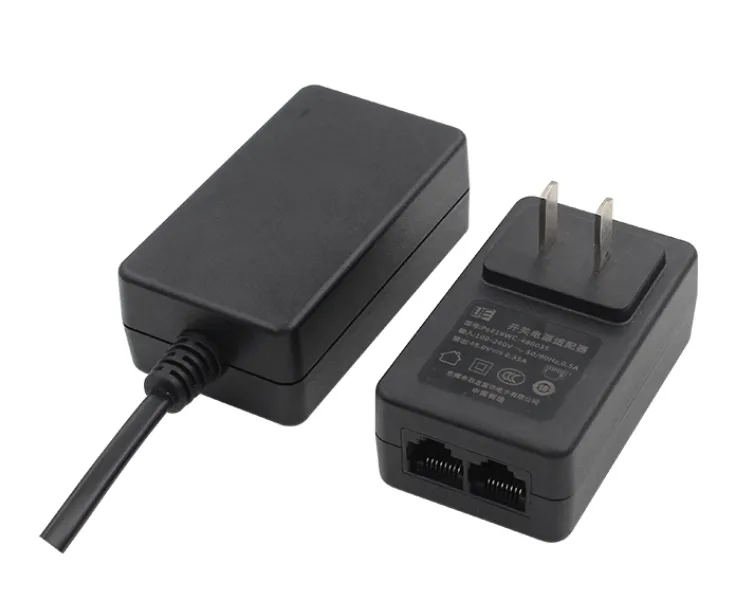
Model | Output Power | PoE Standard | Ethernet Support | Typical Feature |
24W | IEEE 802.3af/at | 10/100Mbps | Compact PoE power solution | |
35W | IEEE 802.3af/at | 10Mbps/100Mbps/1G | Standard PoE application | |
54W | IEEE 802.3af/at | 10Mbps/100Mbps/1G | Gigabit PoE power delivery | |
90W | IEEE 802.3af/at/bt | 10Mbps-10Gbps | High power PoE solution | |
100W | IEEE 802.3at/bt | 10Mbps-10Gbps | High-performance PoE adapter |
Need detailed specifications and datasheets? Explore our complete PoE Adapter product portfolio.
When selecting a PoE adapter, engineers usually consider output power, Ethernet compatibility, efficiency, protection functions, and operating conditions.
Quankang PoE adapters are available with different configurations, including:
Specification | Available Options |
Output Power | 24W / 35W / 54W / 90W / 100W |
Input Voltage | 90-264VAC / 90-290VAC |
PoE Standard | IEEE 802.3af / 802.3at / 802.3bt |
Ethernet Speed | 10Mbps / 100Mbps / 1G / 2.5G / 5G / 10G |
Protection | Short Circuit / Over Current / Over Voltage / Over Temperature |
Safety Compliance | CE, CB, UL, CCC, PSE, KC |
Compare all PoE adapter models and find the right solution for your application.
Standard PoE adapters can cover many networking applications, but equipment manufacturers often face different integration requirements during product development. Limited installation space, specific power requirements, or unique connector designs may require a customized approach.
Quankang works with equipment manufacturers to develop ODM PoE adapter solutions that match their electrical, mechanical, and application requirements.
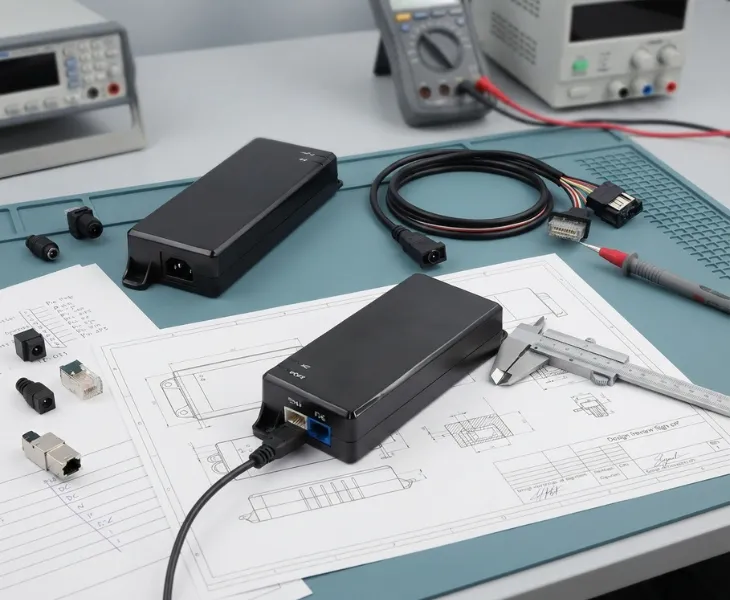
A suitable PoE adapter needs to match the complete system, not only the required output power.
During ODM development, Quankang can customize key specifications including:
These adjustments help customers integrate the PoE adapter into their equipment without unnecessary redesign or additional conversion components.
A customized PoE adapter requires careful evaluation before moving into mass production. Electrical performance, safety compliance, and production consistency all influence the reliability of the final equipment.
Quankang supports customers through the complete development process, including:
With experience in power conversion design and manufacturing, we help equipment manufacturers develop PoE solutions that are ready for long-term supply.
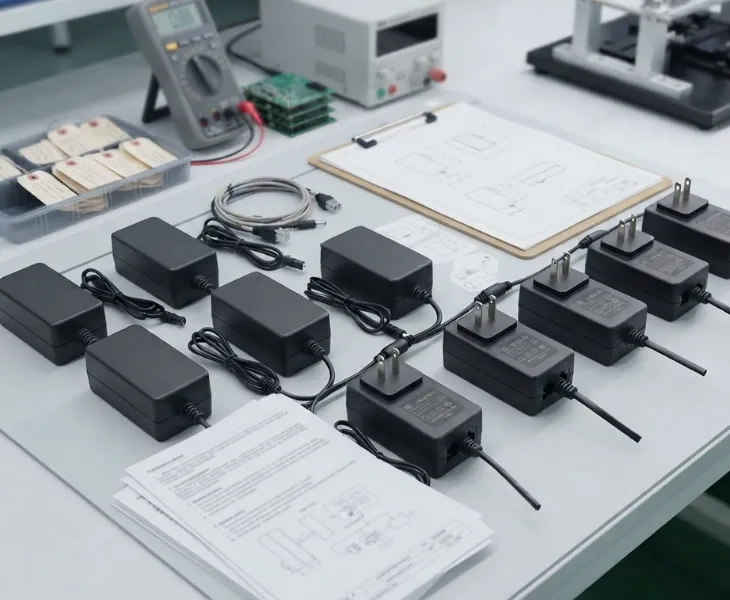
Selecting a PoE adapter is an important part of product development. The power solution needs to match the electrical requirements of the equipment while maintaining stable operation, safety compliance, and reliable Ethernet communication.
Quankang provides PoE adapters from 24W to 100W, supporting different power levels and PoE standards for network equipment, IP phones, wireless access points, POS terminals, and other Ethernet-powered devices.
Our PoE solutions are designed to help equipment manufacturers simplify integration and improve product reliability during development and mass production.
During continuous operation, network devices require a stable power source to maintain reliable performance. A suitable PoE adapter should not only provide the required output power but also protect the connected equipment under abnormal conditions.
Quankang PoE adapters include protection functions such as:
These protection designs help reduce the risk of power-related failures and support stable operation in different application environments.
Different powered devices require different PoE standards and power levels. Selecting a compatible PoE adapter during the design stage helps avoid additional modifications during product testing.
Quankang PoE adapters support IEEE 802.3af, IEEE 802.3at, and IEEE 802.3bt standards according to model specifications.
The product range supports Ethernet data transmission from 10Mbps to 10Gbps on selected models, providing flexible options for equipment manufacturers developing network-connected devices.
Network equipment varies significantly in power consumption and mechanical requirements. A PoE adapter used for an IP phone may require a different output compared with a wireless access point or industrial terminal.
Quankang offers PoE adapter models covering:
Typical Applications: IP phones, small network devices
Typical Applications: Wireless AP, POS devices, Ethernet terminals
Typical Applications: Higher power network equipment
Different connector designs, output requirements, and mechanical specifications can be adjusted based on customer product requirements.
Power compliance is often one of the key considerations during equipment certification. Using a PoE adapter with completed safety and EMC testing can help manufacturers reduce development risks.
Certifications Available:
● Other regional certifications depending on model
EMC Testing Requirements:
This allows customers to select a PoE power solution suitable for different markets and product certification requirements.
When developing network-connected equipment, power design is often influenced by more than just the required output voltage. Space limitations, installation method, Ethernet compatibility and long-term operating conditions all need to be considered during product development.
Quankang PoE adapters are used by equipment manufacturers who need a compact power solution that combines Ethernet connectivity with stable DC output. From communication devices to industrial equipment, our PoE solutions can be configured to match different system requirements.
Many network devices are installed in locations where a separate AC power source is difficult to arrange. IP cameras, wireless access points and communication terminals are typical examples where PoE power can simplify installation by delivering power and data through the same Ethernet connection.
For these applications, the main considerations are usually output stability, Ethernet compatibility and long-term operation. Quankang PoE adapters support IEEE 802.3af/at/bt standards and provide different power levels to support various network equipment designs.
They are commonly integrated into:
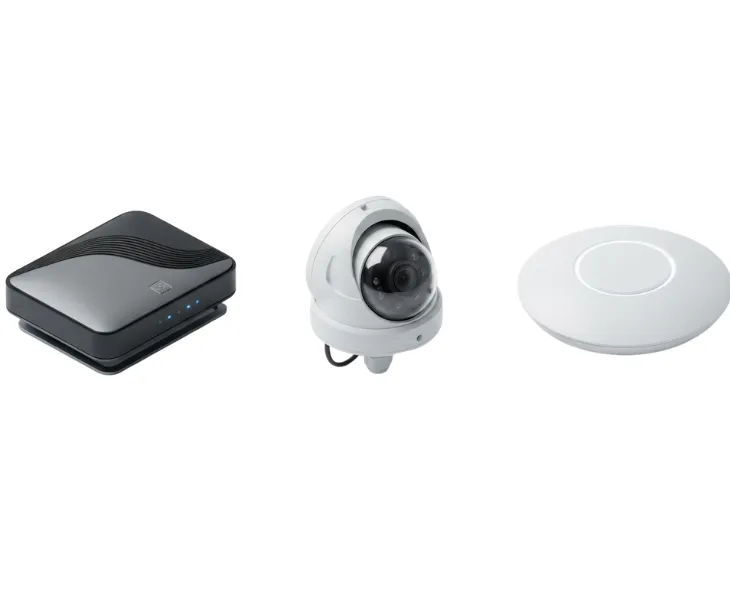
Industrial and IoT equipment often requires a power solution that can fit into a limited installation space while maintaining stable operation over extended periods.
For embedded devices, automation terminals and smart equipment, the PoE adapter is not only a power source but also part of the overall system design. Output voltage, power rating, connector configuration and mechanical requirements may vary depending on the final application.
Quankang works with customers to adjust PoE adapter specifications according to their equipment requirements, helping manufacturers integrate suitable power solutions into their products.
Applications include:
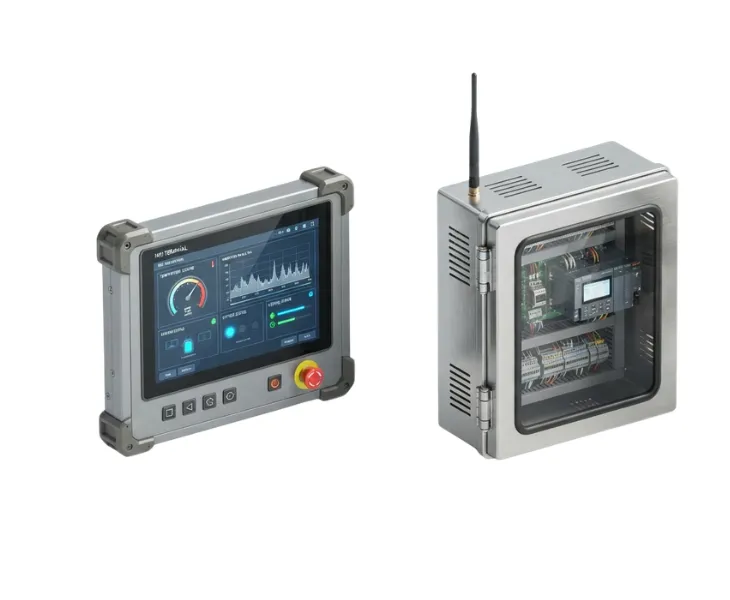
PoE adapter requirements are usually defined by the equipment they are installed into. A power solution for an IP phone does not have the same requirements as one used in an industrial monitoring system.
During product development, customers usually provide details such as input conditions, required output power, Ethernet speed, installation space, and compliance requirements. Our engineering team evaluates these factors to select a suitable PoE power architecture before production.
Below are examples of typical PoE adapter integration requirements from different equipment applications.
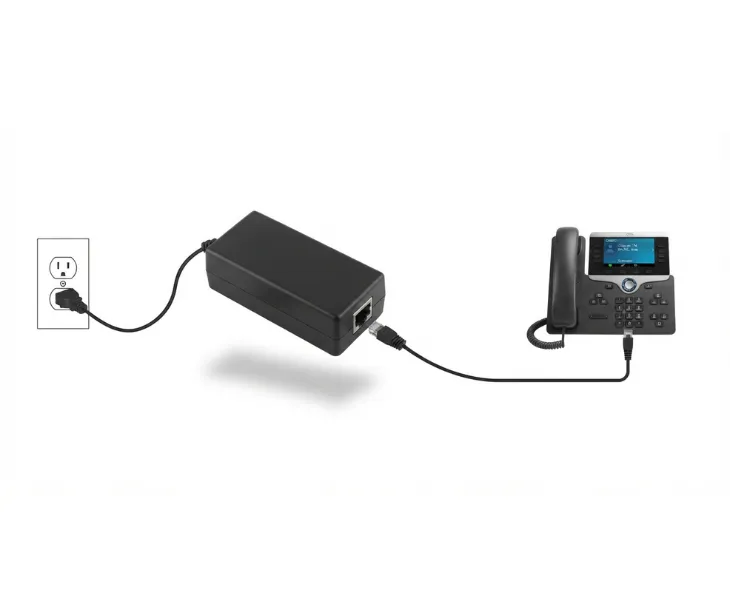
IP communication products such as IP phones, network terminals, and wireless communication devices normally require a compact power solution that can work together with Ethernet data transmission.
A typical requirement for this type of equipment is a 48V PoE adapter with enough output capability for continuous operation while maintaining compatibility with existing network infrastructure.
For one communication equipment application, the electrical specification included:
The main concern during integration was maintaining stable power delivery without affecting the Ethernet communication function. The PoE adapter design was reviewed based on the equipment load, connector position, and installation space.
The selected solution used a compact switching power design with built-in protection against short circuit, over current, and over voltage. The adapter was then integrated into the customer’s equipment for further validation.
For industrial and IoT equipment, the power requirement is usually determined by the connected devices rather than the adapter itself.
A monitoring system with multiple sensors, communication modules, or embedded controllers may require higher PoE power capability and stronger protection performance.
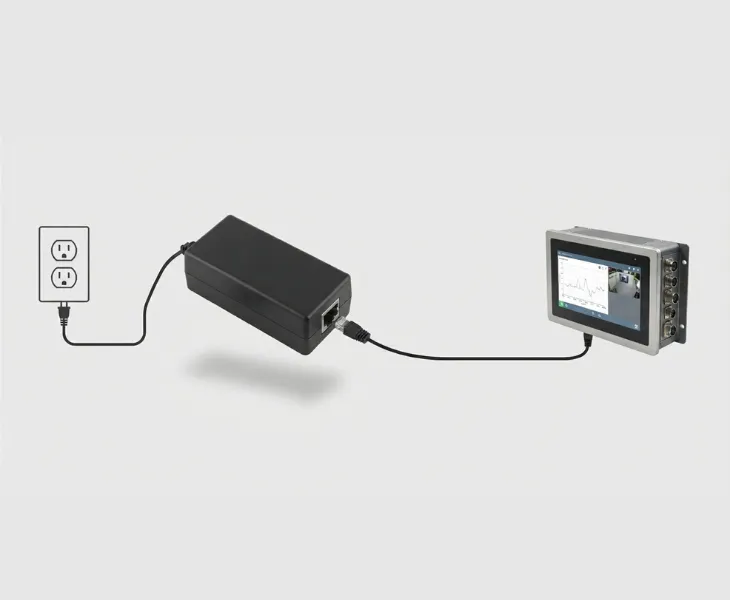
One industrial application required:
The project focused on maintaining stable operation during long working periods. The design also considered protection performance and operating temperature requirements in the installation environment.
Based on the application requirements, the PoE adapter was configured with protection functions including over voltage, over current, short circuit, and over temperature protection. The solution was supplied as part of the customer’s industrial equipment system.
For network and industrial equipment manufacturers, a PoE adapter is a critical power component that directly affects the reliability of the final product.
During mass production, small differences in output performance, protection functions, or Ethernet compatibility may affect equipment stability. Therefore, quality control is focused not only on the finished adapter, but also on every step from component selection to final testing.
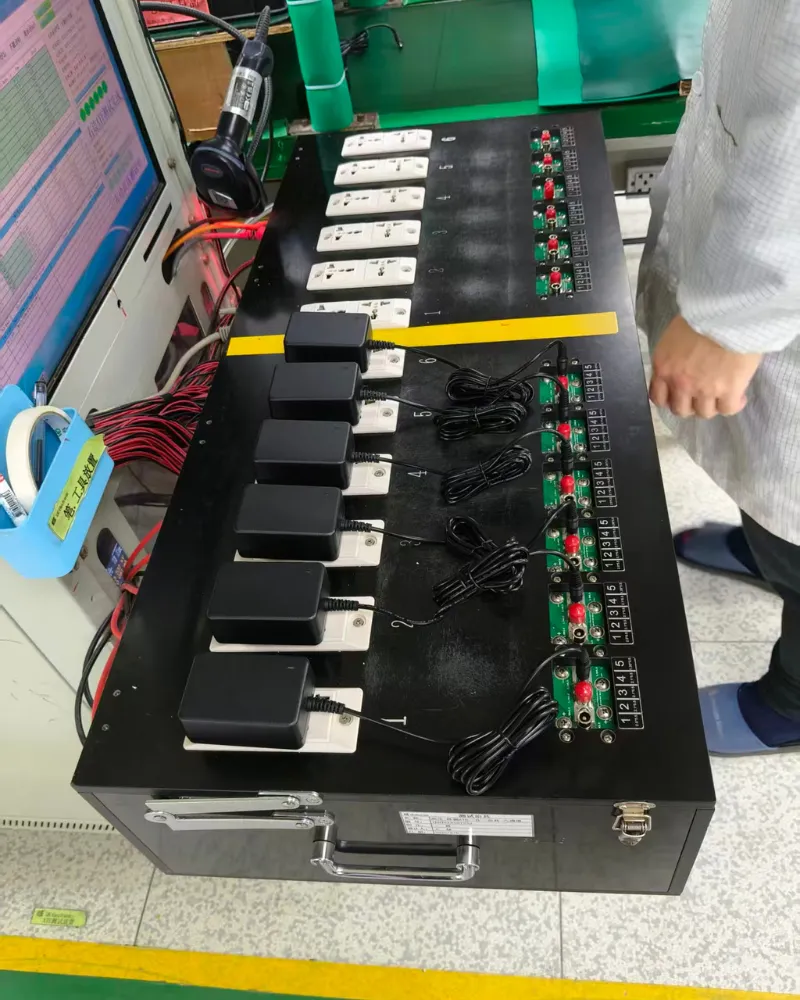
Quankang PoE switching power adapters are developed according to international safety and EMC requirements for professional equipment applications.
Depending on the model, our PoE adapter series supports IEEE 802.3af/at/bt standards and Ethernet transmission speeds from 10Mbps to 10Gbps, making them suitable for different network equipment requirements.
Before shipment, products are verified for key electrical performance, including:
Selected models have passed certifications and standards including CE, RoHS, IEC/EN 62368-1, CB, CCC, cULus, PSE, and FCC requirements.
This helps equipment manufacturers reduce integration risks when applying PoE power solutions to their products.
For customers with long-term production requirements, consistency between initial samples and repeated orders is an important consideration.
PoE adapters supplied for production use need to maintain the same electrical characteristics across different manufacturing batches.
Quankang controls the manufacturing process through:
For higher-power models such as 56W and 100W PoE adapters, additional attention is given to thermal performance, protection response, and long-term operating stability.
This production approach supports customers using PoE adapters in applications such as IP communication equipment, wireless access points, POS systems, and industrial devices.
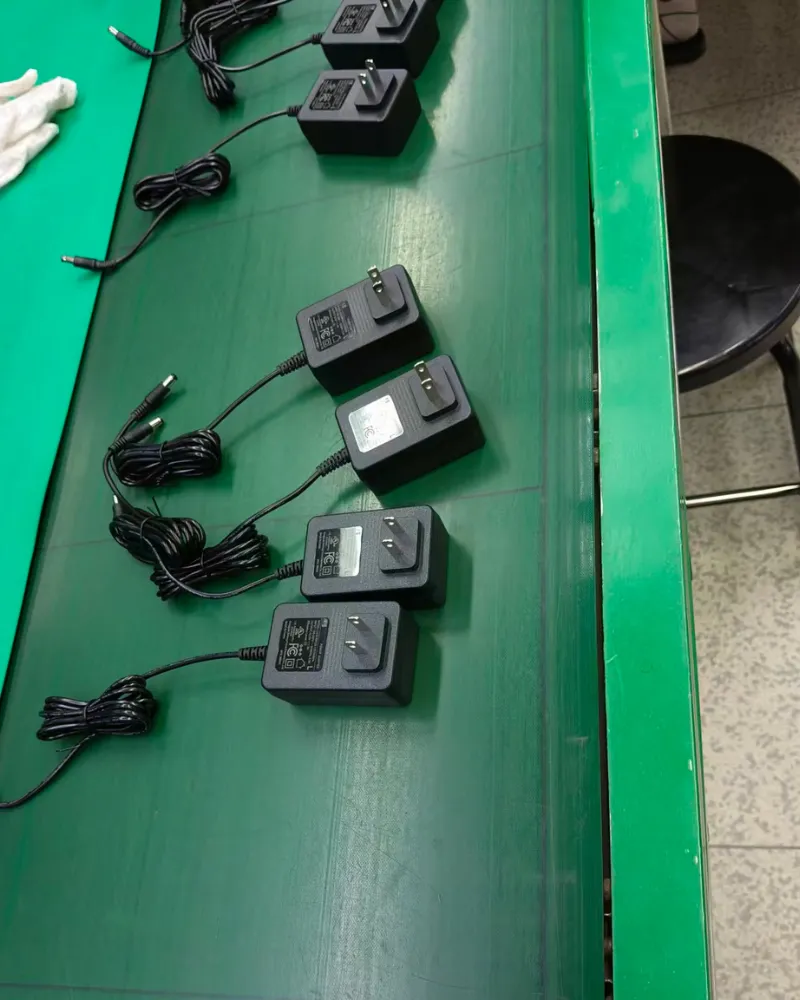
PoE adapters are usually integrated into complete equipment systems, so delivery timing needs to match the customer’s development and production schedule.
For new projects, the first delivery is normally related to product verification. For production orders, consistency between approved samples and shipped units becomes the key consideration.
Quankang manages delivery based on the confirmed product specifications, including output voltage, power rating, PoE standard, and mechanical requirements, to reduce differences between evaluation samples and production shipments.
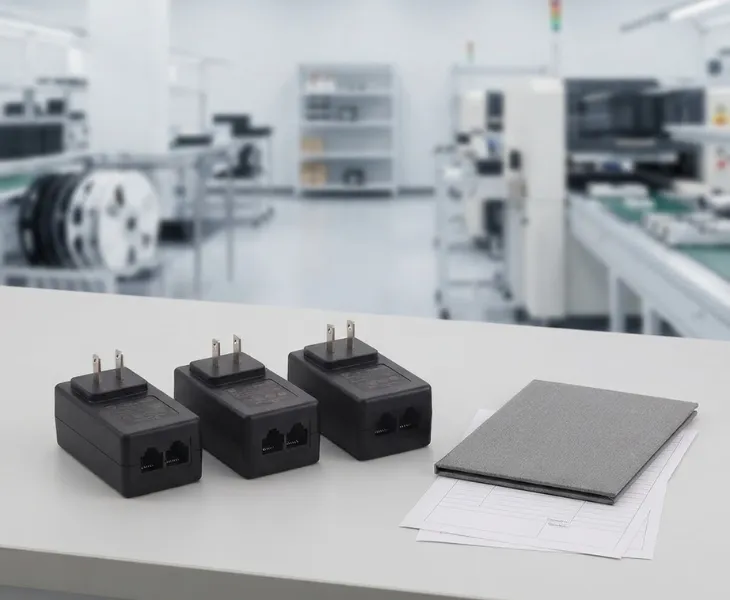
During the product development stage, customers usually receive PoE adapter samples before starting full production.
The sample stage is used to confirm important points such as:
For example, a 48V PoE adapter may require different validation compared with a 54V industrial device.
After approval, production follows confirmed specifications, including electrical, enclosure, and connector configuration.

Before shipment, adapters are checked against approved specifications. Inspection focuses on parameters affecting integration:
Transportation protection is considered during packing to reduce damage from vibration, impact, or handling.
We support standard export shipment by air or sea, ready for installation and system integration.
Selecting the right PoE adapter requires more than checking the output power. Equipment manufacturers need to consider voltage requirements, power rating, PoE standards, and device compatibility to ensure stable integration.
A suitable PoE adapter should match both the electrical requirements and installation conditions of the final equipment.
The output voltage and power rating are the first factors to confirm when selecting a PoE adapter.
Different equipment may require different voltage levels, such as 12V, 24V, 48V, or 54V. The selected adapter should match the device input requirement and provide sufficient power margin for stable operation.
For example, a device requiring 40W input should not always operate with a 40W adapter at full load. Selecting a suitable power margin can help improve long-term reliability.
The PoE standard should also match the connected device:
In addition, engineers should confirm Ethernet speed, connector configuration, and installation requirements before selection.
Quankang provides PoE adapter solutions from 24W to 100W with different voltage and power options for network and industrial equipment.
View PoE Adapter Product Series →
Learn more: How to Choose the Right PoE Adapter for Your Device →
Although PoE adapters and PoE injectors both provide power through Ethernet cables, they are designed for different purposes.
A PoE adapter is mainly used when equipment manufacturers need a complete power solution that matches their device voltage, power requirement, and mechanical design.
A PoE injector is usually used to add PoE capability to an existing network system without changing the original equipment.
| PoE Adapter | PoE Injector |
Main Purpose | Power conversion and PoE output for equipment integration | Add PoE power to existing Ethernet networks |
Typical Use | Network equipment, communication devices, industrial systems | Existing network upgrades |
Main Considerations | Voltage, power rating, PoE standard, connector design | Network compatibility |
For product developers, PoE adapters are usually preferred because they can be selected or customized according to the equipment requirements.
Read more: PoE Adapter vs PoE Injector Comparison →
Choosing a PoE adapter usually starts from the equipment requirement, not from the adapter itself.
Before selecting a model, you need to confirm the device input voltage, required power, PoE standard, and how the equipment will operate in the final application.
A common mistake is selecting an adapter only based on the maximum power value. In some applications, the actual working condition, startup demand, and continuous operation time can affect the final choice.
If the standard model cannot match the equipment requirement, an ODM solution may be considered to adjust the output specification, connector, or mechanical design.
When a PoE-powered device does not start, the problem is not always caused by insufficient power.
The first things to check are the PoE compatibility, output voltage, power class, connector definition, and whether the device requires active PoE negotiation.
Two adapters may both be marked as “48V PoE”, but they may not provide power in the same way.
Checking the complete specification of both the adapter and the equipment before replacement can usually identify the cause faster.
A higher power rating is not always necessary, but choosing the exact minimum rating is not always the best option either.
The actual selection depends on how the equipment works in the application.
For devices running continuously or installed in limited spaces, engineers normally consider additional power margin to avoid operating the adapter close to its limit.
The suitable rating depends on the equipment requirement, operating environment, and expected product lifetime.
For many equipment manufacturers, thermal performance becomes a concern after the adapter is installed into the final product.
An adapter that performs well during open-area testing may have different temperature performance when placed inside an enclosure with limited airflow.
Before finalizing the power solution, it is recommended to evaluate the adapter under the actual installation conditions, including load, enclosure space, and ambient temperature.
Yes. Many equipment designs cannot directly use standard PoE adapters because of space limitations or interface requirements.
Depending on the project, the adapter can be customized for output voltage, power rating, connector type, cable length, and mechanical requirements.
The earlier these requirements are confirmed, the easier it is to avoid changes to the equipment structure later in development.
The PoE adapter is part of the complete equipment system, so its performance can influence the final EMC test result.
If EMC issues appear after the product design is completed, changing the adapter may affect the project schedule.
For this reason, the power solution is usually evaluated together with the equipment requirements during the design stage.
For equipment manufacturers, sample performance is only the first step. The adapter also needs to maintain the same performance after moving into production.
Before mass production, the design is normally reviewed based on electrical requirements, protection functions, and application conditions.
Production testing then helps ensure that delivered units continue to meet the approved specification.
The right PoE standard depends on the power requirement of your equipment.
Before selecting the adapter, you need to confirm the required power level and the PoE capability supported by your device.
Choosing the wrong PoE standard may cause compatibility problems during testing, even when the adapter output voltage appears correct.