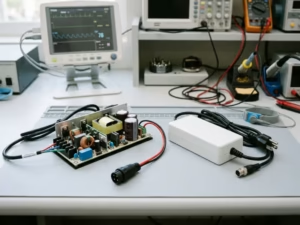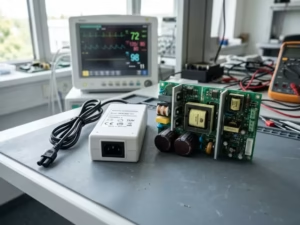
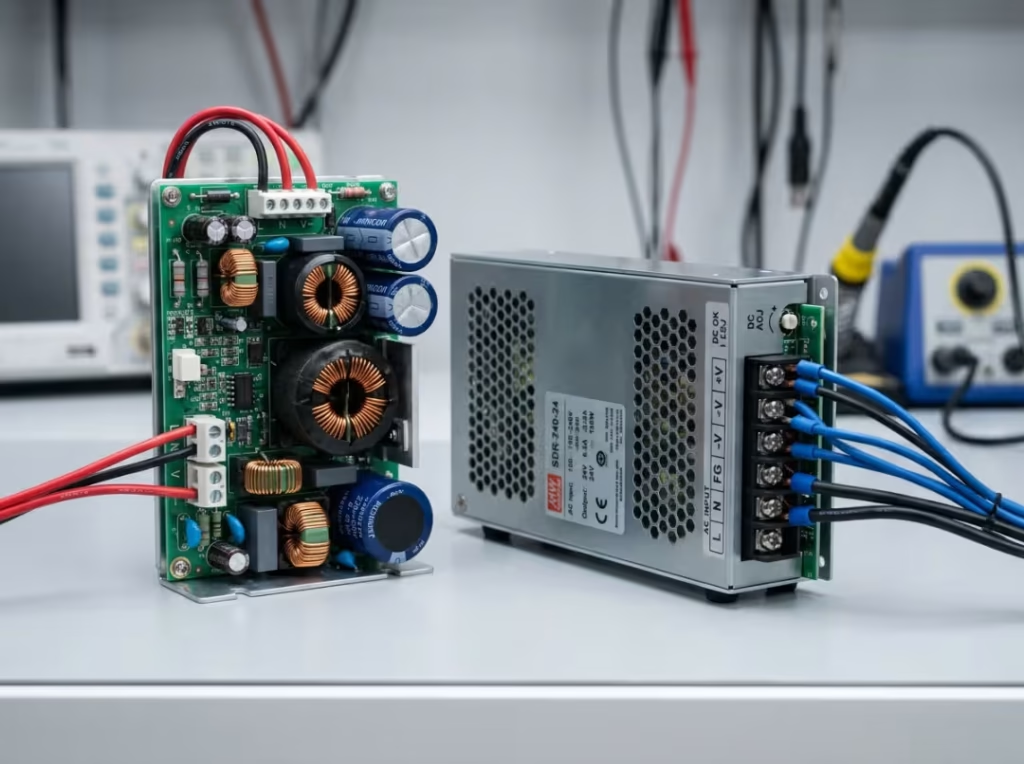
If your equipment already sits inside a protective enclosure with controlled airflow, an open frame power supply is usually the smaller, lighter, and more cost-effective pick. If the supply has to protect itself against dust, debris, or accidental contact, an enclosed power supply almost always wins.
That single choice ripples through your entire design. It shapes your bill of materials, your thermal strategy, your safety compliance path, and how much room you have left inside the chassis. This guide breaks down the real differences so you can decide with confidence, whether you’re an engineer finalizing a layout or a buyer comparing quotes.
Quick Answer: Which One Should You Choose?
Short on time? Here’s the fast decision.
Choose an open frame power supply if:
- The unit will sit inside a host product that already provides a protective enclosure.
- Your system delivers controlled or forced-air cooling.
- Space, weight, and unit cost are top priorities.
- You’re integrating into equipment like medical devices, IT hardware, or instrumentation with existing shielding.
Choose an enclosed power supply if:
- The supply may be exposed, semi-exposed, or handled during service.
- Dust, debris, moisture, or accidental contact are realistic risks.
- You want faster installation with ready mounting brackets and terminals.
- The unit operates in industrial, factory floor, or harsh-condition settings.
The one-line rule: If your equipment already handles protection and airflow, go open frame for the smaller, cheaper option. If the supply has to protect itself, go enclosed.
What Is an Open Frame Power Supply?
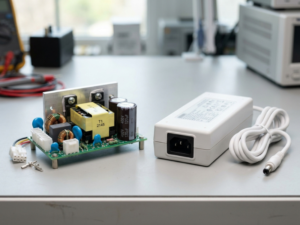
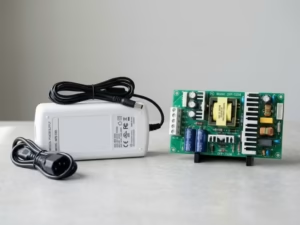
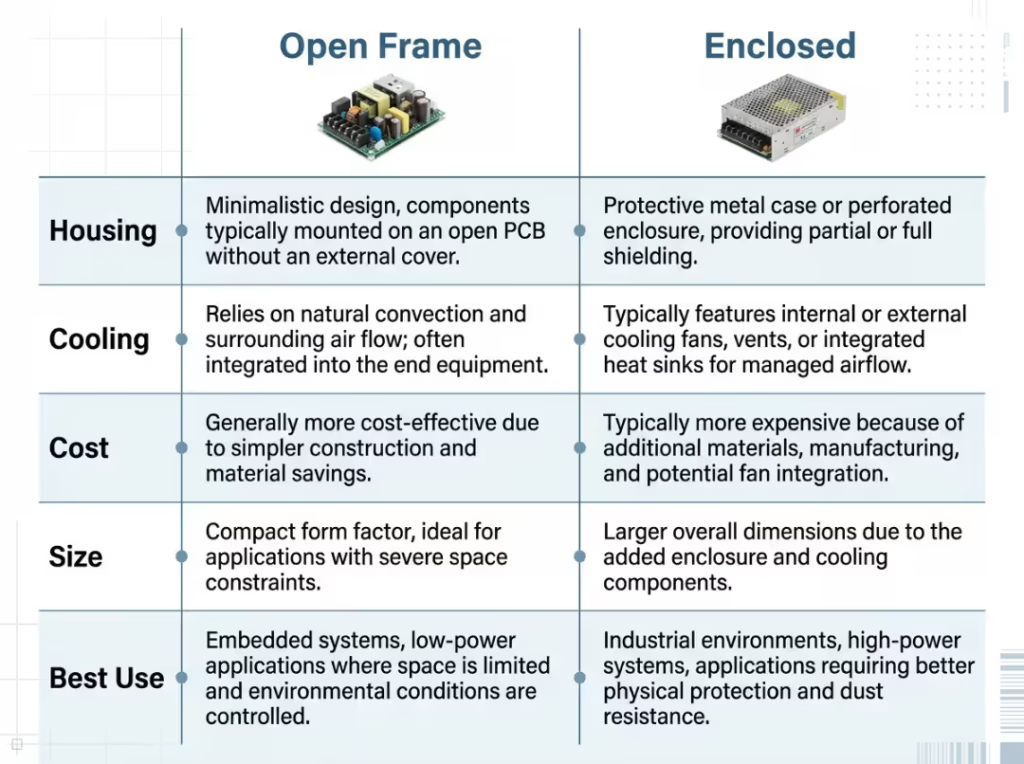
An open frame power supply has no external casing. Its components sit exposed on a bare PCB, usually mounted to a metal chassis or a set of standoffs. The transformer, capacitors, and connectors are all out in the open.
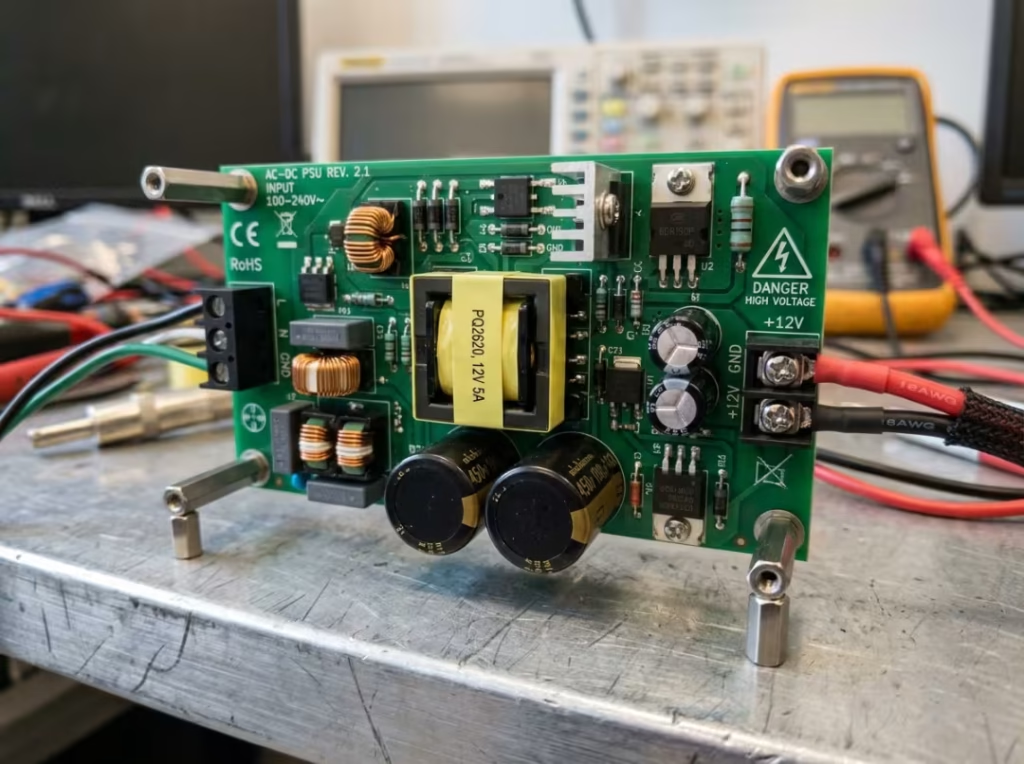
This design keeps the unit compact and light. It’s built to be integrated inside another product that already provides physical protection and airflow, such as a server rack, a medical device, or an industrial control cabinet. The trade-off is clear: you get density and low cost, but the host equipment has to supply the protection and cooling the board doesn’t have on its own.
What Is an Enclosed Power Supply?
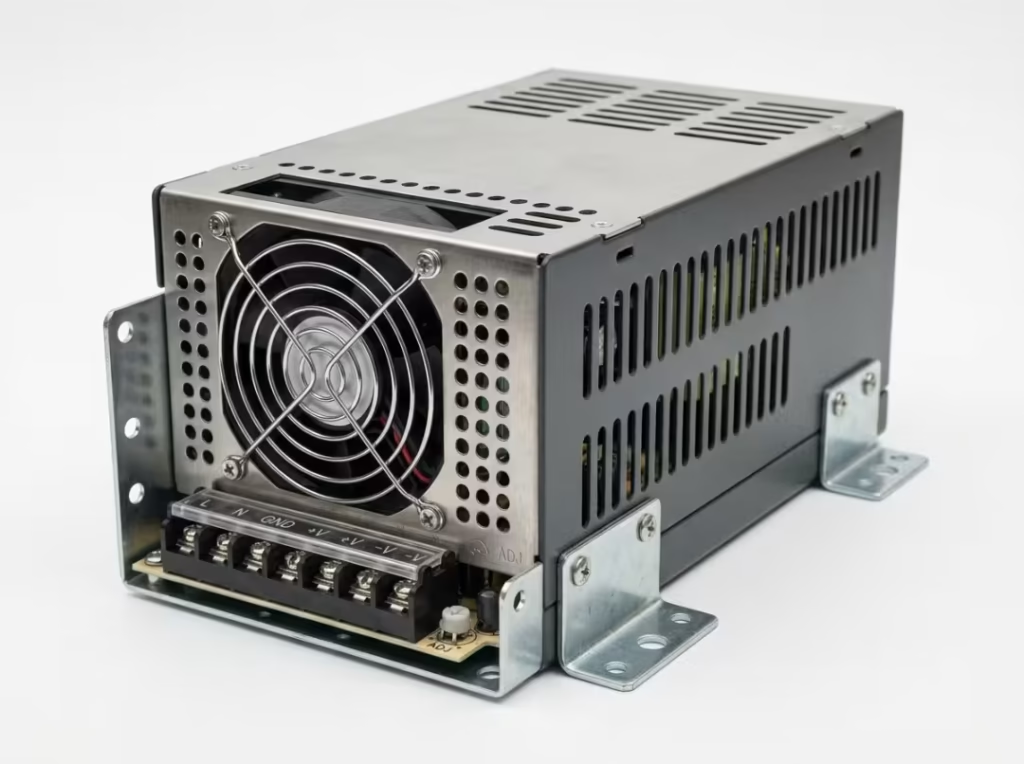
An enclosed power supply houses its components inside a protective metal case. That casing shields the electronics from dust, debris, moisture, and accidental contact.
Many enclosed units add a built-in cooling fan, screw terminals, and mounting brackets. They’re designed to work as standalone units or drop straight into equipment without an extra layer of protection around them. You pay more and give up some space, but you gain durability, faster installation, and a simpler path to safe field use.
Open Frame vs Enclosed Power Supplies: Key Differences
Here’s a side-by-side look at how the two designs compare across the factors that matter most in a real design decision.
Factor | Open Frame | Enclosed |
|---|---|---|
Protective housing | None — exposed components | Full metal casing |
Cooling | Relies on host system airflow | Often has built-in fan or shielded convection |
Exposure risk | Live parts and PCB exposed to dust, debris, and contact | Protected from contaminants and accidental contact |
Safety | Live parts more exposed | Better isolation from contact and debris |
Cost (unit price) | Usually lower | Usually higher |
Total system cost | Can rise with added enclosure, cooling, and compliance work | Higher up front, fewer add-ons |
Size and weight | Smaller, lighter | Larger, heavier |
Integration flexibility | High — fits tight spaces | Lower — needs mounting room |
Installation | Requires careful handling and design | Faster, more plug-and-play |
Maintenance | Exposed parts easier to inspect | Casing may need removal |
Compliance considerations | Enclosure-level safety burden shifts to your product | More protection and isolation built in |
Best-fit applications | Inside protected equipment | Standalone or harsher environments |
Pros and Cons of Open Frame Power Supplies
Pros
- Compact and lightweight — ideal when space and weight are tight.
- Lower unit cost — you’re not paying for a case you may not need.
- Flexible integration — fits custom layouts and dense assemblies.
- Efficient cooling within a ventilated host — no casing to trap heat.
- Easy visual inspection — components stay accessible.
Cons
- Exposed live components — requires a protective host enclosure for safety.
- Sensitive to dust and debris — not suited for open or dirty environments.
- Careful handling needed — static and physical damage are bigger risks.
- Shifts design burden to you — airflow, shielding, and protection become your job.
Pros and Cons of Enclosed Power Supplies
Pros
- Built-in protection — shields against dust, contact, and physical damage.
- Faster installation — mounting brackets and terminals ready to go.
- Safer for exposed or standalone use — less risk of accidental contact.
- Reliable in tougher conditions — better suited to industrial settings.
- Simpler compliance path — casing supports safety and isolation.
Cons
- Higher unit cost — you pay for the housing and extra hardware.
- Larger and heavier — takes more room inside your equipment.
- Potential heat buildup — casing can trap heat without proper venting.
- Less flexible fit — harder to squeeze into tight custom spaces.
Best Applications for Open Frame vs Enclosed Power Supplies
The right choice often comes down to the industry and the equipment the supply lives in. Here’s how the two designs map to common B2B applications.
Medical Devices
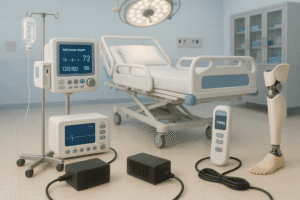
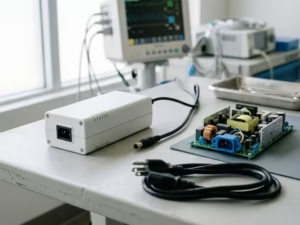
Open frame supplies dominate here. Medical equipment usually has its own protective housing, so the exposed board integrates cleanly while saving space and weight. The catch is certification: the unit must carry IEC 60601-1 approval and meet strict leakage current limits. Enclosed units still appear in medical carts, portable diagnostic gear, and service-accessible equipment where a technician might contact the supply directly.
Industrial Automation
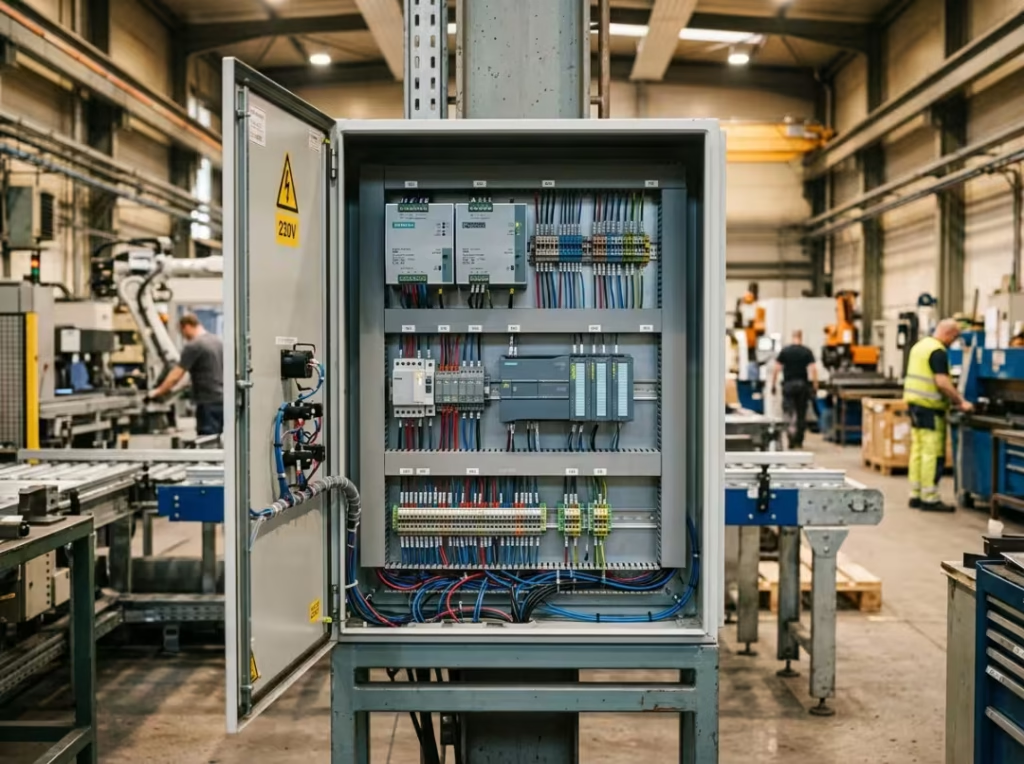
Enclosed supplies are the default on the factory floor. Control cabinets, PLCs, and motor drives face dust, vibration, and physical impact, and the metal casing handles all three. DIN-rail enclosed models are especially common because they mount fast and simplify panel wiring. Open frame units still show up inside sealed industrial equipment where the outer chassis already blocks contaminants.
Telecom and Networking
Both designs have a place. Open frame supplies fit high-density rack equipment like switches and base station hardware, where forced-air cooling is built in and every millimeter counts. Enclosed units serve standalone networking gear and outdoor or semi-protected installations that need more physical and environmental robustness.
Embedded Systems
Open frame is the natural fit. Embedded designs are space-constrained by definition, and the bare board tucks into custom layouts that enclosed units simply can’t reach. Because the host product supplies the protective shell and airflow, you avoid paying for a case you don’t need. Just budget for the thermal and shielding design work that shifts onto you.
Test and Measurement Equipment
This category splits by form factor. Benchtop instruments with ventilated chassis often use open frame supplies for compact, efficient integration. Portable or ruggedized test gear leans enclosed to survive transport, handling, and less controlled environments. Precision instruments also weigh EMC performance heavily, which can push the housing decision either way.
When to Choose an Open Frame Power Supply
Pick an open frame unit when:
- Your end product already has a protective enclosure.
- The host system provides controlled, forced-air cooling.
- Space and weight are at a premium.
- You need to hit a lower price point at volume.
- You’re integrating into medical, IT, or instrumentation equipment with existing shielding.
When to Choose an Enclosed Power Supply
Pick an enclosed unit when:
- The supply will operate as a standalone or semi-exposed component.
- Dust, debris, or moisture are present in the environment.
- You want faster, simpler installation with ready mounting.
- Operator or technician contact is possible during use.
- You’re working in industrial, factory floor, or harsh-condition applications.
Cost Beyond Unit Price: Total System Cost Comparison
Open frame units almost always show a lower price on the datasheet. But the sticker price is only part of the story. Once you account for what it takes to get either design working reliably in your product, the gap narrows and can even reverse. Here’s where the real costs hide.
Integration Cost
An open frame board shifts design work onto your team. You have to design the protective enclosure, plan the mounting, route the airflow, and manage safety clearances. That’s engineering time, and engineering time is money. Enclosed units arrive ready to mount with brackets and terminals, cutting integration labor and shortening your design cycle.
Thermal Management Cost
Open frame supplies depend on your system’s airflow. If your host doesn’t already move air, you may need to add fans, ducting, or heat sinks, and that adds parts and complexity. Enclosed units often include cooling, but the casing can trap heat, so you may still pay a thermal derating penalty. Either way, check the derating curves before you assume one design runs cooler.
Compliance Cost
Certification work scales with how much of the safety burden falls on you. With an open frame board, your finished product has to demonstrate that its enclosure, clearances, and isolation meet the relevant standards, which can add test cycles and documentation. Enclosed units carry more of that protection built in, which can simplify and speed up your compliance path.
Maintenance and Service Cost
Think about the whole lifecycle. Open frame supplies are easy to inspect visually, but their exposed parts raise the risk of field damage and complicate safe service. Enclosed units protect components better and are safer to handle, though you may need to remove the casing to reach anything inside. Factor in replacement risk, downtime, and technician safety when you compare.
The takeaway: Compare total system cost, not unit price. A cheaper open frame board can cost more once you add protection, cooling, compliance work, and service risk, while an enclosed unit can deliver better total value in the right application.
Compliance and Safety Considerations
Choosing between open-frame and enclosed isn’t just about size and price. Your decision shapes how hard it is to certify the finished product and how safe it is in the field. Here’s what to weigh before you commit.
Safety Standards (IEC 62368-1, IEC 60601-1, UL)
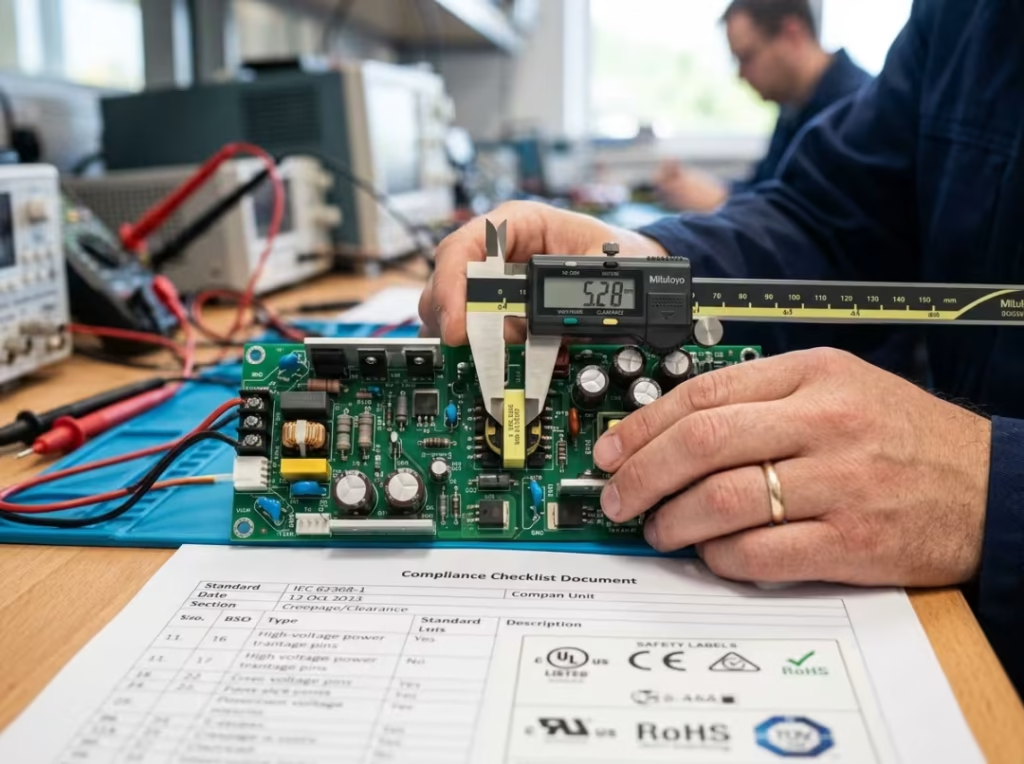
The standard you target depends on your market. IEC 62368-1 governs audio, video, and IT equipment and has largely replaced the older 60950-1. IEC 60601-1 applies to medical electrical equipment and enforces stricter leakage current and isolation requirements. In North America, UL listings (such as UL 62368-1 or UL 60601-1) are often required for market access. Whichever applies, confirm early that the supply carries the right approvals. An open-frame unit places more of the enclosure-level safety burden on your product, while an enclosed unit provides more built-in protection.
EMC Considerations
Electromagnetic compatibility can make or break a design. Enclosed units benefit from their metal casing, which provides a degree of shielding and can help you pass emissions and immunity testing. Open-frame boards radiate more freely, so you may need additional shielding, filtering, or careful layout in the host product to meet limits such as CISPR 32 or FCC Part 15. Plan your EMC strategy at the start, not after a failed pre-compliance scan.
Creepage, Clearance, and Isolation
These are the physical safeguards that keep voltages from arcing or shocking. Creepage is the distance along a surface between conductors; clearance is the distance through air. Both scale with working voltage, pollution degree, and insulation requirements. Isolation separates hazardous voltages from user-accessible circuits. With an enclosed unit, much of this is engineered in. With an open-frame board, you’re responsible for maintaining these distances in your own layout and enclosure design, so build them into the plan before your PCB and mechanical designs lock in.
Bottom line: Compliance isn’t a final checkbox. It’s a design input. The design you pick determines how much safety, EMC, and isolation work lands on your team, so weigh it alongside cost and space from day one.
How to Choose the Right Power Supply for Your Application
Run through this checklist before you commit. Each item can flip your decision.
- Environment — Is the supply exposed to dust, moisture, or contact? Harsher conditions lean toward enclosed.
- Ventilation — Does your system supply steady airflow? Good forced-air cooling supports open frame.
- Space constraints — How much room do you actually have? Tight builds favor open frame.
- Safety requirements — Are live parts reachable during operation or service? Enclosed reduces that risk.
- Certifications — Confirm the unit meets the safety and EMC standards your market demands, such as UL, IEC 62368-1, or IEC 60601-1 for medical.
- Budget — Weigh unit cost against the cost of adding your own protection and cooling around an open frame board.
- End equipment design — Match the supply to how your product is built, mounted, and serviced.
Score each factor for your specific project. If most point toward protection and simplicity, go enclosed. If most point toward density and cost efficiency inside a protected host, go open frame.
Common Mistakes to Avoid
- Choosing on unit price alone. A cheaper open-frame board can end up costing more once you add shielding, cooling, and compliance work. Compare total system cost.
- Assuming open frame always runs cooler. Without adequate host airflow, an exposed board overheats and fails early. Map the airflow path before you commit.
- Treating the enclosure as a complete environmental seal. Many enclosed units aren’t rated for high dust or moisture ingress. Check the IP rating against your environment.
- Underestimating heat inside the case. Enclosed doesn’t mean cool. The casing can trap heat, so read the thermal derating curves, not just the peak rating.
- Overlooking certifications until late. Discovering a missing approval after layout freeze forces costly redesign. Confirm the required standards during concept, not validation.
- Ignoring service-access risk. Exposed open frame parts complicate safe field service. Plan for how a technician will safely handle the unit.
- Skipping derating. Running near the maximum rated load shortens the lifespan of both types. Design in headroom.
- Forgetting clearance. Both designs need space for connectors, airflow, creepage, and service access. Reserve it early.
Frequently Asked Questions
What’s the main difference between open frame and enclosed power supplies?
The presence of a protective case. Open-frame units are bare boards built for integration into a host product; enclosed units add a metal housing for protection and easier standalone use.
Are open frame power supplies safe?
Yes, when installed inside a protective enclosure that prevents accidental contact with live parts. On their own, their exposed components make them unsuitable for open or user-accessible areas.
Is an open frame power supply safe without a housing?
No. Exposed live parts create a shock and contamination risk. Open-frame units are designed to be housed within a host product that provides the physical protection they lack.
Are enclosed power supplies better for industrial environments?
Usually, yes. Their casing protects against dust, debris, and physical impact, which are common on factory floors and in harsh settings. DIN-rail enclosed models are especially popular in control cabinets.
Do enclosed power supplies need fans?
Not always. Lower-power units often rely on convection cooling through the casing, while higher-power models add a fan to prevent heat buildup. Always check the thermal specs and derating data.
Are open frame power supplies more efficient?
Efficiency depends on the specific design, not the housing style. Open-frame units can shed heat more freely within a ventilated host, but efficiency ratings depend on the topology and components, so compare datasheets directly.
Which power supply type is better for industrial automation?
Enclosed units are the common default because they withstand dust, vibration, and contact. Open-frame units still fit inside sealed industrial equipment, where the outer chassis already blocks contaminants.
Which is more cost-effective?
Open frame units cost less up front. But once you add your own protection, cooling, and compliance work, an enclosed unit can deliver better total value. Compare total system cost, not unit price.
Does enclosed mean better cooling?
Not automatically. The casing can trap heat. Many enclosed units add a fan to compensate, so always check the thermal specs and derating curves before assuming one design runs cooler.
How do I choose a power supply for a sealed enclosure?
Watch thermal management closely. A sealed enclosure limits airflow, so verify the derating curve at your ambient temperature, plan for heat dissipation, and confirm the unit can deliver full load without overheating inside the sealed space.
Can open frame power supplies be used in medical devices?
Yes, they’re common in medical equipment, provided they carry the right certifications, such as IEC 60601-1, and are housed within the device’s protective enclosure with proper leakage-current control.
Final Thoughts
The choice comes down to where and how the supply will live. Open frame gives you a smaller, lighter, lower-cost solution when your equipment already handles protection and cooling. Enclosed gives you built-in durability and simpler installation when the environment is tougher or the unit stands more on its own.
Look past the datasheet price. Weigh integration effort, thermal design, compliance work, and service risk together, and match the design to your environment, airflow, space, safety needs, and certifications. Get that right and you avoid the costly rework that comes from choosing on price alone.
Need help specifying the right power supply for your application? Talk to our engineering team for a recommendation matched to your operating environment, thermal profile, and compliance requirements, so you lock in the right unit the first time and keep your design on schedule.