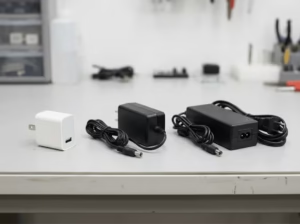
IEC 60601 Design Challenges, Root Causes, and Engineering Solutions
Leakage current is one of the most critical safety parameters in medical electrical equipment design. For medical device manufacturers, excessive leakage current is also one of the most common reasons products fail IEC 60601 certification testing.
In patient-connected applications such as ECG monitors, ultrasound systems, infusion pumps, and diagnostic equipment, even very small leakage currents may create patient safety risks or trigger regulatory non-compliance.
Many OEM engineers only discover leakage current problems during late-stage certification testing, when redesign costs become significantly higher.
This guide explains:
- What leakage current is
- Why medical devices fail leakage current testing
- IEC 60601 leakage current requirements
- Common engineering mistakes
- Practical methods to reduce leakage current in medical power systems
This article is part of our medical power system engineering series:
→ Related Guide:
“Medical Power Supply Failures: Causes, IEC 60601 Risks, and Engineering Solutions”

What Is Leakage Current in Medical Devices?
Leakage current refers to unintended electrical current flowing from the power system to ground, enclosure surfaces, or patient-accessible parts.
In medical equipment, leakage current is especially important because devices may maintain direct patient contact during operation.
Common leakage current paths include:
- AC input to ground
- Primary-to-secondary transformer coupling
- EMI filter capacitors
- Patient-connected signal paths
- Parasitic capacitance inside the power supply
Even when the device operates normally, excessive leakage current may:
- create patient safety risks
- cause IEC 60601 test failure
- introduce signal instability
- affect sensitive diagnostic systems
For medical OEM manufacturers, leakage current control must be considered during early-stage system architecture design rather than after prototype completion.
Why Leakage Current Becomes a Major IEC 60601 Certification Problem
Many medical device manufacturers underestimate how difficult leakage current optimization can become during IEC 60601 testing.
In several OEM projects supported by Quankang, devices passed functional testing successfully but failed leakage current evaluation during certification because of:
- unsuitable commercial-grade adapters
- improper grounding architecture
- excessive Y-capacitor leakage
- insufficient transformer isolation
- incorrect EMC filter design
In many cases, solving leakage current issues late in development requires:
- PCB redesign
- enclosure grounding modification
- replacement of the external power adapter
- repeated safety testing
- additional certification cost
This may delay product launch by several months.
IEC 60601 Leakage Current Requirements
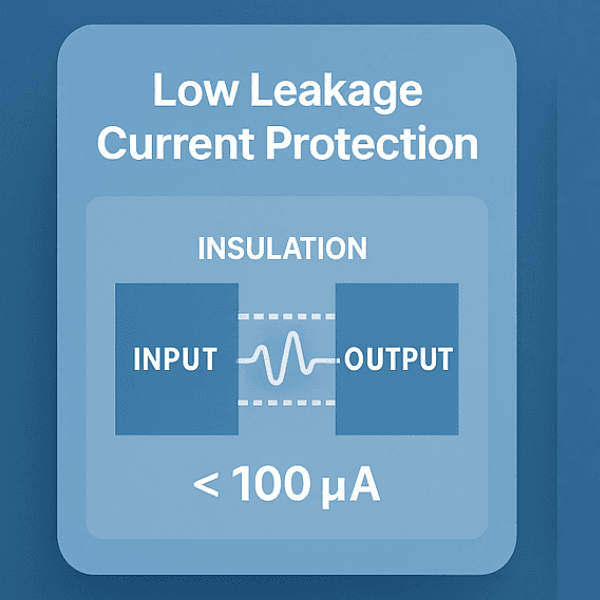
IEC 60601 defines strict leakage current limits depending on device classification and patient contact level.
Typical Leakage Current Limits
| Application Type | Condition | Typical Leakage Current Requirement |
| General medical equipment | Normal Condition (NC) | < 500 μA |
| BF applied part equipment | Normal Condition (NC) | < 100 μA |
| CF applied part equipment | Normal Condition (NC) | < 10 μA |
Applications requiring ultra-low leakage current include:
- ECG systems
- EEG equipment
- cardiac monitoring systems
- electrosurgical devices
- patient-connected diagnostic systems
CF-type applications typically require the strictest leakage current control because they involve direct cardiac contact.
BF vs CF Applied Parts Explained
Understanding BF and CF classifications is critical for selecting the correct medical power architecture.
| Classification | Typical Application | Leakage Requirement |
| BF (Body Floating) | Ultrasound, patient monitors | Moderate |
| CF (Cardiac Floating) | ECG, cardiac applications | Extremely strict |
CF applications generally require:
- ultra-low leakage current
- reinforced isolation
- stricter insulation requirements
- more careful EMI filter optimization
→ Related Resource:
“BF vs CF Medical Equipment Leakage Current Requirements”
Common Causes of Excessive Leakage Current
Leakage current problems are usually caused by a combination of electrical design issues rather than a single component failure.
1. Improper Y-Capacitor Selection
Y-capacitors are commonly used in EMI filters to suppress conducted noise.
However, excessive capacitance values may significantly increase leakage current.
This creates a common engineering conflict between:
- EMC performance
- leakage current compliance
In many projects, commercial adapters prioritize EMI suppression while neglecting medical leakage current requirements.
2. Poor Transformer Isolation Design
Insufficient primary-to-secondary isolation may increase parasitic coupling current.
Common issues include:
- inadequate insulation tape
- weak transformer shielding
- poor winding structure
- insufficient creepage distance
Medical-grade transformers typically require reinforced isolation and controlled parasitic capacitance.
3. Grounding Architecture Problems
Improper grounding is another major source of leakage current instability.
Common grounding mistakes include:
- mixed analog and power grounds
- floating chassis structure
- unstable shield grounding
- excessive ground impedance
Poor grounding may also worsen EMC performance and signal noise.
4. Creepage and Clearance Violations
Insufficient creepage and clearance spacing can cause both:
- safety test failure
- long-term insulation reliability problems
IEC 60601 spacing requirements depend on:
- working voltage
- pollution degree
- insulation type
- MOPP level
→ Related Resource:
“Creepage and Clearance in IEC 60601 Power Supplies”
5. Using Consumer or Industrial Adapters
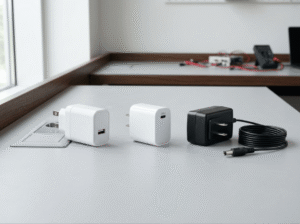
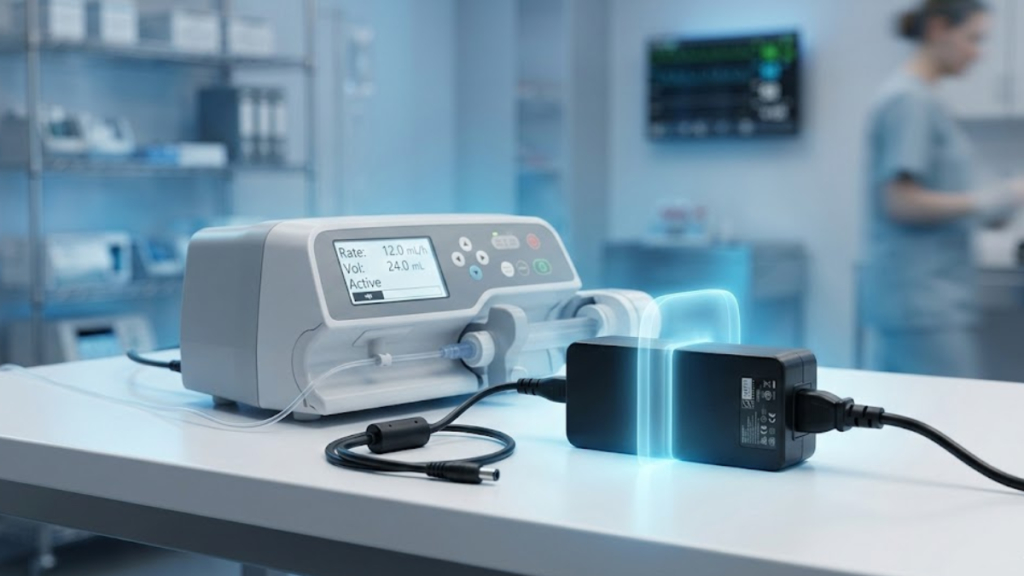
One of the most common OEM mistakes is using commercial adapters in medical applications.
Consumer-grade adapters often fail to meet medical requirements for:
- leakage current
- isolation protection
- EMC performance
- patient safety
Even if the device functions normally, certification failure often occurs during formal IEC 60601 evaluation.
Real-World OEM Problem: CF-Level Leakage Current Compliance
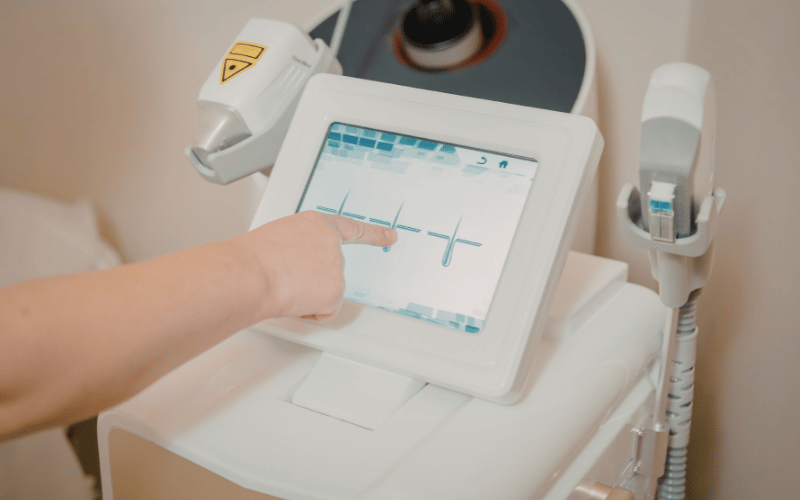
A portable ECG monitor manufacturer encountered repeated IEC 60601-1 leakage current failures during CF-type patient simulation testing.
The device operated normally during battery-powered operation. However, when connected to an external AC-powered adapter, patient leakage current exceeded the strict CF-level limits required for cardiac-related applications.
Initial investigation showed that the primary issue was not the ECG acquisition circuitry itself, but excessive leakage coupling introduced by a commercial-grade external adapter designed for industrial rather than medical applications.
Like many non-medical power supplies, the original adapter relied on relatively large Y-capacitor values to improve EMI suppression, which increased primary-to-secondary leakage current.
System-Level Engineering Solution
To avoid costly redesign of the main control board and patient isolation architecture, the OEM replaced the original adapter with a Quankang 2 × MOPP IEC 60601-certified medical power supply featuring:
- optimized low-leakage EMI filtering
- reinforced isolation architecture
- controlled primary-to-secondary parasitic capacitance
- medical-grade transformer shielding
The medical adapter itself was not intended to independently achieve final CF-level patient leakage limits. Instead, its role was to minimize system leakage contribution and provide sufficient safety margin for the device’s internal isolated DC-DC stages and patient protection circuitry.
After system-level optimization, the device successfully passed CF-type leakage current evaluation while maintaining EMC compliance and signal stability.
This significantly reduced recertification risk and avoided major redesign delays during the final certification phase.
Need a Low-Leakage Medical Power Supply for IEC 60601 Compliance?
Reducing leakage current is not only a power supply issue—it requires a system-level approach that includes isolation design, EMI filtering, grounding architecture, and proper component selection.
Quankang offers a range of IEC 60601-certified medical power supplies designed for low leakage current performance, reinforced isolation, and 2 × MOPP patient protection requirements.
If you are designing patient-connected medical equipment or preparing for IEC 60601 testing, our engineering team can help evaluate your application and recommend appropriate power solutions.