Spend enough years around test labs and industrial floors, and you start to respect high-voltage power supplies. They sit quietly behind some of the most demanding equipment we build, doing a job that ordinary supplies simply can’t.
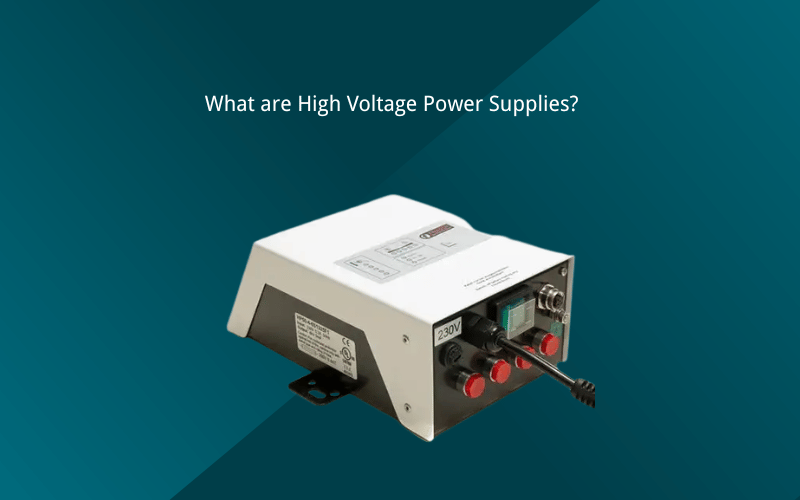
A high-voltage power supply is an electronic circuit that takes a lower-voltage input and converts it into a much higher voltage output. Most engineers draw the line at 1,000 volts (1 kV). Anything above that we treat as high voltage, with all the extra care that entails.
Think of these units as pressure pumps for electrons. They generate the electrical “push” needed to drive current through specialized equipment such as X-ray tubes, accelerators, and microscopes.
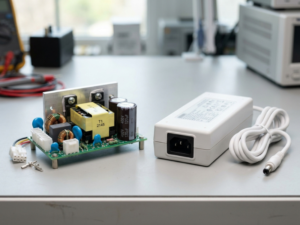
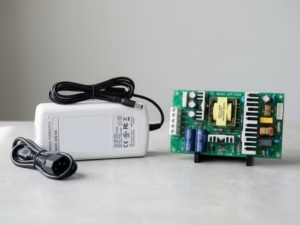
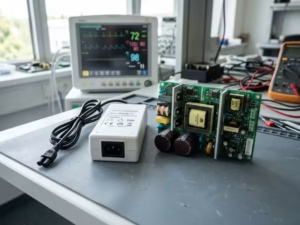
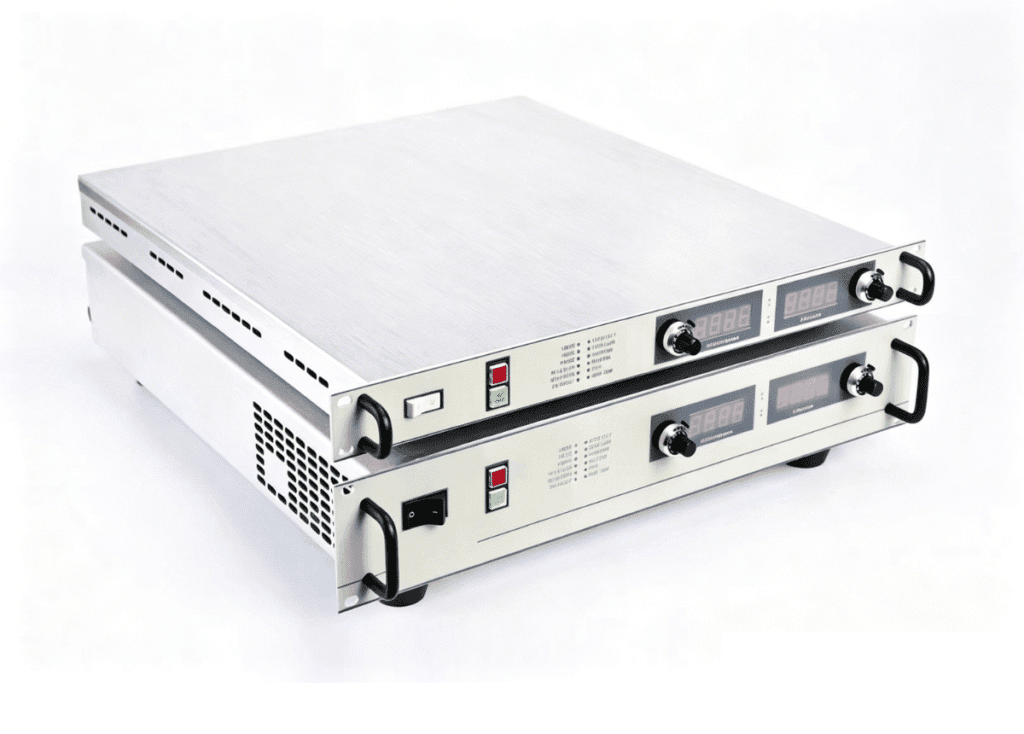
You’ll run into them in a few common formats: small PCB-mount modules that drop onto a board, benchtop laboratory units for hands-on work, and rack-mounted systems for large installations.
This guide walks through the essentials: how these supplies work, the main types, where they’re used, the specs that matter, safety must-haves, maintenance, and how to pick the right one.
Primary Components and How They Work
Every high-voltage supply follows the same basic journey. Power comes in low, gets transformed, and leaves as stable high-voltage DC. Here’s the path step by step.
The input stage accepts low-voltage power, either AC from a wall outlet or DC from a battery or a bus. Nothing dramatic has happened yet. This stage just conditions the incoming power for the work ahead.
Next, an inverter or oscillator converts that DC into high-frequency AC. Why bother? Because higher frequency makes the step-up process far more efficient and lets you use smaller, lighter magnetic parts.
The transformer does the heavy lifting. Using magnetic induction, it boosts the voltage to your target level. This is where low becomes high.
Then rectifiers and filters take over. They convert the high-voltage AC back into clean DC and strip out ripple and noise along the way.
Finally, control loops keep watch. They monitor the output and hold it steady, even when the load shifts or the input voltage wobbles. Without them, your output would drift the moment conditions changed.
Conversion Methods That Shape the Design
The way a supply steps up voltage has a big effect on its size, cost, and performance. Three approaches dominate.
Switched-mode designs use high-frequency conversion. This keeps the unit compact and efficient with strong power density. It’s the go-to choice when space and weight matter.
Voltage multipliers stack diodes and capacitors to build up high voltage from a lower-voltage input. They skip the heavy transformer entirely, which helps when you only have DC or low-voltage AC to work with.
Transformer-based units lean on a dedicated high-voltage transformer. They shine when you need robust isolation and steady, high-output power.
Each method trades something. Switched-mode wins on size, multipliers win on simplicity, and transformer designs win on isolation. Match the method to what your application actually needs.
Typical Classifications of High Voltage Units
Beyond internal design, high-voltage supplies fall into a few practical categories. Knowing these helps you talk to vendors and read datasheets faster.
- DC-to-DC converters take a low-voltage battery or bus input and boost it. You’ll see these inside larger systems, feeding smaller high-voltage components.
- AC-to-DC supplies plug straight into standard mains and deliver high voltage for lab benches and industrial gear. They’re the workhorses of most facilities.
- Regulated supplies hold a constant output no matter what changes around them. If your application needs precision, this is what you want.
- Unregulated supplies are simpler and cheaper. The catch is that their output can sag as you pull more current. They’re fine when the exact voltage isn’t critical.
Common Applications Across Industries
High voltage shows up almost everywhere once you start looking. Here’s where these supplies earn their keep.
- Medical: X-ray tubes, MRI machines, and oncology treatment systems all depend on precise high voltage.
- Scientific research: mass spectrometers, particle accelerators, and electron microscopes need clean, stable output.
- Industrial: electrostatic painting, food sterilization, and laser cutting put high voltage to practical work.
- Semiconductor labs: ion implantation and thin-film deposition during chip manufacturing rely on it.
- High-voltage testing: HV test labs and equipment qualification benches use these supplies to stress and verify hardware.
- Telecommunications: specialized power systems support network and transmission equipment.
- Tube and filament drive: filaments and vacuum tubes demand precise high voltage to operate correctly.
The common thread? Each of these jobs needs more electrical pressure than a standard supply can deliver.
Key Performance Specifications to Monitor
When you compare units, the spec sheet tells the real story. These are the numbers I check first.
- The output voltage range indicates the minimum and maximum voltages the unit can deliver. Note whether it’s fixed or adjustable, because that flexibility matters for varied tasks.
- Output current and wattage limits tell you how much load the supply can handle safely. Watch the peak power capability too, not just the steady-state rating.
- Ripple and noise show how clean the power is. For sensitive imaging and measurement work, this can make or break your results.
- Regulation accuracy measures how tightly the unit holds its target voltage. Tighter is better when precision counts.
- Stability and drift track how much the output wanders over time or as temperature changes. A unit that drifts will frustrate you during long runs.
- Efficiency tells you how much energy gets lost as heat during conversion. Higher efficiency means less heat to manage.
- Isolation and protection features cover the insulation barriers and built-in safeguards that keep things safe.
- Input requirements and power factor confirm what source voltage the unit needs and how cleanly it draws power from your line.
Essential Safety Features and Precautions
High voltage doesn’t forgive mistakes. The right safety features protect both you and your equipment, so don’t treat them as optional.
- Interlock circuits cut power the instant a cabinet door opens or a cable disconnects. They keep voltage away from you when access points are exposed.
- Overload and short-circuit protection stop the hardware from burning out during a fault.
- Over-voltage and over-temperature protection catch abnormal conditions before they cause real damage.
- Controlled ramp-up raises the voltage gradually instead of slamming it on. This protects connected devices from sudden stress.
- Proper grounding is the single most important step you can take. Done right, it guards against electric shock and equipment damage. Never shortcut it.
- Arc protection detects sudden discharges and shuts the power down before a fire or explosion can start.
- Insulation and potting materials keep high voltage from jumping to the casing or nearby parts. We’ll cover potting more in the FAQ.
- Monitoring rounds it out. Keep an eye on ripple, power quality, and any other early signs of trouble while the unit runs.
Reliability and Maintenance Best Practices
A high-voltage supply will reward good upkeep with years of service. Skip it, and you invite failures at the worst possible time. Build these checks into your routine.
- Inspect connectors, cables, and insulation for wear, cracking, or contamination. Small flaws grow fast at high voltage.
- Check cooling systems — fans, vents, and heatsinks. Heat is a leading cause of failure.
- Load test the unit under realistic conditions to confirm stable output power.
- Verify the output voltage and ripple using the proper meters during routine checks.
- Perform periodic calibration to keep regulated features accurate over time.
- Confirm grounding integrity and functionally test the protection circuits.
- Replace aging high-voltage modules before they fail. Planned downtime beats an unplanned outage every time.
Selecting the Right Power Supply for Your Project
Picking a supply comes down to matching the unit to your real-world needs. Run through these questions before you buy.
- First, decide whether you need a fixed output or an adjustable range. Adjustable units cost more but give you flexibility across different tasks.
- Next, account for the environment. Dust, humidity, and altitude all affect high-voltage stability. A unit that’s happy in a clean lab may struggle in a dusty plant or at high elevation.
- Match the physical size to your build. That might mean a compact PCB-mounted module or a full rack system, depending on space and power requirements.
- Weigh your ripple requirements carefully. A precision scientific instrument needs far cleaner power than an industrial sprayer ever will.
- Confirm the input voltage and power factor suit your source. A mismatch here causes headaches later.
- Finally, choose units with strong safety certifications and clear documentation. Good paperwork saves you time during both installation and inspection.
Frequently Asked Questions
What voltage level is officially considered high voltage?
Most engineers treat anything above 1,000 volts (1 kV) as high voltage. Standards bodies vary slightly in their exact thresholds, but 1 kV is the practical benchmark in everyday work.
What is the difference between a modular and a rack-mount power supply?
A modular unit is a compact building block you integrate into a larger system, often mounted right on a board. A rack-mount supply is a standalone unit built to slide into a standard equipment rack. Modular fits embedded designs; rack-mount suits larger installations that need easy access and serviceability.
Why is ripple such a concern in high-voltage applications?
Ripple is the small AC variation superimposed on your DC output. In sensitive work like imaging or precise measurement, that variation introduces noise and errors. The cleaner the power, the more reliable your results.
How do you safely discharge a high-voltage supply after turning it off?
Capacitors can hold a dangerous charge long after power is off. Use a proper discharge tool or grounding stick rated for the voltage, and confirm zero volts with a meter before touching anything. Never assume a unit is safe just because it’s switched off.
Can these units be used at high altitudes?
They can, but air provides less insulation as altitude rises, which makes arcing more likely. Check the manufacturer’s altitude derating. You may need a unit rated for high-altitude use or one with extra insulation.
What does the term “potting” mean in power supply manufacturing?
Potting means filling the unit with a solid or resin compound that encases the high-voltage components. It blocks arcing, seals out moisture and dust, and adds mechanical strength. It’s a common way to safely contain high voltage.
Final Considerations for High Voltage Systems
Every choice in this field comes down to balancing three things: precision, safety, and cost. Lean too far in any direction, and you’ll feel it later.
Remember, a reliable unit protects more than just your data. It protects you and the expensive equipment it powers. That alone justifies spending on quality.
Here’s a rule of thumb I always pass along: calculate your maximum power needs, then add a safety margin of about 20%. That headroom keeps the supply from running at its limit, where heat and stress shorten its life.
Prioritize robust certifications, clear documentation, and steady maintenance. These habits prevent most of the problems I’ve seen over the years.
Get the setup right, and a high-voltage power supply becomes one of the most dependable tools you own, quietly powering the technology and discovery that depend on it.