Every electronic device you own relies on a power supply, yet most people never think about what happens between the wall outlet and the circuit board. That gap matters. Choose the wrong power supply, and you risk unstable performance, overheating, or even a damaged product. Choose the right one, and your design will run reliably for years.
This guide breaks down the two most common types of DC power supplies: regulated and unregulated. We’ll explain how each works, compare them head-to-head, and show you exactly when to use one over the other. By the end, you’ll have a practical framework for matching a power supply to your application.
The Role of a Power Supply in Modern Electronics
The power coming from your wall outlet is alternating current (AC). In most regions, that’s 120V or 230V swinging back and forth 50 or 60 times per second. Almost no electronic device can use this raw AC directly. Microcontrollers, sensors, LEDs, and logic boards all need direct current (DC) at a low, steady voltage.
That’s the job of a power supply: convert high-voltage AC into usable DC voltage. It steps the voltage down, smooths it out, and delivers it in a form your circuit can actually use.
Within the world of DC supplies, two main families dominate the conversation:
- Unregulated power supplies – simple, low-cost, and rugged
- Regulated power supplies – precise, stable, and protective
Both convert AC to DC. The difference lies in how tightly they control the output. That single distinction shapes everything from cost to reliability. So which type truly fits your application? Let’s start by looking under the hood of each one.
What Is an Unregulated Power Supply?
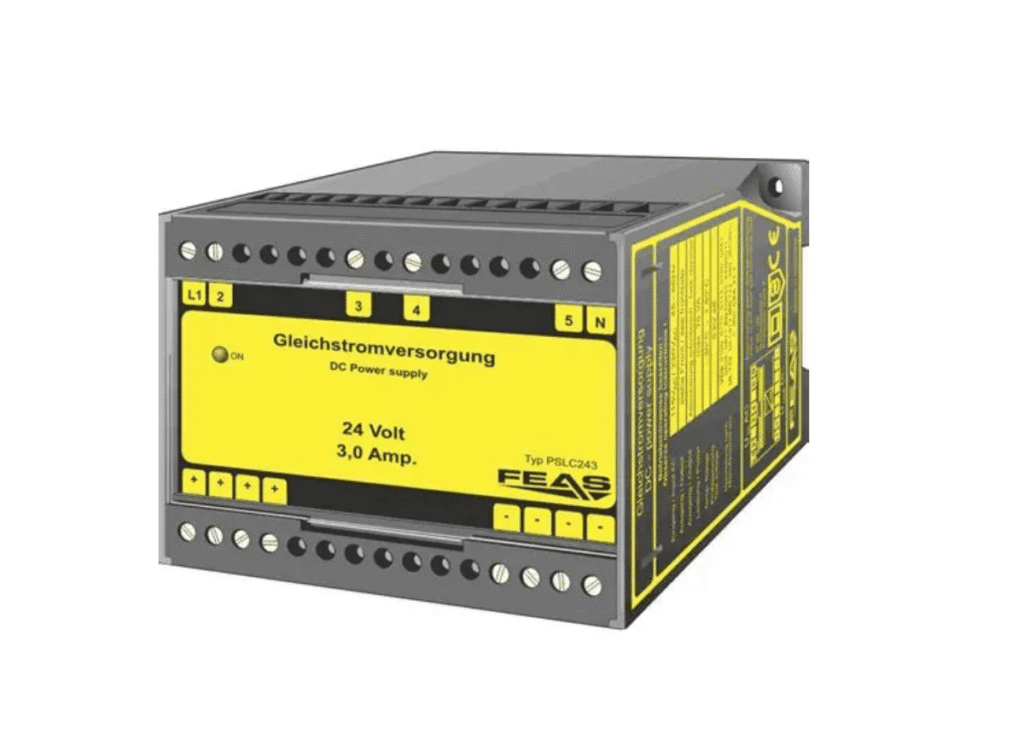
An unregulated power supply takes the simplest possible path from AC to DC. It steps down the incoming voltage, rectifies it into DC, smooths the result, and sends it straight to your load. There’s no active circuitry working to hold the output steady.
Because of that simplicity, the output voltage is directly tied to the input voltage. If your wall voltage rises by 10%, the output rises by roughly 10% too. The supply has no way to correct for that swing.
It also reacts to load. When you draw little current, the output voltage sits high. As current demand increases, the voltage sags. This behavior is normal for unregulated designs and explains why their voltage rating is often a moving target rather than a fixed number.
Core components
An unregulated supply usually contains just a few parts:
- Transformer – steps the high AC voltage down to a lower AC voltage
- Rectifier – converts the AC into pulsating DC, typically using diodes
- Capacitor filter – smooths the pulses into a rougher but more usable DC
That’s it. There’s no feedback loop or regulator chip adding complexity.
Why engineers still use them
Despite their quirks, unregulated supplies remain popular for good reasons:
- Lower cost – fewer components mean a cheaper bill of materials
- Simple design – easy to build, troubleshoot, and repair
- Rugged reliability – with little to fail, they handle abuse and last a long time
For loads that tolerate voltage variation, an unregulated supply is often the smart, economical choice.
What Is a Regulated Power Supply?
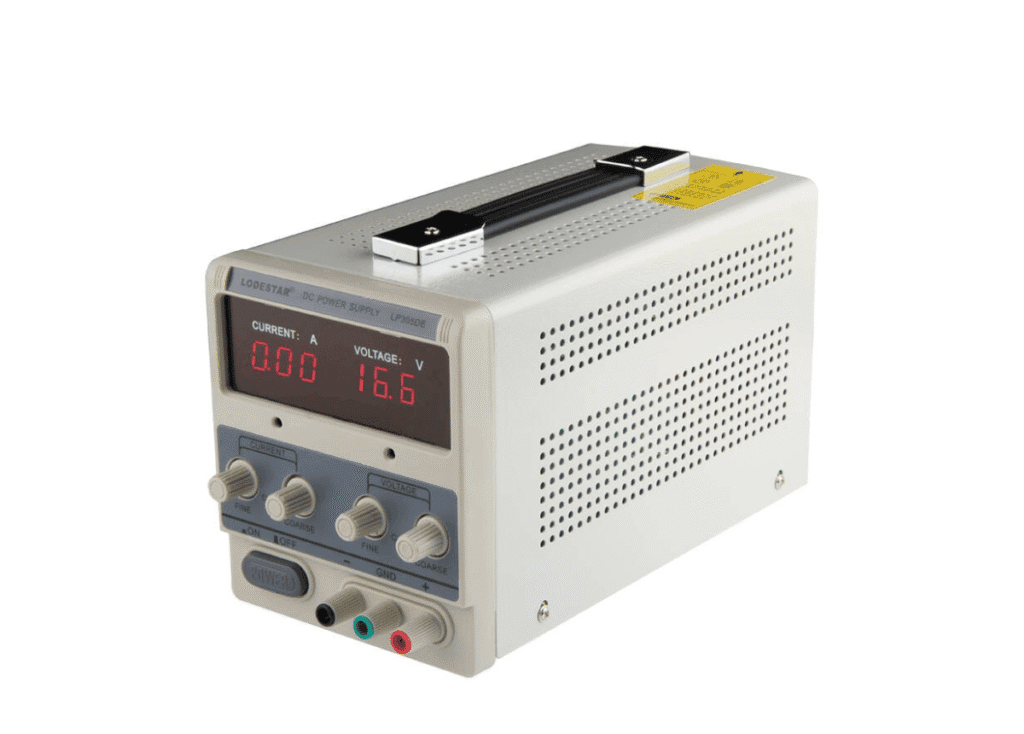
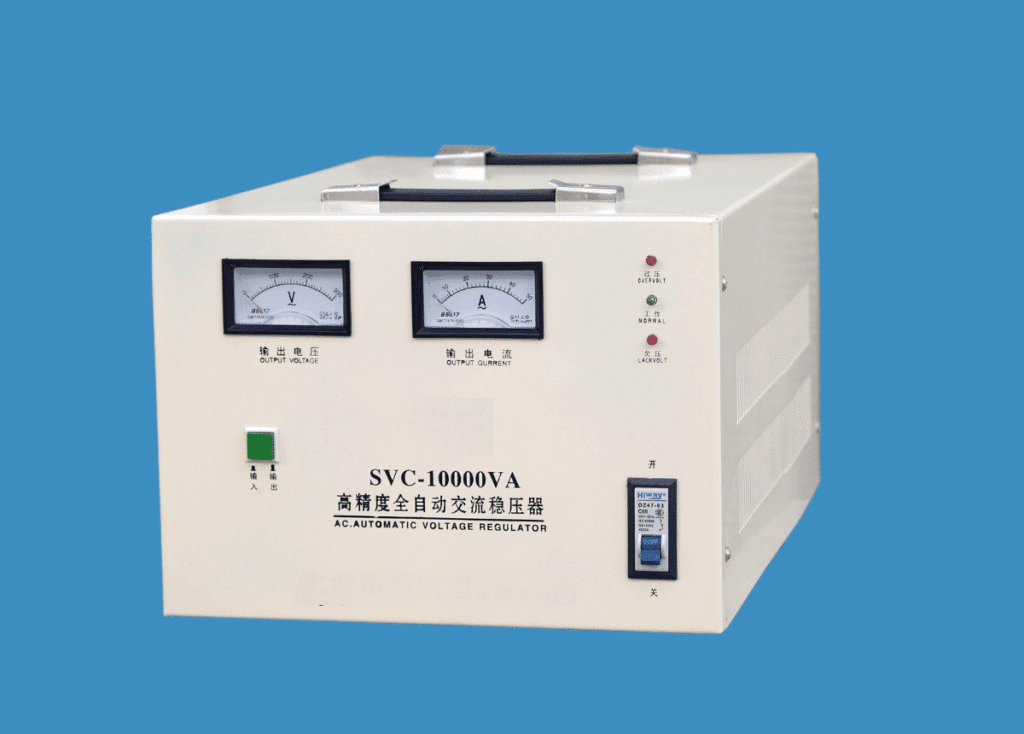
A regulated power supply adds extra circuitry whose only purpose is to keep the output voltage steady. No matter how the input wobbles or how the load shifts, the supply delivers a constant, predictable voltage.
The secret is a feedback loop. The supply constantly monitors its own output and compares it to a fixed reference. If the output drifts too high or too low, the regulator adjusts instantly to bring it back in line. The result is a voltage that barely moves, even when conditions change.
Linear vs. switching-regulated supplies
Regulated supplies come in two main flavors:
- Linear regulated supplies dissipate excess voltage as heat to maintain a steady output. They’re quiet and clean, with very low noise, but they waste energy and run warm, especially when the input voltage sits far above the output.
- Switching power supplies rapidly switch the input on and off to control the average output. They’re far more efficient, lighter, and handle wide input ranges well. The trade-off is more electrical noise, which sometimes needs extra filtering.
Built-in protection
Regulation does more than stabilize voltage. It shields sensitive electronics from spikes, sags, and noise that could corrupt data or stress delicate components. For circuits that demand a clean, consistent supply, that protection is essential.
The trade-offs
This precision isn’t free. Regulated supplies cost more and carry more complex internal designs. That means more potential failure points and a higher price tag. You pay for the stability you get.
Regulated vs Unregulated Power Supply: Key Differences
When you place the two side by side, the contrasts become clear. Here’s how they stack up across the factors that matter most.
- Voltage stability – A regulated supply holds its output nearly constant even when utility voltage dips or surges. An unregulated supply follows the input, so its output drifts with every fluctuation.
- Ripple and noise – Regulated supplies deliver clean output with minimal ripple. Unregulated supplies pass through noticeable ripple, especially under heavy load.
- Efficiency – Switching regulated supplies is typically the most efficient. Linear regulated supplies waste energy as heat. Unregulated supplies fall in between, with no regulation losses but no active optimization either.
- Heat – Linear regulated designs run the hottest because they dissipate excess voltage. Switching supplies stays cooler. Unregulated supplies generate modest heat, primarily tied to load.
- Size and weight – Switching supplies are the smallest and lightest. Unregulated and linear supplies rely on bulky transformers, making them heavier and harder to fit in compact builds.
- Cost – Unregulated supplies win on price. Regulated supplies, especially switching types, cost more due to added circuitry.
- Lifespan and maintenance – With fewer parts, unregulated supplies are extremely durable and low maintenance. Regulated supplies have more components that can age or fail over time.
No single type wins every category. The right pick depends entirely on what your load can tolerate.
When to Use an Unregulated Power Supply
An unregulated supply shines when your load doesn’t care about small voltage swings. If a bit of ripple or a sagging voltage won’t hurt performance, you can save money and gain durability.
Good fits include:
- DC motors – Motors are forgiving loads. A varying voltage simply changes speed slightly, which often doesn’t matter.
- Relays and solenoids – These electromechanical parts just need enough voltage to actuate. Precision isn’t required.
- Simple LED lighting – Basic LED strips and indicators tolerate voltage variation well, especially with a current-limiting resistor in place.
- Battery charging – Many simple charging circuits work fine with an unregulated source, since the battery and charge controller manage the final voltage.
- Budget-driven projects – When cost savings outweigh the need for tight precision, an unregulated supply delivers solid value.
If your application is in this zone, paying extra for regulation may be a waste of money.
When a Regulated Power Supply Is Necessary
Some loads simply will not tolerate voltage drift. For these, a regulated supply isn’t a luxury; it’s a requirement.
Reach for regulation in cases like these:
- Laboratory instruments – Test and measurement gear depend on a stable reference to produce accurate, repeatable results.
- Precision medical devices – Patient safety and accurate readings demand rock-solid voltage with no surprises.
- Microprocessors and computers – Logic circuits need a steady voltage to operate correctly. A sudden dip can crash a system or corrupt data.
- Audio equipment – Ripple in the supply shows up as an audible hum in the speakers. Clean power means clean sound.
- Sensitive sensors and communication hardware – Small voltage errors translate into bad data or dropped signals.
- Industrial automation – PLCs and control systems rely on consistent timing and logic execution, which a stable supply protects.
When accuracy, data integrity, or safety is on the line, regulation pays for itself.
How to Choose the Right Power Supply for Your Application
Picking between the two comes down to understanding your load and your environment. Use this checklist to guide the decision.
1. Judge how sensitive your device is.
Ask whether your circuit needs a precise, steady voltage. Logic boards, sensors, and audio gear say yes. Motors, relays, and simple lighting often say no.
2. Estimate the voltage swing your hardware can tolerate.
Check how much your output might move under your worst-case input and load conditions. Then compare that swing to the acceptable range listed in your component specs. If the swing exceeds what your parts allow, you need regulation.
3. Weigh the operating environment.
High ambient temperatures, wide input-voltage ranges, or electrically noisy surroundings all push you toward a regulated, often switching, supply that can cope with harsh conditions.
4. Balance upfront price against long-term safety.
A cheaper, unregulated supply may save money today, but if it risks damaging an expensive load, the math flips fast. Protect the asset that costs the most.
5. Check the manufacturer’s data sheets.
Before you commit, confirm the voltage tolerance, ripple limits, and current requirements of the device you’re powering. The data sheet is your final word.
Frequently Asked Questions
Why does an unregulated supply read a higher voltage at no load than its rating?
Unregulated supplies are usually rated at full load. With no load drawing current, there’s no voltage drop across the transformer and rectifier, so the capacitor charges to the peak of the waveform. That can leave the no-load voltage well above the labeled value. As you add load, the voltage settles toward its rated figure.
Can a regulated power supply replace an unregulated one in any circuit?
In most cases, yes. A regulated supply delivers cleaner, more stable output that won’t harm loads that previously ran on unregulated power. Just confirm it can supply enough current and matches the required voltage. The main downside is cost, not compatibility.
How does electrical ripple affect the lifespan of my electronics?
Ripple introduces constant small voltage swings and adds heat, particularly in capacitors. Over time, that stress can shorten the life of sensitive components and cause erratic behavior. For circuits built to last, lower ripple means longer life.
Linear vs switching regulated supplies: what’s the real difference in heat, efficiency, and noise?
Linear supplies run hotter and waste more energy because they dissipate excess voltage as heat, but they produce very low noise. Switching supplies are far more efficient and run cooler, yet they generate more electrical noise, which may require extra filtering in sensitive applications.
Matching Your Power Supply to Your Application
Both regulated and unregulated power supplies earn their place in electronics. Unregulated supplies offer low cost, simplicity, and rugged durability for forgiving loads. Regulated supplies deliver stability, clean output, and protection for circuits that can’t afford voltage drift.
The right choice hinges on one question: how much voltage variation can your load tolerate? Answer that honestly and the decision usually makes itself.
Before you finalize a design, review the data sheets for the exact device you’re powering and confirm its voltage, current, and ripple limits. For high-stakes or costly infrastructure, bring in a power engineer. A short consultation now can prevent an expensive failure later.