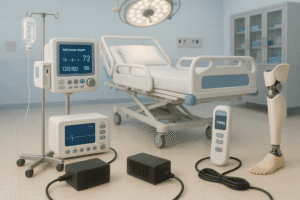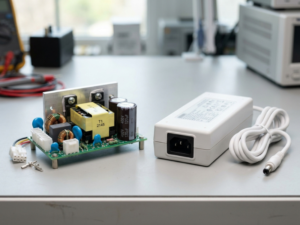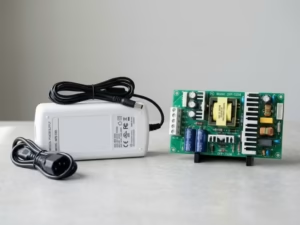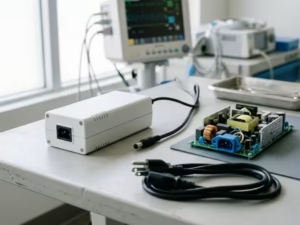
IEC 60601-1-2 4th edition is the electromagnetic compatibility (EMC) collateral standard for medical electrical equipment, defining both emissions and immunity requirements through a risk-based approach built on essential performance. The 4th edition (IEC 60601-1-2:2014) raised immunity test levels, added proximity RF field testing, extended radiated immunity to 6 GHz, and tied EMC directly to ISO 14971 risk management. Amendment 1 (2020) refines it, producing the combined version IEC 60601-1-2:2014+AMD1:2020, sometimes called edition 4.1.
This guide covers the exact IEC 60601-1-2 EMC requirements, all immunity test levels, the difference between the 4th edition and Amendment 1, how to define essential performance, an 8-step compliance process, and the documentation regulators expect before approval.
Key Takeaways
- IEC 60601-1-2, edition 4, uses a risk-based EMC framework instead of fixed equipment categories.
- Essential performance replaces the old “Life-Supporting” and “Non-Life-Supporting” labels. You define it.
- Immunity test levels rose to match a wireless-dense world: ESD up to ±15 kV air, radiated immunity up to 6 GHz.
- Home healthcare needs tougher immunity (10 V/m radiated) than professional facilities (3 V/m).
- ISO 14971 risk management drives EMC from the first design step.
- A formal EMC test plan is mandatory before any lab work begins.
- IEC 60601-1-2:2014+AMD1:2020 (edition 4.1) is the version most regulators now enforce.
What Is IEC 60601-1-2 4th Edition? {#what-is}
Quick Answer: IEC 60601-1-2 4th edition is the collateral EMC standard for medical electrical equipment that uses a risk-based approach to set emissions and immunity requirements tied to the device’s intended use environment.
The core purpose has held steady across editions: stop your device from interfering with other equipment, and keep it working when other equipment interferes with it. What changed in IEC 60601-1-2, edition 4, is the mindset.
Older editions sorted devices into fixed equipment categories. The 4th edition drops that model. Instead of asking “what box does my device fit in,” you now ask “what could electromagnetic interference do to my device, and how bad would that be for the patient or operator?”
This approach ties your IEC 60601-1-2 test levels directly to the intended use environment. The standard defines three:
- Professional healthcare facilities, such as hospitals and clinics, where the electromagnetic environment is controlled.
- Home healthcare environments where patients use devices near consumer electronics, Wi-Fi routers, and cell phones with no oversight.
- Special environments such as ambulances, military settings, or areas near heavy industrial equipment.
Each environment carries its own immunity requirements. Home healthcare requires greater immunity because you cannot control what is near the device. Compliance is mandatory: if you sell medical devices in the US, the EU, or most major markets, you must meet this standard.
3rd Edition vs 4th Edition vs Amendment 1 {#comparison-table}
Quick Answer: The 3rd edition used equipment categories; the 4th edition (2014) introduced the risk-based framework and essential performance; Amendment 1 (2020) refined test levels and clarified application across environments.
Aspect | 3rd Edition | 4th Edition (2014) | Amendment 1 (2020) / 4.1 |
|---|---|---|---|
Compliance framework | Equipment categories | Risk-based approach | Risk-based, clarified |
Performance concept | “Life-Supporting” labels | Essential performance (manufacturer-defined) | Essential performance, tighter guidance |
Risk management link | Loose, informal | ISO 14971 integrated | Integration reinforced |
Immunity test levels | Pre-smartphone era | Raised for wireless density | Select levels refined |
Proximity RF fields | Not addressed | New test requirement | Test method clarified |
Radiated immunity range | Up to 2.7 GHz | Extended to 6 GHz | Maintained, with corrections |
Test environments | Limited | Professional, home, special | Same, clearer criteria |
Formal EMC test plan | Recommended | Mandatory | Mandatory, more details |
IEC 60601-1-2 4th Edition vs Amendment 1 (4.1) {#edition-vs-amendment}
Quick Answer: The 4th edition (2014) was the major overhaul; Amendment 1 (2020) refines it without rewriting the framework, producing the combined version IEC 60601-1-2:2014+AMD1:2020, also called edition 4.1.
The 4th edition introduced the risk-based approach, retired old device classifications for essential performance, raised immunity levels, and added proximity RF field testing. Amendment 1 does three things:
- Tightens specific immunity requirements where real-world use exposed gaps.
- Clarifies how to apply IEC 60601-1-2 test levels across professional, home, and special environments.
- Resolves ambiguities that confused design teams and labs using the original 4th edition text.
Plan against the combined IEC 60601-1-2:2014+AMD1:2020 version unless your target market still enforces the original. Adoption dates vary by region, so confirm which version your regulator requires before you finalize the test plan.
Primary Changes from Previous Versions {#primary-changes}
Quick Answer: The 4th edition replaced device classifications with essential performance, raised immunity levels, added proximity RF field testing, and extended radiated immunity from 2.7 GHz to 6 GHz.
From Old Classifications to Essential Performance
The “Life-Supporting” and “Non-Life-Supporting” labels are gone. The 4th edition replaces them with IEC 60601-1-2 essential performance: the performance you must maintain to avoid unacceptable risk. You define it, based on your device and intended use. That definition drives your entire EMC test plan.
Higher Immunity Test Levels
Phones, tablets, smartwatches, and routers crowd the space around medical equipment. The 4th edition raised immunity test levels to match. Your device must survive a noisier world than it did a decade ago.
Proximity Fields from RF Wireless Equipment
The 4th edition added immunity testing for proximity fields from RF wireless communications equipment. Test points cover specific bands (385 MHz, 450 MHz, 710–780 MHz, 810–960 MHz, 1.72–1.99 GHz, 2.45 GHz, and 5.24–5.785 GHz), with field strengths up to 28 V/m.
Wider Radiated Immunity Frequencies
The radiated immunity upper limit climbed from 2.7 GHz to 6 GHz to cover 5 GHz Wi-Fi and other high-frequency signals. Plan testing across this broader spectrum.
How to Define Essential Performance {#essential-performance}
Quick Answer: IEC 60601-1-2 essential performance is the function your device must continue to deliver to avoid unacceptable patient risk; you define it based on the intended use and set measurable criteria for each immunity test.
Follow the four steps:
- Start with the intended use. State exactly what the device does and for whom.
- Identify safety-critical functions. Determine which functions, if degraded, create unacceptable risk.
- Set measurable criteria. Define “still working” in concrete numbers, not vague terms.
- Document your reasoning in the risk management file.
Concrete examples:
- Infusion pump: accurate delivery rate within a defined tolerance.
- Patient monitor: accurate vital signs and working alarms.
- Diagnostic imaging device: image quality sufficient for diagnosis.
Essential performance sets your pass/fail criteria for every immunity test. A brief reading shift may be acceptable; a frozen display or missed alarm is not.
IEC 60601-1-2 EMC Test Plan Requirements {#test-plan}
Quick Answer: A formal EMC test plan is mandatory before lab work and must list your essential performance, intended environments, applicable tests, exact test levels, pass/fail criteria, and justifications.
A complete plan covers:
- Essential performance: defined functions with measurable acceptance criteria.
- Intended environments: professional, home, or special.
- Test list: all emission and immunity tests that apply.
- Test levels: exact levels for each environment you claim.
- Pass/fail criteria: acceptable performance during and after each test.
- Justifications: documented reasons for any skipped test or adjusted level.
If your device never connects to AC mains, document why surge tests do not apply. Accredited labs request this paperwork before booking, so prepare it early.
The Role of Risk Management in EMC Compliance {#risk-management}
Quick Answer: ISO 14971 risk management is woven into IEC 60601-1-2 compliance — you use it to set immunity test levels and define pass/fail criteria, then feed the results back into your risk file.
EMC is no longer a standalone checkbox. The practical workflow:
- Identify essential performance. Determine what keeps patients safe.
- Map interference scenarios. A reading drifts. An alarm goes silent. A pump pauses.
- Apply a risk judgment to each scenario, scoring severity and probability.
- Set test levels and pass/fail criteria from those judgments.
Keep the story consistent. If a test reveals an issue and you add filtering or a warning, that mitigation must appear in the risk file.
Immunity Test Levels Summary {#test-levels}
Quick Answer: IEC 60601-1-2 4th edition test levels include ±8 kV contact/±15 kV air for ESD, 3–10 V/m radiated immunity across 80 MHz–6 GHz, up to 28 V/m proximity RF fields, and ±2 kV EFT on power lines.
Test | Typical Level | Applies To |
|---|---|---|
Electrostatic Discharge (ESD) | ±8 kV contact, ±15 kV air | Enclosure, accessible points |
Radiated RF Immunity | 3 V/m (professional), 10 V/m (home), 80 MHz–6 GHz | Enclosure |
Proximity RF Fields | Up to 28 V/m at spot frequencies | Enclosure |
Electrical Fast Transients (EFT) | ±2 kV power, ±1 kV signal lines | Power and signal ports |
Surge | ±0.5 kV to ±2 kV | AC/DC power inputs |
Conducted RF Immunity | 3 Vrms / 6 Vrms (ISM bands), 150 kHz–80 MHz | Cables and ports |
Power Frequency Magnetic Field | 30 A/m (professional), up to 80 A/m (home) | Enclosure |
Confirm exact values against the current edition and amendment for your market.
Electrostatic Discharge (ESD)
ESD testing simulates the static shock from walking across carpet. The 4th edition raised it to ±8 kV contact and ±15 kV air discharge. The higher air levels catch designs that used to slip through. Check seams, buttons, and connectors where a discharge can enter.
Electrical Fast Transients and Surge
EFT testing hits power and signal lines with fast spike bursts, mimicking relay and motor switching noise. Surge testing simulates lightning and power-line events. Both apply to power inputs; EFT also reaches longer signal lines. Home healthcare often demands more robust performance.
Conducted Immunity
Conducted immunity pushes RF energy onto cables and ports across 150 kHz to 80 MHz. Any cable that acts as an antenna is a target: power cords, data lines, and patient leads. Weak filtering shows up here first. Monitor essential performance throughout.
Magnetic Field Immunity
Power-frequency magnetic fields can disturb sensitive circuits, especially magnetic sensors and CRT displays. The 4th edition added proximity magnetic field tests at 30 kHz, 134.2 kHz, and 13.56 MHz, tied to wireless charging and RFID. Check whether they apply to your design.
Test Levels for Home Healthcare Environment {#home-healthcare}
Quick Answer: IEC 60601-1-2 home healthcare test levels are higher than professional facilities — expect 10 V/m radiated immunity, elevated conducted immunity in ISM bands, and magnetic fields up to 80 A/m.
The home healthcare environment is uncontrolled. Patients use devices next to phones, Wi-Fi routers, baby monitors, and other consumer electronics with no oversight. Expect these elevated demands:
- Radiated RF immunity around 10 V/m, versus 3 V/m for professional facilities.
- Conducted RF immunity at elevated levels in the ISM bands.
- Stricter proximity RF field requirements, since transmitters sit close to the device.
- Power frequency magnetic fields up to 80 A/m.
Design for these levels from the start. Building only for the hospital and later targeting the home market is a fast route to a failed test. Use the exact levels in the current standard, since they update across editions and amendments.
Requirements for Labeling and Documentation {#labeling}
Quick Answer: IEC 60601-1-2 requires your IFU to state the device’s EMC profile, disclose emissions and immunity compliance tables, warn against unspecified cables, and give concrete safety guidance.
What Goes in the Instructions for Use
Your IFU must state the EMC profile, including intended environments, installation or use precautions, and steps to keep the device operating safely near other equipment.
Compliance Tables
The standard requires tables disclosing your compliance levels for emissions and immunity. These tell a hospital engineer or home user exactly which tests the device passed and at what levels. They become part of your public technical record.
Accessory and Cable Warnings
Warn users against accessories, transducers, or cables you did not specify. A random cable can ruin proven EMC performance. State that only the listed parts maintain compliance.
Maintaining Safety and Performance
Give concrete guidance: keep a minimum separation distance from RF transmitters, and avoid stacking the device with other equipment. Specific instructions, not vague ones.
How to Comply with IEC 60601-1-2 4th Edition: Step-by-Step {#step-by-step}
Quick Answer: Comply with IEC 60601-1-2, 4th edition, in 8 steps: define the intended use, set the essential performance, classify the environment, build an EMC test plan, run pre-compliance testing, complete formal lab testing, update the risk file, and finalize labeling.
- Define intended use. Document what the device does, for whom, and where it operates.
- Set essential performance. Identify safety-critical functions and assign measurable criteria.
- Classify the use environment. Choose professional healthcare, home healthcare, or special — this fixes your IEC 60601-1-2 test levels.
- Build the formal EMC test plan. List every applicable test, the exact levels, pass/fail criteria, and justifications for any exclusions.
- Run pre-compliance testing. Catch shielding and filtering problems at the bench, where fixes are cheap.
- Complete formal lab testing. Use an ISO/IEC 17025-accredited lab covering IEC 60601-1-2:2014+AMD1:2020.
- Update the risk file. Record results, mitigations, and any added filtering or warnings so the story stays consistent.
- Finalize labeling and the technical file. Confirm IFU tables, accessory warnings, and the EMC test plan, then submit to the FDA or your Notified Body.
Preparing for Laboratory Testing {#lab-testing}
Quick Answer: Show up with a production-level unit, all specified cables, test software, real-time essential performance monitoring, spare parts, and your complete EMC test plan and risk documentation.
Hardware Preparation Checklist
- A representative production-level unit, not a rough prototype.
- All specified cables, at correct lengths and types.
- Test software that exercises normal operating modes.
- Real-time essential performance monitoring during each test.
- Spare units and parts for swap-outs.
- Your complete EMC test plan and risk management documentation.
Defining Pass and Fail
Pass/fail criteria flow directly from essential performance. Decide what counts as acceptable before testing, and write it down so there is no argument in the moment.
Pre-Compliance Testing
Run pre-compliance testing early. A bench-stage shielding fix is cheap. A formal-stage failure costs a redesign and a second round of lab fees. Teams that catch issues early routinely save weeks.
Choosing the Right Lab
Pick a lab with ISO/IEC 17025 accreditation that specifically covers IEC 60601-1-2. An accredited report carries weight with the FDA and Notified Bodies. A report from an unqualified lab can get rejected outright.
Common Pitfalls and How to Avoid Them {#pitfalls}
Quick Answer: The top IEC 60601-1-2 failures are poor enclosure shielding, neglected signal-line filtering, undefined essential performance, ignored home healthcare levels, and late-stage design changes.
- Poor enclosure shielding and grounding. Gaps, loose grounds, and floating shields leak energy. Bond shields properly and keep ground paths short and low-impedance.
- Neglected signal-line filtering. This is the number one cause of conducted immunity failures. Filter cables where they enter the enclosure early.
- Undefined or vague essential performance. Without measurable terms, you cannot set defensible pass/fail criteria. Define it first.
- Ignoring home healthcare requirements. Home devices face tougher immunity demands. Plan for the harshest intended environment from the start.
- Late-stage design changes. A “quick” change to a cable, board, or enclosure can invalidate all EMC data. Once you pass, lock the design. Assess the EMC impact before any change.
Frequently Asked Questions {#faqs}
What is IEC 60601-1-2 4th edition?
IEC 60601-1-2 4th edition is the collateral EMC standard for medical electrical equipment. It defines emissions and immunity requirements through a risk-based approach, replacing equipment categories with manufacturer-defined essential performance and tying test levels to the intended use environment.
What does IEC 60601-1-2 edition 4 cover?
It covers electromagnetic emissions and immunity for medical electrical equipment and systems. The scope spans ESD, radiated and conducted RF immunity, EFT, surge, magnetic field immunity, and proximity RF fields across professional, home, and special environments.
What changed from the 3rd edition to the 4th edition?
The 4th edition retired the “Life-Supporting” labels for essential performance, raised immunity test levels, added proximity RF field testing, extended radiated immunity from 2.7 GHz to 6 GHz, and integrated ISO 14971 risk management.
What is IEC 60601-1-2 4.1?
IEC 60601-1-2 4.1 is the informal name for the 4th edition combined with Amendment 1, cited as IEC 60601-1-2:2014+AMD1:2020. It refines immunity requirements and clarifies how to apply test levels across environments.
What is the difference between the 4th Amendment and the 4th Amendment?
The 4th edition (2014) introduced the risk-based framework; Amendment 1 (2020) refines it. Amendment 1 tightens specific immunity requirements, clarifies environment-based test levels, and resolves ambiguities without rewriting the framework.
What are the test levels in IEC 60601-1-2 4th edition?
Typical IEC 60601-1-2 test levels are ±8 kV contact / ±15 kV air for ESD, 3 V/m (professional) to 10 V/m (home) radiated immunity across 80 MHz–6 GHz, up to 28 V/m proximity RF fields, ±2 kV power / ±1 kV signal EFT, and conducted immunity from 150 kHz to 80 MHz.
What is the radiated immunity frequency range in the 4th edition?
Radiated RF immunity covers 80 MHz to 6 GHz, expanded from the 2.7 GHz limit in the 3rd edition. The change accounts for high-frequency signals such as 5 GHz Wi-Fi bands.
What are the IEC 60601-1-2 home healthcare test levels?
Home healthcare requires higher immunity than professional facilities: around 10 V/m radiated immunity, elevated conducted immunity in ISM bands, stricter proximity RF field requirements, and magnetic fields up to 80 A/m.
How do I define essential performance under IEC 60601-1-2?
Start with the intended use and patient safety; identify functions that must remain operational to avoid unacceptable risk; then set measurable criteria. For an infusion pump, an accurate delivery rate is essential; for a patient monitor, accurate vital signs and reliable alarms. Document it in the risk file.
Is IEC 60601-1-2 mandatory?
Yes, for most major markets. Selling medical devices in the US, the EU, and many other regions requires meeting IEC 60601-1-2. A missing or failed EMC assessment can block your product from the market.
What is the difference between IEC 60601-1-2 and IEC 60601-1?
IEC 60601-1 is the general safety standard for medical electrical equipment; IEC 60601-1-2 is the collateral standard covering only electromagnetic compatibility. You must meet both.
Does IEC 60601-1-2 4th edition apply to legacy devices on the market?
Devices cleared under an earlier edition can usually keep selling under existing approval, depending on regional rules. Significant changes or a new clearance typically trigger the current edition. Confirm transition deadlines with your specific regulator.
Can I use the 3rd-edition test data to satisfy the 4th-edition requirements?
Generally no. The 4th edition raised test levels, added new tests like proximity RF fields, and changed the essential-performance framework. Old data rarely meet new requirements; plan to retest rather than rely on reuse.
Do wearable medical devices need IEC 60601-1-2 testing?
Yes. Wearables usually fall under the home healthcare environment and the body-worn use case, meaning higher immunity levels and close attention to proximity RF fields. Their small, tight enclosures make shielding harder, so design for EMC from the first prototype.
Final Steps for Regulatory Approval {#final-steps}
Quick Answer: Before submission, confirm that signed accredited test reports are present, align the risk file with the results, include the EMC test plan and justifications, and verify that labeling matches IEC 60601-1-2 4th edition requirements.
- Confirm complete, signed test reports. Every report must be signed by the accredited laboratory. An unsigned or incomplete report is not evidence.
- Align the risk file with the results. The file must reflect actual test results, including any added filtering or warnings.
- Include the EMC test plan and justifications. Reviewers want to see what you tested, why, and why anything was skipped.
- Review labels and IFU. Confirm emissions and immunity tables, accessory warnings, and use guidance match the standard. Then submit to the FDA or your Notified Body.
Get the planning and documentation right, and the testing tends to follow. That is the real lesson of IEC 60601-1-2 4th edition: EMC is a design and risk discipline, not a last-minute test.