Why Medical Devices Fail EMC Certification and How to Fix It
Electromagnetic compatibility (EMC) is one of the most challenging parts of IEC 60601 certification for medical devices.
Many medical OEM manufacturers successfully complete functional development, only to encounter unexpected EMC failures during IEC 60601-1-2 testing. In many projects, these failures result in:
- delayed product launch
- repeated laboratory testing
- PCB redesign
- enclosure modification
- increased certification cost
- unstable device performance
For portable medical equipment, patient monitoring systems, imaging devices, and wireless healthcare products, EMC problems are especially difficult because modern medical systems combine:
- high-speed digital circuits
- switching power supplies
- sensitive analog front-end signals
- wireless communication modules
- compact enclosure structures
This guide explains the most common IEC 60601 EMC testing problems, the real engineering causes behind them, and practical system-level solutions used in medical power supply design.
This article is part of our medical power system engineering series:
→ Related Guide:
“Medical Power Supply Failures: Causes, IEC 60601 Risks, and Engineering Solutions”
What Is IEC 60601-1-2 EMC Testing?
IEC 60601-1-2 is the international EMC standard for medical electrical equipment.
The standard evaluates whether medical devices:
- generate excessive electromagnetic emissions
- remain stable under electromagnetic disturbance
- maintain safe and reliable operation in clinical environments
Unlike industrial EMC standards, IEC 60601 EMC requirements are stricter because medical devices often operate near:
- life-support equipment
- sensitive monitoring systems
- wireless communication infrastructure
- patient-connected electronics
Testing typically includes:
| EMC Test Category | Purpose |
| Conducted emissions | Evaluate noise injected into AC lines |
| Radiated emissions | Evaluate airborne electromagnetic noise |
| Electrostatic discharge (ESD) | Evaluate static immunity |
| Electrical fast transient (EFT) | Evaluate switching disturbance immunity |
| Surge immunity | Evaluate high-energy transient protection |
| RF immunity | Evaluate wireless interference resistance |
| Conducted RF immunity | Evaluate cable-coupled RF disturbance |
Many OEM manufacturers underestimate how strongly the external power adapter influences EMC performance.
Why Medical Devices Fail EMC Testing
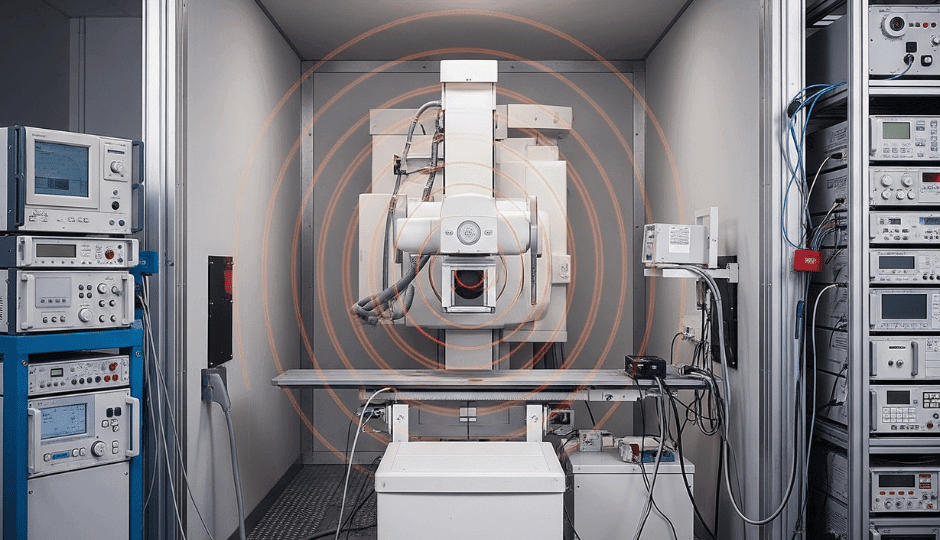
In many IEC 60601 projects, EMC failures are not caused by the main control board alone.
Instead, the root cause is often a combination of:
- low-quality external adapters
- poor grounding architecture
- switching ripple coupling
- enclosure resonance
- insufficient filtering
- unstable cable shielding
Medical devices with compact fanless designs are particularly vulnerable.
Real-World OEM Problem: Portable Monitor Fails Radiated Emissions
A portable patient monitor manufacturer encountered repeated IEC 60601-1-2 radiated emission failures during final certification testing.
The system passed functional verification and safety testing, but failed radiated emissions near several harmonics generated by the switching power architecture.
Initial investigation revealed:
- the main PCB design was relatively stable
- emissions increased significantly when the commercial external adapter was connected
- noise coupled into patient monitoring signal cables
- enclosure grounding impedance amplified radiation peaks
Like many industrial-grade adapters, the original power supply prioritized cost and general EMC performance rather than medical low-noise optimization.
System-Level Engineering Solution
To reduce radiated EMI without redesigning the entire monitoring system, the OEM replaced the original adapter with a Quankang IEC 60601-certified medical power supply featuring:
- multi-stage low-leakage EMI filtering
- optimized transformer shielding
- controlled switching frequency architecture
- reduced common-mode noise coupling
- improved grounding compatibility
Additional system-level optimization included:
- cable routing refinement
- grounding impedance reduction
- enclosure shielding enhancement
After optimization, the system successfully passed IEC 60601-1-2 radiated emission testing while maintaining stable ECG signal quality.
This avoided major PCB redesign and significantly reduced recertification delays.
Common EMC Problems in Medical Devices
1. Conducted Emission Failures
Conducted emissions are switching noise currents injected into AC power lines.
This is one of the most common EMC failures during IEC 60601 testing.
Common Causes
- weak EMI filtering
- unstable switching topology
- excessive ripple current
- poor PCB layout
- low-quality external adapters
Typical Symptoms
- failure near switching harmonics
- unstable EMC margin
- inconsistent lab results
Engineering Solutions
Quankang medical power solutions reduce conducted emissions through:
- multi-stage common-mode filtering
- differential-mode suppression
- optimized switching transitions
- controlled transformer parasitics
→ Related Resource:
“Medical Power Supply EMI Troubleshooting Guide”
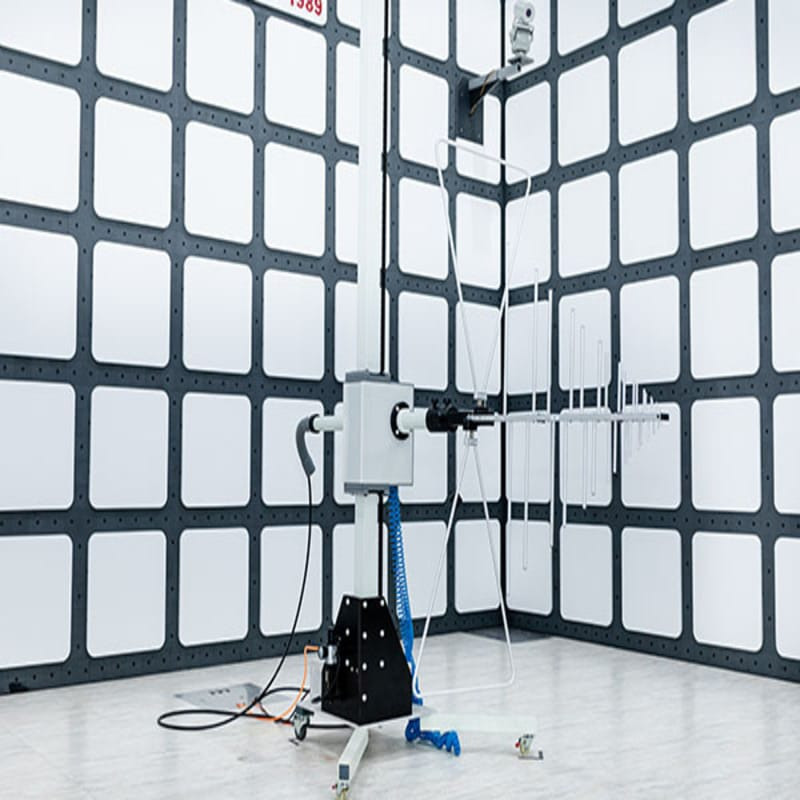
2. Radiated Emission Problems
Radiated emissions occur when high-frequency switching noise propagates through:
- cables
- enclosure gaps
- grounding structures
- PCB traces
Portable medical devices are especially vulnerable because compact structures increase coupling effects.
Common Symptoms
- EMC failure above 100MHz
- cable resonance peaks
- unstable wireless communication
- touchscreen instability
Common Root Causes
- poor enclosure shielding
- unstable grounding
- long cable loops
- high dv/dt switching edges
Engineering Solutions
Quankang medical adapters improve radiated EMI performance through:
- shielded transformer design
- controlled switching frequency optimization
- reduced common-mode current
- low-noise architecture
3. ESD Immunity Failure
Electrostatic discharge (ESD) testing evaluates how devices respond to static electricity events.
Medical devices frequently fail ESD testing because of:
- floating chassis structures
- poor grounding continuity
- weak shielding design
- insufficient transient suppression
Typical ESD Symptoms
- screen freezing
- MCU reset
- communication interruption
- temporary sensor malfunction
Engineering Solutions
Common solutions include:
- improved grounding strategy
- transient suppression devices
- enclosure shielding optimization
- PCB isolation improvement
4. Surge and EFT Immunity Problems
Hospital electrical systems frequently experience transient disturbances caused by:
- motor startup
- backup power switching
- high-power equipment
- unstable infrastructure
Weak transient protection may cause:
- system reboot
- power interruption
- sensor instability
- permanent component damage
Common Causes
- weak surge suppression
- insufficient hold-up time
- unstable transient response
- poor AC input protection
Engineering Solutions
Quankang medical power supplies improve immunity performance through:
- enhanced surge protection
- stable transient response
- reinforced AC input architecture
- optimized hold-up time design
5. RF Immunity Problems in Wireless Medical Devices
Modern medical systems increasingly integrate:
- Wi-Fi
- Bluetooth
- LTE modules
- wireless telemetry
RF immunity problems occur when external radio-frequency energy interferes with sensitive circuitry.
Common Symptoms
- unstable wireless communication
- signal interruption
- sensor drift
- touchscreen malfunction
Engineering Solutions
System-level optimization may include:
- grounding refinement
- shield partitioning
- cable filtering
- low-noise power architecture
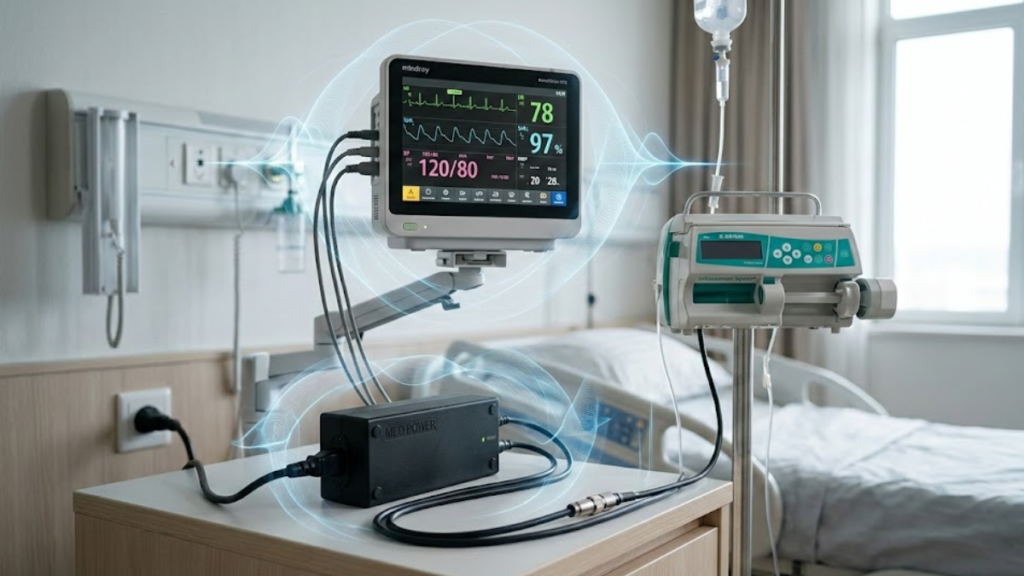
Why External Power Adapters Strongly Affect EMC Performance
Many OEM manufacturers focus heavily on PCB design while underestimating the influence of the external power adapter.
However, switching adapters are often the largest EMI source in medical systems.
Commercial-grade adapters commonly prioritize:
- low cost
- compact size
- consumer EMC standards
rather than:
- low leakage current
- ultra-low ripple
- medical EMC stability
- patient-connected signal integrity
This is why replacing a non-medical adapter frequently improves EMC margins without major system redesign.
Typical Industrial Adapter vs Medical IEC 60601 Adapter
| Parameter | Typical Industrial Adapter | IEC 60601 Medical Adapter |
| Leakage Current | 250–500 μA+ | <100 μA (BF) |
| Isolation Protection | Basic insulation | 2×MOPP |
| Ripple Noise | Higher ripple under load | Low ripple for sensitive medical systems |
| EMC Margin | Minimal compliance margin | Optimized for IEC 60601-1-2 |
| Operating Environment | Commercial/industrial | Clinical and patient-connected environments |
| Lifecycle Stability | Shorter lifecycle support | Long-term medical lifecycle support |
Engineering Tradeoff: EMC vs Leakage Current
One of the most difficult challenges in medical power design is balancing:
- EMC suppression
- leakage current compliance
Improving EMI suppression often requires larger Y-capacitors, which may increase leakage current.
Reducing leakage current too aggressively may worsen EMC performance.
This tradeoff becomes especially critical in:
- ECG systems
- CF-type applications
- patient-connected devices
Quankang medical power solutions optimize both EMC and leakage current through:
- low-leakage EMI filters
- controlled parasitic capacitance
- shielded transformer architecture
- balanced common-mode suppression
→ Related Resource:
“How to Reduce Leakage Current in Medical Devices”
→ Related Resource:
“What Is 2 × MOPP in Medical Power Supplies?”

EMC Design Challenges in Compact Medical Devices
Portable medical devices present additional EMC challenges because they combine:
- fanless enclosure structures
- high-density PCB layouts
- sensitive analog circuits
- battery charging systems
- wireless communication modules
In many projects, EMC problems only appear during:
- full-load operation
- charging mode
- long-duration testing
- cable movement conditions
This makes troubleshooting significantly more difficult during final certification stages.
→ Related Resource:
“Why Medical Power Supplies Overheat”
How Quankang Medical Power Supplies Improve EMC Performance
Quankang medical power solutions are specifically engineered for IEC 60601 medical environments.
Key EMC optimization features include:
Low-Noise Switching Architecture
Designed to minimize:
- conducted emissions
- ripple noise
- high-frequency harmonics
Multi-Stage EMI Filtering
Optimized for:
- medical EMC compliance
- low common-mode noise
- stable signal integrity
Controlled Transformer Shielding
Reduces:
- radiated emissions
- parasitic coupling
- switching noise propagation
Low Ripple Output
Typical medical applications often require:
| Parameter | Typical Requirement |
| Ripple noise | < 100mVp-p |
| Conducted emissions | IEC 60601-1-2 compliant |
| Leakage current | BF/CF application dependent |
Low ripple performance is especially important for ECG and imaging systems.
System-Level EMC Support
Quankang engineering teams support OEM projects with:
- EMC troubleshooting
- grounding optimization
- adapter selection
- transient analysis
- certification preparation
This helps reduce redesign risk during IEC 60601 testing.
How to Reduce EMC Certification Risk
Medical OEM manufacturers can reduce EMC failure risk by:
Selecting Medical-Grade Adapters Early
Avoid replacing adapters late in development.
Considering EMC During System Architecture Design
Not after PCB completion.
Optimizing Grounding and Shielding Early
Grounding problems are among the most common EMC root causes.
Validating Under Real Operating Conditions
EMC problems often appear only during:
- motor startup
- battery charging
- wireless transmission
- long-duration operation
Using IEC 60601-Certified Power Supplies
Medical-certified adapters significantly improve EMC predictability.
Engineering Support for IEC 60601 EMC Compliance
Medical OEM manufacturers frequently face challenges involving:
- EMC certification failure
- conducted emissions
- radiated emissions
- grounding instability
- ripple noise
- leakage current optimization
Quankang engineering teams support medical device manufacturers with:
- IEC 60601-compliant medical power supplies
- low-EMI AC-DC adapters
- ultra-low ripple medical power solutions
- EMC troubleshooting support
- grounding and shielding optimization
- OEM and ODM engineering collaboration
Whether you are developing patient monitoring systems, portable ultrasound equipment, wireless healthcare devices, or imaging systems, selecting the correct medical power architecture can significantly reduce EMC certification risk and improve long-term system stability.
For technical consultation regarding IEC 60601 EMC testing or medical power supply selection, contact Quankang engineering teams.
FAQ
Why do medical devices fail EMC testing?
Common causes include switching noise, grounding problems, poor shielding, low-quality adapters, and ripple coupling into sensitive circuits.
What is the most common EMC problem in medical devices?
Conducted and radiated emission failures are among the most common issues during IEC 60601-1-2 certification.
Can the external adapter cause EMC failure?
Yes. In many projects, the external switching adapter is one of the largest EMI sources in the system.
Why are medical EMC requirements stricter than industrial EMC?
Medical devices often operate near patients and sensitive diagnostic equipment, requiring higher reliability and lower interference risk.
How can EMC redesign costs be reduced?
Early selection of medical-grade power supplies and proper system grounding design can significantly reduce late-stage EMC redesign risk.