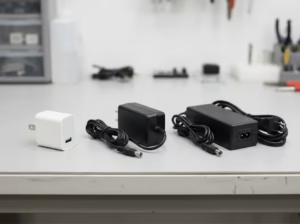
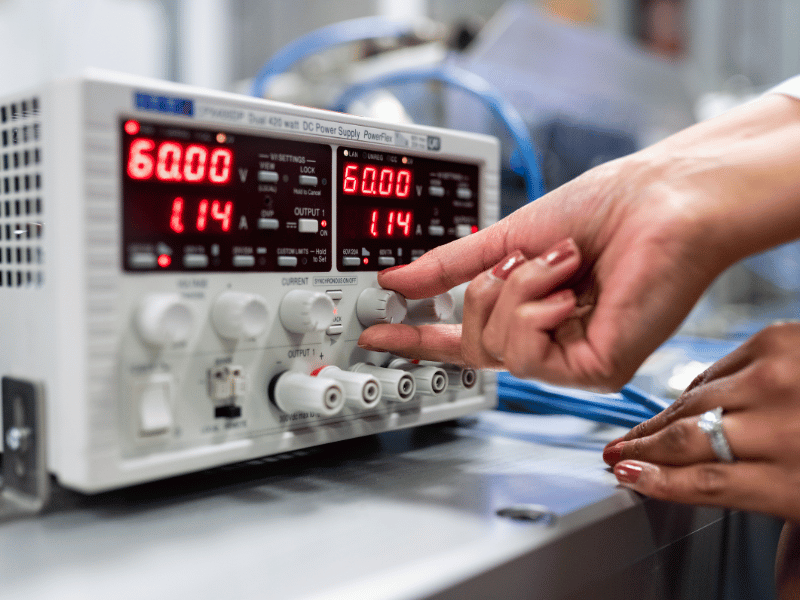
Medical devices depend on stable, safe, and reliable power. A power issue in a consumer gadget may be frustrating, but in healthcare, it can affect monitoring accuracy, treatment delivery, and patient safety. That is why medical power supplies are held to a higher standard than general-purpose power solutions.
If you are selecting a power supply for a medical device or healthcare system, you need to look beyond voltage and current alone. Safety isolation, leakage current, regulatory compliance, noise performance, and long-term reliability all matter. In this guide, you will learn what a medical power supply is, how to choose one step by step, and why quality matters in clinical and laboratory environments.
1.0 What Is a Medical Power Supply?
Definition and Purpose
A medical power supply is a power conversion device designed for use in medical equipment and healthcare environments. Its job is to take input power, usually from the AC mains, and convert it into stable, regulated output power that medical devices can use safely and consistently. Unlike standard commercial power supplies, it must meet stricter electrical safety and performance requirements.
These power supplies are built to protect both the equipment and the patient. In many cases, the device may be used close to the human body or connected directly to a patient. Because of that, the power supply must manage risks such as electric shock, excessive leakage current, overheating, and unstable output under varying loads.
Key Features
Medical power supplies are defined by several important features. One of the most critical is compliance with medical safety standards such as IEC 60601-1. This standard covers essential areas including insulation, isolation, creepage and clearance distances, and allowable leakage current. Low leakage current is especially important because even very small unwanted currents can create safety concerns in patient-connected equipment.
Other common features include reinforced isolation barriers, high reliability, low electromagnetic interference, and robust protection functions such as overvoltage, overcurrent, and short-circuit protection. Many models are also designed to support low standby power, quiet operation, and compact integration into portable or space-limited medical devices.
Applications in Medical Devices
Medical power supplies are used across a wide range of healthcare equipment. Common examples include patient monitors, infusion pumps, ventilators, imaging systems, ultrasound units, diagnostic analyzers, and surgical tools. Some devices need low-voltage DC outputs for electronics and sensors, while others require higher power for motors, displays, or internal subsystems.
They are also used in medical labs, dental systems, home healthcare devices, and rehabilitation equipment. In each case, the power supply must deliver stable power without adding unacceptable noise or safety risk. The exact design will depend on the device class, usage environment, and whether the equipment has direct patient contact.
2.0 How to Choose a Medical Power Supply?
There are many medical power supplies on the market, and choosing the right one can feel complex at first. The best approach is to focus on what your application actually needs rather than chasing the highest specs on paper. A well-matched unit is safer, easier to integrate, and more cost-effective over time.
Before you compare models, ask a few practical questions. What kind of medical device are you powering? Will it be used near or on the patient? Does it need one output or several? Will it sit on a bench, inside a cart, or in a rack? Once you answer those questions, the selection process becomes much easier.
Step 1: Check Your Requirements
Different medical devices need different power levels. A portable diagnostic tool may need only low-voltage DC and modest current, while a larger imaging platform may require higher voltages, multiple rails, or much greater power capacity. Your first step is to define the electrical needs of the entire system, not just a single internal board or module.
Voltage Ranges
The required voltage range depends on the device design. Many portable and compact medical devices operate at relatively low DC voltages to power processors, displays, sensors, and communication modules. In contrast, larger systems such as imaging equipment, laboratory analyzers, and motor-driven devices may need higher voltages or several regulated outputs working together.
You should also consider voltage tolerance, startup behavior, and load variation. A medical device may perform poorly if the supply drifts outside a narrow range, even when the nominal voltage looks correct. It is better to define your acceptable operating window early than discover compatibility problems during testing.
Current Ranges
Current requirements can vary just as much. Low-current supplies may be enough for diagnostic electronics, control boards, or compact monitoring units. Surgical tools, pumps, display-heavy systems, and equipment with motors or heaters often need much higher current capacity, especially during startup or peak operation.
Do not size the supply only for the average load. Include peak current, inrush behavior, and future design margin. In medical systems, undersizing can create reliability problems, while oversizing without justification can waste space and budget. A balanced margin usually gives the best result.
Step 2: Outputs
Outputs, or channels, are another key decision point. Some medical devices need only one regulated output, while others require several separate rails for processors, analog circuits, displays, sensors, and communication modules. The more complex the device, the more important output planning becomes.
Single Output
A single-output medical power supply is often the right choice for simple devices with one main voltage rail. It works well in compact systems where internal point-of-load regulation handles the rest of the power distribution. This approach can reduce wiring complexity, simplify integration, and lower overall cost.
Single-output units are common in straightforward monitoring devices, chargers, portable diagnostic products, and smaller medical accessories. If your device architecture is simple and your downstream conversion is well designed, one output may be all you need.
Dual Output
Dual-output power supplies are useful when a device needs two separate voltage rails, especially positive and negative rails. This is common in analog circuitry, sensor interfaces, signal conditioning stages, and some control systems. Dual outputs can also support isolated subsystems that must remain electrically separate.
In medical electronics, dual-output designs are often selected for devices that combine digital control with sensitive analog measurement. That said, you should confirm whether both outputs need equal performance, equal isolation, or independent regulation before choosing a model.
Multiple Output
Multiple-output power supplies are designed for more complex medical systems. These units can support multiple subsystems simultaneously, including logic boards, displays, motors, data acquisition modules, and communication interfaces. This can simplify system architecture and reduce the need for several separate power modules.
They are especially useful in imaging systems, lab instruments, and advanced monitoring equipment. Still, more outputs also mean more integration decisions. You need to confirm sequencing, regulation behavior, total load capacity, and fault protection across every rail.
Step 3: Types
Medical power supplies can be grouped in several ways, but the most practical distinctions involve conversion method and output type. Understanding these categories helps you choose a supply that fits both the electrical and clinical needs of your device.
Linear vs. Switching Power Supplies
A linear power supply uses a traditional conversion approach and is known for very low ripple and noise. That can be helpful in sensitive medical electronics, especially in diagnostic or measurement systems where signal quality matters. The tradeoff is size, weight, and lower efficiency compared with newer designs.
A switching power supply uses high-frequency switching technology to convert power more efficiently. These supplies are usually smaller, lighter, and better suited for portable equipment or systems where thermal efficiency matters. However, switching designs can produce more electrical noise, so filtering and layout become more important in noise-sensitive medical environments.
In practice, many modern medical devices use switching power supplies because they offer strong efficiency and compact size. High-quality models can achieve low enough ripple and noise for many demanding applications. Still, if your device depends on ultra-clean analog performance, a linear solution or extra filtering may be worth considering.
AC vs. DC Power Supplies
Most medical devices ultimately run on regulated DC power, even when they plug into an AC wall outlet. In those cases, the power supply converts mains AC into controlled DC outputs for the internal electronics. This is the most common setup in patient monitors, pumps, portable systems, and diagnostic devices.
Some specialized healthcare systems may also involve controlled AC output or more complex power architectures, but DC remains the standard for most equipment. When evaluating AC-input medical supplies, check input range, frequency compatibility, and whether global deployment requires universal input support.
High Voltage Power Supplies
High-voltage medical power supplies are used in specialized applications such as X-ray systems, imaging equipment, detector biasing, and other advanced medical technologies. These supplies may operate in kilovolt ranges and are typically paired with strict insulation, shielding, and control requirements.
Selection in this category requires extra care. Output stability, safety interlocks, insulation design, and compliance expectations are more demanding than with standard low-voltage units. If your application involves high voltage, choose a supplier with proven expertise in medical and high-voltage applications rather than a general-purpose option.
Step 4: Form Factor
The form factor of a medical power supply affects how easily it fits into your system and workflow. Even a technically suitable supply can create problems if it is too large, poorly ventilated, or difficult to mount in the final product.
Benchtop
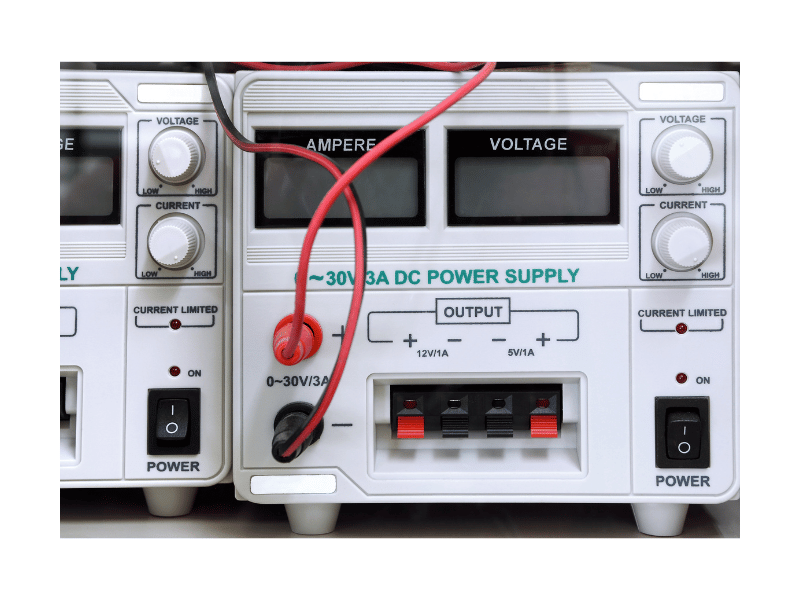
Benchtop power supplies are commonly used in development, testing, servicing, and validation. They provide easy access to controls, displays, and output terminals, which makes them useful for engineering teams, medical equipment repair, and lab evaluation work.
This format is ideal when flexibility matters more than permanent integration. If you are prototyping or verifying a new medical device design, a benchtop supply often speeds setup and makes troubleshooting easier.
Rackmount
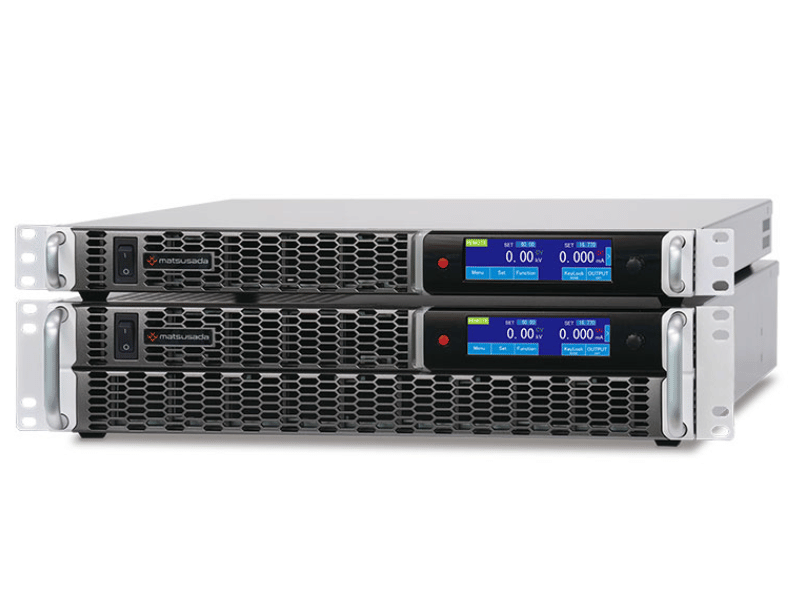
Rackmount power supplies are designed for integration into fixed systems, test racks, and larger equipment setups. They are a strong fit for automated validation systems, centralized medical electronics, and installations where space efficiency and structured cabling matter.
If your application involves production testing, system integration, or permanent installation, rackmount designs can improve organization and scalability. Just make sure airflow, service access, and connector layout fit the overall system plan.
Step 5: Performance and Stability
Performance matters because medical devices often depend on clean, predictable power. If the supply fluctuates, introduces noise, or responds poorly to load changes, the device may become inaccurate or unstable. That is a serious risk in healthcare applications.
Ripple and Noise
Ripple is the unwanted variation that remains on a DC output. Noise also refers to higher-frequency interference riding on the output. In medical electronics, excessive ripple and noise can degrade the performance of sensors, analog front ends, imaging circuits, and communication systems.
Low ripple and noise are especially important in diagnostic and monitoring equipment. Even when a switching supply is acceptable, you should verify that its filtering is good enough for your device. Do not assume all medical-labeled supplies perform the same in this area.
Control Options
Control style also affects usability and precision. Some power supplies use simple analog controls, while others use digital interfaces, keypads, rotary encoders, or programmable settings. Digital control often improves repeatability and makes exact adjustment easier, especially during development and validation.
For medical device teams, precise control can speed up testing and reduce setup errors. If the power supply will be used in automated environments, remote control and digital monitoring may be just as important as the output rating itself.
Step 6: Additional Features
Extra features can make a medical power supply easier to use and better suited to demanding workflows. These functions may not be the first items on your checklist, but they often make a real difference in testing, operation, and long-term system value.
Preset Memory
Preset memory allows users to save common voltage and current settings. This is useful when the same medical device or subsystem is tested repeatedly, because it reduces setup time and helps maintain consistency between sessions.
Slow Start
A slow start, also called a soft start, ramps the voltage up gradually instead of applying the full output instantly. This helps protect sensitive circuits, reduces inrush current, and can improve the startup behavior of medical electronics with delicate components or large input capacitors.
Programmability and Remote Control
Programmable and remote-controlled power supplies are valuable in automated testing, system monitoring, and production environments. Interfaces such as USB, LAN, or other communication options allow precise setup, repeatable test routines, and easier data logging. For medical product development, that can save time and improve validation quality.
3.0 Why Choose a High-Quality Medical Power Supply?
When you choose a medical power supply, quality is not a luxury feature. It is part of risk control. A lower-grade supply may appear acceptable on paper, yet still create problems with leakage current, thermal behavior, output drift, or long-term reliability. In medical applications, those weaknesses can become serious.
Safety Standards and Certifications
One of the strongest reasons to choose a high-quality medical power supply is compliance with recognized medical safety standards. IEC 60601-1 is the key reference for many medical electrical devices and power systems. It addresses protection against electric shock, insulation design, creepage and clearance distances, and leakage current limits.
Low leakage current is especially important in patient-connected or patient-adjacent devices. A compliant supply helps reduce regulatory risk and supports safer system design. It also makes the approval process smoother when you move from development to market.
Long-Term Reliability
Medical equipment is often expected to run for long periods with minimal failure. Downtime can delay care, disrupt workflows, and increase service costs. A high-quality power supply is more likely to provide stable output, resist thermal stress, and maintain performance across years of use.
Reliable supplies also help reduce hidden costs. Fewer field failures, fewer replacements, and less troubleshooting can save much more than the difference in purchase price. In critical environments, reliability is part of the product’s value.
Manufacturer Support and Expertise
The supplier matters almost as much as the product. A manufacturer with expertise in medical power can help with compliance questions, thermal integration, EMC concerns, and application matching. That support becomes valuable when your design faces unexpected constraints or certification challenges.
Good support also improves long-term confidence. If you need documentation, engineering advice, or replacement planning later, a knowledgeable manufacturer is much easier to work with than a low-cost vendor with limited technical backing.
Conclusion
A medical power supply does much more than convert electricity. It helps protect patients, support reliable device performance, and simplify compliance in demanding healthcare environments. That is why choosing the right model means considering requirements, outputs, power supply type, form factor, stability, and useful features rather than focusing on price alone.
Start by defining your device’s real electrical and safety needs. Then compare options based on IEC 60601-1 compliance, leakage current, noise performance, and long-term reliability. If the application is critical, work with a manufacturer that understands medical design requirements. A well-chosen medical power supply gives you a safer product, a smoother development process, and stronger confidence in the field.