Why Do Many Medical Devices Fail IEC 60601 Certification Even with an Isolated Power Supply?
Many medical device manufacturers assume that using an isolated AC-DC power supply is sufficient to meet IEC 60601 safety requirements. However, during formal certification, products often fail due to inadequate patient protection, excessive leakage current, or insufficient insulation distances.
One of the most overlooked requirements is 2×MOPP (Means of Patient Protection). Selecting the wrong power architecture early in development can lead to repeated certification failures, costly redesigns, and delayed product launches.
2×MOPP (Means of Patient Protection)
Medical OEM manufacturers frequently encounter 2×MOPP requirements during:
- IEC 60601 certification
- leakage current testing
- isolation validation
- EMC troubleshooting
- medical adapter selection
However, many engineering teams underestimate how strongly 2×MOPP affects:
- patient safety
- leakage current performance
- creepage and clearance spacing
- EMC behavior
- certification success
- long-term reliability
In practice, improper isolation architecture may lead to:
- leakage current failure
- hi-pot failure
- IEC 60601 certification rejection
- EMC instability
- costly redesign cycles
- delayed product launch
This guide explains:
- what 2×MOPP means
- how it differs from standard insulation
- why medical devices require reinforced isolation
- how 2×MOPP affects EMC and leakage current
- common OEM mistakes during medical power system design
This article is part of our IEC 60601 medical power engineering series.
→ Related Guide:
“Medical Power Supply Failures: Causes, IEC 60601 Risks, and Engineering Solutions”
→ Related Guide:
“BF vs CF Medical Equipment Leakage Current Requirements”
What Does 2×MOPP Mean?
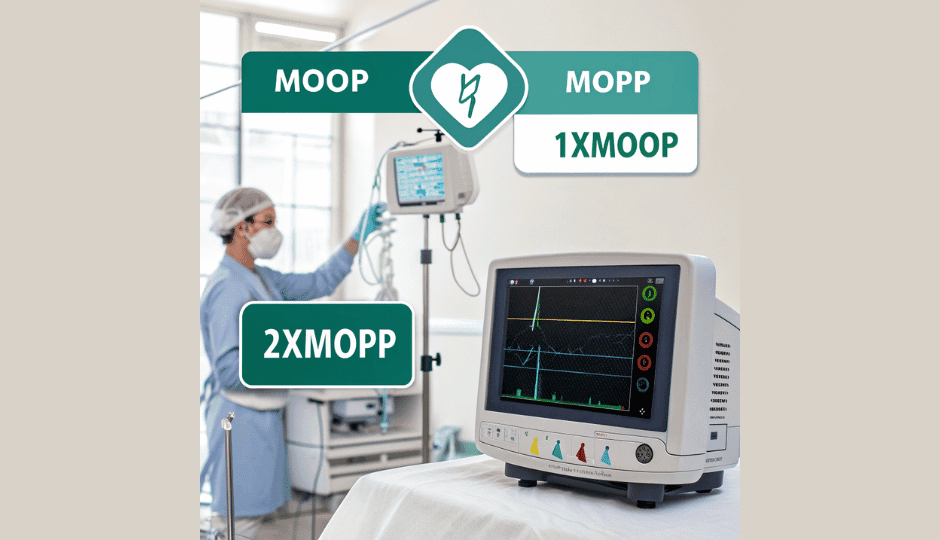
MOPP stands for:
Means of Patient Protection
Under IEC 60601-1, MOPP defines the insulation and electrical isolation measures used to protect patients from electric shock.
1×MOPP
Provides a single level of patient protection.
2×MOPP
Provides two independent layers of patient protection or one reinforced protection system with equivalent safety performance.
The key concept is not simply “thicker insulation.”
The real requirement is:
Even if one layer of protection fails, the second layer must still independently protect the patient.
This is why 2×MOPP typically requires:
- reinforced transformer insulation
- larger creepage distance
- larger clearance spacing
- higher hi-pot withstand capability
- lower leakage current
- stricter material selection
Why Medical Devices Require 2×MOPP Protection
Unlike consumer electronics, medical devices may establish direct conductive contact with patients.
Even very small electrical leakage may create safety risks in:
- ECG systems
- patient monitors
- ultrasound equipment
- infusion pumps
- ventilators
- rehabilitation devices
- home healthcare equipment
IEC 60601 therefore requires reinforced isolation between:
- AC mains input
- patient-accessible circuits
2×MOPP protection helps ensure patient safety even under:
- single-fault conditions
- transient surges
- insulation aging
- long-duration operation
Real-World OEM Problem: IEC 60601 Certification Failure Caused by Inadequate Isolation
A portable patient monitoring equipment manufacturer selected a compact commercial-grade adapter during early product development because it provided:
- stable voltage output
- acceptable EMC behavior
- low cost
- compact mechanical size
The prototype passed:
- functional testing
- software validation
- initial EMC pre-testing
However, during formal IEC 60601 certification, the device repeatedly failed:
- leakage current testing
- hi-pot isolation testing
- patient safety evaluation
The root cause was traced to the adapter’s insulation architecture.
The original adapter lacked:
- reinforced 2×MOPP isolation
- sufficient creepage and clearance spacing
- medical-grade transformer insulation
- low-leakage EMI filter optimization
Quankang Engineering Solution
To avoid a full system redesign, the OEM replaced the original adapter with a Quankang IEC 60601-certified medical power solution featuring:
- reinforced 2×MOPP isolation
- optimized low-leakage EMI filtering
- controlled common-mode current
- medical-grade transformer insulation
- improved creepage and clearance spacing
After system-level optimization, the product successfully passed:
- leakage current testing
- hi-pot validation
- IEC 60601 safety certification
while significantly reducing redesign cost and certification delays.
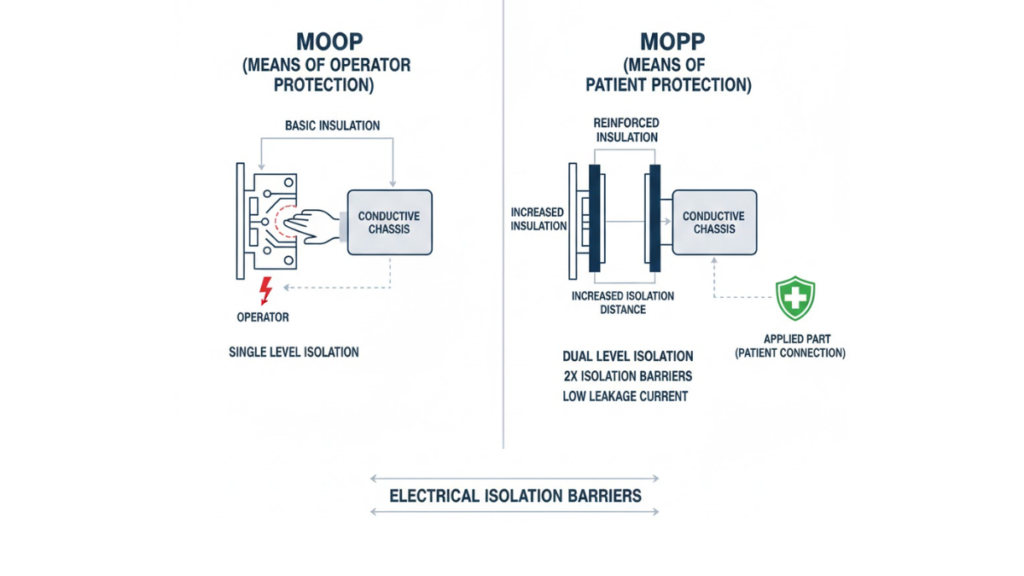
Difference Between MOOP and MOPP
IEC 60601 defines two different protection concepts.
| Protection Type | Meaning | Intended Protection |
| MOOP | Means of Operator Protection | Protects equipment operators |
| MOPP | Means of Patient Protection | Protects patients |
Patient protection requirements are significantly stricter because patients may be:
- physically vulnerable
- electrically connected to equipment
- exposed to conductive pathways
As a result, MOPP requires:
- stronger insulation
- lower leakage current
- reinforced isolation architecture
Difference Between 1×MOPP and 2×MOPP
| Isolation Level | Protection Capability |
| 1×MOPP | Single level of patient protection |
| 2×MOPP | Reinforced dual patient protection |
2×MOPP systems typically require:
- reinforced insulation
- larger creepage distance
- larger clearance spacing
- higher isolation voltage
- stricter transformer construction
For many patient-connected applications, 2×MOPP is mandatory rather than optional.
Typical Medical Devices Requiring 2×MOPP
2×MOPP medical power systems are commonly required in:
- ECG systems
- patient monitors
- portable ultrasound equipment
- infusion pumps
- ventilators
- rehabilitation devices
- sleep therapy systems
- home healthcare equipment
These applications require both:
- low leakage current
- reinforced patient isolation
2×MOPP Creepage and Clearance Requirements
One of the most important aspects of 2×MOPP implementation is insulation spacing.
Typical medical designs require significantly larger:
- creepage distance
- clearance spacing
than consumer electronics.
For example:
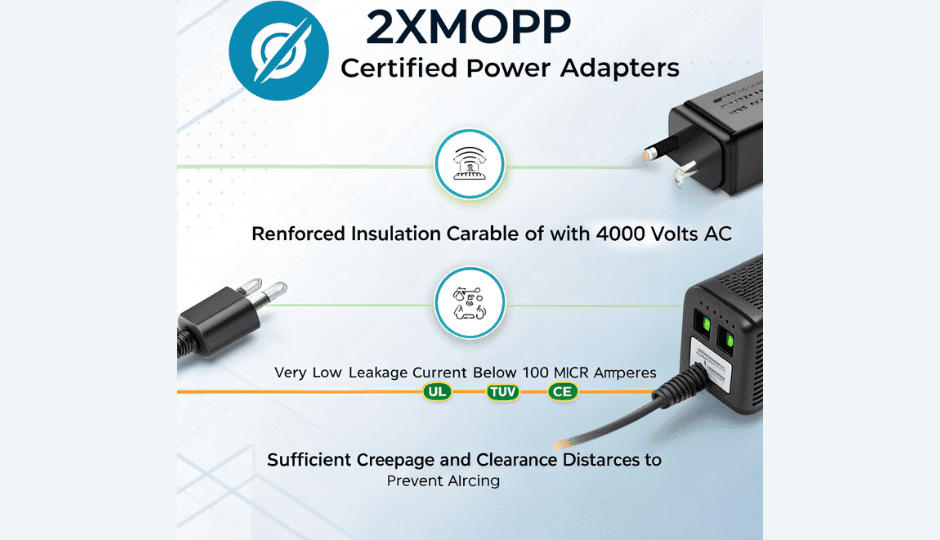
- PCB spacing may require approximately 8 mm or more depending on working voltage and insulation category
- isolation structures must withstand high-voltage hi-pot testing, often around AC 4000V
This cannot be achieved simply by adding insulating paint.
The physical layout itself must provide sufficient safety distance.
→ Related Resource:
“Creepage and Clearance in IEC 60601 Power Supplies”
Why 2×MOPP Affects Leakage Current
Leakage current is one of the most critical parameters in medical electrical systems.
Poor isolation architecture may increase:
- common-mode current
- parasitic coupling
- patient leakage current
This becomes especially important in:
- BF devices
- CF devices
- ECG systems
- imaging systems
Medical power systems must carefully balance:
- EMC suppression
- low leakage current
- reinforced isolation
High-quality medical power supplies reduce leakage current through:
- reinforced transformer insulation
- controlled parasitic capacitance
- optimized EMI filter design
- stable grounding architecture
Typical medical leakage current targets may include:
| Application Type | Typical Patient Leakage Limit |
| BF equipment | <100 μA |
| CF equipment | <10 μA |
CF applications are especially difficult because extremely small leakage currents are required during patient simulation testing.
→ Related Resource:
“How to Reduce Leakage Current in Medical Devices”
→ Related Resource:
“BF vs CF Medical Equipment Leakage Current Requirements”
Engineering Tradeoff: EMC vs Leakage Current
One of the most difficult engineering challenges in medical power design is balancing:
- EMC performance
- low leakage current
For example:
Increasing Y-capacitor values may improve EMI suppression while simultaneously increasing leakage current.
Reducing leakage current too aggressively may worsen:
- conducted emissions
- radiated EMI
- system noise stability
This tradeoff becomes especially critical in:
- ECG systems
- wireless monitoring devices
- portable medical equipment
- compact fanless systems
True medical-grade power architecture requires system-level optimization rather than simply passing isolated individual tests.
→ Related Resource:
“IEC 60601 EMC Testing Problems and Solutions”
→ Related Resource:
“Medical Power Supply EMI Troubleshooting Guide”
Typical Industrial Adapter vs 2×MOPP Medical Adapter
| Parameter | Typical Industrial Adapter | 2×MOPP Medical Adapter |
| Isolation Type | Basic insulation | Reinforced patient isolation |
| Leakage Current | 250–500 μA+ | <100 μA (BF) |
| Creepage/Clearance Margin | Consumer-oriented | IEC 60601 reinforced spacing |
| EMC vs Leakage Optimization | Consumer EMC priority | Medical balanced architecture |
| Patient Safety Support | Limited | Patient-connected applications |
| Lifecycle Support | Short-term commercial lifecycle | Long-term medical OEM support |
Many IEC 60601 certification failures originate from using commercial power systems in medical applications.
Why Commercial Adapters Often Fail Medical Certification
Commercial adapters are usually optimized for:
- low cost
- compact size
- consumer EMC requirements
rather than:
- patient protection
- ultra-low leakage current
- reinforced medical isolation
- long-term medical reliability
As a result, commercial adapters frequently fail:
- leakage current testing
- hi-pot testing
- IEC 60601 certification
- EMC stability validation
How to Select a 2×MOPP Medical Power Supply
Selecting a medical power supply involves more than checking whether it is labeled “IEC 60601 compliant.” OEM engineers should verify that the power supply meets both the electrical safety requirements of the application and the long-term needs of the product lifecycle.
Before selecting a power solution, consider the following:
| Check Item | Why It Matters |
| IEC 60601 certification | Demonstrates compliance with medical safety requirements |
| 2×MOPP isolation | Required for many patient-connected devices |
| Leakage current specification | Critical for BF and CF applications |
| Hi-pot test voltage | Confirms insulation strength |
| EMC test reports | Helps avoid system integration issues |
| Thermal performance | Ensures reliable operation in enclosed medical equipment |
| MTBF and reliability data | Supports long product life and reduced maintenance |
| Long-term product availability | Minimizes redesign during the product lifecycle |
| Technical support | Important for certification and OEM integration |
By evaluating these factors early in development, manufacturers can reduce certification risks and avoid costly redesigns later in the project.
How Quankang Medical Power Supplies Implement 2×MOPP
Quankang medical power solutions are specifically engineered for IEC 60601 patient protection requirements.
Key features include:
Reinforced Transformer Isolation
Improves:
- hi-pot reliability
- leakage current stability
- long-term insulation reliability
Optimized Creepage and Clearance Architecture
Supports:
- reinforced patient isolation
- transient withstand capability
- medical safety compliance
Low-Leakage EMI Filter Design
Balances:
- EMC suppression
- low patient leakage current
Controlled Common-Mode Current
Improves:
- ECG signal integrity
- imaging system stability
- patient-connected reliability
Medical-Grade Reliability Validation
Quankang medical adapters undergo:
- hi-pot testing
- leakage current testing
- EMC verification
- thermal validation
- long-duration reliability testing
This helps reduce certification redesign risk for medical OEM manufacturers.
Common OEM Mistakes When Designing for 2×MOPP
Using Commercial Adapters During Early Development
This often causes late-stage certification failure.
Ignoring EMC and Leakage Interaction
These parameters are strongly interconnected.
Underestimating Isolation Spacing
Compact layouts may unintentionally reduce safety margin.
Assuming Battery Testing Is Sufficient
Leakage current behavior often changes significantly during AC-powered operation.
Delaying Medical Power Architecture Decisions
Late-stage redesigns are expensive and time-consuming.
Engineering Support for 2×MOPP Medical Power Systems
Medical OEM manufacturers frequently encounter challenges involving:
- leakage current failure
- hi-pot testing problems
- EMC vs isolation tradeoffs
- BF/CF patient protection
- compact PCB spacing
- IEC 60601 certification delays
Quankang engineering teams support medical device manufacturers with:
- IEC 60601-compliant medical power supplies
- reinforced 2×MOPP medical adapters
- low-leakage AC-DC power systems
- EMC optimization support
- thermal and isolation engineering
- OEM and ODM medical power collaboration
Whether you are developing ECG systems, portable monitors, ultrasound devices, infusion pumps, or home healthcare equipment, selecting the correct medical power architecture is essential for patient safety and certification success.
For technical consultation regarding 2×MOPP isolation or medical power supply selection, contact our engineering teams.
FAQ
What does 2×MOPP mean?
2×MOPP means two independent levels of patient protection defined by IEC 60601.
Why is 2×MOPP important?
It helps protect patients from dangerous electrical current and supports IEC 60601 certification.
What is the difference between MOOP and MOPP?
MOOP protects operators. MOPP provides stricter protection for patients.
Does every medical device require 2×MOPP?
Not all devices, but many patient-connected medical systems require reinforced isolation.
Why do commercial adapters fail medical testing?
Commercial adapters usually lack reinforced isolation and low-leakage medical architecture.