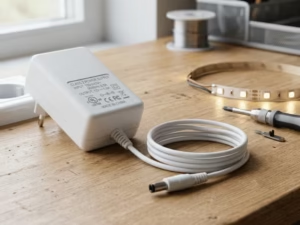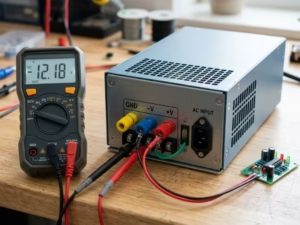
Choosing the wrong 12V power adapter is one of the most common causes of device instability in real-world applications. Problems such as random rebooting, startup failure, overheating, and shortened product lifespan are often not caused by incorrect voltage — but by insufficient current capacity and poor power margin design.
In this engineering guide, we explain the real differences between 12V 1A and 12V 2A adapters, why current headroom matters, and how OEM engineers select reliable power solutions for industrial and medical systems.
Quick Comparison: 12V 1A vs 12V 2A
At a basic level, both adapters provide the same output voltage (12V), but their maximum current capability is different.
| Feature | 12V 1A Adapter | 12V 2A Adapter |
| Maximum Power | 12W | 24W |
| Current Capacity | Standard | Double |
| Thermal Stress Under Load | Higher | Lower |
| Startup Surge Handling | Limited | Better |
| Voltage Stability | Lower | Higher |
| Long-Term Reliability | Basic | Improved |
| Suitable Applications | Sensors / IoT | Industrial / Medical / CCTV |
The Physics Behind It
Voltage can be understood as electrical “pressure,” while current represents how much electrical flow the adapter can supply.
A 12V 2A adapter does not force 2A into the device. The device only draws the amount of current it requires.
The advantage of a higher current adapter is that it has more electrical headroom during peak demand conditions.
Power formula:
P=V×I
Example:
- 12V × 1A = 12W
- 12V × 2A = 24W
This means a 2A adapter can safely deliver twice the power capacity of a 1A version.
Why Current Rating Matters in Real Applications
In engineering design, current capacity is not just a number printed on the adapter label. It directly affects:
- Device startup stability
- Thermal performance
- Cable voltage drop
- Long-term reliability
- Adapter lifespan
- EMC stability
- Peak load handling capability
Many devices appear stable during laboratory testing but fail in field deployment because the adapter has insufficient current margin.
This is especially common in:
- CCTV systems
- Medical monitoring equipment
- Routers and gateways
- Embedded industrial controllers
- Portable healthcare electronics
What “12V 1A” and “12V 2A” Actually Mean
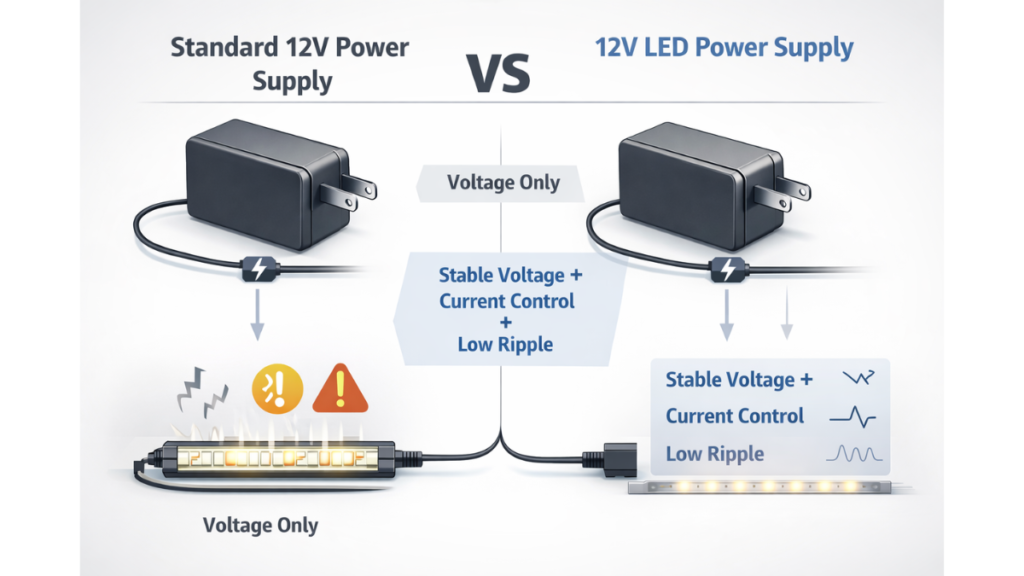
The designation “12V 1 A” indicates the adapter provides 12 volts of direct current (DC) and can supply up to 1 ampere of current — equivalent to 12 watts of maximum power. Likewise, a “12V 2 A” adapter can supply up to 2 amperes, or 24 watts of power at the same 12 V output. In both cases, the device being powered determines how much current is drawn, up to the adapter’s rated maximum.
If you’re new to current ratings and want a more general explanation of how amperage affects power delivery across different voltages, you may find this overview helpful:
What Is the Difference Between 1A and 2A Power Adapters?
Key Differences Between 12V 1A and 12V 2A Adapters
| Feature | 12V 1A Adapter | 12V 2A Adapter |
| Maximum Power | 12W | 24W |
| Current Margin | Low | High |
| Heat Generation | Higher under load | Lower |
| Startup Reliability | Limited | Better |
| Voltage Stability | Lower | Better |
| OEM Reliability | Basic | Preferred |
| Continuous 24/7 Operation | Less ideal | More suitable |
Can You Use a 12V 2A Adapter Instead of a 12V 1A Adapter?
Yes — In Most Cases
A common misunderstanding is that a 2A adapter will “push” excessive current into the device.
This is incorrect.
The device determines how much current it draws. If the device only requires 0.8A, then even a 2A adapter will only supply 0.8A.
Benefits of Using a Higher Current Adapter
Using a 12V 2A adapter for a 1A device often provides:
- Lower operating temperature
- Better startup stability
- Reduced voltage drop
- Improved transient response
- Longer adapter lifespan
- Better tolerance for peak current demand
This is why industrial and medical OEM systems usually prefer higher current margin by default.
Can You Use a 12V 1A Adapter for a 2A Device?
Not Recommended
If a device requires up to 2A but is powered by a 1A adapter, several problems may occur:
- Voltage drop during startup
- Random rebooting
- Failure to boot
- Adapter overheating
- Protection mode triggering
- Reduced long-term reliability
- Premature adapter failure
In industrial and medical applications, this is considered a serious power design mismatch.
Why Startup Surge Current Changes Adapter Selection
One of the biggest reasons engineers select 2A adapters for systems averaging below 1A is startup surge current.
Many electronic devices briefly consume much higher current during startup than during normal operation.
Common examples include:
- CCTV systems
- Routers
- Embedded controllers
- LCD displays
- Portable medical devices
- Motor-driven equipment
For example:
A device with 0.8A normal operating current may briefly require 1.5A–2A during startup.
If a 1A adapter is used:
- Output voltage may collapse temporarily
- The system may fail to boot
- The adapter may enter protection mode
A 2A adapter provides sufficient headroom to handle these short-duration peak loads safely.
Real Engineering Failure Example
Case Study: CCTV System Random Reboot Issue
A CCTV OEM originally selected a 12V 1A adapter because the camera consumed only 0.7A during steady operation.
However, after deployment, customers reported:
- Random rebooting
- Night vision instability
- Failure during cold startup
Root cause analysis revealed that the IR LED system generated startup surge current exceeding 1.4A.
Although the average current remained below 1A, the adapter repeatedly entered overload protection during transient peaks.
Solution
The OEM replaced the adapter with a 12V 2A power supply.
Results:
- Startup became stable
- Voltage drop disappeared
- Adapter temperature decreased
- Field failure rate was significantly reduced
This is a common real-world example of why current headroom matters.
Cable Voltage Drop in Long-Distance Applications
In industrial and CCTV installations, long DC cable runs can create voltage drop problems.
For example:
- Adapter output: 12V
- Voltage at device end: 10.8V
This may cause:
- Unstable operation
- IR camera malfunction
- Communication errors
- Unexpected rebooting
Higher current-capacity adapters usually maintain better voltage stability during transient loads and long cable conditions.
Why Power Adapters Lose Performance Over Time
Power adapter aging is another important but often overlooked issue.
Electrolytic capacitors gradually degrade under high temperature and continuous load conditions.
Adapters operating near maximum capacity typically experience:
- Higher internal temperature
- Faster capacitor aging
- Reduced voltage stability
- Shorter operational lifespan
For example:
A 12V 1A adapter running continuously at 0.95A will age much faster than a 12V 2A adapter operating at the same load.
This is why designing with power margin significantly improves long-term reliability.
Engineering Rule for Current Selection
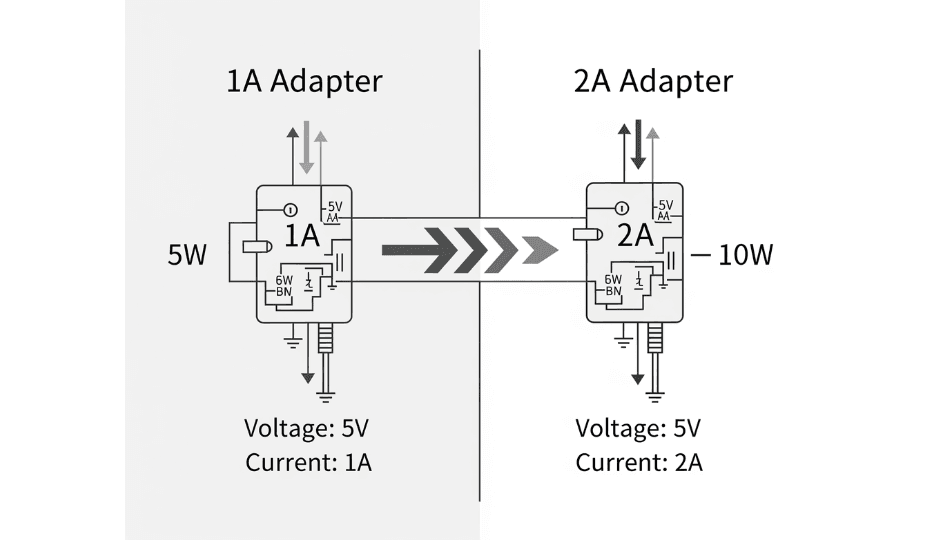
A common engineering practice is to maintain at least 20%–30% current headroom.
Recommended formula:
Irecommended=Irequired×1.25
Example:
If a device requires 1.6A:
1.6×1.25=2.0A
Recommended choice:
➡ 12V 2A adapter
This safety margin improves:
- Thermal stability
- Startup reliability
- Lifetime performance
- Field reliability
Real-World Application Scenarios
12V 1A Is Suitable For
- Small LED modules
- Low-power sensors
- Basic IoT devices
- Simple control boards
- Lightweight consumer electronics
12V 2A Is Recommended For
- IP cameras
- CCTV systems
- Industrial controllers
- Wireless gateways
- Portable medical devices
- Embedded systems
- Devices with startup surge current
Why Medical and Industrial OEMs Prefer Higher Current Margin
In OEM systems, adapter selection affects far more than basic operation.
It directly influences:
- Certification stability
- Thermal design
- EMC performance
- Field failure rate
- Long-term maintenance cost
- Product reliability
Medical devices often operate continuously for long periods and must remain stable even under abnormal operating conditions.
For this reason, medical-grade power supplies are usually designed with larger safety margins than ordinary consumer electronics.
Examples include:
- Patient monitors
- Oxygen concentrators
- Portable ultrasound systems
- ECG devices
- Home healthcare products
This is why many engineering teams prefer 2A margin even for systems averaging below 1A.
Recommended Medical Power Supply Solutions (Quankang)
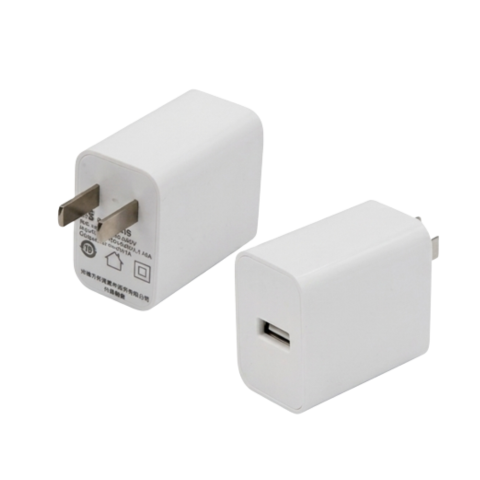
| 12V 1A–2A Medical Wall Plug Adapter UES06WZ-SPA Medical Power Adapter A compact medical wall plug adapter designed for portable healthcare electronics. Key Features · 12V output · IEC 60601 medical compliance · 2×MOPP isolation · Interchangeable AC plugs · Low standby power · Compact structure Typical Applications · Blood pressure monitors · ECG equipment · Pulse oximeters · TENS therapy devices
|  |
 | 5V Low-Power Medical Adapter UE05LZ5-SPA Medical Power Supply Designed for ultra-low power medical electronics. Applications · Sleep monitors · Hearing aids · Portable nebulizers · Pulse oximeters
|
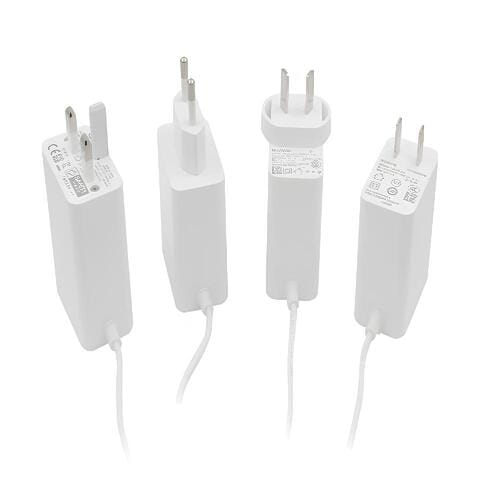
| 24V Multi-Voltage Medical Adapter UES48LZ1-SPA Medical Power Supply A flexible medical adapter supporting multiple output voltages. Key Features · 12V / 15V / 19V / 24V outputs · GaN technology · IEC 60601 compliance · 2×MOPP isolation · Low no-load power consumption Applications · Oxygen concentrators · Portable ultrasound systems · Electrotherapy devices · Phototherapy systems
|  |
 | High-Power Desktop Medical Power Supply UES65CZ-SPA Medical Power Supply A high-performance desktop medical power supply for demanding applications. Key Features · 12V–24V output · Up to 5A output capability · Leakage current ≤100μA · Peak load up to 140W · Operation altitude up to 5000m · Level VI efficiency Applications · Ventilators · Endoscopy systems · Diagnostic instruments · Physiotherapy devices
|
Common Mistakes in Adapter Selection
Many field failures are caused by simple power selection mistakes.
Common Errors Include
- Choosing 1A only because it is cheaper
- Ignoring startup surge current
- No current safety margin
- Using consumer-grade adapters in OEM systems
- Ignoring voltage drop over cable distance
- Selecting incorrect connector polarity
- Ignoring thermal conditions
These mistakes often result in:
- Warranty claims
- Product instability
- EMC failures
- Customer complaints
- Product redesign delays
12V 1A vs 12V 2A Summary
| Scenario | Recommended Adapter |
| Small low-power electronics | 1A |
| Stable consumer electronics | 1A–2A |
| CCTV systems | 2A preferred |
| Industrial controllers | 2A |
| Medical devices | 2A preferred |
| High reliability systems | 2A+ margin |
Final Conclusion
The difference between 12V 1A and 12V 2A adapters is not simply about “more power.”
It directly affects:
- System stability
- Startup reliability
- Thermal performance
- Adapter lifespan
- EMC behavior
- Long-term field reliability
For OEM, industrial, and medical applications, engineers should always select adapters with sufficient current headroom instead of choosing the minimum theoretical requirement.
This approach significantly improves:
- Product reliability
- Certification stability
- Thermal margin
- Customer satisfaction
- Long-term operational safety
Looking for a Reliable 12V Medical Power Supply?
Quankang provides:
- 5V / 12V / 24V / 48V medical adapters
- IEC 60601 certified solutions
- Wall plug and desktop medical power supplies
- OEM / ODM customization
- Global certification support
- Engineering technical assistance
Contact Quankang for samples, technical consultation, or OEM medical power projects.
Frequently Asked Questions
Will a 12V 2A adapter damage a 12V 1A device?
No. The device only draws the current it requires.
What happens if adapter current is too low?
The system may reboot, overheat, or fail during startup.
Can higher amperage improve stability?
Yes. Additional current margin usually improves startup performance and thermal reliability.
Why does my 12V device reboot randomly?
Possible causes include insufficient current capacity, voltage drop, startup surge current, or adapter overheating.
Does higher current rating reduce heat?
In many cases, yes. Adapters running below maximum load usually operate at lower temperature.