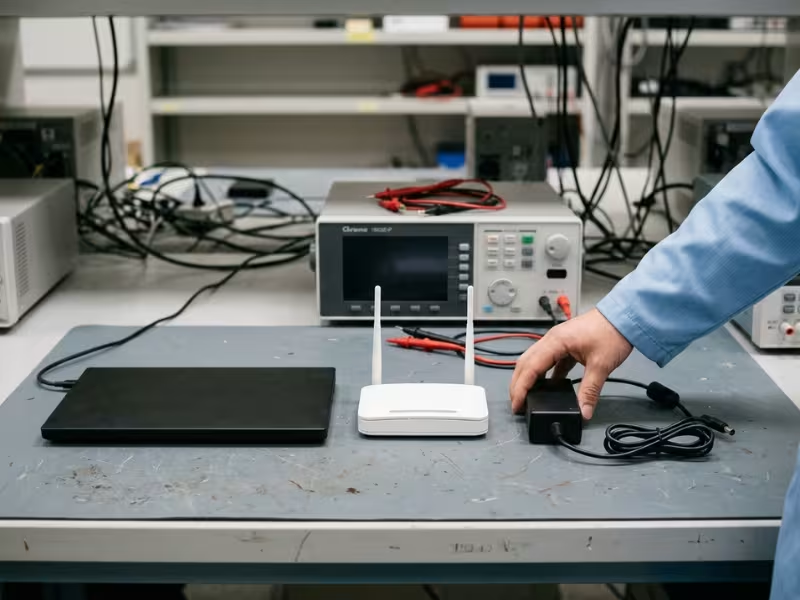
IEC 62368-1 is the international safety standard for audio/video, information technology, and communication technology equipment. The International Electrotechnical Commission (IEC) publishes it. It replaced two older standards, IEC 60950-1 for IT equipment and IEC 60065 for audio/video equipment. It also changed how safety is evaluated: it starts from hazards rather than from a fixed list of construction rules.
The most common confusion is easy to correct. IEC 62368-1 is a standard, not a certificate. Labs test products against it, and certification bodies certify products to it, but the standard itself certifies nothing.
This guide covers what the standard includes, how its hazard-based model works, how it relates to UL and EN versions, and what a compliance claim actually proves.
What Is IEC 62368-1?
The full title is Audio/video, information and communication technology equipment – Part 1: Safety requirements. IEC Technical Committee 108 developed it for a practical reason. Product categories had merged. A smart TV is a computer, and a networked speaker is both an audio product and an IT product. Keeping two separate standards for products that no longer fit either one created gaps and duplicated work.
At a glance:
- Scope: AV, IT, and communication equipment, plus the power supplies built for them
- Hazards addressed: electric shock, fire, hazardous substances, mechanical injury, thermal burns, and radiation
- Standards replaced: IEC 60950-1 and IEC 60065
- Method: hazard-based safety engineering (HBSE)
Several editions have been published. The fourth edition, released in 2023, is the latest at the time of writing. The edition matters when you verify a report, and the section on compliance claims below explains why.
The standard is just as clear about what it leaves out. IEC 62368-1 does not cover electromagnetic compatibility (EMC), energy efficiency, or functional performance. Each of those has separate requirements.
Is IEC 62368-1 a Standard or a Certification?
It is a standard. It is a document that sets safety requirements. Certification is something a third party does against that document. Treating the two as one thing is the main reason “IEC 62368-1” claims on datasheets get misread.
Term | What It Is | Who Does It |
|---|---|---|
Standard | The published safety requirements | IEC (international) or national bodies (regional adoptions) |
Testing | Evaluating a product against the requirements | A test lab, either in-house or independent |
Certification | Formal third-party confirmation that a product meets the requirements | A certification body, through a CB test certificate or an NRTL Listing, for example |
Compliance | The state of meeting the requirements | Declared by the manufacturer or confirmed by a third party |
A simple analogy helps. The standard is the exam syllabus. Testing is sitting the exam. Certification is the official result issued by an accredited body. This matters to buyers because the name of a standard on a datasheet proves nothing about a specific model. The evidence lives in the report and the certificate, not in the citation.
What Products Does IEC 62368-1 Cover?
Scope depends on product category and intended use. Size and component type do not decide it. Voltage only sets the outer boundary, since the standard applies to equipment with a rated voltage up to 600 V.
Typically Covered by IEC 62368-1 | Typically Covered by Another Standard |
|---|---|
Laptops, desktops, and servers | Medical electrical equipment: IEC 60601-1 |
Routers, switches, and modems | Household appliances: IEC 60335 series |
Printers, monitors, and TVs | Laboratory and measurement equipment: IEC 61010-1 |
Audio equipment and set-top boxes | Luminaires: IEC 60598 series |
Phones and conferencing equipment | Machinery electrical equipment: IEC 60204-1 |
External adapters, USB chargers, and PoE injectors for the products above |
Power supplies are where scope causes the most confusion, and the rule is simple: a power supply follows its end application. An adapter that powers a router falls under IEC 62368-1. The same adapter powering a patient monitor needs evaluation to IEC 60601-1, which has stricter requirements for leakage current and means of protection. That’s why many power supply makers, including us at quankang, evaluate certain models to both standards. A single design can then serve IT customers and medical power supply applications without a redesign.
Mixed-function products, such as a smart appliance with a large display, are less clear-cut. Scope usually follows the product’s primary function. Confirm it with your evaluating lab before testing starts, not after.

How IEC 62368-1 Works: The Hazard-Based Safety Approach
This section explains what really sets the standard apart. Legacy standards largely told designers how to build a product: specific constructions, materials, and tests. IEC 62368-1 starts with a different question. What energy in this product could cause pain or injury, and what stands between that energy and a person?
The model has three blocks: an energy source, an energy transfer mechanism, and a body part. Injury happens only when energy reaches a body part. The standard requires a safeguard between them so that transfer can’t happen under normal, abnormal, or single-fault conditions.
Energy sources are ranked in three classes. Class 1 is not painful. Class 2 can be painful but is not injurious. Class 3 can cause injury.
Hazard Type | Classes | Example |
|---|---|---|
Electrical energy | ES1, ES2, ES3 | Mains input is ES3. A low-voltage DC output is typically ES1. |
Power source (fire) | PS1, PS2, PS3 | More available power means stronger fire safeguards. |
Thermal | TS1, TS2, TS3 | Touchable enclosure surfaces |
Mechanical | MS1, MS2, MS3 | Fan blades, sharp edges, and heavy products |
Radiation | RS1, RS2, RS3 | Lasers, LEDs, and displays |
Two more concepts complete the model:
- Safeguards: A basic safeguard works under normal conditions. A supplementary safeguard takes over if the basic one fails. A reinforced safeguard does the job of both on its own. Instructional safeguards, such as labels and warnings, and precautionary safeguards, which rely on instruction or supervision, change behavior rather than block energy physically.
- Categories of persons: Ordinary persons have no training. Instructed persons have been told about hazards. Skilled persons have the expertise to recognize hazards themselves. The more access an untrained person has, the stronger the safeguard must be.
Worked example: an external power adapter
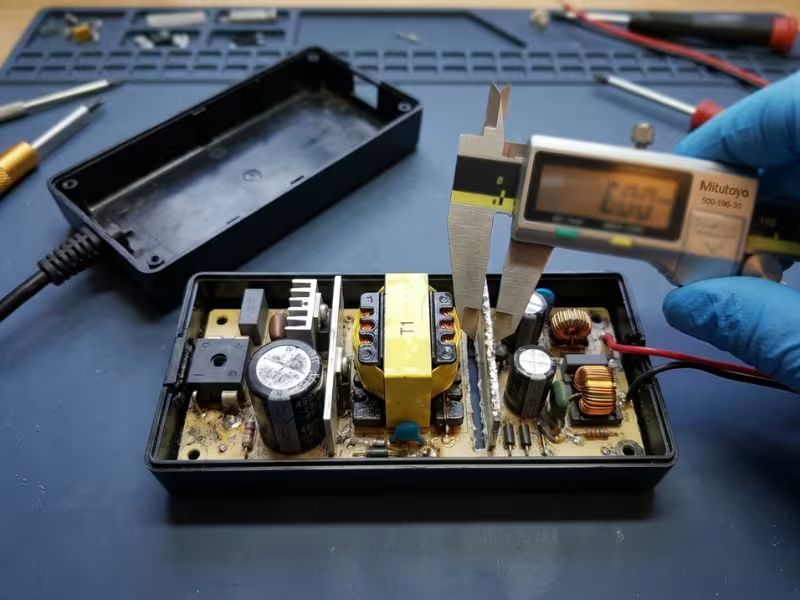
The adapter’s mains input is an ES3 source. Its DC output connector is accessible to an ordinary person and is typically classified as ES1. Because the ordinary person must never be exposed to ES3, the standard requires a reinforced safeguard, or a basic plus a supplementary safeguard, between primary and secondary. In hardware terms, this sets the transformer’s insulation system and the creepage and clearance distances across the isolation barrier. Every major design decision on the isolation side traces back to that one energy-to-person relationship.
This approach isn’t “stricter” than the legacy standards. It’s different in method. Its real advantage is flexibility. A new technology that prescriptive rules never anticipated can still be evaluated, as long as the designer can identify the energy source and justify the safeguard.
How IEC 62368-1 Relates to Older and Regional Standards
IEC 60950-1 and IEC 60065 were phased out in the major markets around December 2020. In the US and the EU, new certifications are now issued to 62368-1 versions. Products certified to the legacy standards may need re-evaluation when they’re significantly redesigned or recertified.
The IEC standard rarely reaches a market on its own. Countries and regions adopt it, often with national differences or common modifications. The core requirements are shared, but the details are not identical.
Standard | What It Is | Where It’s Used |
|---|---|---|
IEC 62368-1 | International base standard | Basis for IECEE CB Scheme reports and national adoptions |
UL 62368-1 / CSA C22.2 No. 62368-1 | Binational North American adoption with national differences | US and Canadian certification, including NRTL Listing |
EN 62368-1 | European adoption with common modifications | EU conformity, commonly under the Low Voltage Directive |
IEC 60950-1 / IEC 60065 | Legacy standards | Replaced by 62368-1 for new certifications in major markets |
The practical point is this. A CB report to IEC 62368-1 is a strong foundation, and certification bodies in many countries accept it as the basis for national certification. It doesn’t replace that certification automatically. The national differences for each target market still have to be covered. That’s why target markets belong in the first specification for any custom power adapter, not in a late-stage review.
What Does “IEC 62368-1 Compliant” Actually Mean?
How a claim is worded tells you how much evidence stands behind it.
Claim Wording | What It Usually Means | What to Ask For |
|---|---|---|
“Designed to IEC 62368-1” | Design intent only | Any test evidence at all |
“Compliant with IEC 62368-1” | Manufacturer’s statement, possibly self-declared | The test report and who issued it |
“Tested to IEC 62368-1” | Testing was done, but the lab may be unknown | Lab name and full report |
“CB test certificate to IEC 62368-1” | Third-party evaluation under the IECEE CB Scheme | Certificate number, report, and the national differences covered |
“UL Listed to UL 62368-1” | North American certification by an NRTL | File number, verified at the model level |
“CE marked, EN 62368-1” | EU declaration of conformity that references the standard | Declaration of Conformity and the supporting report |
Self-declaration isn’t invalid. It’s a legitimate route in some regulatory regimes. What matters is knowing which evidence exists before you rely on the claim. In any report, check three things:
- The edition, and whether your target market accepts it
- The exact model number, not just a product family name
- The national differences included for the markets where you will sell
Scenario: the “compliant” adapter that wasn’t ready to ship
A sourcing team receives a quote for a 36 W desktop ITE power supply marked “IEC 62368-1 compliant.” Before placing the order, they request the CB report. It was issued to the second edition and includes no US or Canadian national differences. The finished equipment is headed for North America, so the adapter needs additional evaluation before it can ship with the product. Because the team asked at the quote stage, the gap costs a few days of discussion instead of a missed launch date.
Common Misconceptions About IEC 62368-1
Most problems come from misreading scope or evidence, not from failed tests.
- “IEC 62368-1 is a certification.” It’s a standard. A third party issues certification against it.
- “IEC, UL, and EN 62368-1 are the same document.” They share core requirements, but national differences and common modifications apply.
- “It covers every electronic product.” Medical, household, laboratory, and lighting products typically fall under other standards.
- “A compliant power supply makes my product compliant.” The finished product needs its own evaluation. The power supply’s evaluation can be reused only within its stated conditions of use.
- “It covers EMC and efficiency.” It’s a safety standard only. EMC and energy efficiency are separate requirements.
- “Any edition is fine.” Accepted editions depend on the market and the date. Always check the edition printed on the report.
IEC 62368-1 FAQs
Is IEC 62368-1 mandatory?
Not directly. Markets require safety compliance through their own regulations and adopted versions. Examples include EN 62368-1 under the EU Low Voltage Directive and listing to UL 62368-1 where electrical codes, inspectors, or customers expect it.
What is the current edition of IEC 62368-1?
The fourth edition, published in 2023, is the latest at the time of writing. Markets often accept earlier editions during transition periods, so confirm which edition your target market and certification body currently accept.
Does IEC 62368-1 cover USB and PoE power ports?
Yes, as part of the equipment that provides them. IEC 62368-3 adds specific requirements for DC power transfer through cables and ports, such as USB and PoE. It’s commonly applied alongside Part 1 for chargers and injectors.
Does IEC 62368-1 cover batteries?
It covers equipment that contains batteries, including charging circuits and protection against fire and chemical hazards. Battery cells and packs are usually also evaluated to battery-specific standards, such as IEC 62133-2 for lithium systems.
Conclusion
IEC 62368-1 is the hazard-based safety standard for AV, IT, and communication equipment. It replaced IEC 60950-1 and IEC 60065, and it reaches markets through regional adoptions such as UL 62368-1 and EN 62368-1. It defines requirements. It doesn’t certify anything by itself.
Two rules cover most real-world decisions. Confirm scope by end application, and treat every compliance claim as only as strong as the report behind it. Before you approve a supplier, request the report, check the edition and the exact model, and confirm that the national differences for your target market are included.