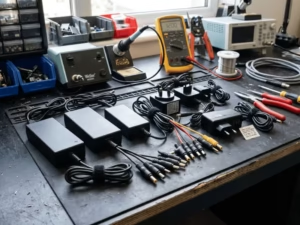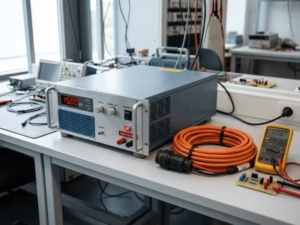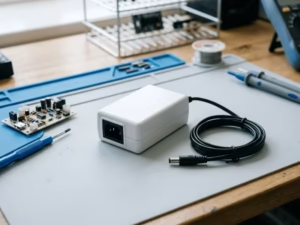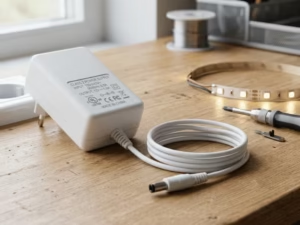
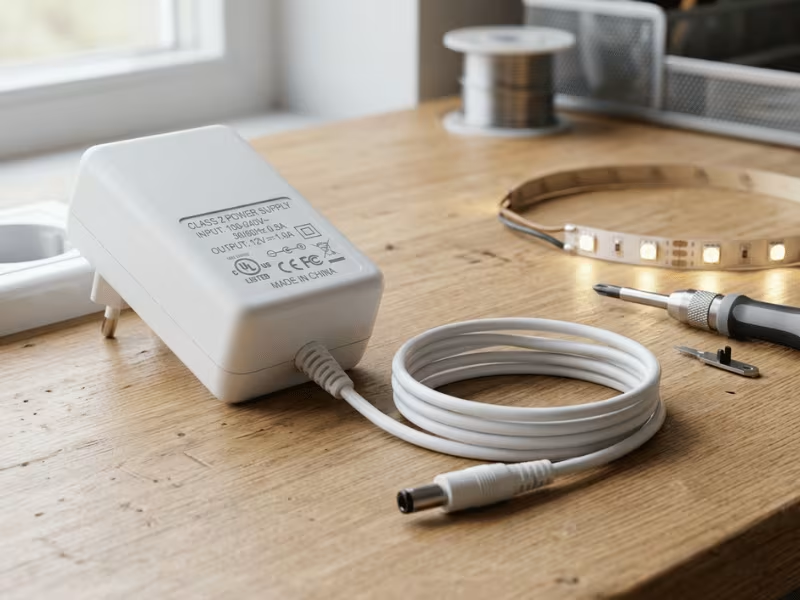
Picture yourself wiring up a run of LED strip lights under a kitchen cabinet. Or mounting a thermostat. Or powering a card reader by the front door.
You grab a small adapter, and a question pops up: is this thing actually safe to run behind a wall?
I hear these questions all the time from installers and product designers.
Is this power supply safe for a low-voltage circuit? Does it really count as “Class 2,” or does the label just say so? Will it make my wiring simpler, or add more rules to follow? And can I trust it with my specific device?
These are the right things to ask. A lot of people skip them and just match the voltage and current.
But “Class 2” means more than low voltage. Get it right, and your install gets safer and easier. Get it wrong, and you invite problems you won’t see until later.
Let’s clear it up.
What a Class 2 Power Supply Actually Is
A Class 2 power supply is one with a deliberately limited output. It caps how much voltage, current, and power the circuit can push out — and that cap is the whole point.
Why limit the output? Because limited energy means limited danger. Keep the power low enough, and the circuit can’t easily start a fire or deliver a dangerous shock. That’s the core idea.
Here’s a distinction people miss all the time. “Class 2” describes the output side and the circuit it feeds. It doesn’t describe the input, the enclosure, or the device as a whole. When a supply carries a Class 2 rating, it’s making a promise about what comes out — not about how it’s built inside.
Two standards define this. In the U.S., UL 1310 covers Class 2 power units and sets the output limits they have to meet. NEC Article 725 then treats the wiring on that limited circuit as its own category, separate from ordinary branch circuits. I won’t walk you through the code line by line — what matters is the result: a supply that keeps its output inside safe boundaries.
And the payoff runs deeper than safety alone.
Because the circuit stays power-limited, you often get to wire it with smaller conductors, skip conduit that a full-power circuit would demand, and route things with far more freedom. That saves time, material, and headache on the install.
So a Class 2 supply gives you two wins at once: a safer circuit, and a simpler one to put in.
Class 2 vs. Class II: The Most Common Confusion
Here’s the mix-up I fix more than any other: Class 2 and Class II are not the same thing. They look almost identical on paper, but they solve completely different problems.
Class 2 is about a power-limited output. It caps the energy leaving the supply, following UL 1310 and NEC Article 725. Class II is about construction — specifically double insulation that protects you from shock, defined under IEC and EN standards. One controls how much power comes out. The other controls how the supply keeps live parts away from you.
Term | What it refers to | Main concern | Are they the same? |
|---|---|---|---|
Class 2 | A power-limited output circuit (UL 1310 / NEC 725) | Limiting output energy to reduce fire and shock risk | No — it describes the output |
Class II | Double-insulated construction (IEC / EN) | Protecting users from shock through insulation, no earth ground needed | No — it describes how the unit is built |
So these two labels answer separate questions. Class 2 answers “how much power can this circuit push out?” Class II answers “how does this device stop a fault from reaching my hands?”
Now here’s where it gets practical. A single power supply can land in any of three spots:
- Class 2 but not Class II. The output stays power-limited, but the unit relies on a different protection method inside.
- Class II but not Class 2. The unit uses double insulation, yet its output isn’t held to Class 2 energy caps.
- Both at once. Plenty of small adapters carry both ratings, and that’s perfectly normal.
Why should you care? Because assuming one implies the other will burn you.
I’ve watched buyers grab a supply marked Class II and wire it as if it qualified for Class 2 conductor rules. It doesn’t. The double-insulation mark told them nothing about the output limits. When an inspector shows up, that circuit fails — not because the supply is bad, but because the label meant something else entirely.
Read both marks separately. If your install depends on power-limited wiring, confirm the Class 2 rating specifically. Don’t let a Class II symbol talk you into skipping that check.
How to Tell If a Power Supply Is Really Class 2
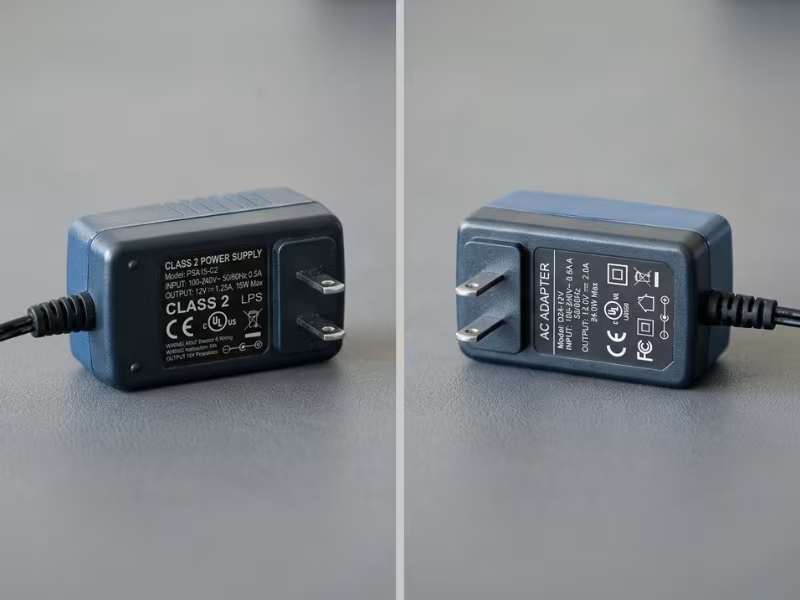
A label that says “Class 2” isn’t proof on its own. I’ve handled plenty of units that claimed the rating but couldn’t back it up. Here’s the quick check I run before I trust any supply.
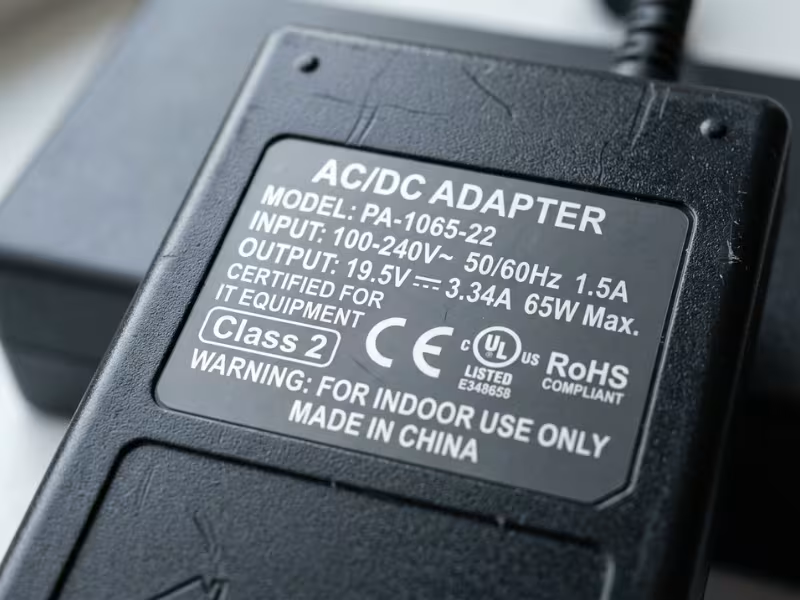
Start with the label itself. Look for the words “Class 2” printed right on the unit — not on the box, not in the ad, on the actual supply. If it isn’t there, treat the claim as unverified.
Next, find the certification mark and make sure it’s real. A UL 1310 listing tells you an independent lab tested the output limits. A vague logo or a mark you can’t trace tells you nothing.
Then read the numbers. Confirm the output voltage, current, and wattage sit inside Class 2 limits. Match the model number on the label against the certification record. A supply that carries a mark for a different model doesn’t count for yours.
Finally, check that the rating fits where you’re installing it. A supply rated for a dry indoor spot won’t hold up in a damp or outdoor location, no matter what its Class 2 mark says.
What to check | Why it matters | Common mistake |
|---|---|---|
Label says “Class 2” on the unit | Confirms the maker stands behind the rating | Trusting the box or product page instead of the unit |
Certification mark is credible (UL 1310) | Proves a lab verified the output limits | Accepting a generic or untraceable logo |
Output voltage, current, wattage | Shows the output stays within Class 2 caps | Checking only voltage, ignoring total power |
Model number matches the certification | Ties the mark to the exact unit in hand | Assuming a listing covers every model in a line |
Rating suits the install environment | Keeps the supply safe where it actually runs | Using an indoor-rated unit in a wet spot |
Physical label over marketplace claims | The label is the only statement that holds up | Believing a seller’s title that says “Class 2” |
One habit saves the most trouble: pick up the unit and read what’s printed on it. Marketplace titles and spec sheets get copied, padded, and sometimes flat-out wrong. The physical label is the one place the manufacturer makes a real claim.
Run these six checks and you’ll spot a fake Class 2 supply in under a minute — long before it ends up behind a wall.
Where Class 2 Power Supplies Make Sense
Some jobs practically ask for a Class 2 supply. The circuit runs on low power, the install benefits from simpler wiring, and the safety margin comes built in. Here are the places I reach for one first.
LED lighting. Strip lights, under-cabinet fixtures, and landscape runs pull modest power and live behind walls or under counters. A Class 2 supply lets you route thin conductors without conduit, so the install goes faster and stays neat. But watch the total load. String too many meters of strip onto one supply and you blow past the wattage cap — at which point the circuit stops qualifying as Class 2 at all.
Security and access control. Card readers, keypads, electric strikes, and small cameras run on limited-power circuits by design. Class 2 wiring gives you the freedom to snake cable through a building without the heavy rules a full-power run demands. The catch: a big electric strike or a bank of PoE cameras can draw more current than one Class 2 output allows. Add it all up before you commit.
HVAC thermostats and zone controls. The classic 24V control transformer feeding a thermostat is a textbook Class 2 use. Low voltage, low energy, simple wiring — it just works. Trouble shows up when someone daisy-chains too many zone dampers or controllers onto one transformer and the output sags. Size the supply for every device on the loop, not just the thermostat.
Doorbells, intercoms, and signaling. These systems barely sip power, so a Class 2 supply covers them with room to spare. You get safe, easy wiring and no conduit fuss. The only real limit surfaces with newer video doorbells, which pull far more than an old chime. Check the current draw before you assume the existing transformer can handle it.
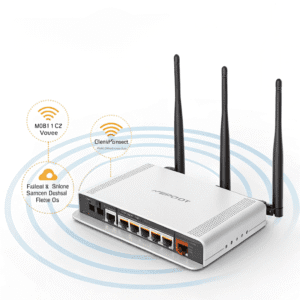
Networking and IT equipment. Small routers, switches, and PoE devices often run on limited-power circuits too. When you’re powering this kind of gear, a certified ITE power supply built for information technology equipment keeps the output clean and the safety marks in order. Just confirm the total draw stays inside Class 2 limits, since a loaded PoE switch can climb quickly.
Low-power control circuits. Sensors, small actuators, and PLC input loops in tight spaces love Class 2 wiring, because it sidesteps conduit and keeps routing flexible. But the moment a control loop drives a large actuator or a high-inrush relay bank, you’ve likely outgrown what Class 2 can deliver.
Notice the pattern. Class 2 shines wherever the load stays genuinely low and the install gains from lighter wiring rules. The one thing that trips people up every time is the same: total power creeping past the cap. Keep your load list honest, and these applications stay firmly in Class 2 territory.

When Class 2 Is Not Enough
Class 2 solves a lot of problems, but it isn’t the answer for every circuit. I’ve seen designs stall because someone forced a power-limited supply into a job that clearly outgrew it. Knowing where Class 2 ends saves you that pain.
The first hard wall is the power cap itself. Class 2 holds the output to a strict energy limit, so once your total load climbs past that ceiling, the circuit simply stops qualifying. Add a few more fixtures or a bigger actuator, and you’ve crossed the line whether you meant to or not.
Long cable runs cause the second common headache. Push low-voltage power across a long distance and the voltage drop adds up fast. Your device at the far end may starve for volts even though the supply reads fine at the source. A higher-power, higher-voltage design often fixes what Class 2 can’t.
High-current devices tell the same story. Large electric strikes, motorized dampers, and high-inrush relay banks pull more current than a single Class 2 output can deliver. Try to force it, and the supply sags or trips.
Complex industrial control loops raise the bar again. When you’re driving several motors, big contactors, or heavy automation, you need real power and the wiring rules that come with it.
In these cases, don’t twist Class 2 to fit. Reach for a Class 1 circuit, a proper industrial supply, or another compliant path built for the load. The right classification isn’t the one you prefer — it’s the one your circuit actually earns.
How to Choose the Right Class 2 Power Supply
Picking a Class 2 supply isn’t about grabbing the cheapest unit with the right voltage on the label. I work through the same order every time, because skipping a step here shows up as a failure later — usually behind a wall, where it’s hardest to fix.
Start with the load. Add up the total voltage and current every device on the circuit will pull, then confirm the supply covers that draw with room to spare. Match the voltage exactly, and never size the current to the bare minimum. A supply running at its absolute limit runs hot and dies early.
That’s where headroom comes in. Many devices spike hard at startup — LED drivers and relays can pull several times their steady current for a moment. Size for that surge, not the average. Then check the derating curve. A supply rated at 25°C often delivers far less inside a warm ceiling or a sealed cabinet, so leave 20–30% margin.
Next, verify the label and certification, not the marketing. Read “Class 2” and a traceable UL 1310 mark right on the unit. Match the model number to the listing. A claim on a product page proves nothing when an inspector shows up.
Then confirm the environment. An indoor-rated adapter fails fast in a damp or outdoor spot, so match the IP rating to the real install site. Check the mounting style too — plug-in, DIN rail, or enclosed — and make sure the wiring compartment fits your conductors.
Don’t overlook the connector and wiring. Match barrel size, polarity, and locking style to your device, since reversed polarity can kill electronics instantly. Pick the right wire gauge for the run length, because a long thin cable drops voltage and starves the load. When a standard unit doesn’t match your voltage, connector, or footprint, custom power adapters let you spec the exact output and marks your design needs.
Finally, weigh efficiency if the supply runs around the clock. Compare no-load draw and look for DoE Level VI or EU CoC Tier 2 compliance. On a 24/7 circuit, a few wasted watts add up on the bill and generate heat you’d rather avoid.
Selection factor | What to confirm | Why it matters |
|---|---|---|
Voltage and current | Total load draw with margin, exact voltage | Undersizing overheats the supply and shortens its life |
Startup and temperature | Inrush surge, derating curve, 20–30% margin | A unit at its limit sags, trips, or fails in the heat |
Label and certification | “Class 2” and UL 1310 on the unit, model match | An unverified claim fails inspection and voids safety |
Environment and mounting | IP rating, mounting style, wiring space | The wrong rating fails in damp, wet, or hot spots |
Connector and wiring | Barrel size, polarity, wire gauge, run length | Wrong polarity kills devices; thin cable starves them |
Efficiency and standby | No-load draw, DoE Level VI or CoC Tier 2 | Waste and heat pile up on a supply that never turns off |
Run these six in order and you’ll catch the problems that hide until it’s too late to fix them cheaply.
Common Mistakes When Specifying a Class 2 Power Supply
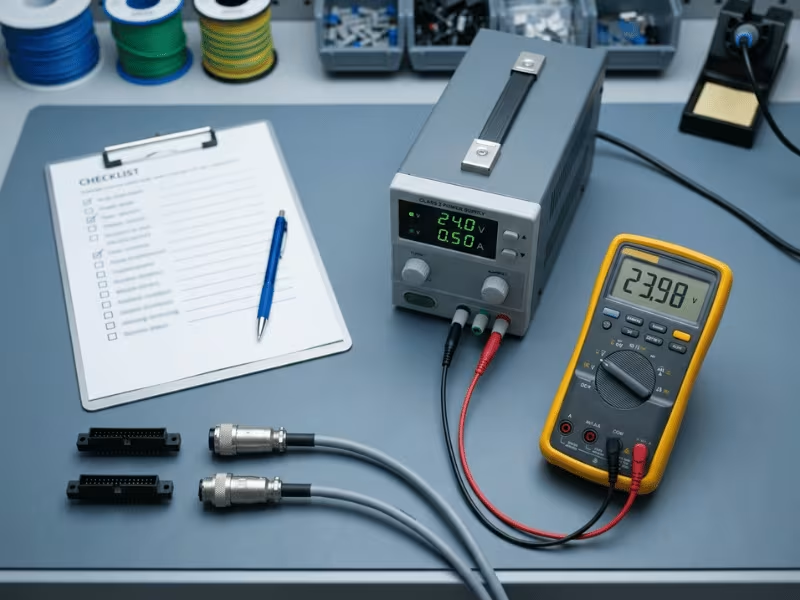
Even careful buyers slip on the same traps. Here are the five I catch most often, and how to sidestep them.
Mistake | What really happens | Better way |
|---|---|---|
Assuming low voltage means Class 2 | A 12V or 24V adapter gets treated as Class 2 with no proof, and the circuit fails inspection | Confirm the actual “Class 2” mark and output limits, not just the voltage |
Confusing Class II with Class 2 | A double-insulated unit gets wired under power-limited rules it never met | Read both marks separately — one covers construction, the other covers output |
Matching only voltage and current | The right numbers hide missing certification, isolation, or surge protection | Check the UL 1310 listing alongside the electrical specs |
Ignoring derating and environment | A unit rated at 25°C bakes in a hot cabinet and dies early | Read the derating curve and match the IP rating to the real site |
Trusting a listing over the label | A marketplace title claims “Class 2” while the unit carries no mark at all | Pick up the supply and read what’s printed on it |
Two of these cause the most damage.
The Class II mix-up burns people constantly. That double-insulation symbol tells you nothing about output limits. If your install depends on power-limited wiring, verify the Class 2 rating on its own — never let a Class II mark stand in for it.
The listing-versus-label gap comes next. Sellers copy specs, pad titles, and sometimes get it flat-out wrong. The physical label is the only claim that holds up when an inspector arrives.
One more habit saves real money: never spec on price alone. A cheap adapter that skips isolation or surge protection costs far more once it fails behind a wall. If you want a reliable starting point, browse a range of certified power supply options before you settle. Check the mark, check the derating, check the load — then buy.
Frequently Asked Questions
What is a Class 2 power supply?
It’s a supply with a deliberately limited output. It caps the voltage, current, and power a circuit can push out, which lowers the risk of fire and shock. That limit also lets you wire the circuit with lighter rules and thinner conductors.
Is Class 2 the same as Class II?
No. Class 2 describes a power-limited output under UL 1310 and NEC 725. Class II describes double-insulated construction under IEC standards. One controls how much energy leaves the supply; the other controls how the unit protects you from shock. Always check each mark separately.
What is the maximum output for a Class 2 power supply?
The cap sits at 100 watts on the output, and it shifts with voltage. Higher voltage means lower allowed current, and vice versa. Once your total load crosses that ceiling, the circuit no longer qualifies as Class 2, even if the supply still runs fine.
Can I use a Class 2 power supply outdoors?
Only if its rating says so. The Class 2 mark covers output limits, not weather resistance. Match the IP rating to your site — damp, wet, or exposed. An indoor-rated unit fails fast outdoors, regardless of the Class 2 label printed on it.
Does every low-voltage adapter count as Class 2?
No. Plenty of cheap 12V or 24V adapters carry no test mark at all. Low voltage alone proves nothing. Look for “Class 2” printed on the unit itself, backed by a traceable UL 1310 listing that matches the model number.
When is a Class 2 power supply not enough?
When your load outgrows it. Big electric strikes, motorized dampers, high-inrush relay banks, and long cable runs all push past what Class 2 delivers. In those cases, reach for a Class 1 circuit or a proper industrial supply built for the load.
The Bottom Line
Class 2 isn’t a fancy way to say “low voltage.” It means three things working together: a limited output, a verified compliance mark, and the right application for the job.
Drop any one of those, and the rating stops meaning anything.
So here’s your next move. Pick up the supply in your hand and read the label. Confirm the “Class 2” text and a traceable UL 1310 mark. Check the output voltage, current, and wattage against your load list.
Then look at where it’s going. Match the rating to the real temperature, moisture, and space at the install site.
Do that, and you’ll know — before anything goes behind a wall — that the supply truly fits.