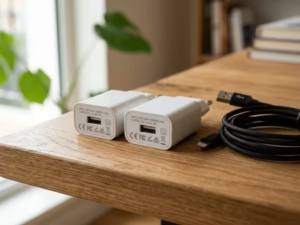

Most people meet the term “GaN charger” or “GaN adapter” on a product page, not in a textbook. The label sounds technical, so it’s easy to shrug and move on.
Here’s what actually matters. GaN is not the point. The result is. A good GaN power supply runs smaller, stays cooler, and wastes less energy than the older bricks you’re used to.
But I’ll be honest with you. Not every product wearing a “GaN” sticker is worth your money. And plenty of everyday devices don’t need GaN at all.
So in this guide, I’ll walk you through what a GaN power supply really is, why it works, when it’s worth choosing, and how to tell a solid one from a cheap imitation.
What a GaN Power Supply Actually Is
Let’s clear up the name first. GaN stands for gallium nitride, a semiconductor material that engineers use to build fast switching devices.
So what makes a power supply a “GaN power supply”? It comes down to one part inside. Every power supply has a switching stage that flips current on and off very quickly. A GaN unit uses GaN transistors there instead of the older silicon MOSFETs.
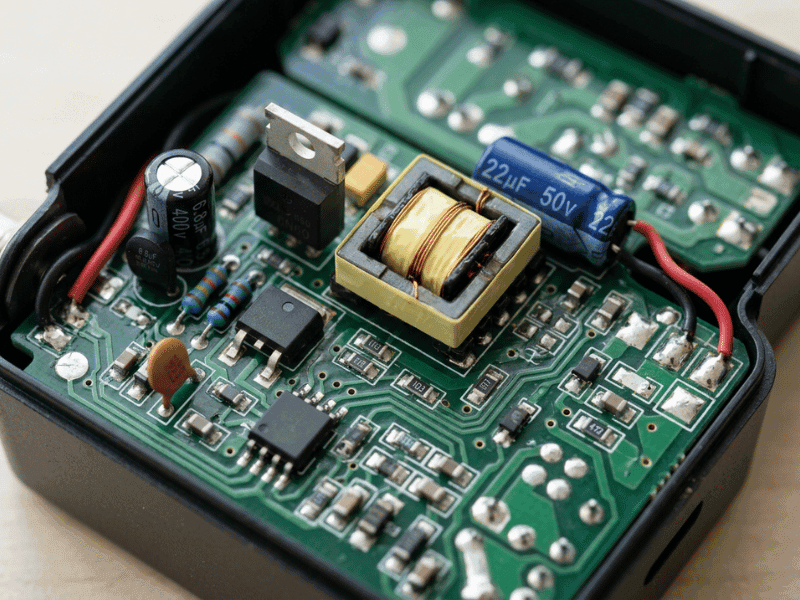
That single swap changes the whole product.
You’ll see this technology under a few different names on a spec sheet:
Same core idea in each one. GaN handles the switching, and you get more power in a tighter, cooler package.
Why People Care About GaN Power Supplies
I get asked the same thing a lot: “Why should I pay more for GaN?” Fair question. The answer comes down to three problems people run into every day.

So the appeal isn’t the material. It’s what the material lets you carry, charge, and rely on.
How a GaN Power Supply Works
You don’t need an engineering degree to see why GaN wins. It comes down to one job, done better.
The basic job of a power supply
Every power supply does the same thing. It takes the high-voltage AC from your wall and turns it into the steady, low-voltage DC your device can use. Then it holds that voltage stable, no matter how hard the device pulls.
Simple in theory. The catch is how it gets there.
To convert power, the supply flips current on and off thousands of times a second. The faster and cleaner it does this, the less energy it wastes as heat. So two things really decide the size and temperature of a brick: how efficiently it switches, and how much heat it has to shed.
Why GaN changes the switching stage
This is where gallium nitride earns its keep. A GaN transistor switches much faster than silicon, and it loses less energy each time it flips.
Faster switching lets engineers run the supply at a higher frequency. That sounds abstract, but the payoff is physical. Higher frequency means the bulky parts inside, the transformers, inductors, and capacitors, can all shrink.
Lower losses matter just as much. Less wasted energy means less heat, so the supply needs a smaller heatsink or none at all.
Put those together and you get more power packed into a smaller, cooler shell. That’s the whole trick.
Where GaN Makes the Biggest Difference
GaN doesn’t help everywhere equally. It shines in places where space, heat, and efficiency all fight for attention at once. Three areas show this off best.
Application | Why GaN Fits Well | What Improves |
|---|---|---|
USB-C laptop and phone chargers | High power in a tiny, multi-port shell | Size, weight, portability |
Server and networking power | Lower losses across constant heavy load | Energy cost, rack density |
Automotive and tight spaces | Light, cool, efficient conversion | Weight, thermal margin, range |
GaN vs Silicon: What Really Changes
Silicon built the power supplies we all grew up with, and it still does its job well. So why switch? Because the moment you push for more power in less space, silicon starts to struggle where GaN stays comfortable.
The difference shows up in five places that actually affect the product in your hand.
Factor | GaN | Silicon | What It Means in Practice |
|---|---|---|---|
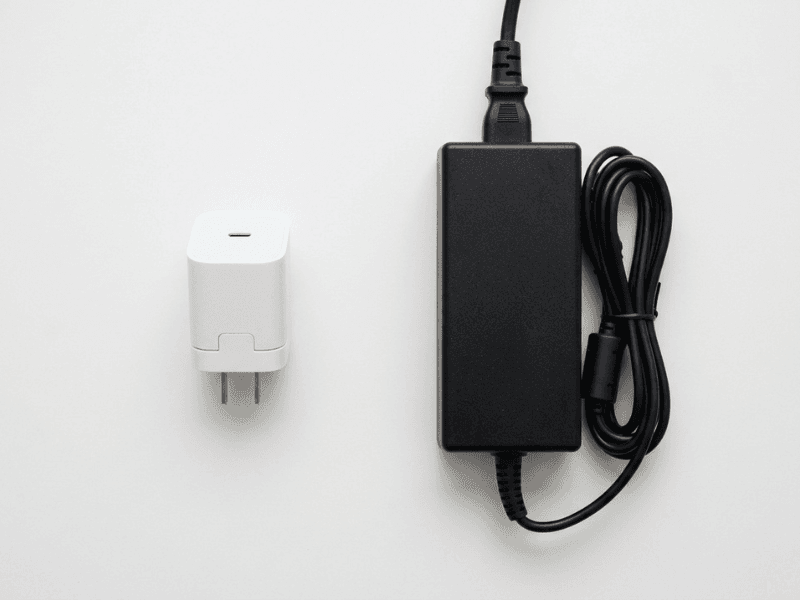
Size | Much smaller shell | Larger, bulkier | A 100W GaN charger fits where a 65W silicon one used to |
Heat | Runs cooler | Warms up fast under load | Safer to leave plugged in, easier on the internals |
Efficiency | Wastes less energy | Loses more as heat | More power reaches your device, less goes to waste |
Power density | High watts per cubic inch | Lower | Fits high wattage into a pocket-sized body |
Cost | Higher upfront | Cheaper to make | You pay more now, often for a better daily experience |
So GaN clearly wins when size and efficiency matter most. High-wattage chargers, tight enclosures, dense racks — that’s its home turf.
But silicon isn’t dead. For a simple 5W phone brick or a low-power gadget, silicon costs less and does the job fine. Paying extra for GaN there buys you nothing.
GaN vs SiC: They Are Not the Same Upgrade
People often lump GaN and SiC together because both beat plain silicon. But they don’t compete for the same job.
I reach for GaN when a design needs to stay small, run cool, and switch fast at medium voltage. That covers most chargers, adapters, and compact power supplies. It’s the sweet spot where GaN feels effortless.
SiC plays a different game. It handles very high voltage and heavy current, so I turn to it for solar inverters, industrial drives, and EV traction systems. Ask GaN to do that heavy lifting, and you push it past its comfort zone.
Technology | Best Voltage/Power Range | Best Fit |
|---|---|---|
GaN | ~80V–650V, low to medium power | Chargers, adapters, compact PSUs |
SiC | 1,200V and up, high power | Solar inverters, industrial drives, EV traction |
So if you’re shopping for a charger or adapter, GaN is the name worth watching. SiC lives in bigger, tougher machines.
When a GaN Power Supply Is Worth It—and When It Isn’t
GaN is not always the smart buy. It shines in some setups and adds nothing in others. Here’s how I decide.
I reach for GaN when the job asks for a lot of power in a small body. A 100W charger you can pocket? That’s GaN’s world. I also recommend it to people who travel often, since one light unit can replace a bag of bricks.

Multi-device charging is another clear win. If you want a single charger for a laptop, phone, and earbuds, GaN packs the ports without turning into a hot block. And when heat or efficiency really matters — a sealed enclosure, a fanless setup, a device running all day — GaN pays for itself.
But I tell buyers to skip it too. For a 5W gadget, GaN buys you nothing. If the charger sits bolted behind a desk where size never matters, save the money. Budget-first shoppers often do fine with silicon. And sometimes the right charging protocol matters far more than the transistor inside.
How to Choose a GaN Power Supply
Buying a good GaN unit isn’t hard once you check things in the right order. Here’s the process I walk people through.
What to Check | Why It Matters | What to Avoid |
|---|---|---|
Wattage vs device need | Underpowered units charge slowly or not at all | Buying by plug shape alone |
Protocol or output spec | Wrong profile blocks fast charging | Ignoring PD/PPS support |
Per-port ratings | Total power splits across ports | Trusting the headline wattage |
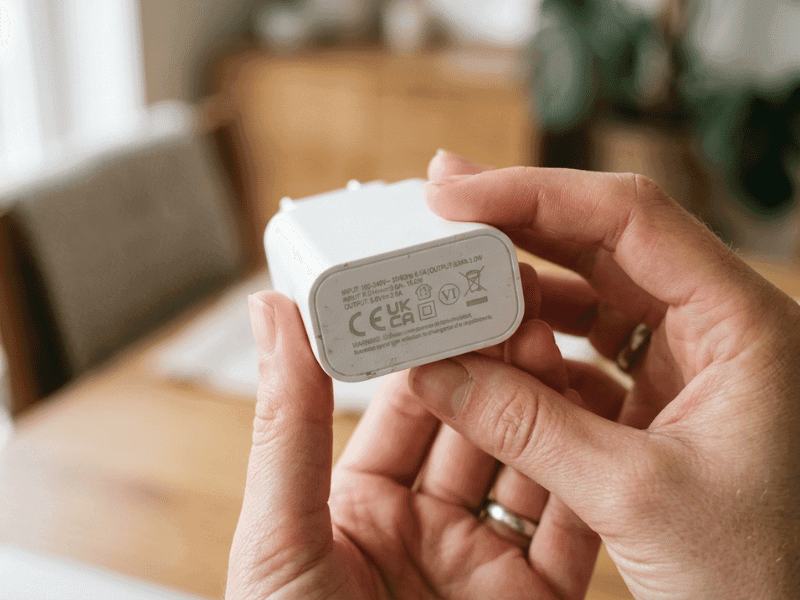
Safety marks and protection | Guards your gear and home | Uncertified no-name brands |
Common Mistakes Buyers Make
I see the same slip-ups over and over. Dodge these four, and you’ll pick a better unit.
Common Questions About GaN Power Supplies
The Bottom Line on GaN
GaN isn’t magic. It won’t fix a bad charger or make a slow device fast. What it does is solve a real, everyday problem: fitting more power into a smaller, cooler body without wasting energy.
That’s where its value lives. More watts, less bulk, better efficiency.
So when you shop, look past the “GaN” sticker. Check the wattage, the protocol support, the thermal design, and the safety marks. Those tell you far more than the material name ever will.
If you care about size, heat, or carrying less gear, GaN is well worth your attention. If none of that matters to you, a good silicon unit still does the job.