
- Home
- ITE Power Supply
- UE13-SPA1-OP | 13W 12V ITE Open Frame Power Supply for Embedded Equipment
UE13-SPA1-OP | 13W 12V ITE Open Frame Power Supply for Embedded Equipment
UE13-SPA1-OP
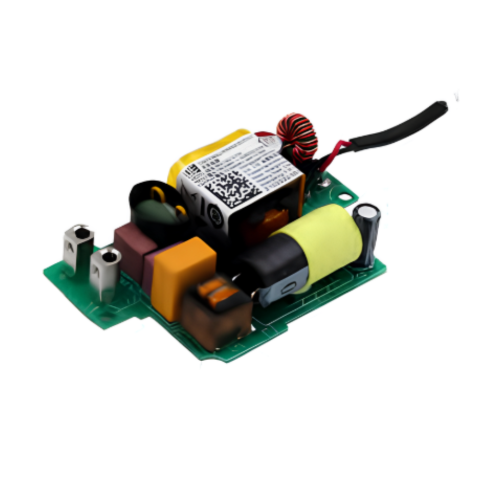
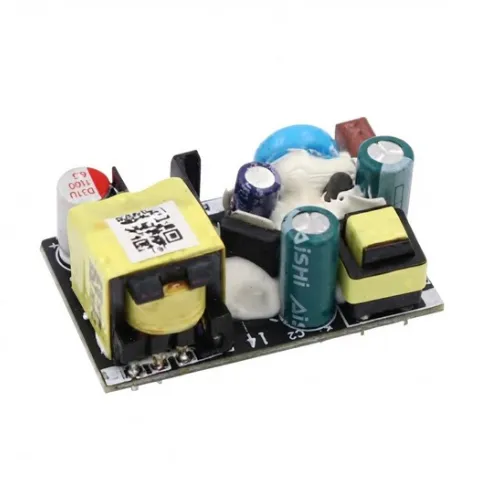
The UE13-SPA1-OP is a compact 13W 12V open frame power supply developed for ITE and other customized embedded equipment where installation space is limited. Its small 61.0 × 37.3 × 15.5 mm PCB combines universal 90–264VAC input, low standby power and strong EMC immunity in a lightweight built-in design, giving ODM customers a practical starting platform for integrating AC-DC power directly inside their equipment.
- Compact Built-In Power: Fits the AC-DC power stage into equipment where PCB space and component height are limited.
- Wide AC Input: Supports 90–264VAC input for products designed around different mains environments.
- Strong EMC Immunity: Specified with 4kV surge immunity and comprehensive EMC emission and immunity performance.
- ODM Development: Electrical and mechanical requirements can be reviewed around the actual needs of the target product.
Models & Ratings
The UE13-SPA1-OP provides a 12V DC output with current configurations up to 1.08A, making it a starting platform for low-power electronics that need an internal AC-DC supply rather than an external adapter. When checking whether it fits your design, don’t look at the 13W rating alone—the continuous current required by the 12V load is the first number to compare.
If your equipment has startup peaks or a load that changes significantly during operation, those conditions should also be considered before selecting the final configuration. For an ODM project, the actual load requirements can be reviewed rather than simply matching the nameplate wattage.
| Model Number | Power(W) | Input Voltage Range(VAC) | Output Voltage(VDC) | Output Current(A) | Operating Temperature Range(℃) | Safety Standards |
| UES13-120YYYSPA1-OP | 13 | 90-264 | 12 | 0.01-1.08 | -10~+50 | CQC,CB |
Mechanical Details
At 61.0 × 37.3 × 15.5 mm, the UE13-SPA1-OP is designed for equipment where the AC-DC power stage has to fit into limited internal space. The small PCB footprint is useful when enclosure size is already fixed or the power board needs to share space with control electronics and other internal components.
Board dimensions are only the starting point when evaluating mechanical fit. Mounting position, wiring, insulation clearance and surrounding components also need to be considered. For space-constrained ODM projects, these requirements can be reviewed together with the enclosure design.
Dimensions
Weight
61.0mm (L) × 37.3mm (W) × 15.5mm (H)
About 28g
Input Specifications
The 90–264VAC universal input range allows the UE13-SPA1-OP to operate across common AC mains environments, which is useful when the same product platform is being developed for different regional power conditions. Its 0.1W maximum standby power is also relevant for equipment that remains connected to AC power for long periods while spending part of its operating time in standby.
For engineers comparing a built-in 12V power supply with an external solution, these input characteristics provide a clearer starting point for deciding how the AC-DC stage should be integrated into the final product.
Input Voltage Range
Input Current
Average Efficiency
Standby Power
90-264VAC
0.5A
Energy Efficiency Level VI
0.1W Max
Environmental & General
A built-in power board operates in the thermal environment created by the complete equipment, so ambient temperature, ventilation and nearby heat-generating components all matter. The UE13-SPA1-OP specifies operation from -10°C to +50°C, along with defined storage, humidity and MTBF conditions that engineers can use during the initial reliability review.
The 100,000-hour MTBF figure is specified at full load and 25°C ambient according to Telcordia SR-332. It should therefore be read together with the stated test conditions rather than treated as a guaranteed lifetime under every installation condition.
Operating Temperature
Storage Temperature
Operating Humidity
Operating Altitude
MTBF
-10°C to 50°C
-40°C to 70°C
5% to 95% RH, non-condensing
5,000m
100,000 hours at full load at 25°C ambient, calculated per Telcordia SR-332
Protection
A built-in 12V DC power supply may have to deal with more than a stable rated load. A shorted output, excessive current or abnormal output-voltage condition can originate elsewhere in the equipment, so the response of the power stage to these faults needs to be considered during system design.
The UE13-SPA1-OP includes short-circuit, over-current and over-voltage protection. Surge performance is another important consideration because the board connects directly to AC mains; the product specification states 4kV surge immunity, providing engineers with a defined reference when reviewing the electrical environment of the finished equipment.
Short Circuit
Over Current
Over Voltage
Trip and restart (hiccup mode)
Auto-recovery upon removal of fault
Built-in protection to prevent high-voltage output
Safety Approvals
When an open frame power supply is installed inside equipment, safety requirements affect more than the power board itself. Insulation, enclosure design, wiring and the relationship between the power section and surrounding circuitry all become part of the finished product evaluation.
The UE13-SPA1-OP is specified to CQC (GB 4943.1) and CB (IEC 62368-1) standards. This gives ODM developers a defined safety basis when considering the board for ITE projects, while final compliance still depends on the complete equipment and the requirements of its target market.
IEC62368-1
GB4943.1
EMC
EMC performance becomes especially important when an open frame power supply is installed close to processors, communication circuits or other sensitive electronics. A board may perform correctly by itself but still interact with the rest of the system once the power supply, control electronics and wiring are placed inside the same enclosure.
The UE13-SPA1-OP is specified to EN 55032/CISPR 32 Class B for conducted and radiated emissions, together with EN 55035/CISPR 35 and relevant IEC/EN 61000 immunity tests. Its specified immunity covers ESD, radiated RF, EFT/burst, surge, conducted RF and voltage dips, giving engineers useful data for planning system-level EMC validation.
| EMC Item | Standard / Performance |
|---|---|
| EMC Standard | EN 55032/CISPR 32; EN 55035/CISPR 35 |
| Conduction & Radiation | EN 55032/CISPR 32 Class B |
| Harmonic Currents | IEC/EN 61000-3-2 Class A |
| Voltage Flicker | IEC/EN 61000-3-3 |
| ESD | IEC/EN 61000-4-2, ±15kV Air / ±8kV Contact, Class B |
| Radiated Immunity | IEC/EN 61000-4-3, 10V/m, Class B |
| EFT/Burst | IEC/EN 61000-4-4, ±2kV, Class B |
| Surge | IEC/EN 61000-4-5, ±4kV DM / ±6kV CM |
| Conducted Immunity | IEC/EN 61000-4-6, 10Vrms, Class B |
| Dips & Interruptions | IEC/EN 61000-4-11, 0%, 70%, 0% of UT |
Download File
Common Applications
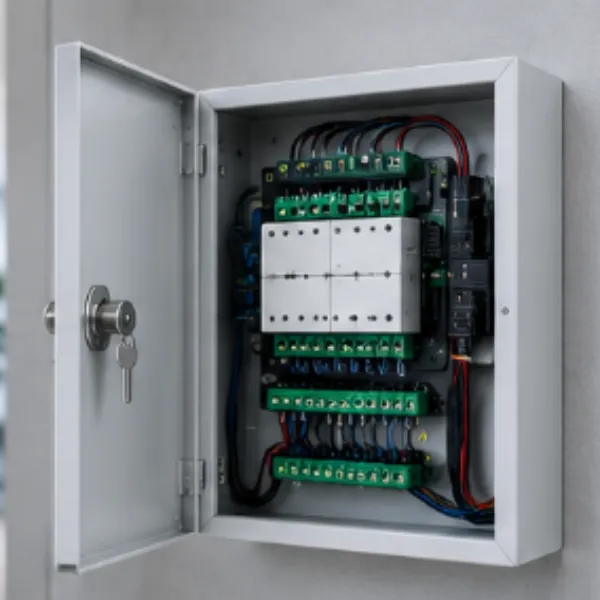
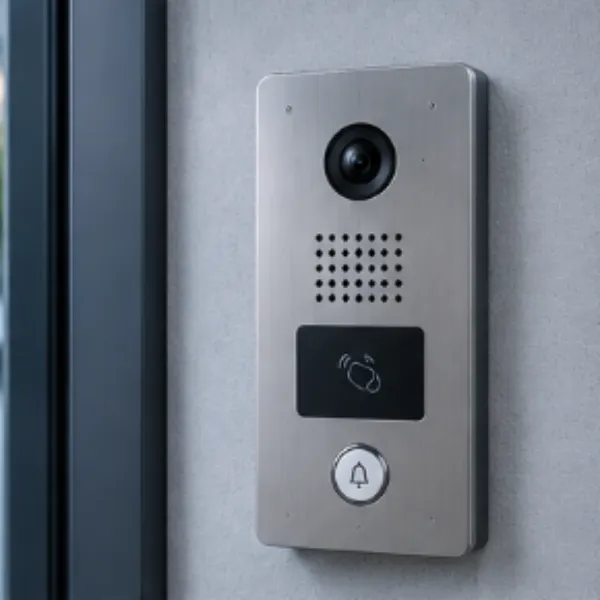
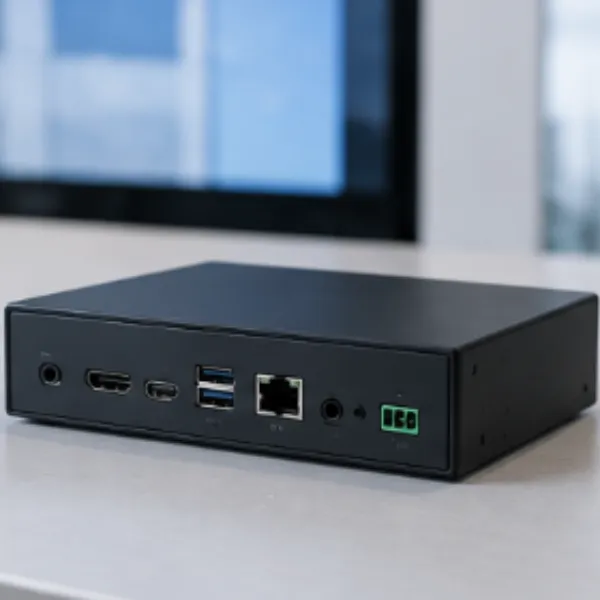
The UE13-SPA1-OP is developed for ITE and other customized electronic equipment that requires a compact 12V AC-DC power stage inside the enclosure. Its 13W output and small open frame PCB make it a useful starting platform for low-power designs where an external adapter is not preferred. For ODM projects, the final power rating, board layout and electrical configuration should be reviewed against the actual equipment requirements.


Frequently Asked Questions
A datasheet gives you the ratings. What it doesn’t always tell you is whether those ratings make sense once the power supply is inside your product. Here are five questions that are worth checking before choosing the UE13-SPA1-OP.
Is 13W enough for my 12V device?
Check the actual current draw, including startup. This series goes up to 1.08A at 12V.
A device running steadily below that figure may be a good match. A device sitting near 1.08A most of the time, or pulling more current for a few moments when it starts, leaves much less room to work with. In that case, moving up to a higher-current supply is usually the safer design choice.
Why use an open frame board instead of a 12V adapter?
Mostly because of how you want the finished product to be built.
With an adapter, the AC-DC section stays outside. With the UE13-SPA1-OP, it sits inside the equipment. That gets rid of the external power brick, but now the enclosure has to provide space for the board, mains wiring and proper electrical clearance.
Neither approach is automatically better. They solve different packaging needs.
The PCB fits my enclosure. Is that enough?
Not quite. The board itself is 61.0 × 37.3 × 15.5 mm, but it can’t be treated like a solid block that only needs those exact dimensions.
There still has to be somewhere for the wiring to go, and the open board needs suitable clearance from nearby parts. This is easy to miss when the main PCB and power board are being packed into the same small enclosure.
If the power supply is Class B, will my product be Class B too?
No. The UE13-SPA1-OP is specified for EN 55032/CISPR 32 Class B conducted and radiated emissions. That result belongs to the power supply, not automatically to whatever it is installed in.
Once the product is assembled, its other boards, cables and physical layout also come into play. Think of the Class B result as useful power-supply-level EMC data, not a shortcut around testing the finished equipment.
What if this board is almost right, but not quite?
That is where an ODM version can make sense.
For example, a project may be comfortable with the 12V power range but have different mechanical or electrical requirements. In that situation, the existing platform may be more useful as a development base than as an off-the-shelf board.
If the required load is already beyond what this 13W platform can reasonably support, however, changing to a more suitable power platform makes more sense than trying to stretch this one.
Related Models
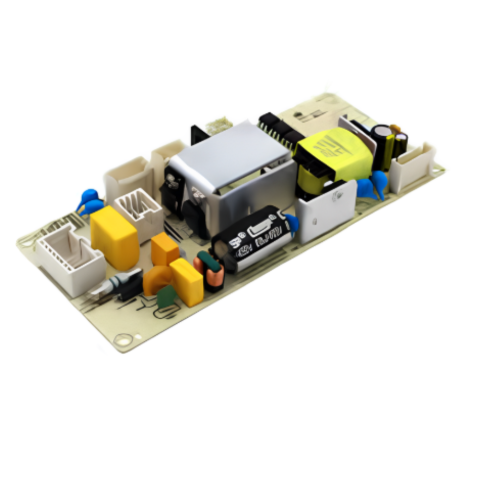
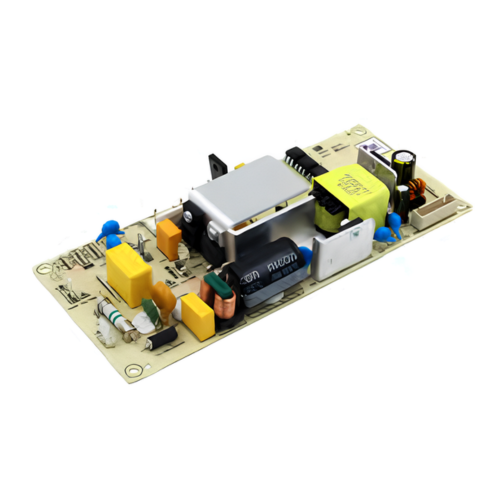
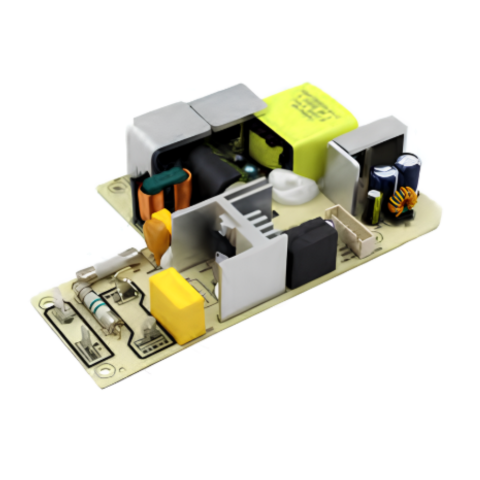
A standard 12V power supply may be electrically close to your requirement but still be wrong for the final product because of PCB dimensions, available current or other system constraints. Explore related power platforms if the UE13-SPA1-OP does not provide the right starting point; for ODM development, the better choice is the architecture that can be adapted efficiently around the actual equipment rather than simply the nearest wattage.
Related Resources
Selecting an embedded 12V DC power supply involves electrical, mechanical and compliance decisions that are difficult to judge from voltage and wattage alone. The resources below provide additional guidance on ITE power supplies, open frame design and AC-DC power supply selection, helping engineers make a more informed choice before moving into product integration.
What Is an ITE Power Supply Used For?
Learn what an ITE power supply is, where it is commonly used, and what to consider when selecting power for information technology equipment.
What Is an Open Frame Power Supply?
Understand how open frame power supplies are built into equipment, their main advantages, and what engineers should consider during installation.
AC-DC Power Supply Selection: A 7-Step Engineering Guide
Follow a practical selection process for comparing output requirements, operating conditions, safety, EMC and other factors before choosing an AC-DC power supply.
Request Technical Support & Pricing
Our engineering team provides dedicated technical assistance for our entire I.T.E. and industrial power supply portfolio. Whether you are navigating IEC/EN 62368-1 safety compliance, require custom DC output tuning, or need mechanical integration advice for high-density enclosures, we ensure your project specifications are met with technical precision.
✔ IEC/EN 62368-1 & Global ITE Safety Compliance
✔ Custom DC Connectors, Cables & Voltage Tuning
✔ Engineering Samples Available for System Evaluation
✔ Direct Technical Response from Engineers within 24h