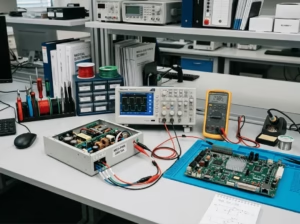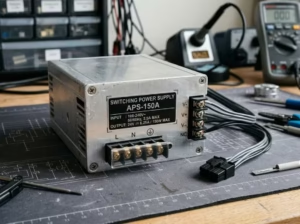
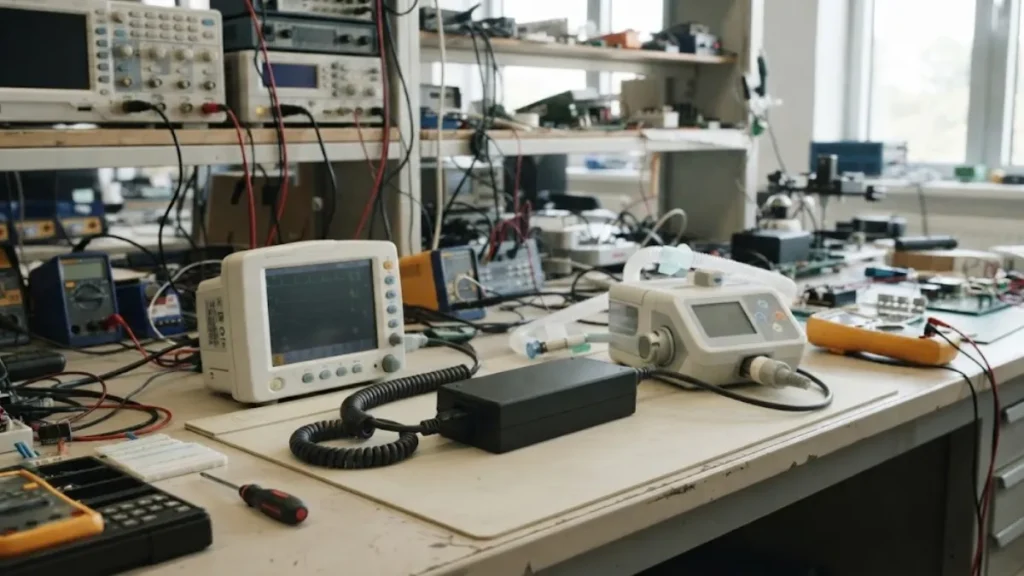
When developing a medical device, the power supply is usually not the first item engineers focus on.
The main attention is often placed on the functions that define the product — improving measurement accuracy, developing software, optimizing the mechanical structure, or reducing the size of the equipment.
The power adapter may appear to be a relatively simple component. If the output voltage and current meet the requirements, the initial assumption is often that the power solution is suitable.
In many projects, the challenge appears later.
During safety evaluation and certification, manufacturers may find that a standard adapter that works well in general electronic applications does not provide the protection required for medical equipment.
The reason is not related to output performance alone. Medical applications introduce additional requirements for patient protection, insulation, leakage current, and electromagnetic compatibility.
This is the main difference between a standard adapter and a medical-grade power adapter.
Why Medical Applications Change the Power Supply Requirements
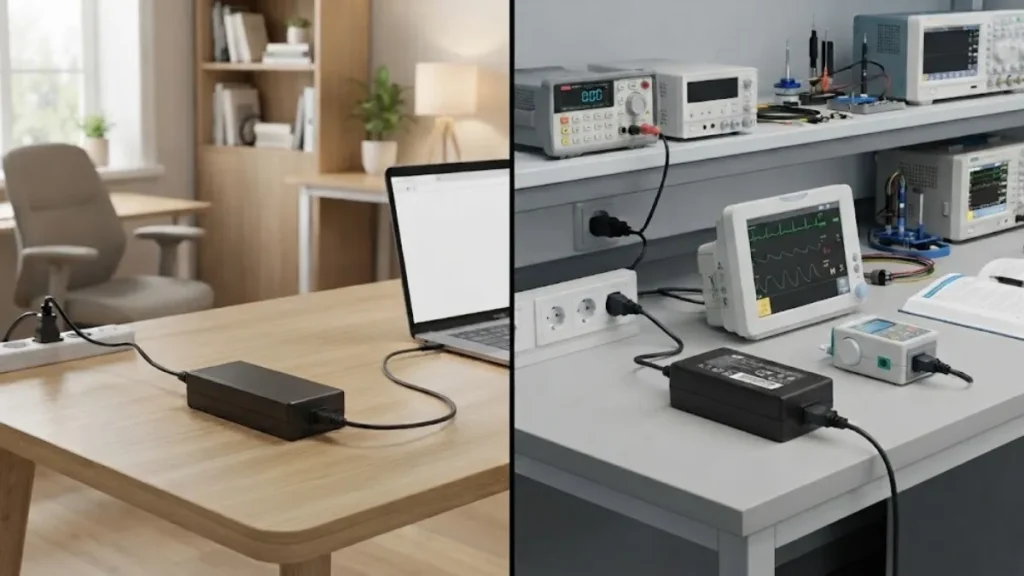
A standard adapter and a medical power adapter perform the same basic function: converting AC input into a stable DC output.
However, the environment in which they operate is very different.
Standard adapters are widely used in consumer electronics such as laptops, displays, and household devices. These products are normally designed around everyday user safety, efficiency, size, and cost.
Medical equipment operates under different conditions.
Devices such as patient monitors, respiratory equipment, infusion pumps, ultrasound systems, and home healthcare products may need to operate continuously for long periods. Some equipment uses sensors or applied parts that connect directly with the patient.
In these situations, the power supply is no longer only an energy source. It becomes part of the equipment safety system.
A suitable medical power solution needs to maintain stable output while also supporting the protection requirements of the complete device.
Why Output Specifications Alone Are Not Enough
During the early stages of product development, engineers often begin power selection with basic electrical specifications:
- Output voltage
- Output current
- Power rating
- Connector type
These parameters are important, but they do not define whether a power supply is suitable for medical applications.
Two adapters with the same voltage and wattage can have completely different internal designs.
One may be developed for general electronic equipment, while another may include additional insulation protection, lower leakage current, and medical safety certification.
This difference is not visible from the outside.
In practice, many power supply issues are discovered when products move from prototype testing into certification. Changing the adapter at this stage can affect the mechanical design, documentation, and testing schedule.
For this reason, medical device manufacturers usually benefit from evaluating the power solution early in the development process.
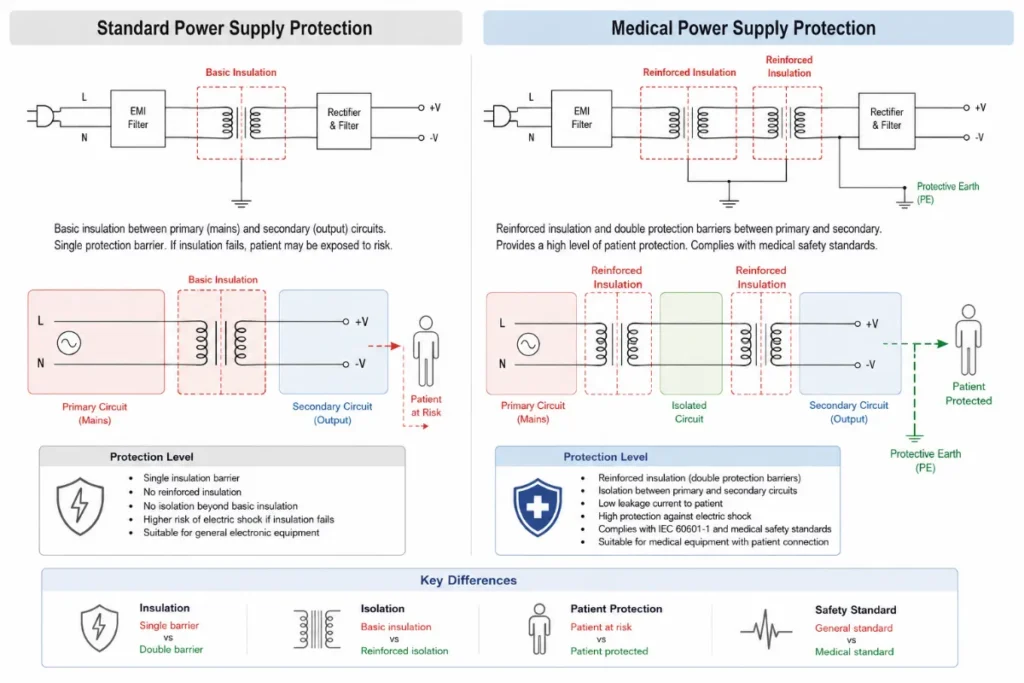
IEC 60601-1: A Different Approach to Safety
One of the biggest differences between standard and medical power supplies is the safety standard behind the design.
General electronic products often follow standards such as IEC 62368-1. These standards focus on protecting users from electrical and energy-related hazards.
Medical electrical equipment follows IEC 60601-1, which considers additional risks because the patient may become part of the system.
During medical equipment evaluation, the power supply design is reviewed together with the complete device. Factors such as insulation, dielectric strength, leakage current, and patient protection need to be considered.
This is why a power adapter that works correctly in a consumer product may still not be suitable for medical equipment.
A medical-grade power supply is designed with these requirements in mind from the beginning rather than being adapted later.
Patient Protection and the Role of MOPP
Patient protection is one of the key areas where medical power supplies differ from standard adapters.
In consumer electronics, the main concern is normally protecting the user operating the equipment.
Medical devices require additional protection because the patient may be connected to the equipment through sensors, electrodes, or other applied parts.
IEC 60601-1 defines Means of Protection (MOP), including Means of Operator Protection (MOOP) and Means of Patient Protection (MOPP).
Depending on the application, different protection levels may be required.
For equipment with patient-connected applications, 2MOPP provides two independent protective barriers between hazardous voltage and the patient.
This additional protection helps reduce risk in situations where a single protection measure may fail.
When selecting a medical power supply, engineers need to understand the final equipment classification and choose the appropriate protection level rather than selecting a product only based on electrical output.
Leakage Current: A Detail That Can Affect Medical Certification
Leakage current is another area that requires careful consideration.
For many consumer products, leakage current is mainly evaluated from the perspective of user safety.
Medical equipment requires stricter control because the device may operate close to the patient for extended periods.
For example, equipment with BF or CF applied parts has different requirements because these parts may have direct contact with the human body.
During certification testing, leakage current measurements are often an important part of the evaluation process.
One common mistake is focusing only on whether the power supply can deliver enough power. A solution may meet the electrical requirements but still create difficulties if the leakage performance does not match the medical application.
This is why medical power selection requires consideration of the complete system rather than a single specification.
Insulation Design and EMC Performance
Many differences between medical and standard adapters are hidden inside the product.
Insulation design is one example.
Medical power supplies require careful consideration of insulation systems, including creepage distance, clearance distance, and dielectric strength.
These factors help maintain protection during normal operation and under possible fault conditions.
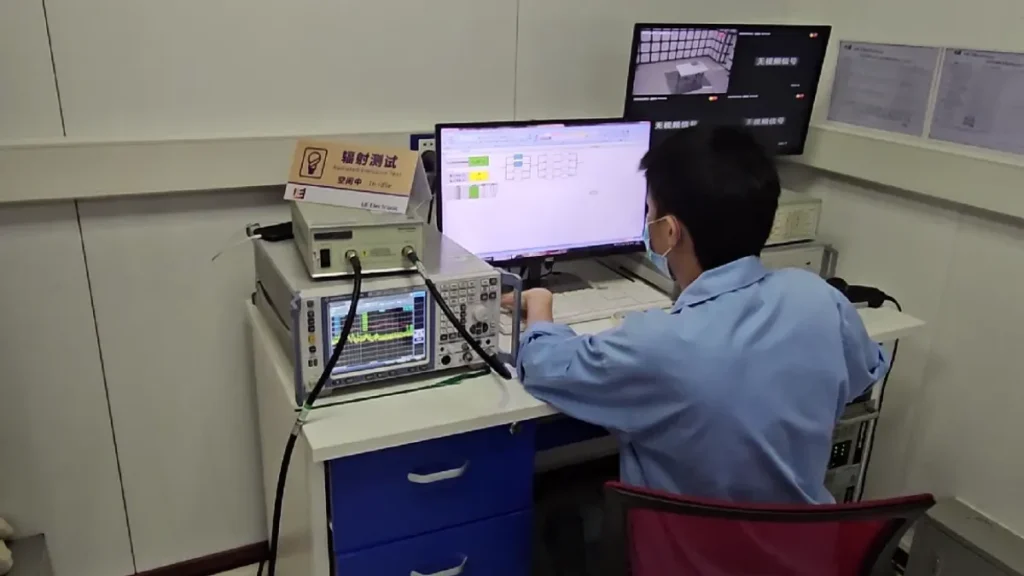
EMC performance is another important consideration.
Hospitals and healthcare environments contain many electronic systems operating at the same time. A power supply with poor electromagnetic compatibility may affect equipment stability or interfere with sensitive measurements.
For medical devices such as monitoring equipment and diagnostic systems, EMC performance directly affects reliability in real-world operation.
Selecting the Right Medical Power Supply for Your Device
Choosing a medical power adapter should not be based only on matching voltage and power requirements.
During development, manufacturers should consider how the power supply will work together with the complete device.
The application environment, safety requirements, certification needs, mechanical design, and long-term product availability all influence the final selection.
In many cases, working with an experienced medical power supplier can help identify potential issues before they become development problems.
A supplier with medical application experience can provide support beyond the product itself, including technical communication, certification documents, customization support, and long-term production planning.
UE Medical Power Solutions for Healthcare Equipment Manufacturers
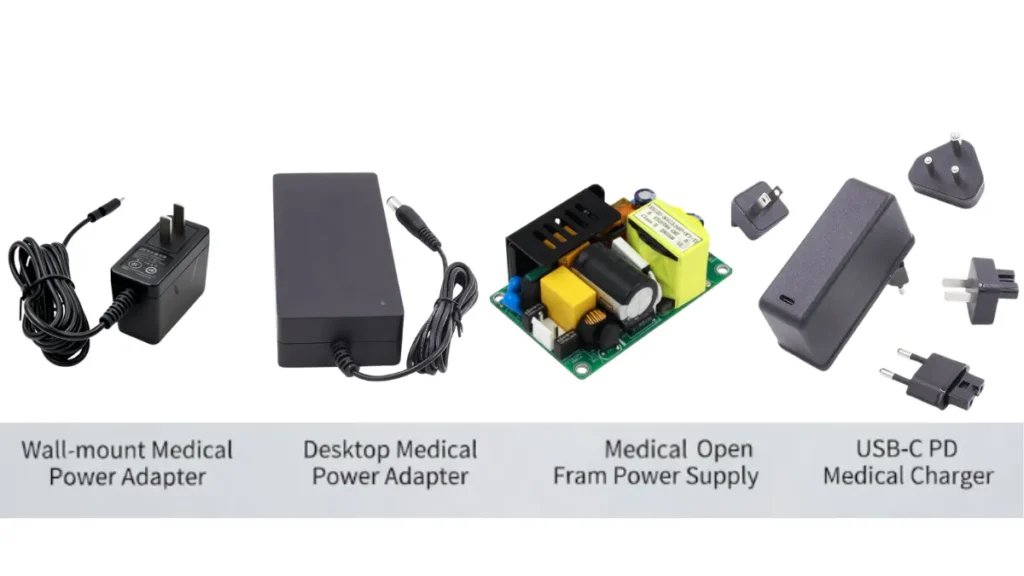
UE has been supporting medical equipment manufacturers with reliable power solutions designed for healthcare applications.
Our medical power portfolio includes wall mount adapters, desktop power supplies, open frame solutions, and USB-C PD medical charging products.
With solutions ranging from 5W to 500W, UE supports applications from portable healthcare devices to professional medical equipment.
Through medical-focused design experience and support for global certification requirements, UE helps manufacturers address challenges related to safety, reliability, and product development.
For medical device companies, the right power supply is not only about meeting electrical specifications. It is about building a reliable foundation for the complete product.
Conclusion
A standard adapter and a medical-grade power adapter may look similar, but they are designed for very different requirements.
The difference is found in the details that cannot be seen from the outside — patient protection, insulation design, leakage current control, EMC performance, and compliance with medical safety standards.
Selecting the right power solution early in the design process can help manufacturers reduce certification risks and develop more reliable medical equipment.