Power over Ethernet (POE) simplifies network deployment by delivering data and power through a single Ethernet cable. However, insufficient POE power is a common issue in real-world installations—especially in IP surveillance, wireless access points, and industrial networking.
What Does “POE Power Not Enough” Mean?
“POE power not enough” refers to a situation where the Power Sourcing Equipment (PSE)—such as a POE switch or POE adapter—cannot supply sufficient power for the connected Powered Device (PD).
This may occur due to:
Power budget limitations
Incorrect IEEE POE standard selection
Cable loss over long distances
Device power demand exceeding design assumptions
Even when a device appears to power on, unstable or insufficient power can cause hidden reliability problems.

Common Symptoms of Insufficient POE Power
1. Device Reboots Randomly
One of the most frequent signs. The device may:
Restart under load
Reboot at night or during peak operation
Lose connection intermittently
This often indicates momentary power drops.
2. Device Powers On but Features Are Disabled
Examples include:
IP cameras without IR LEDs at night
PTZ cameras unable to pan/tilt/zoom
Wireless APs running in reduced-performance mode
The device may intentionally limit functionality to stay within available power.
3. POE Port Shows Fault or Overload
Some POE switches or injectors will:
Disable the port automatically
Display “overcurrent” or “power denied” status
Require manual reset
This is a protection mechanism defined in IEEE standards.
4. Device Fails to Start Completely
If the available power is below the minimum startup threshold, the PD may not boot at all.
Technical Risks of Ignoring POE Power Shortage
While POE includes safety mechanisms, persistent under-power conditions can still cause issues:
Unstable system behavior affecting monitoring or control systems
Unexpected downtime in security or industrial environments
Accelerated component aging due to repeated power cycling
Misdiagnosis, leading to unnecessary device replacement
Addressing POE power issues early reduces troubleshooting time and long-term maintenance costs.
Common Causes of POE Power Insufficiency
1. Incorrect IEEE POE Standard Selection
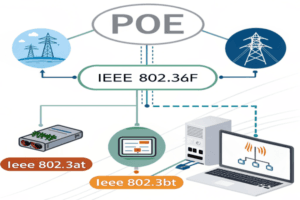
| POE Standard | Max Power at PSE | Typical Use |
| 802.3af | 15.4W | Basic IP cameras |
| 802.3at (PoE+) | 30W | PTZ cameras, APs |
| 802.3bt | 60–90W | High-power devices |
Using 802.3af for a device that requires PoE+ or bt is a common mistake.
2. Power Budget Exhaustion
In multi-port systems:
Total available POE power is shared
Adding devices may exceed the switch or adapter’s total budget
Individual ports may be throttled
3. Cable Loss and Poor Cable Quality
Factors include:
Long cable runs approaching 100 meters
CCA (copper-clad aluminum) cables
Poor terminations or connectors
Voltage drop increases with distance and resistance.
4. Underestimated Device Power Demand
Manufacturers often list:
Average power consumption
Not peak or startup power
Devices with heaters, motors, IR LEDs, or radios often require higher transient power.
Practical Fixes for POE Power Problems
Fix 1: Verify Device Power Requirements
Check:
Required IEEE standard
Maximum power (not just nominal)
Startup and peak load conditions
Always design with power margin, not exact matching.
Fix 2: Upgrade to a Higher POE Standard
If a device is unstable:
Move from 802.3af → 802.3at
Or from PoE+ → 802.3bt
This often resolves reboot and feature-limitation issues.
Fix 3: Use a Dedicated POE Adapter (Injector)
When a switch cannot provide sufficient power, a standalone POE adapter can supply power to individual devices without replacing the entire switch.
Fix 4: Improve Cabling
Use Cat5e or Cat6 pure copper cable
Reduce unnecessary cable length
Avoid inline connectors where possible
Fix 5: Recalculate Total POE Power Budget
For multi-device deployments:
Sum maximum device power
Add safety margin
Compare against total PSE capacity
Notes on Quankang POE Adapters (Technical Reference)
In POE system design, POE adapters are defined as active PSE devices that comply with IEEE 802.3 standards and perform power negotiation before delivery.
Quankang POE adapters are designed to:
Support IEEE 802.3af / at / bt standards
Provide stable power output suitable for compliant PD devices
Be used as part of structured POE power architectures
They are typically applied in scenarios such as:
IP surveillance systems
Wireless networking deployments
Industrial Ethernet environments
As with any POE component, selection should be based on required power level, system topology, and device specifications, rather than brand considerations alone.
When POE Power Issues Indicate a Design Problem
If POE power shortages occur repeatedly, it may indicate:
Incorrect system-level power planning
Devices operating outside their intended POE class
Infrastructure upgrades outpacing power design
In such cases, revisiting the overall POE architecture is more effective than individual fixes.
Related POE Reference Articles
POE Adapter vs POE Injector: What’s the Difference?
POE Adapter Not Working? 7 Common Problems and Solutions
How to Use a POE Adapter with Non-POE Devices
Passive POE vs Active POE: Technical and Safety Differences
Final Thoughts
Insufficient POE power is not always obvious—but its effects can compromise system stability, performance, and reliability.
By understanding POE standards, recognizing early symptoms, and applying proper power budgeting and component selection, engineers and system integrators can prevent POE-related failures before they impact operations.
A POE system designed with adequate power margin is more resilient, easier to maintain, and better suited for long-term deployment.