I’ve spent decades around power electronics, and I can tell you that the boring black brick plugged into the wall rarely gets the credit it deserves. That’s changing fast. Care is moving out of hospitals and into living rooms and bedrooms, and the demands on those power supplies have shifted right along with it.
Think about what a home patient actually deals with. A heavy oxygen concentrator. A CPAP that hums all night. A nightstand crowded with adapters that run hot and tangle together. The medical device gets all the attention, but the power supply feeding it shapes the daily experience just as much.
This is where gallium nitride, or GaN, earns the “game-changer” label. It makes home medical power smaller, cooler, quieter, and more dependable. Below, I’ll walk you through how it works, why it matters at the bedside, and where the technology is headed.
What Is GaN and How Does It Work?
Gallium nitride is a wide-bandgap semiconductor. In plain terms, that means it handles voltage and heat better than the silicon we’ve leaned on for decades. Electrons move through it more efficiently, and it tolerates higher temperatures before it strains.
The real magic is switching speed. Every power adapter rapidly flips current on and off to convert wall power into the voltage your device needs. GaN transistors can do this at much higher frequencies than silicon.
That speed has a direct payoff. Faster switching lets engineers shrink bulky internal components, such as transformers and capacitors. Smaller parts mean a smaller, lighter brick.
GaN also wastes less energy during each switch. Lower switching and conduction losses mean less energy turns into heat. So you get more usable power out of a package that runs cooler.
Put those together, and you get high power density: more watts from a smaller footprint. For a medical device that has to run reliably, hour after hour, that combination is exactly what you want.
Improving Portability for Home Patients
Weight and bulk are not minor annoyances for someone managing a chronic condition. They decide whether a person can move freely through their own home.
A GaN power supply trims that burden. Pair a lighter adapter with a portable oxygen concentrator, and suddenly the whole setup is easier to carry from the bedroom to the kitchen to the porch.
For patients who travel, the savings add up across a mobile kit. A few lighter adapters can shave real weight off a bag that already holds tubing, batteries, and the device itself.
There’s a space angle too. GaN chargers take up less space, so they free up room in a travel case and reduce bedside clutter where three or four devices usually fight for outlets.
And because GaN chips are so compact, manufacturers can build multi-port chargers that run several tools from a single wall outlet. One tidy hub instead of a tangle of bricks is a genuine quality-of-life upgrade.
Safety and Thermal Management at Home
Heat is the enemy of both safety and longevity. A hot adapter on a carpet or bedspread is a risk no caregiver wants to think about.
Because GaN supplies waste less energy, they simply run cooler to the touch. That lowers the chance of burns and reduces fire risk in a setting that isn’t built like a hospital.
Cooler operation has a quiet bonus, literally. Many GaN designs shed enough heat passively that they don’t need a loud internal fan.
Why Quiet Matters at Night
For someone using a CPAP or a monitor while they sleep, fan noise isn’t trivial. A silent power supply helps the patient rest, and rest is part of recovery. I rank this benefit higher than most engineers do, because comfort drives whether people actually use their equipment.
Safety also comes down to electrical isolation. Reputable GaN medical adapters meet strict leakage current standards, so stray current stays away from the patient. Always confirm a device is built and tested to medical-grade requirements, not just consumer specs.
Lower running temperatures protect the gear itself, too. Heat slowly degrades capacitors and other internal parts, so a cooler supply tends to extend the life of expensive electronics.
Reliability, Efficiency, and Power Density Benefits
Reliability is the whole point of a medical power supply. If it falters, the device falters, and that’s not acceptable.
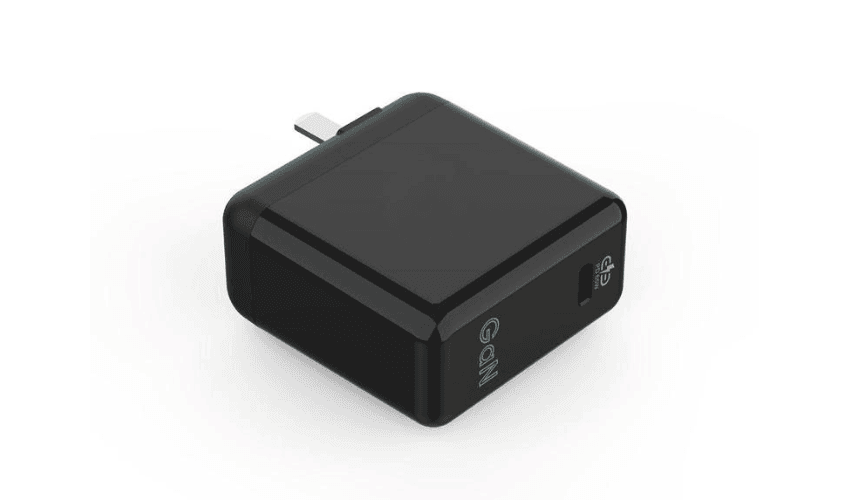
Power density is worth understanding here. It describes how much wattage a charger delivers relative to its size. GaN offers high density, so a small brick can deliver 65W, 100W, or more of steady power without overheating.
That efficiency comes from those lower switching and conduction losses I mentioned. Less wasted energy means lower power bills over a device’s life and less heat to manage.
Clean power delivery matters just as much as quantity. Sensitive medical sensors don’t like voltage spikes or sags. A well-designed GaN supply keeps the output steady, protecting the readings and the hardware behind them.
Efficiency helps battery-powered tools, too. Tighter conversion can mean faster, cooler charging between uses, so a device is ready when the patient needs it.
Finally, many GaN supplies support a wide input voltage range. That lets the same adapter work safely whether you’re plugged in at home or traveling overseas.
GaN vs. Traditional Silicon Power Supplies
Silicon has served us well for decades, and I’m not here to bury it. But it’s bumping against hard physical limits on heat and switching speed. We’re squeezing out the last few percent of performance.
GaN clears those limits. Here’s how the two stack up in practice:
- Size: GaN units often run 30% to 50% smaller than a silicon charger of the same wattage.
- Heat: Silicon adapters get noticeably hotter when pushing high power for extended periods; GaN adapters stay cooler.
- Cost: GaN can cost more upfront, but lower energy use and longer lifespan usually win out in total value.
- Environment: Smaller housing uses fewer raw materials, which trims waste over time.
The cost gap is the honest sticking point, and I won’t pretend otherwise. But for equipment that runs daily for years, the long-term math favors GaN more often than not.
Common Patient and Provider Questions
Patients and caregivers ask me the same handful of things. Here are straight answers.
Is GaN safe for life-support and critical equipment?
Yes, when the supply is designed and certified for medical use. The semiconductor material is sound. What matters is the full design, including isolation, protection circuits, and proper certification. Don’t judge it by the material alone.
Are all GaN power supplies medically certified?
No. Many GaN chargers on the market are consumer products. For medical gear, look for the device maker’s approved adapter or one that clearly meets medical safety standards. Check the label and documentation, and when in doubt, ask the manufacturer.
Why do GaN chargers sometimes cost more?
The materials and manufacturing processes are still maturing, so the parts cost more than commodity silicon parts. You’re often paying for a smaller size, better efficiency, and longer life. Prices keep falling as production scales.
Can I use a GaN phone charger with my medical device?
Don’t assume you can. A consumer charger may not meet the isolation and leakage standards medical devices require, even if the plug fits and the wattage looks right. Use the adapter that your device maker approves.
Does a GaN supply help my battery last longer, and does it get hot?
Efficient, stable charging is gentler on batteries and can support healthier charge cycles. As for heat, GaN adapters do warm up under load, but they typically stay cooler than silicon equivalents.
Future Trends and Considerations
The wide-bandgap field is advancing quickly, and GaN is at the forefront. Each generation brings better efficiency and higher power in smaller packages, which is exactly the direction home healthcare needs.
Cost is the big lever. As fabs scale up and yields improve, GaN prices continue to drop. That’s pulling the technology from premium gear toward everyday medical electronics.
There are real engineering challenges, and I’d be doing you a disservice to skip them. Fast switching demands careful thermal layout, solid gate drive design, and robust protection circuits. Sloppy implementation can erase GaN’s advantages, so the quality of the design still matters enormously.
My expectation is straightforward: GaN will become the default for new home medical power supplies within the next several years. The benefits align well with where care is heading.
Conclusion
The humble power adapter has been bulky, hot, and noisy for too long. GaN fixes all three problems at once, without asking patients to compromise on reliability.
The payoff lands where it counts. Lighter gear that’s easier to carry. Cooler bricks that are safer on a nightstand. Quieter nights for better sleep. Steadier power for the devices people depend on.
When you upgrade or buy new home medical equipment, look for GaN-labeled, medically certified power options. It’s a small detail that improves daily life more than most people expect.
We’re watching a quiet shift in how home care gets powered, and GaN is leading it. The technology that makes medical equipment smaller and safer is already here, and it’s only getting better.