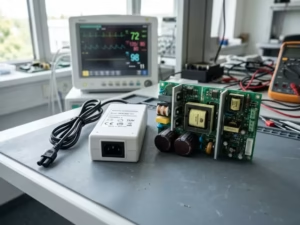
Quick Answer: What Is the Difference Between IEC 60950-1 and IEC 62368-1?
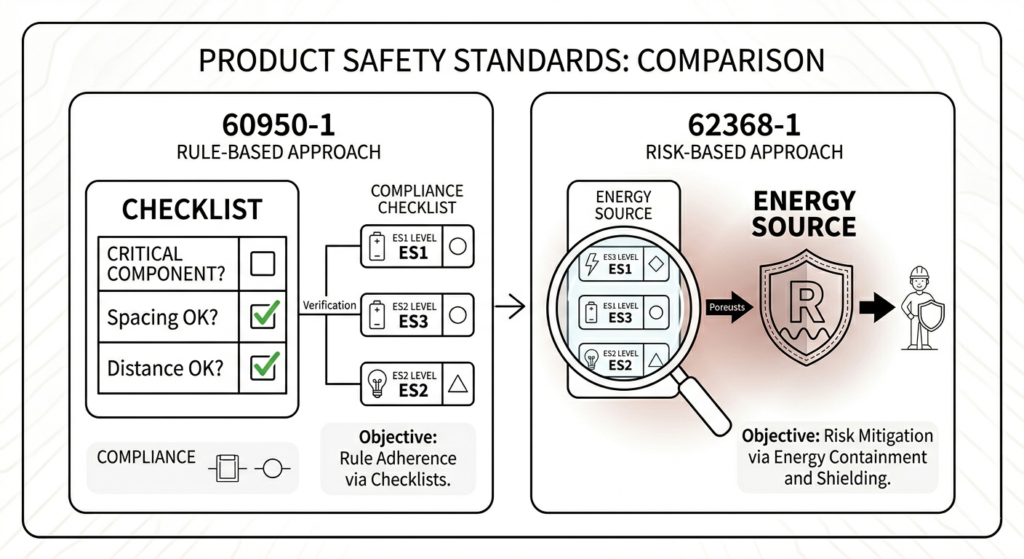
The main difference between IEC 60950-1 and IEC 62368-1 lies in their safety philosophy.
IEC 60950-1 follows a prescriptive design-based approach, meaning manufacturers must comply with specific construction requirements to ensure product safety.
IEC 62368-1 introduces Hazard-Based Safety Engineering (HBSE), which focuses on identifying potential energy sources that could cause injury and implementing safeguards to protect users.
This modern safety framework gives engineers more design flexibility while maintaining strict protection requirements.
In practical projects, we have seen this transition clearly. Several OEM customers who previously designed adapters according to IEC 60950-1 rules had to redesign parts of their power architecture once they moved to IEC 62368-1 certification.
Not because the products were unsafe.
But because the evaluation logic changed.
Simply put:
60950 focuses on how you build the product.
62368 focuses on how you control risk.
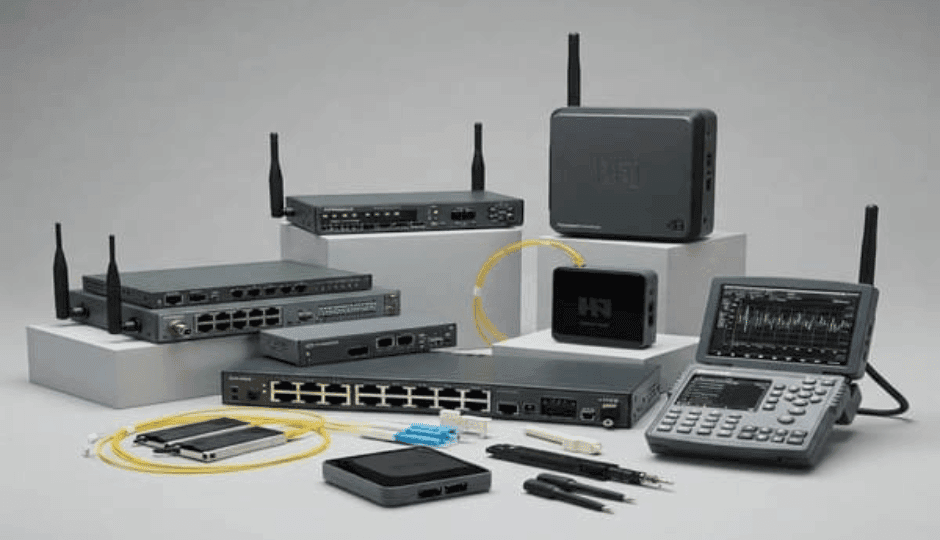
Evolution of Electronic Equipment Safety Standards
Safety standards for electronic equipment have evolved alongside advances in modern electronics.
Historically, safety standards were separated by product category.
| Standard | Equipment Type |
| IEC 60950-1 | Information Technology Equipment |
| IEC 60065 | Audio and Video Equipment |
However, modern electronic products increasingly combine multiple functions.
For example:
- Smart TVs integrate networking systems
- Communication devices include multimedia capabilities
- Consumer electronics combine computing and AV technologies
Because of this technological convergence, the International Electrotechnical Commission (IEC) developed IEC 62368-1 as a unified safety standard.
The goal was simple:
Create a technology-neutral safety framework capable of supporting future electronic products.
According to IEC industry reports, over 90% of newly certified ICT equipment globally now follows IEC 62368-1 requirements.
In other words, this transition is already complete in most markets.
What Is IEC 60950-1?
IEC 60950-1 was originally developed for information technology equipment (ITE) such as:
- computers
- servers
- networking equipment
- telecommunications systems
- external power adapters
The standard focused on preventing hazards including:
- electric shock
- fire risk
- overheating
- mechanical injury
To achieve this, IEC 60950-1 used a rule-based safety system.
The standard defined strict construction requirements such as:
- insulation spacing
- enclosure design
- component safety ratings
- electrical clearance distances
Engineers simply had to follow these predefined rules.
If the construction met the requirements, the product was generally considered compliant.
In earlier power adapter designs, we often saw engineers treat 60950 compliance as a checklist.
Check the spacing. Check insulation. Pass the test.
It worked.
But it also limited flexibility, especially for compact switching power supplies where layout space is extremely limited.
What Is IEC 62368-1?
IEC 62368-1 is a next-generation safety standard covering both:
- information technology equipment
- audio and video equipment
Instead of relying on rigid construction rules, the standard uses Hazard-Based Safety Engineering (HBSE).
The safety process typically involves three steps:
- Identify energy sources within the equipment
- Determine whether those energy sources could cause injury
- Implement safeguards to prevent harm
Energy sources considered in IEC 62368-1 include:
- electrical energy
- thermal energy
- mechanical energy
- radiation energy
This flexible framework allows engineers to design new technologies while maintaining high safety standards.
In real engineering practice, this means risk analysis becomes part of the design phase, not just the certification phase.
It changes how engineers think.
Instead of asking:
“Does this meet the spacing requirement?”
Engineers now ask:
“Could this energy source harm the user?”
Different question.
Different design logic.
Engineering Comparison: IEC 60950-1 vs IEC 62368-1
| Design Aspect | IEC 60950-1 | IEC 62368-1 |
| Safety philosophy | Prescriptive design rules | Hazard-based safety engineering |
| Equipment scope | IT equipment | ICT + audio/video equipment |
| Design flexibility | Limited | High |
| Risk evaluation | Fixed construction rules | Energy hazard analysis |
| Safety strategy | Prevent hazards through design limits | Identify hazards and apply safeguards |
| Innovation support | Moderate | High |
Because of this shift, IEC 62368-1 is widely considered the future safety framework for electronic equipment.
For manufacturers developing new products today, designing directly for 62368 compliance is usually the safest long-term strategy.
Hazard-Based Safety Engineering (HBSE) Explained
The HBSE model focuses on controlling energy that could potentially cause harm.
HBSE Safety Logic
Energy Source → Hazard → Safeguard → User Protection
For example, switching power adapters generate high voltage electrical energy internally.
If this energy becomes accessible to users, it could cause electric shock.
Therefore engineers must implement safeguards such as:
- reinforced insulation
- current limiting circuits
- protective grounding
- fire-resistant enclosures
- thermal shutdown protection
In one networking equipment project we supported, the original adapter design passed electrical testing but failed during hazard evaluation.
Why?
Because under abnormal conditions, thermal buildup inside the transformer could elevate energy levels beyond ES2 classification.
The solution required improving thermal dissipation and insulation structure.
After redesign, the product passed certification smoothly.
This is exactly how HBSE works in real projects.
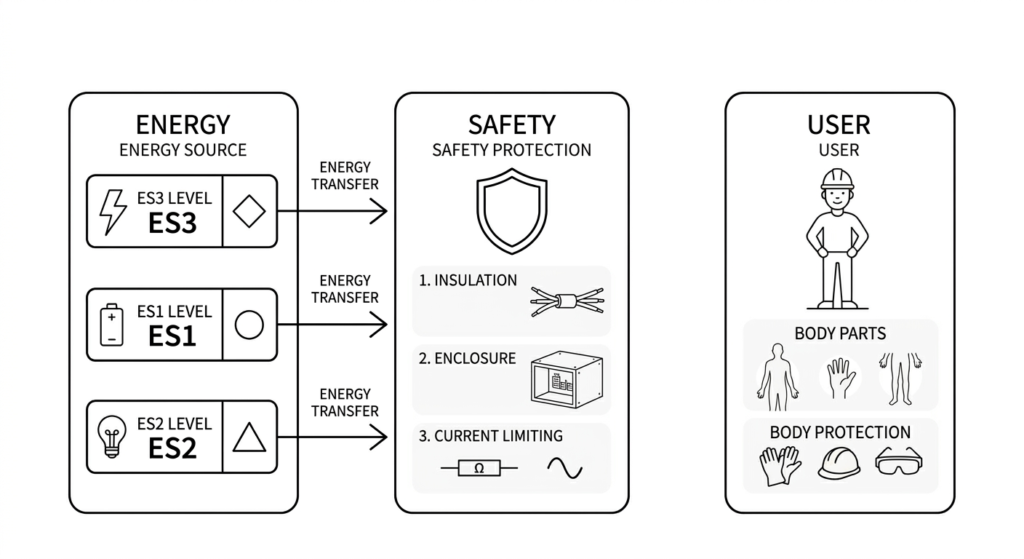
Energy Source Classification in IEC 62368-1
IEC 62368-1 introduces a new energy classification system.
| Energy Class | Description |
| ES1 | Safe energy levels |
| ES2 | May cause discomfort |
| ES3 | Potentially harmful energy |
Depending on the classification, different safeguards must be applied.
For example:
- ES1may require no protection
- ES2requires basic safeguards
- ES3requires reinforced protection
Most switching power adapters internally contain ES2 or ES3 energy sources.
Which means isolation design becomes critical.
In our experience working with industrial electronics customers, transformer insulation and PCB creepage distance are among the most common causes of certification redesign.
Small details.
Big impact.
Impact on Power Adapter Design
The transition from IEC 60950-1 to IEC 62368-1 significantly affects power adapter design.
Modern power adapters must evaluate hazards such as:
- high voltage circuits
- transformer insulation failure
- abnormal temperature rise
- short circuit conditions
To meet IEC 62368-1 requirements, modern switching power adapters typically include:
- over-current protection
- over-voltage protection
- thermal shutdown protection
- reinforced insulation barriers
- fire-resistant enclosure materials
For example, many global-market adapters support 90–264VAC universal input voltage.
Compared with single-voltage power designs, this wider input range increases component cost slightly.
But for export-oriented equipment manufacturers, it is almost a mandatory feature.
Otherwise the same product would require different power adapters for different regions.
Not practical.
Typical Power Adapter Safety Architecture
(Power Adapter Safety Architecture Diagram)
Typical structure:
AC Input
↓
EMI Filter
↓
Bridge Rectifier
↓
Switching Transformer
↓
Isolation Barrier
↓
Output Rectifier
↓
Protection Circuits
Key safety elements include:
- reinforced insulation
- thermal protection
- current limiting
- fire-resistant enclosure
These layers work together to ensure hazardous energy remains isolated from users.
That’s the core idea behind 62368.
How to Choose an IEC 62368-1 Power Adapter Supplier
For equipment manufacturers, selecting the right power adapter supplier is critical for product safety certification and long-term reliability.
When evaluating suppliers, engineers and procurement teams should verify:
| Evaluation Factor | Why It Matters |
| IEC 62368-1 certification | Required for global market access |
| UL / EN safety approvals | Regional compliance |
| Insulation protection design | Prevent electrical hazards |
| Thermal protection system | Prevent overheating |
| Component reliability | Long-term product stability |
| Manufacturing quality system | Consistent production |
In real OEM projects we often see one common problem:
Some suppliers provide certificates but cannot support certification documentation required for end-product testing.
Reliable manufacturers should also provide:
- CB test reports
- safety evaluation documents
- engineering support during certification
Otherwise certification delays become very common.
Looking for a reliable IEC 62368-1 power adapter manufacturer?
Our engineering team supports OEM and industrial projects worldwide.
Contact us for technical consultation.
Typical Applications of IEC 62368-1 Power Adapters
IEC 62368-1 compliant power adapters are widely used in:
- networking equipment
- routers and switches
- industrial control systems
- communication devices
- consumer electronics
- USB-C charging adapters
These devices often operate continuously for long periods.
Which means safety protection must remain stable 24/7.
No exceptions.
Global Certification Requirements
Although IEC 62368-1 defines the international safety framework, regional certifications are still required.
| Region | Certification |
| United States | UL 62368-1 |
| Europe | EN 62368-1 |
| Canada | CSA 62368-1 |
| International | IEC 62368-1 |
Products intended for global markets typically require multiple certifications, often supported through CB Scheme testing reports.
Without these certifications, market entry can become extremely difficult.
Simple reality.
Power Adapter Safety Certification Checklist
Before selecting a power adapter supplier, manufacturers should confirm:
- IEC 62368-1 certification
- UL safety approval
- CB test reports
- insulation protection levels
- thermal protection design
- fire-resistant enclosure materials
Using certified adapters significantly simplifies product approval and market entry.
Looking for an IEC 62368-1 Power Adapter Manufacturer?
If you are developing networking equipment, communication devices, or industrial electronics, choosing a reliable power adapter manufacturer is essential.
Our engineering team can help you:
✔ Select the right IEC 62368-1 compliant power adapter
✔ Ensure global safety certification compliance
✔ Customize power solutions for your equipment
Our adapters feature:
- IEC 62368-1 certified designs
- ultra-low leakage current
- low EMI and stable output
- reliable long-term OEM supply
Contact our engineering team for technical consultation
Request a quote within 24 hours
Conclusion
The transition from IEC 60950-1 to IEC 62368-1 represents a major shift in electronic equipment safety engineering.
Instead of rigid design rules, IEC 62368-1 introduces a hazard-based safety model that evaluates energy sources and applies safeguards to prevent injury.
For manufacturers developing electronic equipment or power adapters, understanding this transition is essential for:
- product design
- safety certification
- global market access
From our experience supporting OEM customers, companies that integrate HBSE thinking early in the design process usually complete certification faster and avoid costly redesign cycles.