Medical Power Supplies for Infusion Drug Devices
Certified medical AC-DC power supplies for infusion pumps, insulin pumps, and miniature piston pumps
Quankang designs and manufactures medical power supplies for infusion and drug delivery devices used in hospitals, clinics, and homecare environments. For 36 years, we have built safe, stable AC-DC power adapters for equipment that depends on accurate flow control and reliable operation. Our solutions are designed to IEC 60601-1, with 2xMOPP patient protection, low leakage current, and clean DC output that helps maintain stable performance under changing motor loads.
We keep power design, testing, and production under one roof. Our in-house EMC laboratory helps identify interference issues early, before they delay certification. Backed by 212 patents and customers in more than 50 countries, we help OEMs select the right medical-grade power supply for pump-driven devices and move to market with lower risk and greater confidence.
*Share your specifications. Our engineering team typically responds within one business day.
Why Infusion Drug Devices Need Medical-Grade Power
Infusion and drug delivery devices depend on precise control of flow rate, timing, and alarm response, often over long operating periods. The power supply supports the motor drive, pressure sensing, and control electronics that make this performance possible. If power is unstable, noisy, or poorly isolated, it can affect motor control, sensor feedback, and overall system reliability, while also increasing electrical safety risk.
For OEMs, the power supply directly affects dosing accuracy, patient safety, and regulatory readiness. Selecting the right medical-grade power supply early in development helps reduce risk across all three.


Six engineering factors separate a medical-grade power supply from a standard adapter, and each one has direct consequences for infusion and drug delivery equipment.
Applications
Power Supply Solutions for Infusion Drug Devices
Infusion and drug delivery devices differ in load behavior, operating time, portability, and safety requirements. Explore our application-specific solutions for recommended models, typical power ranges, and key design considerations for your equipment.
Applications
-

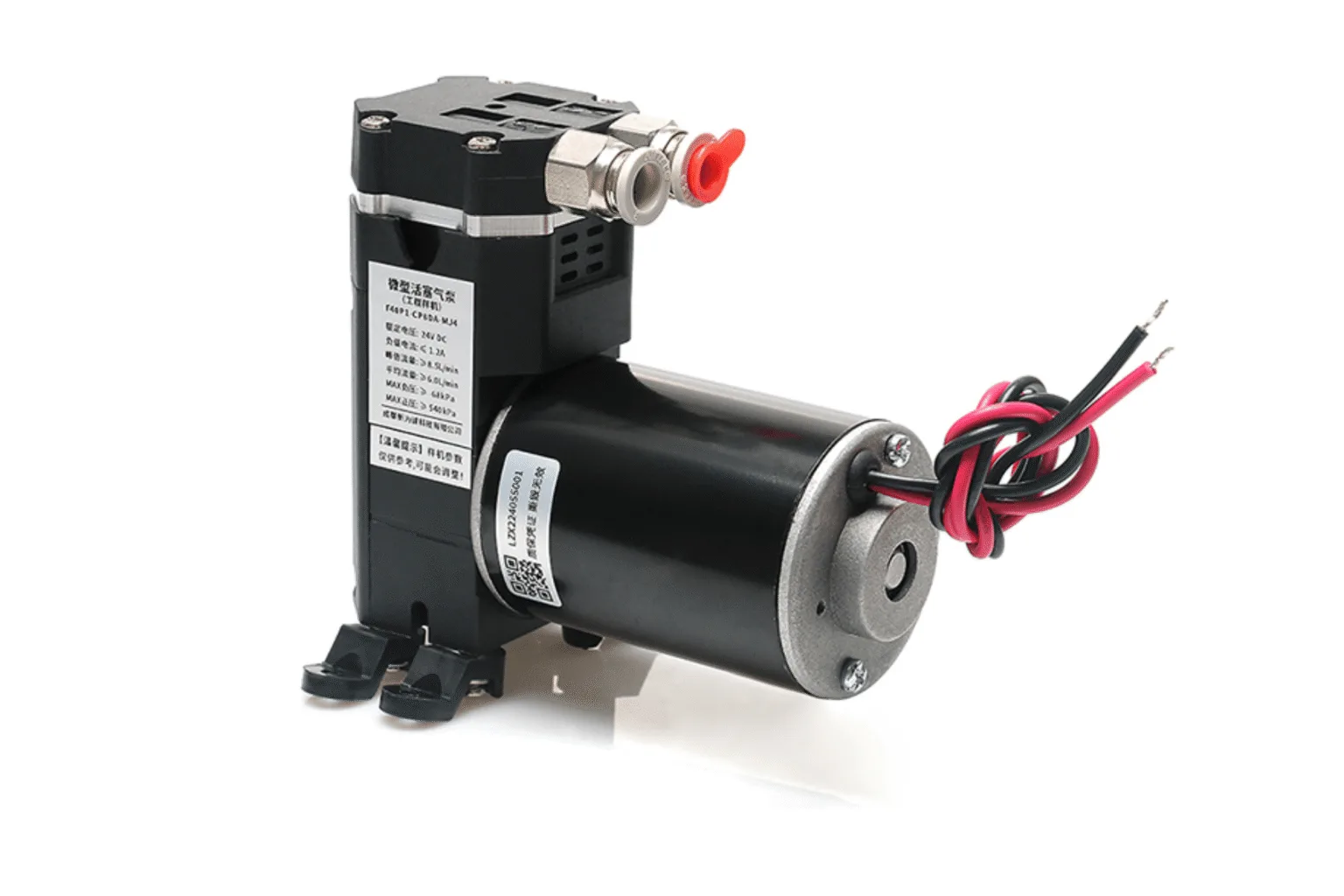
Miniature Piston Pump
Stable, low-noise power for miniature piston pumps integrated into compact medical fluid handling and drug delivery systems.
Typical power needs
Low- to medium-power external adapters, selected according to pump displacement, duty cycle, and motor drive requirements
Key design considerations
- Stable output under dynamic motor loads
- Low ripple and noise for consistent stroke and flow control
- Inrush and peak current support during pump start-up
- Compact form factors for integrated equipment designs
- Long-term reliability for frequent or continuous operation
-

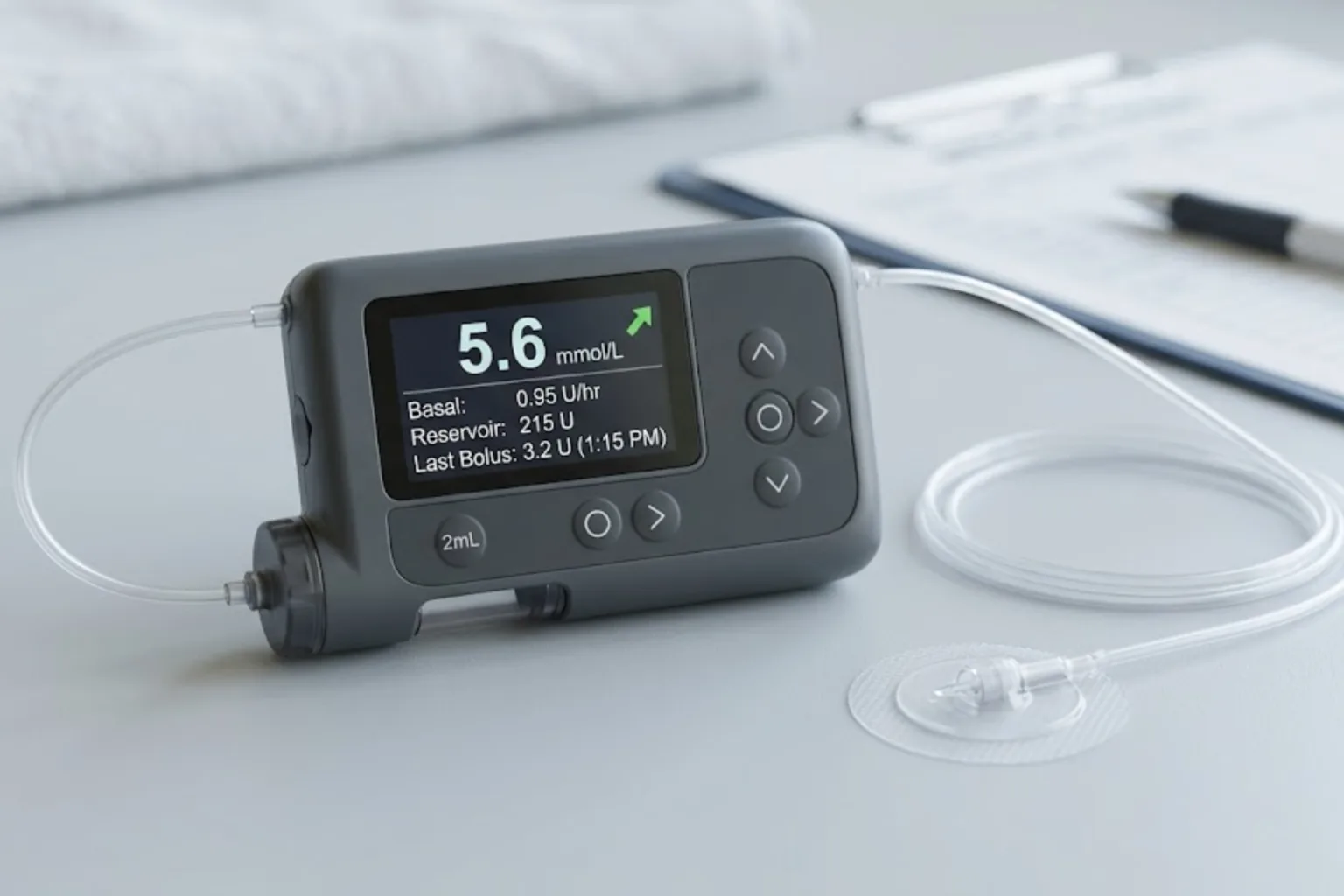
Insulin Pump
Safe, dependable charging power for insulin pumps, charging cradles, and wearable insulin delivery systems used in daily homecare.
Typical power needs
Low-power medical adapters and chargers, commonly in the 5W–10W range
Key design considerations
- 2xMOPP isolation and low leakage current for home-use safety
- Clean, stable output for safe and consistent battery charging
- Compact, lightweight design for travel and daily use
- Low temperature rise for overnight charging
- Wide input range and global plug options
-

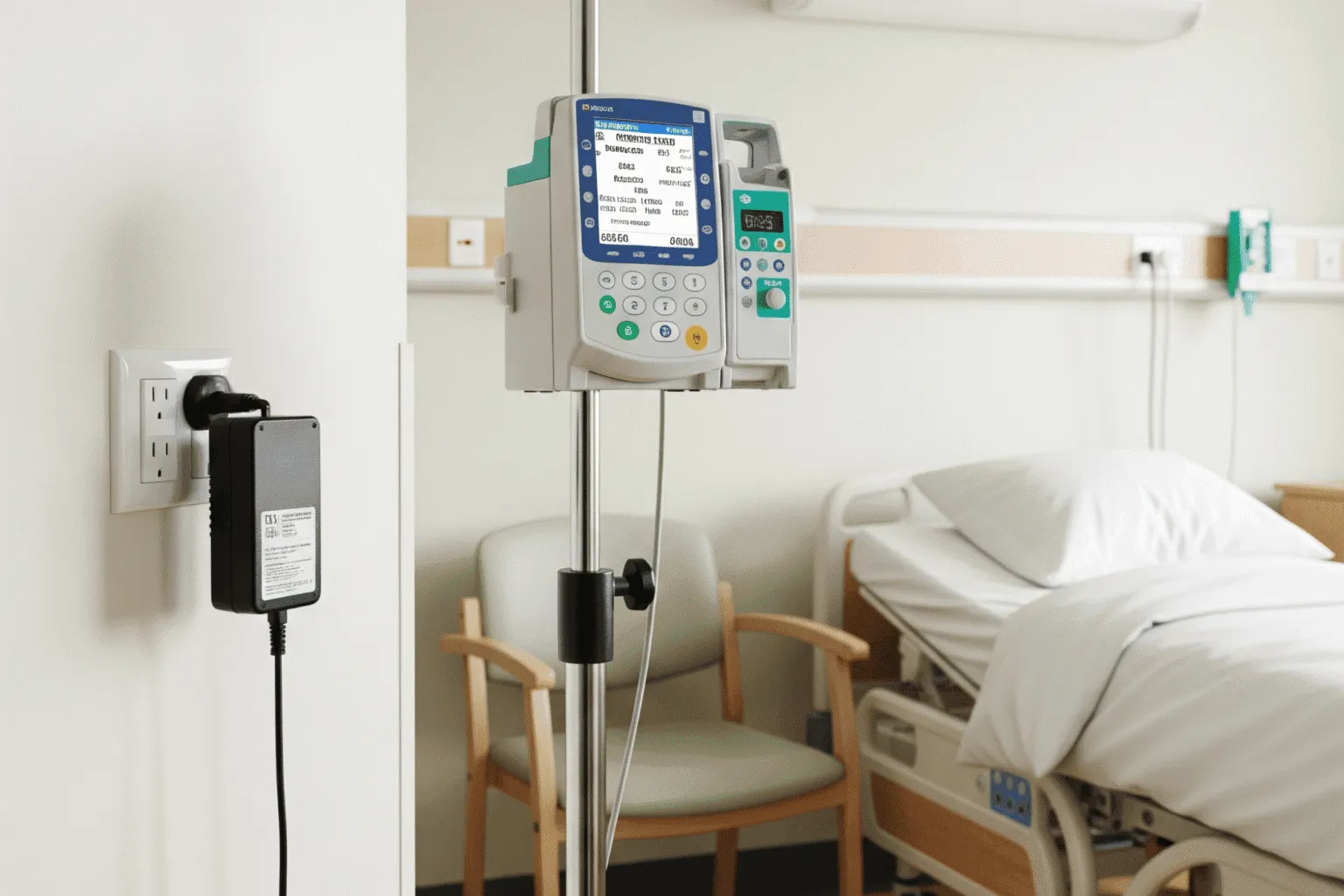
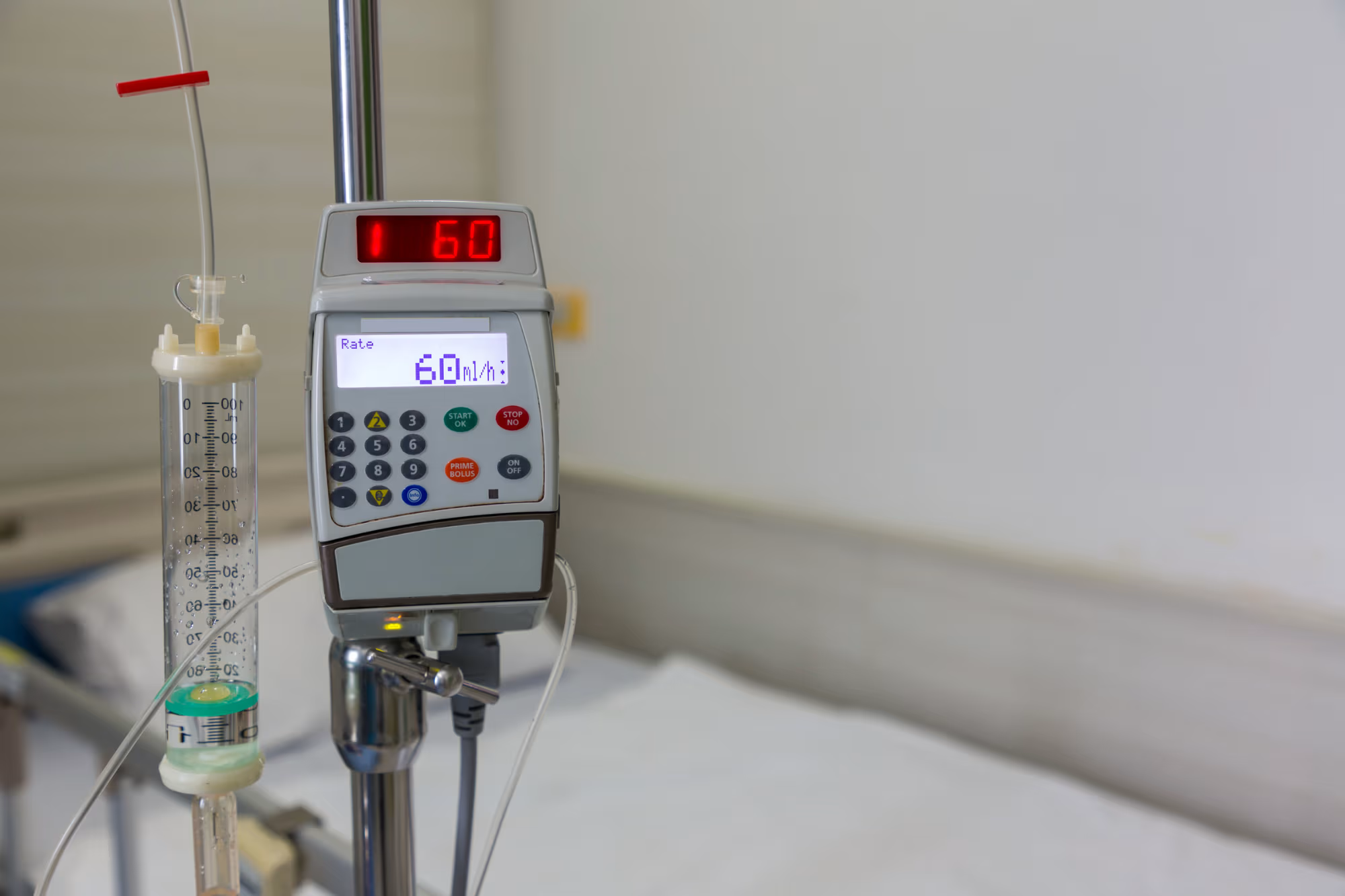
Infusion Pump
Precision-stable power for volumetric, syringe, and portable infusion pumps used in hospitals, clinics, and home infusion therapy.
Typical power needs
Medium-power external adapters, selected according to pump type, motor load, and internal battery charging requirements
Key design considerations
- Low ripple and noise for accurate flow control and sensor feedback
- Stable output during motor operation and battery charging
- EMC design for multi-device clinical environments
- Continuous-duty reliability for long infusion sessions
- IEC 60601-1 and IEC 60601-1-2 compliance support
Selection Guide
Power Supply Selection Guide for Infusion Drug Devices
Output voltage and wattage define only part of the specification. For infusion and drug delivery devices, power stability, isolation, and EMC performance directly affect dosing accuracy, operating reliability, and certification readiness. Evaluating the factors below early in development can help reduce redesign risk, avoid late-stage test failures, and support smoother product approval.
| Selection Factor | Why It Matters |
|---|---|
| 01IEC 60601-1 Certification | Confirms compliance with core medical electrical safety requirements and helps streamline system-level approval for infusion devices. |
| 02Leakage Current | Helps reduce electrical risk in patient-connected applications, including devices used with IV lines, catheters, or subcutaneous infusion sets. |
| 03Ripple & Noise | Clean DC output helps protect motor control, pressure sensing, and occlusion detection circuits that support accurate dosing. |
| 04EMC (IEC 60601-1-2) | Controls emissions from motor and power stages while improving immunity, so pumps can operate safely alongside other medical equipment. |
| 05Isolation Level (1xMOPP / 2xMOPP) | Defines the degree of patient protection from mains voltage. 2xMOPP is preferred for patient-connected and home-use infusion devices. |
| 06Continuous Operation | Long infusion sessions and around-the-clock therapy require robust thermal design, high MTBF, and stable output under changing motor and charging loads. |
Key Features
Key Features of Quankang Power Supplies for Infusion Drug Devices
- 01
Medical Safety Compliance
Designed and certified to IEC 60601-1 and IEC 60601-1-2.
- 02
2xMOPP Patient Protection
High-isolation design for reinforced protection from mains voltage in patient-connected applications.
- 03
Low Leakage Current
Leakage current controlled within medical limits for safe use in infusion and drug delivery devices.
- 04
Stable Output Performance
Tight voltage regulation under changing motor and charging loads.
- 05
Low Ripple and Noise
Clean DC output for motor drives, pressure sensors, and control electronics.
- 06
Dynamic Load Support
Supports pump start-up currents and peak loads without output disruption.
- 07
Global Input Compatibility
Wide 90–264VAC input with interchangeable plugs for US, EU, UK, AU, KR, and JP markets.
- 08
Flexible Integration Options
Available in wall-plug, desktop, and open-frame form factors for portable and bedside designs.
- 09
Built-In Electrical Protection
Short circuit, over-voltage (OVP), and over-current (OCP) protection for safer operation.
- 10
Low Temperature Rise
Designed for overnight charging and long infusion sessions with stable thermal performance.
- 11
Long Service Life
High-reliability design supports long operating life in OEM medical equipment.
- 12
OEM/ODM Customization
Custom output, connectors, cable length, enclosure, labeling, and other integration options available.
Frequently Asked Questions
What types of infusion and drug delivery devices commonly use external medical power supplies?
Why can't a standard adapter be used in an infusion device?
Which standards apply to power supplies for infusion devices?
Can power quality affect flow and dosing accuracy?
Can Quankang customize a power supply for my infusion device?
Partner With a Power Supply Specialist for Infusion Drug Devices
Whether you are developing a new infusion pump or refining an established drug delivery platform, the right power supply shortens your path to market. Share your voltage, power, isolation, load profile, and certification requirements. Our engineers will recommend a qualified model or develop a custom solution around your design.
With 36 years of medical power expertise, an in-house EMC laboratory, and customers in more than 50 countries, Quankang supports your program from first prototype to full-scale production.
Start Your Infusion Device Power Project
Send your specifications today. An engineer will follow up with recommendations, typically within one business day.