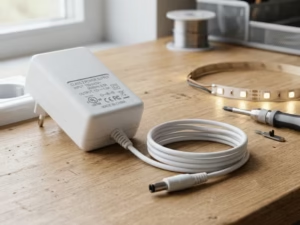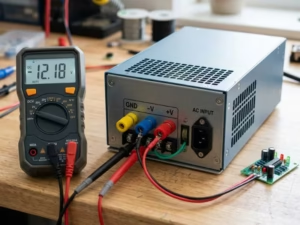
When you know the AC to DC power supply is wrong, just test the voltage? It is not enough. In fact, the common way is to use a multimeter test the output voltage. If the reading matches the nominal value, the AC to DC power supply is considered qualified. But this is just the surface; the test way only explains how the AC to DC power supply works under no-load or light-load conditions. That reflects the performance of actual work conditions. Many related problems of the AC to DC power supply, these problems typically appear after increased load or extended operating time, and are often undetectable with simple voltage tests.
AC to DC power supply load testing vs. actual application load
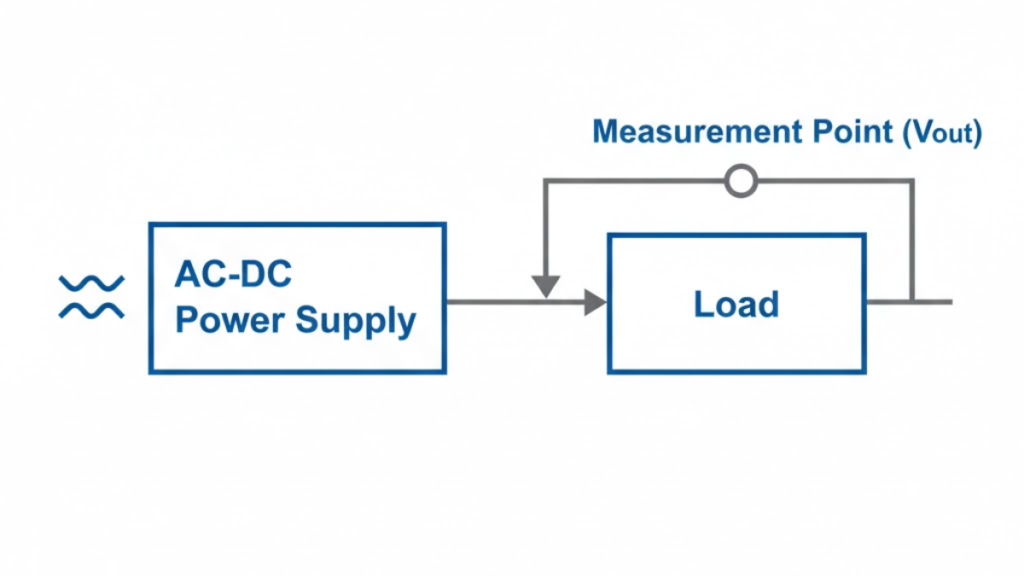
Compare the AC to DC power supply load testing and the actual application load; you need to know their means. The power supply load testing assesses different actual application conditions in the power supply. The key is simulate different load testing to check the output voltage stability, ripple and noise, efficiency, and protection feature. It’s usually use electronic load or a load bank. Through gradually increase load to monitor the AC to DC power supply’s voltage fall, current changes, and temperature, that make sure it conforms to design specifications and industry standards.
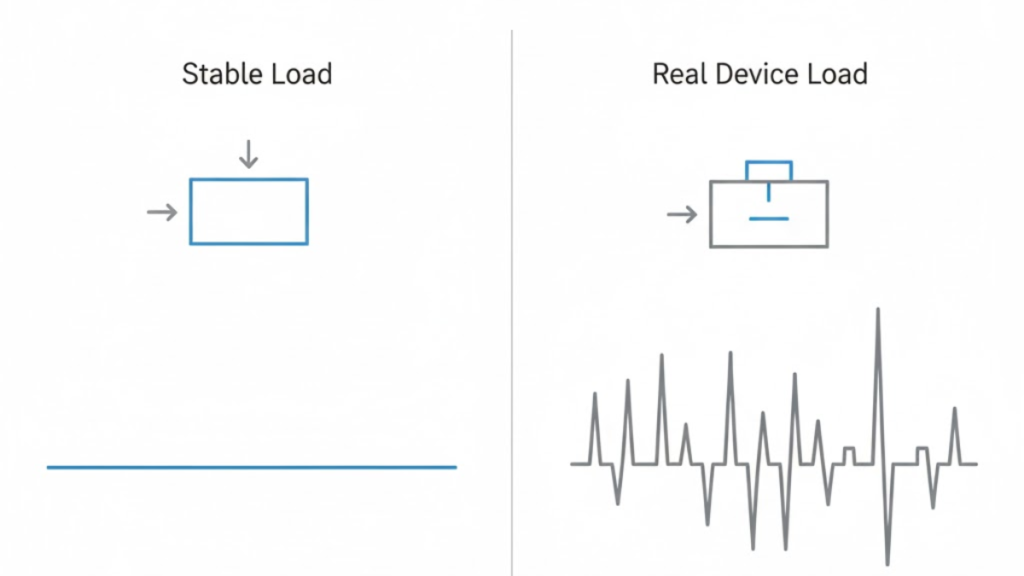
And the AC to DC power supply’s actual application load means that when the device is actually working, the power supply needs to bear the electricity demand of the actual power consumption of electrical appliances. It describes the power, current, and voltage of the AC to DC power supply, and is a core consideration for the selection and design. This is a direct relationship with the device if stable work, such as overall power consumption of computer components involved when running games: fan, hard drive, and CPU are the actual load. With the matching degree of AC to DC power supply theory rated power decides the system stability, and insufficient power will lead tothe blue screen of death.
In laboratory load testing, usually work in stable and adjust control condition. Such as use fixed resistor oran electronic load, the current change is relatively gentle. And the actual application, load is dynamic, and the current will constantly fluctuate because start device, function switching, and working mode. Moreover, the actual application leads to an increase in temperature, ventilation conditions, and installation method, which affect the AC to DC power supply output stability. So, through standard load testing results, it is not completely equal to the actual performance of the terminal device.
The key index of evaluate in output stability
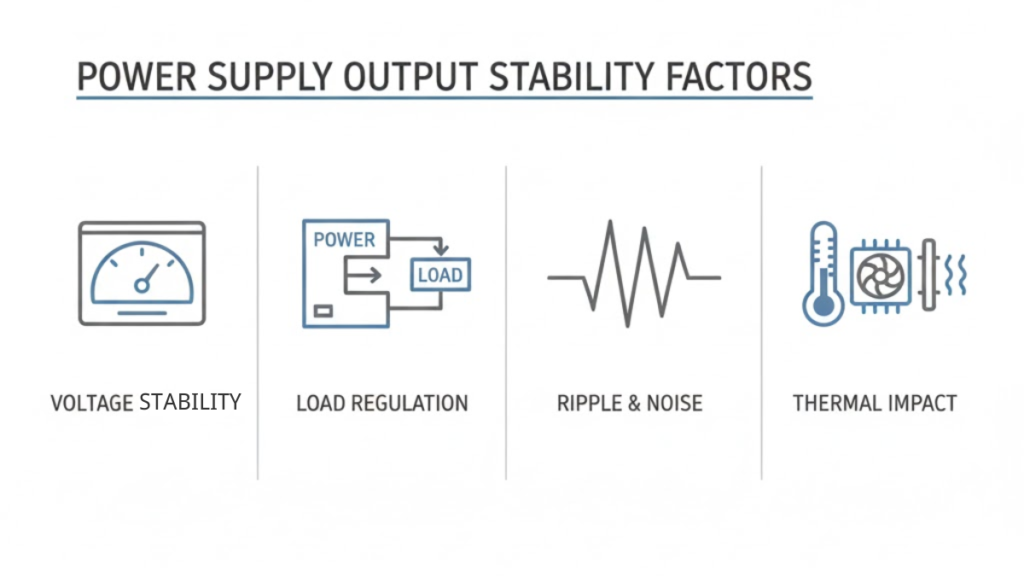
In load condition evaluation, the engineer usually needs to make judgments for many dimensions and not attact a numerical values. And the key indices include stability level of output voltage, responsiveness of load change, ripple and noise levels, and performance of the power supply work long time.
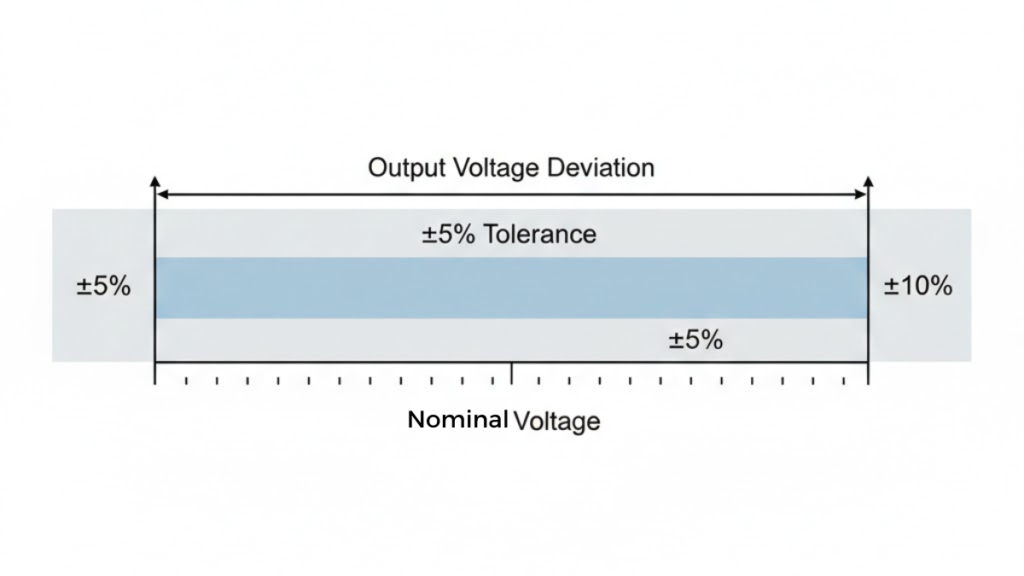
Different applications have different tolerances for output voltage deviations. In some consumer electronics, ±10% voltage deviation is usually accepted, but in industrial control or medical equipments that the voltage stable requirment higher. The common permissible range is ±5% or more strictly. Most attractions, even if the voltage stays inthe permissible deviation range. If the load change appears to cause significant fluctuations, and still may still affect the system’s stability. The voltage deviation should combine the dynamic performance evaluation together, and not be an isolated judgment.
Ripple and noise: why the AC to DC power supply is easy to ignore in light load
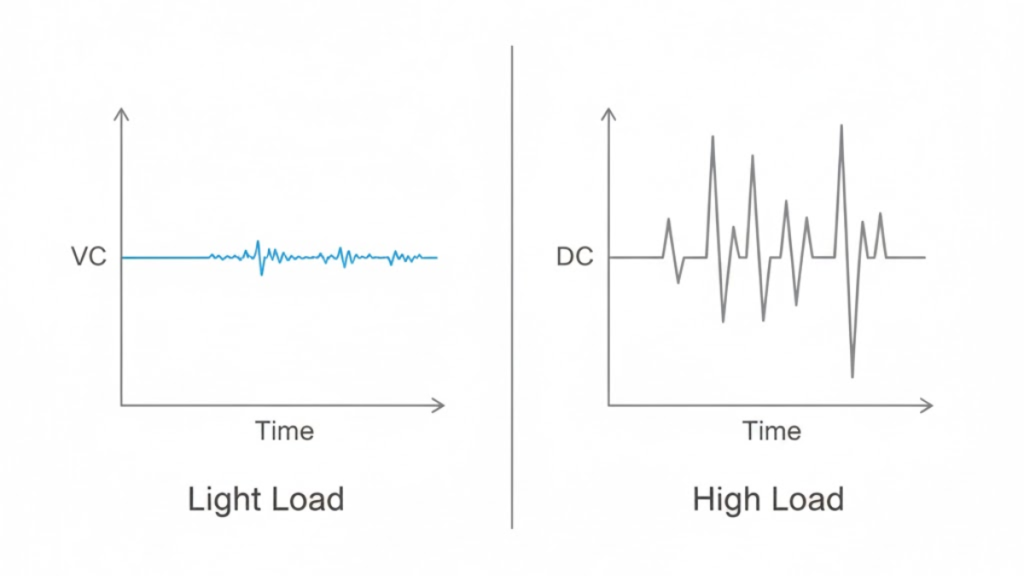
Under light load or no load conditions, the ripple and noise level look is not obvious, which is an ignored reason for one of reatled problem. But when the load increases, the interface of the power supply device and the filter circuit bears more stress, and the ripple amplitude will increase. Higher ripple and noise may lead to LED flicker, analog signal interference, communication error, and shorten the lifespan of downstream components. Therefore, the ripple and noise should be evaluated in the rated load or near the actual work load condition.
In engineering practice, the common solution is that the AC to DC power supply output voltage is normal, but the system appear unnormal. This is usually the reason, for example, when the output voltage reduces with an increase in load; the ripple obvious increase in high load conditions; the power supply performance wrong in the temperature rise; the protection performance of the power supply does not match the actual application. These problem expose in load test or long-time work.
From an engineering perspective, the target of the AC to DC power supply test is not only make sure if able to output the correct voltage, but attract it stability and reliability under real-world working conditions. The reasonable test approach is let the power supply be a part of the system, that combine load characteristics, working environment, and usage period to conduct a comprehensive assessment. Only performance stable in these conditions and satisfies the requirements of long-term applications.
Conclusion
The performance advantages and disadvantages of an AC to DC power supply, which reflect it if able stable support for the whole system work in the end. Compare the simple parameter validation, deeper in load testing, and stable evaluation. It is able to help an engineer find potential risks in advance, and avoird appear site problems. Understanding power supply testing logic from an application perspective is the key step to system reliability and safety.