Looking to choose a medical power supply for a diagnostic device, monitoring system, imaging platform, or another healthcare application? It is a critical decision. The right power supply helps protect patients, supports stable device performance, and keeps your equipment aligned with strict medical safety requirements. The wrong one can create compliance issues, reduce reliability, and lead to failures you cannot afford in a clinical setting.
Before making a purchase, it is important to look beyond basic voltage and wattage. You also need to consider medical standards, certifications, installation conditions, cooling, cable routing, and long-term maintenance. This guide outlines 10 key considerations when buying a medical power supply to help you make a more informed and practical decision for your application.
1. How Can a Medical Power Supply Help You?

As healthcare devices become more advanced and more connected, medical power supplies have become essential components rather than simple supporting parts. In hospitals, clinics, labs, and home-care settings, stable and safe power delivery is necessary for device accuracy, patient protection, and uninterrupted operation. A poor-quality power supply can affect performance, increase risk, and shorten the service life of the equipment it supports.
Here’s how a medical power supply can help:
- Protect patient safety: Medical-grade isolation and low leakage current help reduce the risk of electrical injury.
- Support compliance: A qualified unit helps your device meet medical standards and approval requirements.
- Improve reliability: Stable output helps sensitive electronics perform as intended.
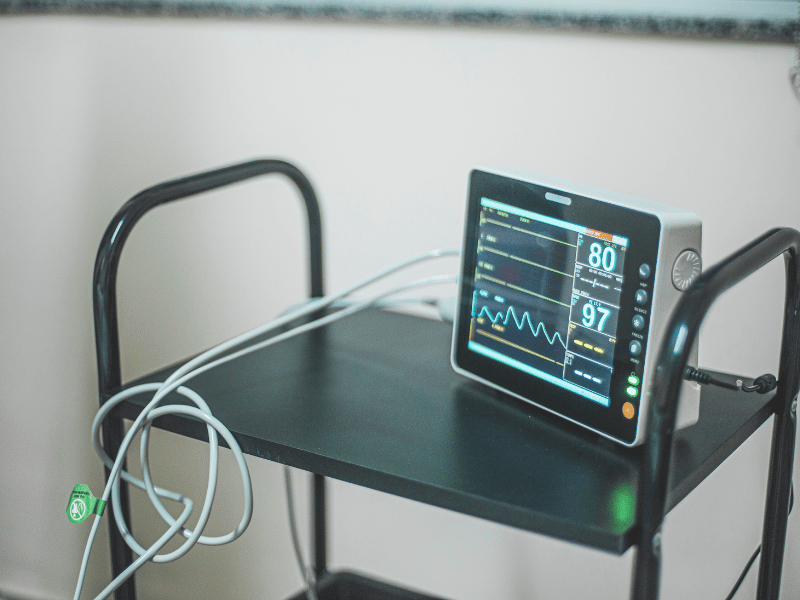
- Power-critical life-support equipment: Devices used for monitoring, treatment, and diagnosis require a consistent power supply.
- Reduce downtime: Better build quality can lower the risk of field failures.
- Handle demanding environments: Medical power supplies are often designed for strict operating conditions.
- Support compact system design: Many models offer efficient, space-saving layouts for modern devices.
- Enhance long-term performance: High-quality components can improve product lifespan and maintenance cycles.
If you are designing or sourcing a medical product, the power supply is not a detail to overlook. It plays a direct role in safety, performance, and regulatory success.
2. Types of Medical Power Supplies
Medical power supplies come in several main types, each designed for different usage scenarios. Whether you are building a stationary hospital device, a portable monitor, or a backup-ready system, the right type depends on how and where the equipment will operate.
a. AC-DC Power Supplies
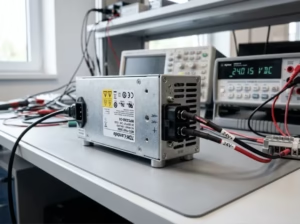
AC-DC medical power supplies convert wall power into a stable DC output for medical devices. They are commonly used in bedside monitors, imaging systems, infusion equipment, laboratory instruments, and many other products that run from facility power.
These units are a practical choice when you need reliable continuous operation, strong compliance support, and predictable output performance. If your medical device is mainly used indoors and connected to mains electricity, AC-DC power supplies are often the first option to evaluate.
Read More: What is DC 5V power supply?
b. DC-DC Converters
DC-DC converters take one DC voltage and convert it into another. They are often used in portable equipment, battery-powered systems, embedded medical electronics, and applications with multiple internal voltage rails.
This type works well when space is limited or when the device depends on battery power. DC-DC converters also help designers manage power distribution inside compact systems where efficiency and thermal control are important.
c. Uninterruptible Power Supplies (UPS)
UPS systems provide backup power when the main source fails. In medical settings, this can be critical for devices that must keep running during outages, transfer events, or unstable grid conditions.
They are commonly used with hospital systems, emergency equipment, data-sensitive devices, and infrastructure that cannot tolerate sudden shutdowns. If power continuity matters as much as power quality, a UPS may be essential.
3. Compliance with Medical Standards
When buying a medical power supply, compliance is not optional. Medical environments require stricter safety rules than ordinary commercial or industrial applications, and one of the most important standards is IEC 60601-1. This standard covers basic safety and essential performance requirements for medical electrical equipment and helps reduce risks of electric shock, leakage current, insulation failure, and other hazards.
A compliant medical power supply is designed to support patient and operator safety under real operating conditions. It also helps streamline product approval and reduces the risk of delays during testing and certification.
Mechanical vs. certification-only thinking: what’s the difference?
Some buyers focus only on whether a unit can provide the right output numbers. That is not enough in medical design. A power supply may meet voltage and current needs, but if it does not meet medical isolation, leakage, and protection requirements, it may not be suitable for the device at all.
In short, always verify the medical standard first, then confirm the electrical fit. That approach saves time, cost, and redesign effort later.
4. Can Your Facility Support the Power Supply?
Before selecting a medical power supply, it is important to evaluate the environment where it will be installed and used. A unit may look perfect on paper, but if it does not align with your facility’s infrastructure or operating conditions, you may encounter avoidable problems during installation or use.
a. Voltage and Current Requirements
First, confirm that the power supply is compatible with your local electrical system and the device’s actual load profile. Input range, output current, peak demand, and startup behavior all matter.
If the facility experiences line voltage fluctuations or supports multiple regional voltage standards, choose a unit designed to handle such variations. This is especially important for globally deployed medical equipment.
b. Environmental Conditions
Medical power supplies may be installed in clean rooms, busy hospitals, mobile carts, laboratories, or home-care devices. Each setting creates different demands for temperature, humidity, dust exposure, and ventilation.
A unit that performs well in a cool lab may struggle in a tightly enclosed system or a warmer clinical environment. Check the operating temperature range and derating conditions before making a final choice.
c. Mounting Options
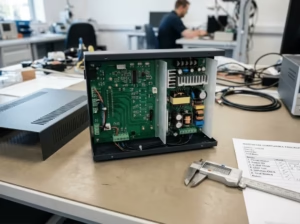
Medical power supplies come in wall-mounted, open-frame, enclosed, desktop, rack-mounted, and portable designs. The best option depends on your device architecture and the permanence of the installation.
If service access matters, choose a format that is easy to maintain. If space is tight, a compact internal design may be better. Good mounting selection improves both usability and safety.
5. Avoiding Installation Pitfalls
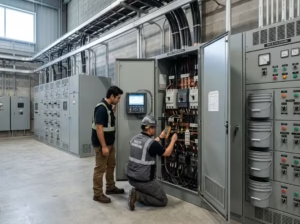
Before installing a medical power supply, take time to check the system layout and site conditions. Many failures come from avoidable installation mistakes rather than defects in the power supply itself. Problems like poor grounding, blocked airflow, and incorrect wiring can cause unstable performance, extra heat, or even safety risks.
a. Grounding and wiring
Improper grounding is one of the most common installation issues in medical electronics. It can interfere with safety performance, increase noise, and affect compliance behavior.
Always follow the manufacturer’s wiring instructions carefully. Use the correct connectors, verify polarity, and make sure grounding paths are secure and consistent throughout the system.
b. Ventilation and placement
Even efficient power supplies generate heat. If the unit is installed in a sealed area without enough airflow, internal temperatures may rise faster than expected.
Leave enough clearance for cooling and avoid placing the unit near other heat-generating parts. A good layout helps prevent performance loss and early aging.
6. Key Certifications to Look For
Certifications help verify that a medical power supply has been evaluated for safety, quality, and compliance. They also make it easier for manufacturers and buyers to confirm that the unit is suitable for medical use in target markets. When reviewing options, do not assume every “medical-grade” label means the same thing.
Common certifications to check
Look for certifications and approvals such as:
- IEC 60601-1 compliance
- UL certification
- CE marking
- FDA-related suitability, when applicable to the final product pathway
- EMC compliance for electromagnetic compatibility requirements
These marks help show that the product has been designed and tested to meet recognized standards. They also reduce risk during system approval and market entry.
Special cases to note
Some certifications apply to the power supply itself, while others depend on the complete medical device. That means you still need to review how the power supply performs once integrated into the final system.
In other words, certifications are essential, but they are not a shortcut for system-level validation.
7. Choosing the Right Power Specifications
When selecting a medical power supply, it is critical to match the unit’s electrical specifications to the real demands of your device. A model that looks close enough on paper may still create performance issues if startup current, peak loads, or thermal limits are ignored.
a. Voltage and Current Ratings
Start by matching the required output voltage and current to the medical device’s specifications. This sounds basic, but it is often where mistakes begin, especially in systems with multiple rails or fluctuating loads.
Always confirm normal operating load, startup demand, and any temporary high-current events. A supply that is undersized may become unstable or run too hot.
b. Power Output Range
Make sure the power supply can handle both continuous power and peak demand. Medical devices may draw more power during startup, motor activity, signal transmission, or specific treatment cycles.
Leaving a sensible margin helps improve reliability. Consistently running too close to the maximum rating can shorten service life.
c. Efficiency Ratings
Higher efficiency means less wasted energy and less internal heat. That matters in medical systems because lower heat can improve reliability, reduce cooling needs, and support compact designs.
An efficient power supply can also reduce operating costs over time, especially in systems that run continuously.
Finding the ideal range
The best choice is usually not the largest model available. Oversizing too much can increase cost, space use, and design complexity without adding real value.
Instead, choose a unit with enough headroom for peak demand, but not so much that the system becomes inefficient or unnecessarily bulky. A balanced specification is usually the smarter long-term decision.
8. Adjustment and Flexibility
When comparing medical power supplies, flexibility is another important factor. Some applications need a fixed output and nothing more. Others benefit from adjustable settings, a modular architecture, or a design that supports multiple product versions with minimal changes.
a. Adjustable output settings
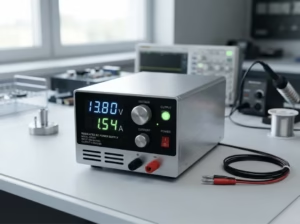
Some medical power supplies allow small output adjustments to match system requirements more precisely. This can be useful during design tuning or when supporting slightly different device configurations.
That said, adjustments should be carefully controlled and documented. In medical systems, stability matters more than convenience.
b. Modular and application-friendly designs
Modular power supplies or adaptable configurations can simplify integration across multiple products. This is helpful for manufacturers building families of related medical devices.
More flexibility can also make servicing easier later, especially if power needs change during product updates or regional deployment.
9. Preventing Overheating and Failures
Heat is one of the biggest threats to power supply reliability. If a medical power supply runs too hot for too long, component aging speeds up, output performance may drift, and the risk of failure increases. In medical applications, that kind of instability can affect more than just uptime.
How to reduce thermal stress
To prevent overheating, ensure the unit has the appropriate cooling strategy for the application. Depending on the design, that may include:
- Natural convection
- Forced-air cooling with fans
- Heat sinks
- Well-ventilated enclosure layouts
Also, check whether the power supply derates at higher temperatures. A unit that works well at room temperature may deliver less power in a hotter environment.
Choosing more durable designs
Reliable medical power supplies are usually built with thermal protection, quality internal components, and layouts that manage heat effectively. If long service life matters, do not judge by wattage alone.
Look for designs that stay stable under sustained load and realistic operating temperatures, not just ideal lab conditions.
10. Cable Management and Maintenance
Cable management matters more than many buyers expect. In medical equipment, poor cable routing can create clutter, restrict airflow, complicate servicing, and increase the chance of accidental disconnection. A well-managed setup is safer, cleaner, and easier to maintain over time.
Cable management considerations
When reviewing a medical power supply, think about cable length, connector type, routing path, and service access. Here are a few things to keep in mind:
- Use appropriate cable lengths: Too short creates strain; too long adds clutter.
- Check connector security: Medical devices often need firm, reliable connections.
- Protect airflow paths: Poor cable routing can block ventilation.
- Plan for maintenance: Technicians should be able to inspect or replace parts without unnecessary disassembly.
Maintenance-friendly features
Some power supplies offer detachable cables, organized connector layouts, or integrated cable management features. These small details can save time during installation and service.
If the system will be maintained frequently, choose a design that supports fast, safe access rather than one that only looks compact on day one.
11. Our Recommendation
We’ve covered the most common questions about choosing a medical power supply, from compliance and certifications to power specifications, cooling, installation, and maintenance. If you are still deciding, the best choice is usually a solution that balances safety, reliability, flexibility, and real-world usability rather than focusing on only one specification.
A strong medical power supply should:
- Meet recognized medical safety standards
- Match your device’s actual voltage, current, and peak load needs
- Fit your installation environment and cooling conditions
- Offer reliable certification support for your target market
- Simplify maintenance and long-term operation
At Quankang, we provide medical power supply solutions designed to ensure safe, dependable performance across a wide range of healthcare applications. If you want a solution tailored to your device or project, explore Quankang’s range of medical power supplies and use this checklist to guide your next decision.