Have you opened up a power supply or dealt with failing electronics and wondered how long the capacitor can last? When should you replace it, and what causes one capacitor to fail sooner than another? Yes, we will answer these questions in this article, so read on!
With major improvements in power supply design, capacitors have become more reliable and efficient. Today, power supply manufacturers are constantly working to make electronic devices safer, more stable, and longer-lasting. Not only are modern capacitors built to handle tougher operating conditions, but many are also available at lower cost than before.
So if you’re wondering whether power supply capacitors are still fragile and expensive parts, think again. With better materials and smarter manufacturing, many capacitors can now last for years under normal use. What’s more, they no longer always come with a high replacement cost.
If you are using a desktop PC, monitor, TV, amplifier, industrial control system, or any equipment with a power supply, it helps to know how long its capacitor may last. In this article, we are going into that.
What is the Life Expectancy of a Capacitor in a Power Supply?
In most cases, an electrolytic capacitor in a power supply can last 2 to 10 years. For ceramic and film capacitors, the service life can be much longer, reaching 10 to 20 years or more under proper conditions.
That range can become shorter or longer depending on how the power supply is designed and used. Some capacitors reach their rated life only when running at full temperature and ripple current, while others can last well beyond their specification if stress is low. It also depends on the capacitor type, operating temperature, load voltage, and ripple current level, which we will discuss later.
If the power supply is used in hot environments or runs for long hours every day, you may need to replace electrolytic capacitors sooner. In many devices, other parts can still work well while the capacitor becomes the first major component to age and fail.
What Factors Affect the Life of Your Capacitor?
Now, let’s take a look at some specific things that can affect your power supply capacitor’s life:
1. Type of Capacitor
If you are checking a power supply, have a look at the type of capacitor used in the circuit. Or rather, what type of capacitors are commonly used in power supplies? You should have a basic idea of what makes each type different from the others.
Usually, lower-cost power supplies rely heavily on aluminum electrolytic capacitors. They are widely used because they offer high capacitance at a low price, but their lifespan is relatively shorter. They also tend to dry out over time, especially when exposed to heat for long periods.
If you want a more durable and stable design, you should look for power supplies that use higher-grade electrolytic, polymer, ceramic, or film capacitors where suitable. Nowadays, capacitor technology has improved, and higher-quality parts offer greater reliability and longer operating life. What’s more, the extra cost is often worth it in equipment that must run continuously.
This means that it may be more practical to choose a better-built power supply with high-quality capacitors than a cheaper one with lower-rated components.
You would also want to choose a capacitor type that meets the circuit’s electrical requirements. This matters because each capacitor handles voltage, frequency, ripple current, and temperature differently. The right match helps the capacitor charge and discharge properly without being overstressed.
Electrolytic Capacitor
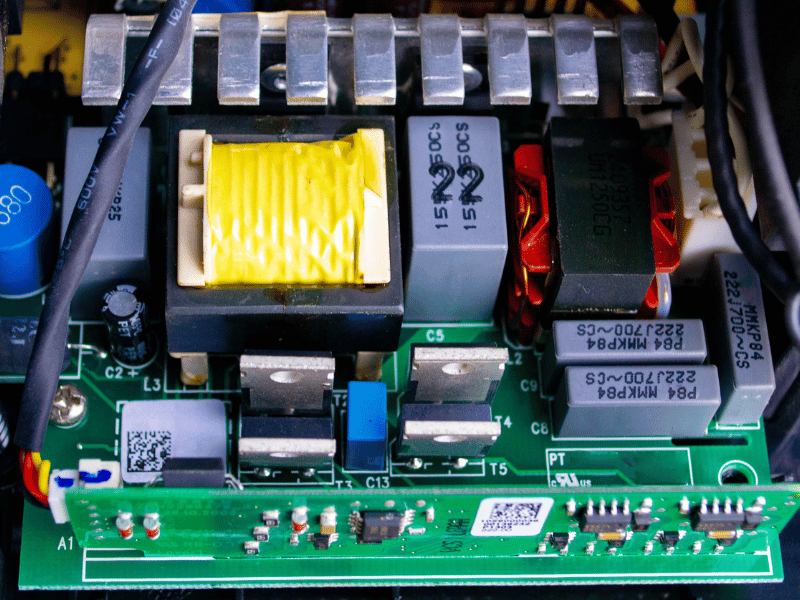
Normally, you will find electrolytic capacitors in the input and output stages of many power supplies. They are common, affordable, and useful for bulk energy storage.
Modern electrolytic capacitors are much better than older versions, but they still age faster than most other capacitor types. Their liquid electrolyte slowly degrades, especially under heat. This is why many failed power supplies show bulging or leaking electrolytic capacitors.
Ceramic Capacitor
Ceramic capacitors are smaller and usually last much longer than electrolytic types. They are often used for filtering high-frequency noise and stabilizing circuits.
They do not dry out like electrolytic capacitors, which is a major advantage. However, ceramic capacitors generally have lower capacitance values in many practical power supply roles, and some types can crack under mechanical stress.
Film Capacitor
Film capacitors are also known for long life and stable performance. They work well in applications that need reliability, low loss, and resistance to aging.
They are often larger and more expensive than other options, which is why they are not always used everywhere in a power supply. Still, when long-term durability matters, they are a strong choice.
2. Capacitor Maintenance
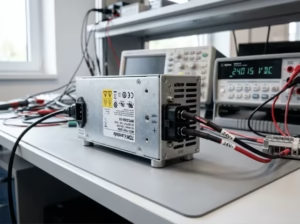
For power supply components, proper maintenance is important, especially in dusty, hot, or poorly ventilated environments. If not properly maintained, dirt buildup and blocked airflow can raise internal temperature. This can lower capacitor life and cause earlier failure. If you want to prolong the life of your capacitor, make sure the power supply stays clean and has enough ventilation.
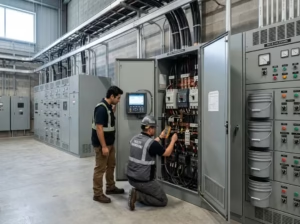
For a certain period of time, it also helps to inspect the unit for signs of stress such as bulging tops, leakage, corrosion, or discoloration around the capacitor area. In industrial systems, regular checks can help detect capacitor aging before the entire power supply fails.
3. Capacitor Usage
A capacitor’s life can also depend on its usage pattern. If a power supply runs near its voltage limit or handles high ripple current for long periods, the capacitor will wear out faster. Repeated charging and discharging under stress creates heat inside the part, and heat is one of the main causes of aging.
Power supplies that operate 24/7, face unstable loads, or work in demanding systems tend to shorten capacitor lifespan. On the other hand, if the capacitor is used below its rated limits and in a well-designed circuit, it can last much longer than expected.
4. Operating Temperature
As the capacitor’s life is strongly affected by temperature, you should take care when using power supplies in hot environments. To maximize capacitor life, make sure the unit has proper airflow and is not placed near strong heat sources. This is because many capacitors, especially electrolytic ones, lose their charge quickly as the temperature rises.
For one, a common rule of thumb is that every 10°C drop in operating temperature roughly doubles capacitor life. On the other hand, a constant high temperature can dry out the electrolyte much faster and reduce performance. To address this, some power supply manufacturers use heat sinks, cooling fans, better layouts, or higher-temperature-rated capacitors.
Wrapping Up
There you have it! In a nutshell, a capacitor in a power supply can last several years, depending on how the device is designed, used, and maintained. The type of capacitor you have can also be a major factor. If you choose a lower-cost power supply with cheaper capacitors, you may not get the same long-term reliability. As higher-quality electrolytic, ceramic, and film capacitors often deliver better performance, we highly recommend choosing a well-built power supply from the start.
If you want your capacitor to last longer, keep the power supply cool, avoid overloading it, and inspect it periodically for signs of wear. Small steps like proper ventilation and clean operating conditions can make a big difference in service life.
When you understand what affects a capacitor’s lifespan, it becomes much easier to prevent failure and plan for replacement before serious problems arise.