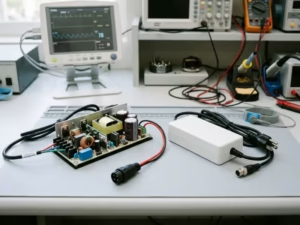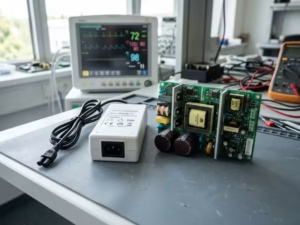
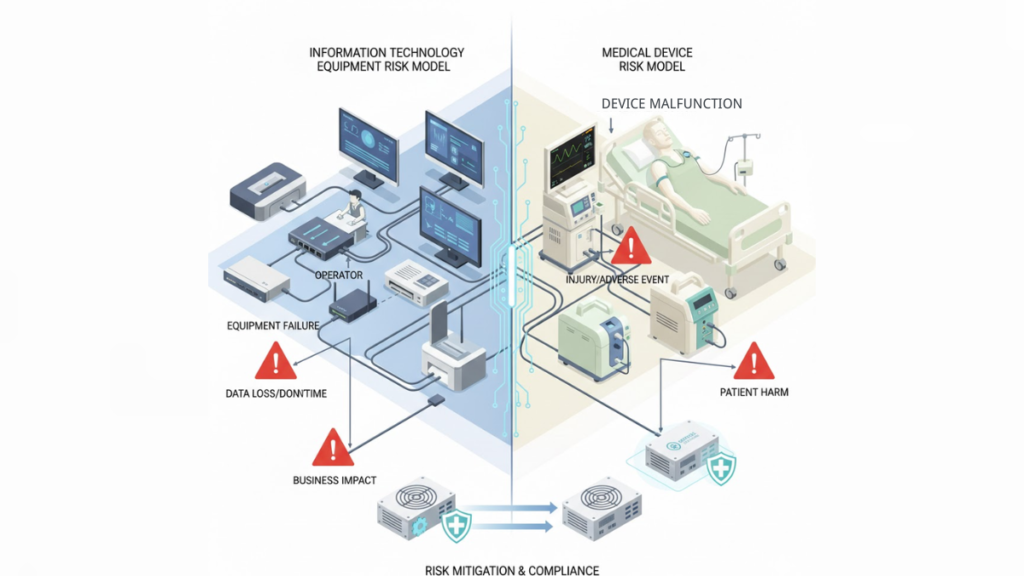
Choosing the right power supply is a critical decision when designing electronic equipment. For engineers, product designers, and OEM manufacturers, one of the most common questions is:
What is the difference between an ITE Power Supply and a Medical Power Supply?
Although both types of power supplies convert AC input voltage into stable DC output, they are designed for completely different safety environments, regulatory requirements, and risk levels.
Understanding the differences between ITE power supply vs medical power supply is essential for companies developing products for industries such as:
- Medical devices
- Healthcare equipment
- Industrial electronics
- Communication systems
- Consumer electronics
Medical power supplies must meet significantly stricter safety requirements because they may be used in environments where patients are directly connected to electronic equipment.
In contrast, ITE power supplies are designed primarily to protect equipment and operators in commercial or office environments.
This guide explains:
- What an ITE power supply is
- What a medical power supply is
- Key international safety standards
- Leakage current limits
- Isolation requirements (2×MOPP)
- Engineering design considerations
- Real-world applications
- How to choose the correct power supply
By the end of this guide, you will clearly understand how to select the right power supply for your product.
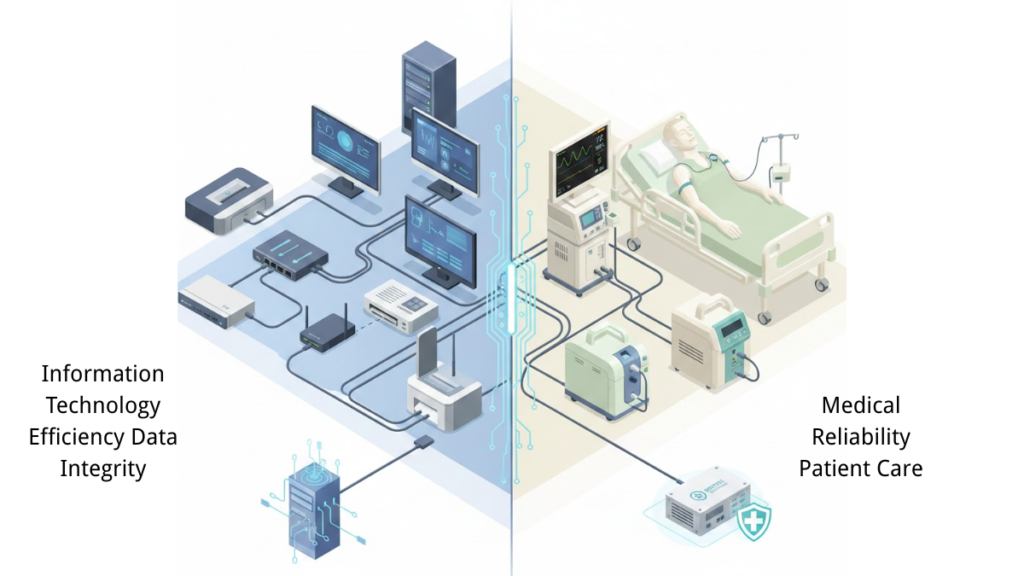
What Is an ITE Power Supply?
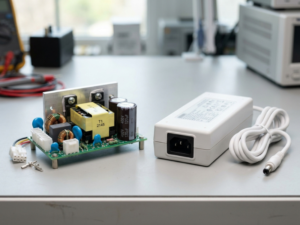
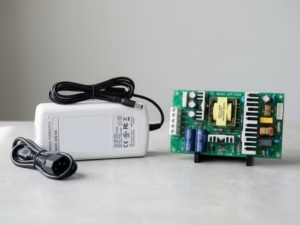
An ITE Power Supply (Information Technology Equipment Power Supply) is designed to power electronic devices used in IT and communication systems.
These power supplies are commonly used in:
- Network routers
- Ethernet switches
- Desktop computers
- POS systems
- LCD displays
- Office electronics
- Communication devices
ITE power supplies focus primarily on equipment protection, electrical safety, and operational reliability.
Unlike medical power supplies, they are not designed for patient-contact environments.
Typical Features of ITE Power Supplies
ITE power supplies typically offer:
- Universal AC input (100–240V)
- Standard insulation design
- Moderate leakage current limits
- High efficiency
- Cost-effective manufacturing
- Compliance with IEC 62368-1 safety standards
They are widely used because they provide stable performance and cost-efficient power solutions for mass electronics production.
Learn more about ITE power adapters
What Is a Medical Power Supply?
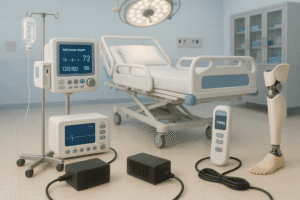
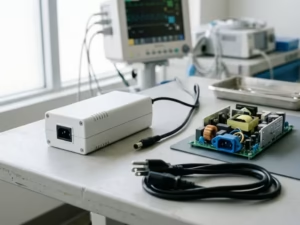
A Medical Power Supply is designed specifically for medical electrical equipment where patient safety is critical.
These power supplies must comply with strict international safety standards to ensure electrical energy does not pose risks to patients.
Typical applications include:
- Patient monitors
- Infusion pumps
- Ventilators
- Ultrasound equipment
- Portable diagnostic devices
- Medical imaging systems
Because patients may be connected to these devices through sensors, electrodes, or probes, the electrical safety requirements are far more stringent than those for standard IT equipment.
Key Features of Medical Power Supplies
Medical power supplies typically include:
- Ultra-low leakage current
- Reinforced insulation
- 2×MOPP patient protection
- Strict EMC compliance
- High reliability design
- Long lifecycle components
These features ensure medical equipment can operate safely even during continuous monitoring or fault conditions.
Explore medical-grade power supplies
Need Help Choosing the Right Power Supply?
If you are developing electronic or medical equipment, selecting the correct power supply is critical for safety certification and long-term reliability.
Our engineering team can help you:
✔ Select the correct ITE or medical power adapter
✔ Ensure IEC 60601-1 or IEC 62368-1 compliance
✔ Customize power solutions for your equipment
Contact our engineering team for technical consultation
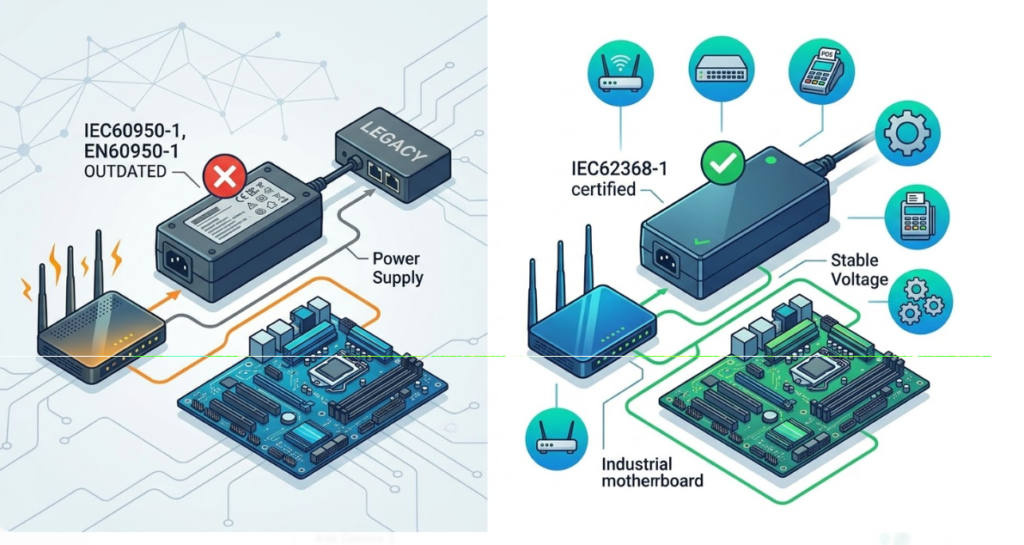
Power Supply Safety Standards
One of the most important differences between ITE power supplies and medical power supplies lies in the safety standards they must meet.
ITE Power Supply Standard
ITE devices must comply with:
IEC 62368-1
This modern safety standard replaced older IT equipment standards such as:
- IEC 60950-1
- IEC 60065
IEC 62368-1 uses a hazard-based safety engineering approach that focuses on preventing energy sources from causing harm.
Medical Power Supply Standard
Medical equipment must comply with:
IEC 60601-1
This standard defines strict safety requirements for medical electrical equipment.
It includes requirements for:
- Patient protection
- Leakage current limits
- Electrical isolation
- Mechanical safety
- Risk management
Additional related standards include:
- IEC 60601-1-2 (EMC requirements)
- IEC 60601-1-11 (home healthcare equipment)
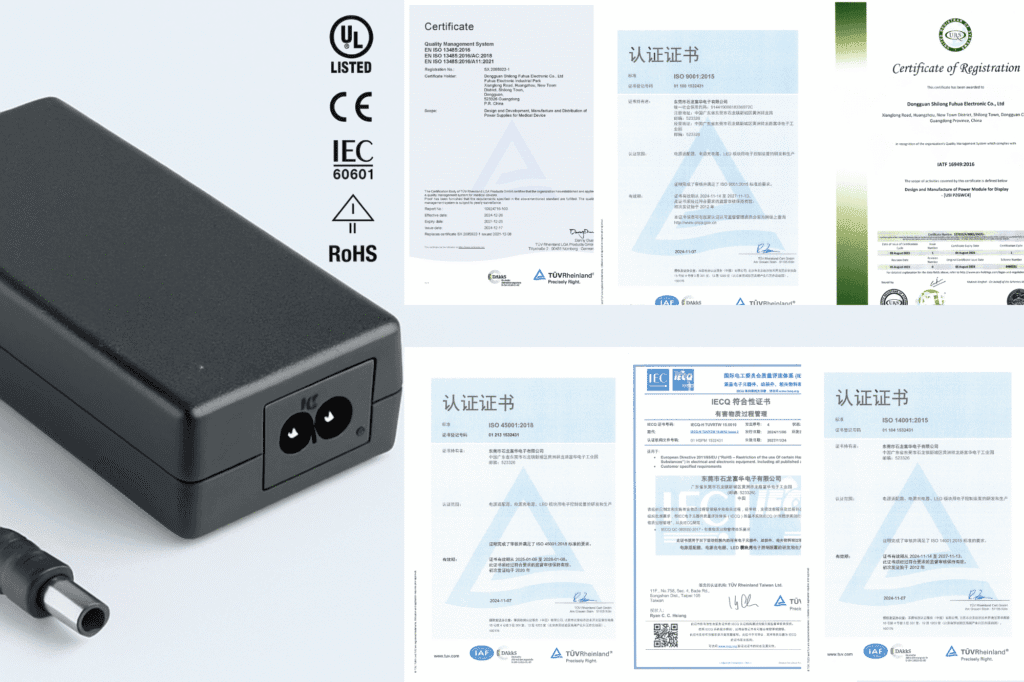
ITE Power Supply vs Medical Power Supply: Key Differences
The differences between these two power supply types can be summarized as follows.
| Feature | ITE Power Supply | Medical Power Supply |
| Main Standard | IEC 62368-1 | IEC 60601-1 |
| Leakage Current | Up to ~3.5 mA | Typically <100 µA |
| Insulation | Standard | Reinforced |
| Protection | Operator safety | Patient safety |
| Certification | Moderate | Strict |
| Cost | Lower | Higher |
The most important distinction is patient protection.
Medical power supplies must remain safe even if multiple faults occur simultaneously.
Leakage Current Requirements
Leakage current is a small amount of electrical current that unintentionally flows from a device to ground.
In IT equipment this is typically harmless.
However, in medical devices even tiny electrical currents can affect human physiology.
Typical Leakage Limits
| Power Supply Type | Typical Leakage Limit |
| ITE power supply | ≈ 3.5 mA |
| Medical power supply | ≈ 100 µA |
This is why medical power supplies must include additional insulation and isolation layers.
Understanding 2×MOPP Protection
Medical power supplies must provide Means of Patient Protection (MOPP).
Two protection categories exist:
MOOP – Means of Operator Protection
MOPP – Means of Patient Protection
Most medical devices require 2×MOPP, which means two independent protection barriers.
This ensures that even if one insulation barrier fails, the patient remains protected.
How to Choose Between ITE and Medical Power Supplies
Engineers often need to determine which type of power supply is suitable for their equipment.
The following table provides a practical selection guide.
| Application Scenario | Recommended Power Supply | Reason |
| Network routers | ITE Power Supply | No patient contact |
| Industrial control systems | ITE Power Supply | Standard electrical safety |
| Patient monitors | Medical Power Supply | Direct patient connection |
| Infusion pumps | Medical Power Supply | Strict leakage limits |
| Home healthcare devices | Medical Power Supply | IEC 60601-1-11 required |
Selecting the correct power supply early in the design stage can prevent costly certification delays.
Engineering Design Considerations
Designing a compliant power supply requires careful engineering.
Key considerations include:
- Creepage distance
- Clearance distance
- Isolation voltage
- EMI / EMC compliance
- Thermal management
- Reliability testing
Medical equipment must also follow risk management procedures defined by ISO 14971.
How to Choose a Reliable Power Supply Manufacturer
For OEM manufacturers, selecting the right supplier is just as important as choosing the correct power supply type.
| Evaluation Factor | Why It Matters |
| IEC certification | Required for global market access |
| 2×MOPP isolation design | Critical for patient safety |
| Leakage current control | Prevent electrical hazards |
| EMC compliance | Pass medical device certification |
| Long lifecycle components | Ensure product reliability |
| OEM customization capability | Support device development |
Working with an experienced manufacturer can significantly simplify certification and product development.
Looking for a Reliable Medical Power Supply Manufacturer?
Our engineering team supports OEM medical device manufacturers worldwide.
We can help you:
✔ Select compliant power adapters
✔ Ensure IEC 60601-1 certification
✔ Customize power solutions for your equipment
Request a quotation within 24 hours

Real-World Application Examples
Example 1: Network Router
Routers typically use ITE power supplies.
Typical specifications:
Input: 100–240V AC
Output: 12V DC
Certification: IEC 62368-1
Example 2: Patient Monitor
Patient monitors require medical power supplies.
Typical features:
- IEC 60601-1 certification
- 2×MOPP isolation
- Ultra-low leakage current
These protections ensure patient safety during continuous monitoring.
Common Mistakes When Selecting Power Supplies
Many engineers make mistakes when choosing power supplies.
Common issues include:
- Using ITE adapters in medical devices
- Ignoring leakage current limits
- Selecting insufficient isolation levels
- Overlooking EMC compliance
Choosing the correct power supply early in product development can prevent expensive certification delays.
Future Trends in Medical Power Supplies
The medical power supply industry is evolving rapidly.
Important trends include:
- Higher efficiency designs
- Compact power modules
- GaN semiconductor technology
- Increased power density
- Intelligent monitoring systems
These technologies help manufacturers build smaller, more efficient medical devices.
People Also Ask
Can an ITE power supply be used in medical equipment?
Generally no. Medical equipment must comply with IEC 60601-1 safety standards.
Why are medical power supplies more expensive?
They require stricter certification, stronger insulation, and lower leakage current.
What does 2×MOPP mean?
It means two independent insulation barriers that protect patients from electrical shock.
What voltage outputs are common in medical power supplies?
Common outputs include: 12V、15V、24V、48V
Need a Reliable Medical or ITE Power Supply?
Quankang is a professional manufacturer specializing in ITE power adapters and medical-grade power supplies.
Our solutions include:
- IEC 60601-1 certified medical power supplies
- IEC 62368-1 ITE adapters
- Custom AC-DC power solutions
- OEM / ODM design services
Quankang power supplies are widely used in:
- Medical devices
- Industrial electronics
- Communication equipment
- Smart hardware systems