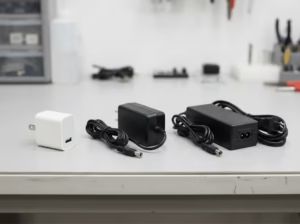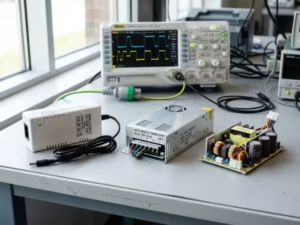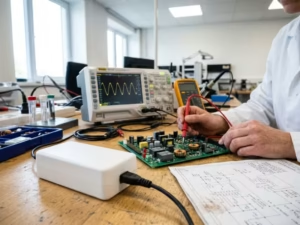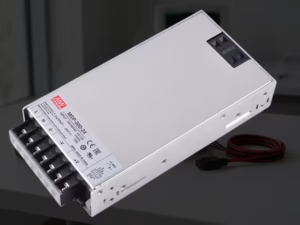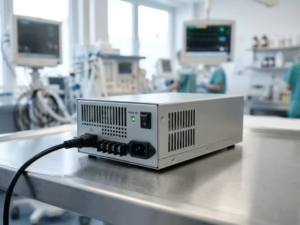
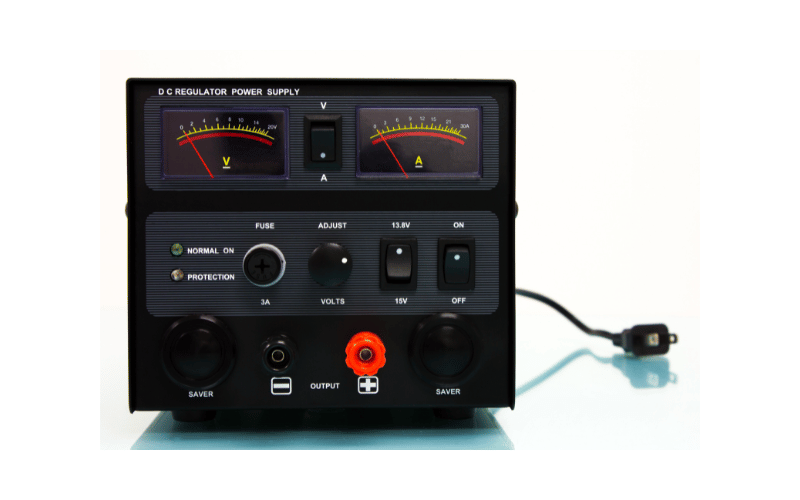
A regulated power supply is an embedded system or a stand-alone unit that delivers a steady and reliable direct current (DC) or alternating current (AC) voltage to connected electronic devices. In contrast to an unregulated power supply, a regulated power supply delivers a precise output even when input voltage or load current changes. This is accomplished by special internal circuitry that continually adjusts output level by controlling internal resistance or switching structures. Unregulated power supplies are designed to keep the delivered voltage within a very small tolerance. Because of their vital role in supplying energy to electronic devices, unregulated power supplies are the basic power source for all modern devices, from simple to complex.
All electronic devices need a regulated power supply to function. Unregulated power supplies can severely damage electronic components, such as microprocessors and memory devices. If the voltage is unregulated and is below the required voltage level, the electronic component will reset, lose memory, and possibly stop functioning. If the voltage exceeds the required level, the electronic components will be damaged or destroyed. Regulated power supplies are used to eliminate the severe effects of significant voltage spikes from standard battery services. Regulated power supplies are designed to absorb and compensate for the effects of a fired battery supply, protecting electronic components. The unregulated power supplies used in electronic devices are designed to prolong the life of the electrical component. Regulated power supplies protect electronic components from failure.
Types of regulated power supplies
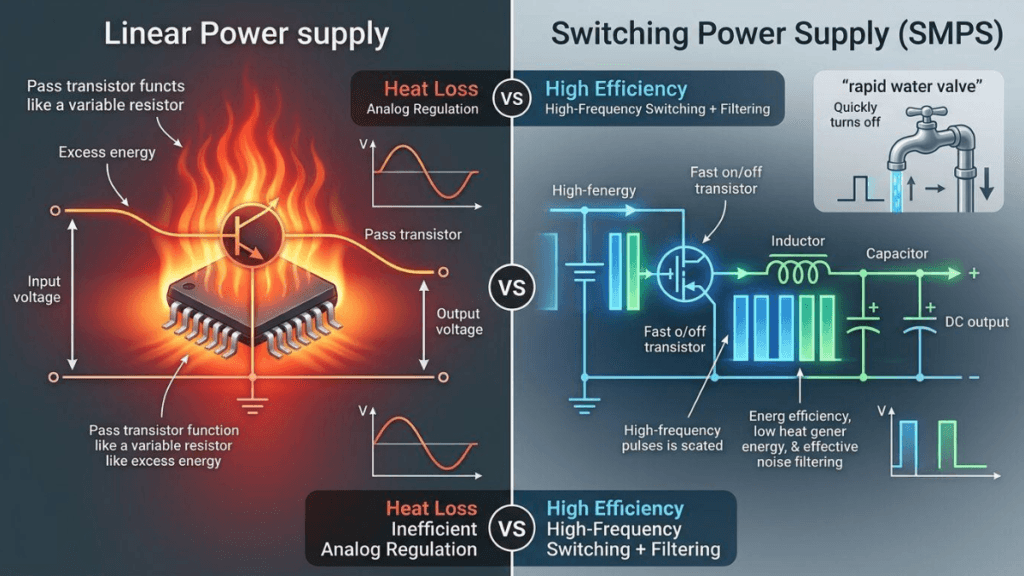
Among power supply designs, linear power supplies are the least complex. Their operation begins with an AC power supply. This supply is sent through a transformer to reduce its amplitude. After this, the power is sent through a bridge rectifier circuit, which then supplies a pulsed DC current. To attain a regulated output, linear power supplies utilize transistors as pass elements that operate in the linear region, dissipating power as heat. During operation, the power supply maintains the desired output by adjusting the voltage drop across the pass element. As a result, regulated linear power supplies output a nearly constant DC output. Compared with switching power supplies, linear power supplies operate with very little to no electrical noise. This makes linear power supplies more appropriate for use in sensitive functions.
Switching power supplies (also known as switched-mode power supplies (SMPS)) are more complex, but offer more advantages than linear power supplies. For operation, SMPS utilizes a form of high-frequency chopping. This entails switching the supply on and off multiple times (typically 10 to 100 times a second). This form of operation breaks the input energy into multiple smaller packets. To generate a stable DC output, the supply uses a transformer as an intermediate storage element and a combination of capacitors and inductors for smoothing. In this operating mode, the supply draws a much more stable input energy than linear power supplies.
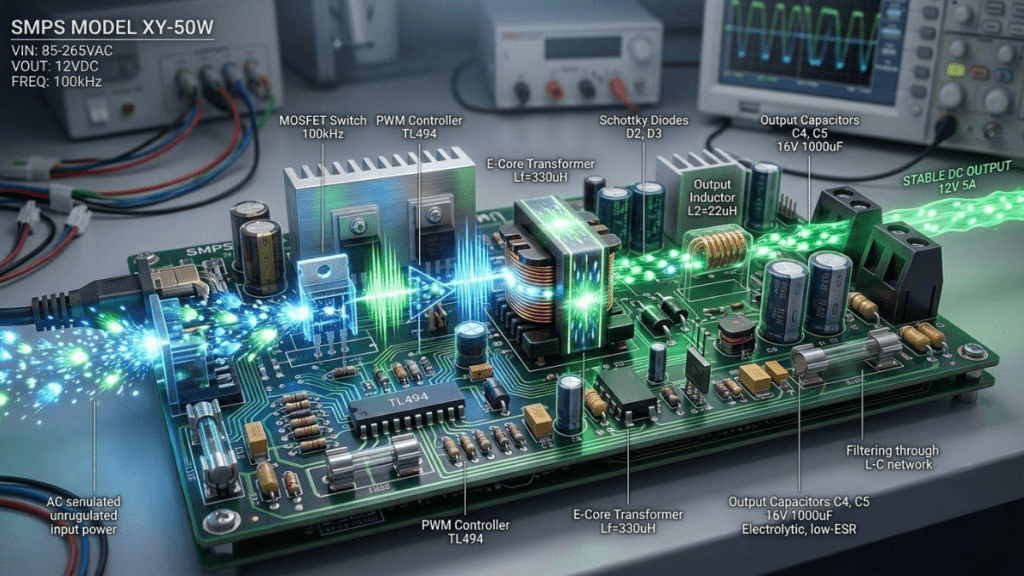
Efficiency, cost, and other requirements often determine whether a linear or switching power supply is the best option. Linear power supplies are considerably less efficient, converting only 40 to 60 percent of the energy input into output energy, with the rest wasted as heat. The waste means larger coolers and heat sinks are required, with larger transformers, which also adds weight and bulk. However, they also mean lower costs and allow low-noise power. This makes linear power supplies ideal for medical equipment, audio amplifiers, and laboratory test equipment. Switching power supplies achieve 80 to 95 percent efficiencies and are also more compact. Though they are more expensive to design and build and often generate EMI at higher frequencies, they are used extensively in consumer electronics, computers, and industrial power systems.
Hybrid power supply designs are particularly useful for highly specialized applications, showing both linear and switching technologies. In a hybrid configuration, a switching regulator serves as the first stage, rapidly reducing the input voltage to just above the desired output level. A linear regulator serves as the second stage, removing high-frequency switching noise and the output voltage ripple before supplying it to the load. This two-stage system combines the size and efficiency of the switching supply with the ultra-low-noise output of the linear supply. Hybrid systems are especially used in advanced telecommunications, precision measurement instruments, and high-end aerospace electronics, where both efficiency and communication signal clarity are critical.
How regulated power supplies work
Voltage regulation is the fundamental process of maintaining a constant output voltage regardless of changes in the input voltage from the power source or changes in the load current demanded by the connected device. Without precise regulation, fluctuations in the power grid or variations in how much power a device draws could cause wild swings in the delivered voltage. This instability can lead to erratic device behavior, hardware lockups, or severe physical damage to sensitive semiconductor components. By employing active voltage regulation, a power supply ensures that the delicate internal circuits of computers, medical devices, and communication arrays receive the exact electrical parameters they need to function safely and predictably at all times.
Feedback mechanisms are the brain behind a regulated power supply, acting as a continuous monitoring and correction system to maintain output stability. The power supply continuously measures its own output voltage and feeds a portion of this signal back to an internal control circuit. This control circuit compares the actual output voltage against a highly stable, predetermined reference voltage. If the load suddenly draws more current, causing the output voltage to dip slightly, the feedback loop detects the difference and instantly signals the regulating components to let more power through. Conversely, if the voltage begins to climb, the feedback loop triggers the system to restrict the power flow. This real-time, closed-loop adjustment happens thousands of times per second.
The transformation, rectification, and filtering of power rely on three key physical components: transformers, rectifiers, and capacitors. The transformer sits at the front end of the process, magnetically stepping down the dangerous high-voltage AC from the wall outlet to a safer, lower AC voltage. Next, the rectifier—typically constructed from an arrangement of diodes—steps in to convert this alternating current into direct current by flipping the negative halves of the AC wave into positive ones. However, this newly created DC power is highly pulsating and uneven. Capacitors act as energy reservoirs to smooth out these pulsations, absorbing electrical energy during the peaks of the waveform and discharging it during the valleys, resulting in a much steadier power flow for the regulation stage.
While both linear and switching designs aim for the same goal of stable voltage, their working principles differ drastically in execution. A linear power supply essentially acts like a variable, continuously adjusting resistor; it takes a higher input voltage and drops it to the desired output level, dissipating the difference as heat. This is a continuous, smooth process. A switching power supply, on the other hand, acts like a rapid water valve. It turns the power fully on and off thousands of times per second, controlling the exact amount of energy delivered to the output by varying how long the “valve” stays open during each cycle. This digital-like chopping technique avoids the massive heat dissipation of linear designs but requires intense filtering to remove the resulting electronic noise.
Key components of regulated power supplies
Transformers are indispensable components in most regulated power supplies, primarily responsible for voltage conversion and electrical isolation. They consist of two coils of wire wrapped around a magnetic core. When AC power flows through the primary coil, it generates a fluctuating magnetic field that induces a corresponding voltage in the secondary coil. By varying the number of wire turns between the two coils, a transformer can effectively “step down” the high voltage from a standard electrical grid to a much lower voltage suitable for electronic devices. Additionally, transformers provide critical galvanic isolation, creating a physical barrier between the dangerous high-voltage input and the delicate low-voltage output, thereby protecting both the connected electronics and human users from electric shock.
Rectifiers serve the critical function of converting alternating current (AC), which constantly reverses direction, into direct current (DC), which flows in only one direction. The most common configuration is the bridge rectifier, which uses four diodes arranged in a specific pattern. Diodes are semiconductor devices that act as one-way valves for electricity. As the AC voltage fluctuates between positive and negative, the bridge rectifier effectively rectifies the current so that the negative halves of the AC waveform are inverted, resulting in a continuous stream of positive voltage pulses. Without this essential conversion step, the subsequent electronic components and the end devices would be unable to function, as almost all microprocessors, logic boards, and digital circuits require a strict DC power source.
Capacitors and inductors work together to perform the essential task of smoothing and filtering the raw, pulsating DC voltage produced by the rectifier. Capacitors store energy in an electrostatic field and act like a buffer; they charge up when the voltage pulses high and release their stored energy when the voltage dips, effectively filling in the gaps and flattening the power curve. Inductors, on the other hand, store energy in a magnetic field and resist sudden changes in current flow. When placed in the circuit, an inductor chokes off high-frequency noise and sudden voltage spikes. Together, these two components filter out the residual AC ripple and switching noise, ensuring that the final output is a clean, steady, and flat DC voltage.
Applications of regulated power supplies
Consumer electronics form one of the largest and most visible application areas for regulated power supplies. Devices such as desktop computers, laptops, televisions, and gaming consoles rely entirely on these power supplies to convert erratic wall power into the precise voltages required by delicate microchips. In a desktop computer, for example, the internal power supply unit simultaneously delivers heavily regulated 3.3V, 5V, and 12V streams to power the motherboard, processor, hard drives, and cooling fans. Smart home devices, mobile phone chargers, and audio systems also utilize compact regulated power supplies to ensure that audio signals remain free of interference and that internal batteries charge safely without risk of overheating or chemical degradation.
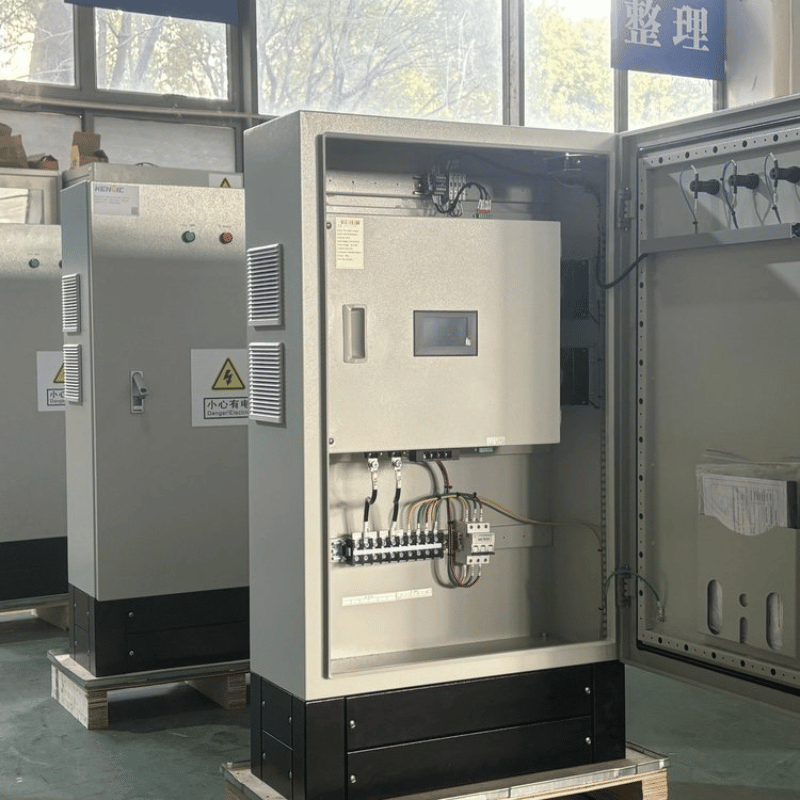
Industrial applications demand a different tier of regulated power supplies, prioritized for ruggedness, extreme reliability, and high power output. In factory automation and robotics, power supplies drive programmable logic controllers (PLCs), motor drives, and vast arrays of sensors that dictate the manufacturing process. These environments are notorious for electrical noise, voltage sags, and heavy machinery drawing massive power spikes. Industrial-grade power supplies are built to withstand harsh conditions, providing clean, uninterrupted power to control systems so that a robotic arm does not miss a precise millimeter of movement due to a voltage drop. They also power essential infrastructure like water treatment facilities, telecommunications hubs, and heavy transit control grids.
Critical applications in healthcare and aerospace highlight the absolute necessity of flawless voltage regulation, where failure can directly result in the loss of human life. In hospitals, life-support machines, MRI scanners, and patient monitoring systems use specialized medical-grade regulated power supplies that feature ultra-low leakage current and extreme isolation to protect patients from electrical shock. In aerospace and aviation, power supplies must deliver pristine energy to navigation arrays, flight control computers, and communication systems while surviving extreme temperature fluctuations, high vibration, and intense cosmic radiation. These highly specialized power supplies employ extensive redundancy and hybrid regulation designs to ensure that a spacecraft or commercial jet maintains continuous operational capability regardless of internal power fluctuations.
Benefits of regulated power supplies
One of the primary advantages of using regulated power supplies is the dramatic improvement in device longevity and overall operational reliability. Electronic components, particularly modern semiconductors and microprocessors, degrade rapidly when exposed to voltages outside of their specified operating range. Chronic undervoltage can cause systems to work harder and generate excess heat, while chronic overvoltage forces components to handle energy levels they were not designed for, slowly burning out microscopic pathways. By holding the output voltage precisely steady, regulated power supplies eliminate this electrical stress. This ensures that the internal components of your devices operate comfortably within their intended parameters, significantly extending hardware lifespan and reducing the frequency of costly repairs or full system replacements.
Enhanced performance and reduced electrical noise are also major benefits, particularly in systems where signal integrity is paramount. In audio and video production equipment, any variation or “ripple” in the power supply manifests directly as audible humming, static, or visual artifacts on a screen. Regulated power supplies—especially linear and hybrid models—filter out this high-frequency noise and AC ripple, providing a perfectly clean energy baseline. This clean power allows sensitive analog-to-digital converters, scientific measurement instruments, and high-fidelity audio amplifiers to perform at their absolute peak efficiency without interference. Consequently, the data collected is more accurate, the sound produced is clearer, and the device’s overall functionality reaches its maximum engineered potential.
Furthermore, regulated power supplies offer robust protection against external voltage fluctuations and dangerous power surges. The power supplied by municipal grids is rarely perfectly stable; it is subject to brownouts, sudden spikes from lightning strikes, and fluctuations caused by heavy machinery turning on and off in the neighborhood. Regulated power supplies act as an impenetrable electrical firewall against these anomalies. If a massive surge hits the input, the regulation circuitry clamps down to ensure the output voltage to the connected device does not spike. If the input voltage drops significantly, the power supply adjusts its internal switching or resistance to boost the output back to normal levels, keeping your critical systems safely insulated from the chaos of the raw power grid.
Challenges and limitations
Despite their immense benefits, regulated power supplies face significant challenges due to the high costs of designing and manufacturing high-quality units. Precision components, such as high-grade capacitors, heavy copper transformers, and advanced silicon control chips, are expensive to produce and source. Furthermore, creating a power supply that meets strict medical, industrial, or aerospace standards requires extensive testing, certification, and the inclusion of redundant safety circuits, all of which drive up the final price. For manufacturers trying to build budget-friendly consumer devices, the expense of implementing a top-tier regulated power supply often represents a disproportionately large percentage of the total material cost, forcing difficult compromises between ultimate reliability and retail affordability.
Efficiency trade-offs remain a persistent limitation, particularly when deploying linear power supply designs. Because linear regulators operate by dissipating excess input voltage as heat to achieve the desired output, their efficiency is intrinsically tied to the difference between the input and output voltages. If a system requires a 5V output from a 24V input, a substantial amount of power is simply wasted as heat. This inefficiency not only drives up electricity consumption but also necessitates the inclusion of large, heavy metal heat sinks and sometimes active cooling fans to prevent the unit from melting itself. This makes linear designs entirely unsuitable for battery-powered or compact, enclosed devices where space and energy conservation are critical.
Complexity and electromagnetic interference (EMI) issues present the primary challenges for switching power supplies. While SMPS designs solve the efficiency problem of linear regulators, their operational method of rapidly turning high currents on and off creates severe electrical noise and radio frequency interference. If left unmanaged, this EMI can leak from the power supply and disrupt the operation of nearby electronic devices or corrupt data within the device it powers. Overcoming this requires highly complex circuit board layouts, heavy metal shielding, and multiple stages of sophisticated inductor and capacitor filtering. This added complexity makes switching power supplies much harder to design, troubleshoot, and repair compared to their simpler linear counterparts.
Innovations in regulated power supplies
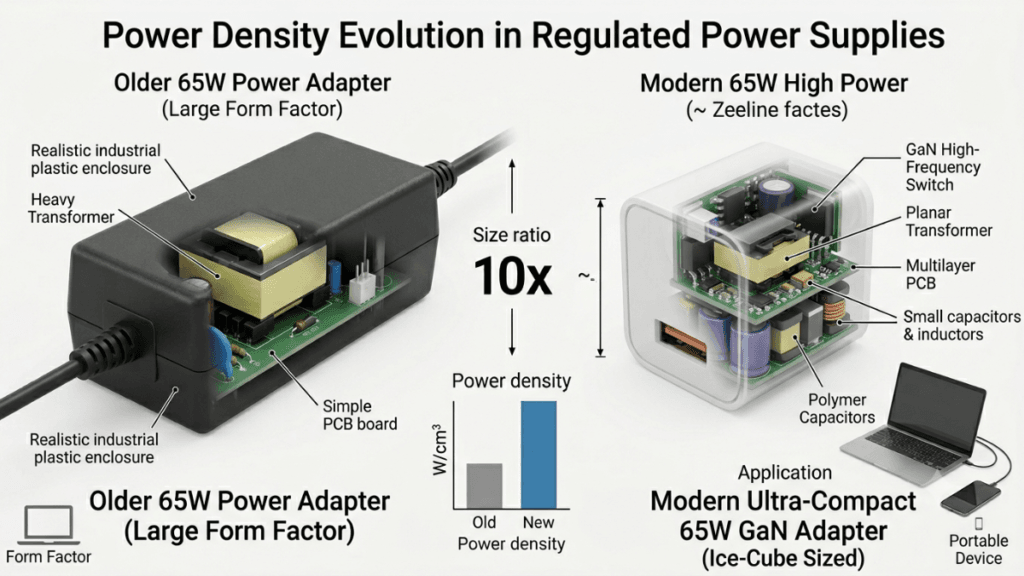
The introduction of Gallium Nitride (GaN) and Silicon Carbide (SiC) semiconductor technologies represents the most significant breakthrough in power supply efficiency in decades. For years, traditional power supplies relied on standard silicon transistors, which face hard physical limits on how fast they can switch and how much heat they generate. GaN and SiC are wide-bandgap materials that allow electrons to move much more freely, enabling transistors to switch on and off at vastly higher frequencies with almost zero resistance. This massive reduction in energy loss means power supplies generate significantly less heat, allowing manufacturers to drastically increase the efficiency rating of the units while simultaneously shrinking the size of the necessary heat sinks and cooling components.
Smart power supplies with deep Internet of Things (IoT) integration are transforming the way facilities manage energy consumption and device health. Modern regulated power supplies are no longer just passive energy delivery boxes; they are equipped with microprocessors and network connectivity. These smart units can continuously monitor their internal temperature, output voltage, load current, and overall operating efficiency, transmitting telemetry data in real time to centralized cloud dashboards. Facility managers can remotely adjust voltage outputs, schedule power cycles, and receive automated alerts if a power supply begins to show signs of component wear. This predictive maintenance capability prevents unexpected downtime and allows for highly optimized, dynamic energy distribution across massive data centers and industrial floors.
The push for miniaturization and higher-power-density designs continues to shape the physical evolution of regulated power supplies. As consumer devices like laptops, smartphones, and medical implants become thinner and more compact, the power supplies driving them must shrink accordingly. Engineers are leveraging the high-frequency switching capabilities of GaN technologies, combined with advanced planar transformers and multi-layer printed circuit boards, to pack unprecedented amounts of power into microscopic footprints. Today, a power adapter no larger than a standard ice cube can safely deliver 65 watts of heavily regulated power—a feat that would have required a heavy, brick-sized unit just a decade ago. This relentless pursuit of power density enables the continuous advancement of portable technology.
Safety considerations
The importance of overvoltage and overcurrent protection within regulated power supplies cannot be overstated, as these mechanisms are the primary defense against catastrophic device failure and fire. Overvoltage protection (OVP) actively monitors the output; if an internal component fails and causes the voltage to spike above a safe threshold, the OVP circuit instantly shuts down the supply or shorts the output to ground to save the connected device. Similarly, overcurrent protection (OCP) tracks the amperage being drawn by the load. If a connected device short-circuits and attempts to pull a massive amount of current, the OCP steps in to throttle the power or trip an internal breaker, preventing the wires from melting and the power supply from destroying itself.
Compliance with rigorous safety standards, such as those established by Underwriters Laboratories (UL), the Conformité Européenne (CE), and the International Electrotechnical Commission (IEC), is mandatory in power supply manufacturing. These global regulatory bodies dictate strict rules regarding the physical spacing of high-voltage components on the circuit board to prevent electrical arcing, the quality of the insulation used in the transformers, and the exact limits of allowable electromagnetic interference. Achieving a UL or CE certification involves subjecting the power supply to extreme stress tests, including high-voltage surges, thermal baking, and physical drop tests. This compliance ensures that the power supply will not pose a shock hazard or interfere with public communication networks.
Thermal management and fire safety are critical design pillars, as all power supplies inevitably generate heat during voltage conversion. If this thermal energy is not properly dissipated, internal temperatures can quickly exceed the solder’s melting point or the plastic housing’s ignition point. Engineers mitigate this risk through careful thermal design, incorporating extruded aluminum heat sinks, thermally conductive potting compounds, and, in high-power units, active cooling fans. Furthermore, safety regulations require the use of flame-retardant plastics and specialized components such as thermal fuses, which permanently sever the power connection if the internal temperature reaches a critical level, ensuring the device fails safely without starting a fire.
Maintenance and troubleshooting
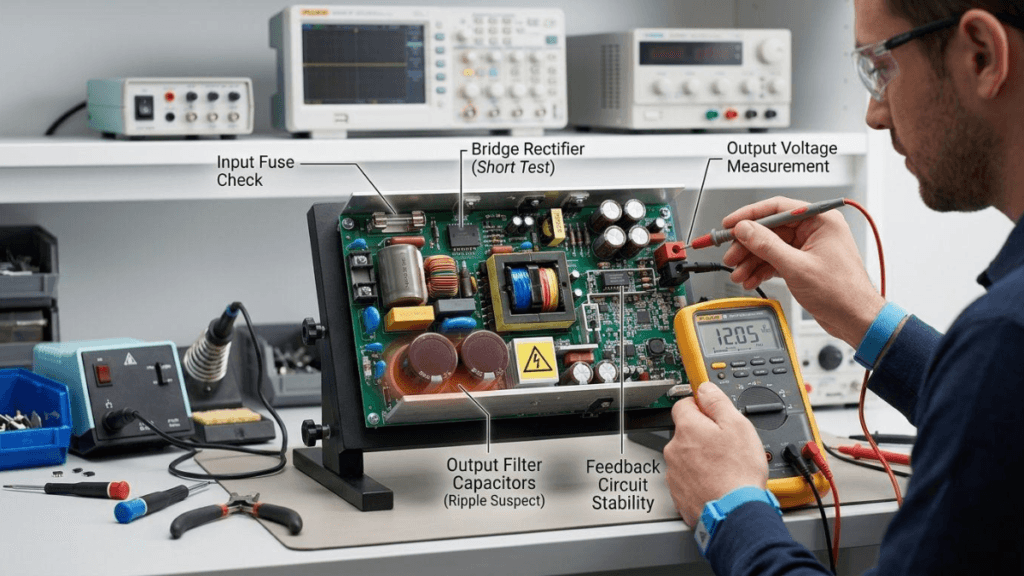
Routine maintenance practices are essential for keeping regulated power supplies operating at peak efficiency and preventing sudden failures. Because power supplies generate heat and often rely on cooling fans, they attract dust and other environmental debris. Regularly scheduling downtime to use compressed air to clear dust from the fan blades, ventilation grilles, and internal heat sinks helps maintain thermal insulation and ensures proper airflow. Additionally, a routine visual inspection should be conducted to check for swollen or leaking electrolytic capacitors, scorched circuit board traces, or loose connection terminals. Ensuring that the operating environment remains cool, dry, and free of corrosive airborne chemicals will also significantly extend the unit’s operational life.
Identifying common issues and their symptoms is the first step in diagnosing a failing regulated power supply. One of the most frequent symptoms is unexpected device resets or erratic behavior, which usually indicates that the power supply is experiencing voltage droop under heavy load, likely due to aging capacitors losing their ability to hold a charge. Another common issue is overheating, where the unit becomes excessively hot to the touch; this indicates a failed cooling fan or a severe dust buildup. Additionally, if a switching power supply begins emitting a high-pitched whining or buzzing noise, it often signifies that the internal transformer coils are vibrating loose or that the feedback loop is struggling to maintain the correct switching frequency.
When troubleshooting and repair steps are necessary, they must be approached with extreme caution, as power supplies can retain lethal high-voltage charges in their capacitors long after being unplugged. The troubleshooting process typically begins by using a digital multimeter to measure the output voltage and verify that it matches the specified rating under both idle and load conditions. If the output is dead, technicians will check the input fuse and the bridge rectifier for shorts. If the voltage is present but fluctuating, the feedback circuitry and output filter capacitors are the prime suspects. Due to the low cost of modern switching supplies and the severe safety risks involved, a total replacement is often recommended rather than attempting to replace individual microscopic surface-mount components.
Future trends in power supply technology
The increased adoption of renewable energy sources is fundamentally reshaping the design architecture of future regulated power supplies. As the world transitions toward solar panels, wind turbines, and massive, localized battery storage arrays, power supplies must adapt to handle highly variable, bidirectional energy flows. Traditional grid power is a steady AC stream, but renewable sources often generate highly fluctuating DC power. Future regulated power supplies are being engineered to seamlessly accept these varied, intermittent DC inputs directly, regulating them efficiently without the need to first convert them to AC and back again. This direct DC-to-DC regulation greatly reduces energy conversion losses, making entire localized microgrids much more efficient and practical for both residential and industrial applications.
AI-driven power management systems represent the next major evolutionary leap in power supply technology. Rather than relying on static, hardwired feedback loops, next-generation power supplies will feature onboard neural networks and machine learning algorithms. These AI systems will continuously analyze the exact power-draw patterns of the connected devices, predicting when heavy loads are imminent based on historical usage data. By anticipating these shifts, the AI can adjust the power supply’s switching frequency and output voltage in advance, ensuring absolute stability before a voltage drop can even begin. Furthermore, AI will dynamically route power to different sections of a circuit board to maximize efficiency and proactively alert technicians to impending hardware failures days before they occur.
A relentless focus on sustainability and energy efficiency will drive the regulatory and manufacturing standards for all future power supply developments. With global electricity consumption rising rapidly, governments and environmental agencies are enforcing much stricter efficiency mandates, pushing towards the “80 Plus Titanium” standard and beyond, demanding 96 percent or higher efficiency under all load conditions. Manufacturers are responding by moving away from toxic materials and focusing on highly recyclable chassis designs and biodegradable circuit board substrates. The ultimate goal of this future trend is to create ultra-efficient power architectures that draw less energy from the grid, generate zero excess heat, and leave a minimal environmental footprint from their initial manufacturing to their eventual disposal.
History of regulated power supplies
The history of regulated power supplies closely mirrors the overall history of modern electronics, evolving from massive, inefficient machines to the microscopic powerhouses of today.
Early designs and their limitations
In the early 20th century, electronic devices such as vacuum-tube radios and early telegraph systems relied heavily on massive, heavy batteries to provide stable DC power. When engineers began plugging these devices into the newly established AC electrical grid, they used basic unregulated rectifiers. These early designs simply converted AC to DC but offered no protection against grid fluctuations, meaning a dip in the city’s power would cause radios to lose volume or early computers to calculate incorrectly. They were also notoriously dangerous and generated extreme amounts of heat.
Evolution of linear and switching technologies
By the 1950s, the invention of the solid-state transistor allowed for the creation of the first true linear regulated power supplies. These units could finally provide the ultra-stable voltage needed by sensitive laboratory equipment and early mainframe computers, though they remained massive and highly inefficient. The real breakthrough came in the 1970s with the commercialization of the switched-mode power supply (SMPS). Driven by the aerospace industry’s need for lightweight electronics and later adopted by companies like Apple for personal computers, SMPS technology revolutionized the industry by offering small, lightweight, and highly efficient power delivery.
Milestones in modern power supply innovation
- 1920s: Early use of vacuum tube rectifiers to convert AC to DC for commercial radio sets.
- 1958: Development of the first commercial linear voltage regulators using germanium transistors.
- 1977: Apple introduces the Apple II, featuring a custom-designed, highly compact switched-mode power supply designed by Rod Holt, popularizing SMPS in consumer electronics.
- 1990s: The introduction of advanced surface-mount technology (SMT) allowed power supplies to shrink dramatically, enabling the laptop and mobile phone revolution.
- 2004: The “80 Plus” certification program is introduced, pushing the industry to standardize power supply efficiency above 80 percent.
- 2020s: Widespread commercial adoption of Gallium Nitride (GaN) semiconductors, allowing for unprecedented power density and the creation of ultra-compact, high-wattage chargers.
Summary and importance of regulated power supplies
To summarize, regulated power supplies are highly sophisticated electronic systems that convert erratic input power into clean, precise, and stable voltage. By bridging the gap between raw grid electricity and delicate internal components, they provide immense benefits, including drastic improvements in device longevity, the elimination of electrical noise, and ironclad protection against power surges. From bulky linear regulators to today’s ultra-efficient GaN-based switching power supplies, this technology has evolved to serve almost every industry on the planet. Whether powering the smartphone in your pocket, the automated robotic arm on a manufacturing floor, or the critical life-support systems in a hospital, regulated power supplies ensure that our technology operates safely, quietly, and continuously.
Ultimately, their role in enabling technological advancements cannot be minimized. Every major leap in computing power, telecommunications, and aerospace exploration has been inherently limited by the ability to deliver stable, efficient power to increasingly microscopic and power-hungry processors. Without the continuous innovation in regulated power supply design—shrinking their physical footprint while vastly improving their thermal efficiency and output precision—the modern digital age would quite literally burn itself out. As we look toward a future dominated by artificial intelligence, sustainable microgrids, and advanced mobile technology, the regulated power supply will remain the silent, vital heartbeat driving human progress forward.