
Medical equipment does not fail randomly.
In many cases, an unstable medical power supply or poorly designed medical power adapter is the hidden cause.
If your device keeps restarting, freezing, showing signal noise, or overheating, the real problem may be the AC DC medical power supply powering it.
Let’s break down the symptoms and technical reasons behind unstable power.
What Happens When a Medical Power Adapter Is Unstable?
1. Random Restarts or Startup Failure
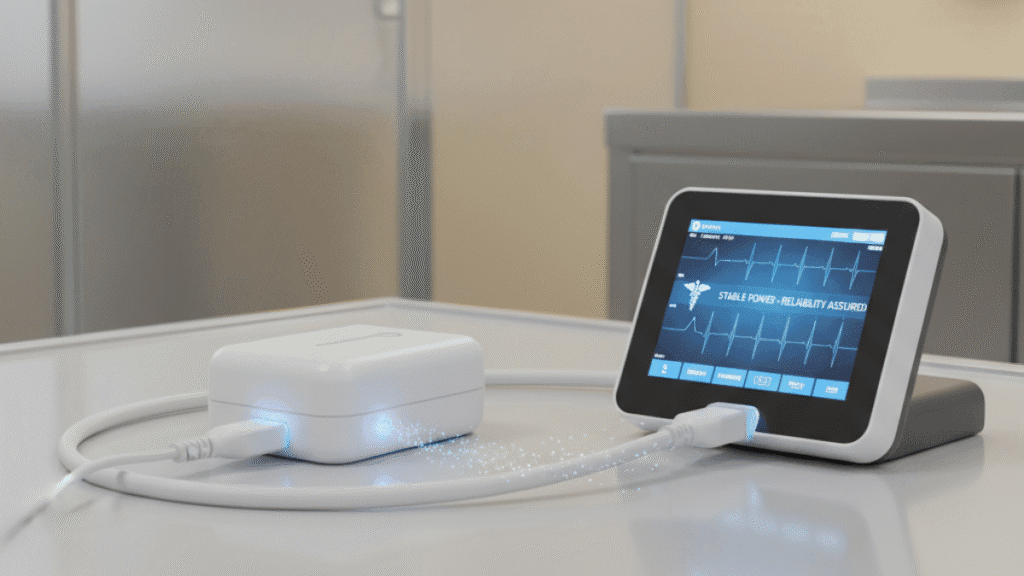
Medical devices require a stable medical-grade power adapter with precise voltage regulation and low ripple output.
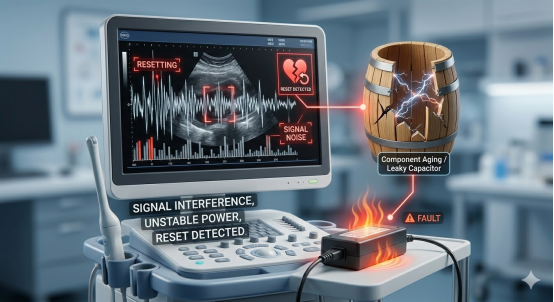
If the output voltage fluctuates, the control board may automatically reset.
This is one of the most common symptoms of a faulty external medical power supply.
Common causes include:
- Poor voltage regulation
- Insufficient current capacity
- Low-quality internal components
- Unstable switching frequency
Devices connected to patient-monitoring systems especially require a reliable low leakage current power supply.
2. Signal Interference or Image Distortion
Low-quality adapters often generate electromagnetic interference (EMI).
For imaging, ultrasound, or diagnostic systems, unstable output from a poorly filtered switching medical power supply can cause:
- Ripple noise
- Screen flickering
- Data drifting
- Blurred or unstable signals
Medical environments require strict EMI limits defined by International Electrotechnical Commission standards.
Using a certified IEC 60601-1 power supply significantly reduces interference risks.
3. Overheating and Shortened Equipment Lifespan
Without proper over-voltage protection (OVP) and over-current protection (OCP), internal components heat up quickly.
A well-designed high efficiency medical power supply helps:
- Control temperature rise
- Reduce internal stress
- Extend capacitor lifespan
- Improve long-term reliability
Heat remains the primary failure factor in power electronics.
4. Surge Damage During Thunderstorms or Grid Fluctuation
Voltage surges can occur during lightning strikes, power grid switching, or initial plug-in.
Without surge protection, MOSFETs, IC chips, and electrolytic capacitors inside a standard adapter may fail instantly.
A properly designed surge protected medical power adapter absorbs voltage spikes and prevents sudden shutdown.
5. Safety Risks and Fire Hazards
Adapters lacking short-circuit protection may continue delivering current during a fault.
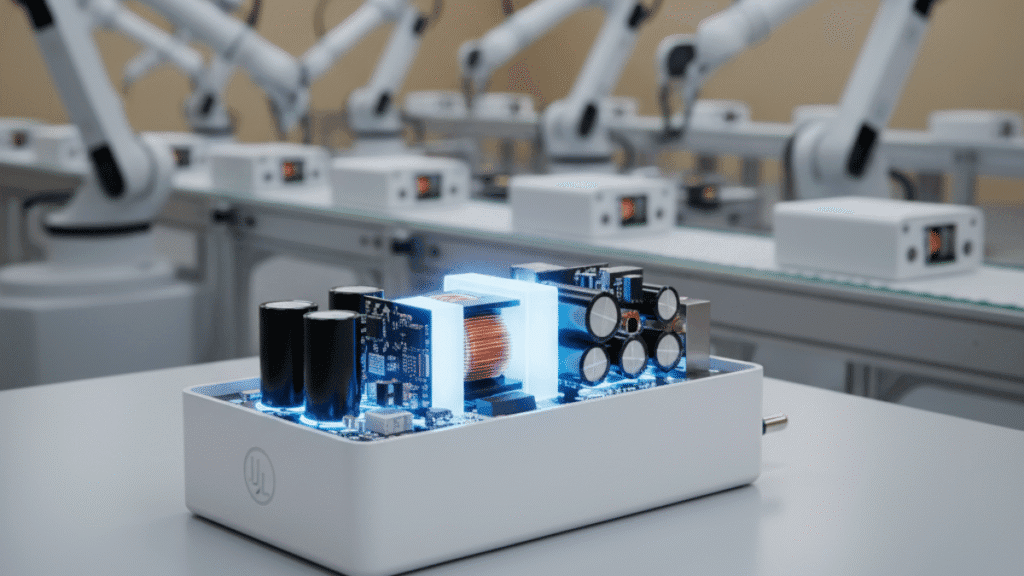
A compliant UL certified medical power supply must pass strict insulation, temperature rise, and fire-resistance testing under UL standards.
For patient-connected equipment, reinforced insulation and leakage control are mandatory.
What determines the stability of a power adapter?
Stability depends on three critical factors:
1. Internal Circuit Design
- High-grade transformer structure
- Low ESR capacitors
- Advanced PWM controller
- Optimized PCB layout
A professional OEM medical power supply manufacturer focuses heavily on these internal design elements.
2. Protection Systems
Reliable units include:
- Over-voltage protection
- Over-current protection
- Short-circuit protection
- Surge protection
- Thermal shutdown
These features are standard in a true hospital-grade power supply.
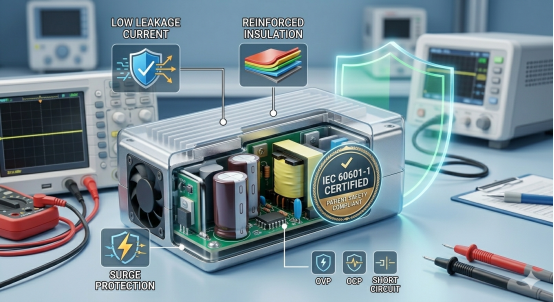
3. Compliance With Medical Safety Standards
For medical applications, compliance with IEC 60601-1 is essential.
An IEC 60601-1 certified medical power supply ensures:
- Low leakage current
- Reinforced insulation
- Patient safety compliance
- Electrical strength testing.
This standard is mandatory for most medical device manufacturers worldwide.
How to determine whether a power adapter is stable?
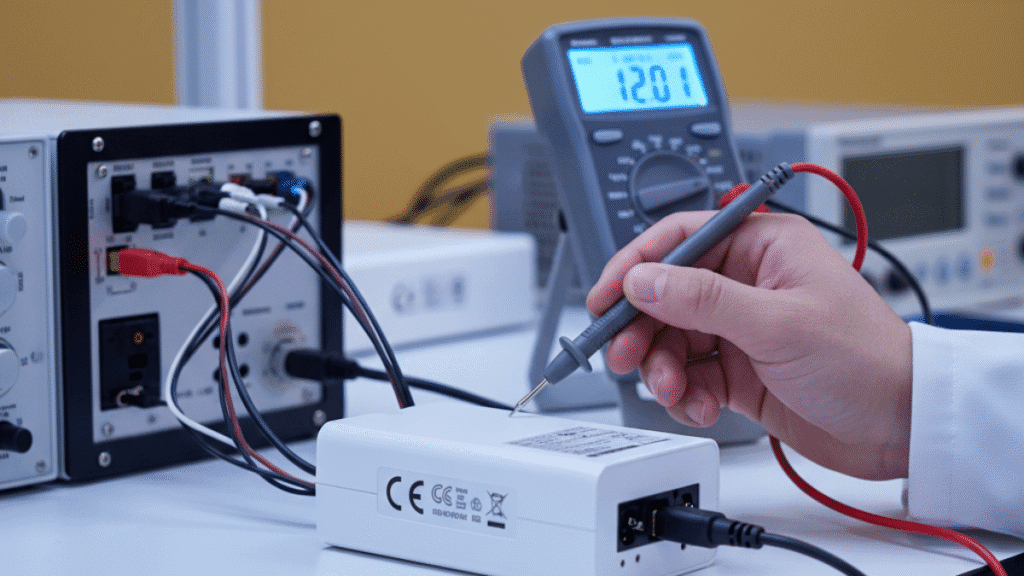
You can evaluate stability through the following steps:
- Verify certifications (UL, CE, IEC 60601-1)
- Confirm voltage and current ratings
- Monitor device restart behavior
- Measure output ripple with a multimeter
- Perform full-load testing
A stable regulated medical power supply should maintain constant voltage under load without noise or overheating.
FAQ
Can a bad medical power supply damage equipment?
Yes. Continuous voltage fluctuation or surge exposure can permanently damage PCBs, IC chips, and sensitive sensors.
Does UL certification guarantee performance?
UL certification confirms safety compliance.
However, long-term reliability also depends on internal component quality and thermal management.
Why is leakage current important in medical adapters?
Excess leakage current can pose risks to patients connected to monitoring equipment.
That is why an IEC 60601-1 compliant power supply strictly limits leakage levels.
How to choose a stable power adapter
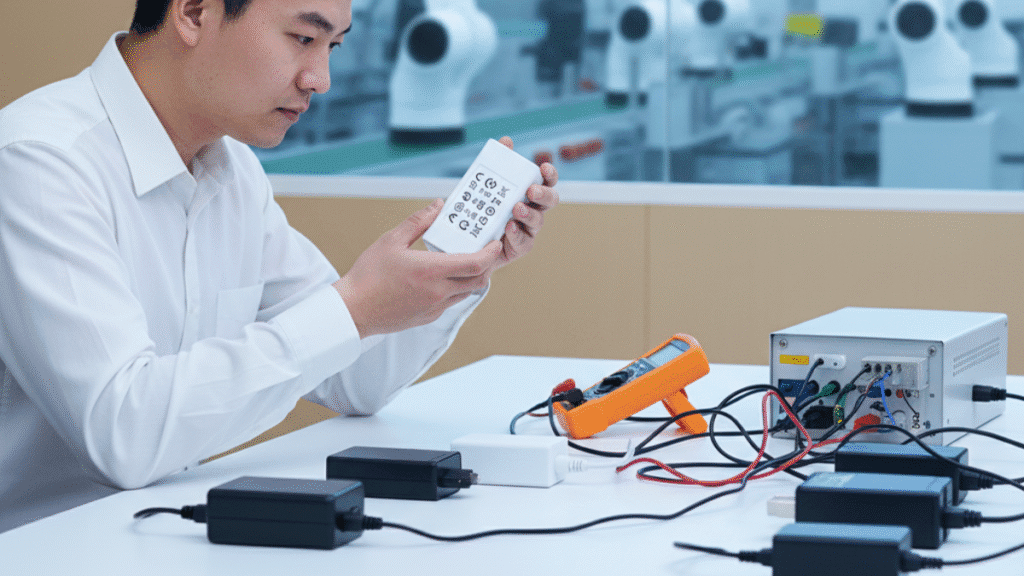
At this point, you may still have some questions. After all the background we’ve covered, how do we choose a stable adapter? The approach is similar to how we judge stability. Before purchasing, understand which certifications the manufacturer has obtained, and check whether the product’s power, voltage, and current match our device’s requirements. Buy some samples for testing before placing a mass production order.
If you’re still unsure, you can visit the manufacturer’s production facility to observe the quality of materials and the production process. We have been providing stable power supply solutions for medical and industrial equipment clients, and many of them were rescued from the difficulties caused by “unstable power” through our solutions.
Conclusion
A medical device is only as reliable as its power source.
Choosing a certified, well-designed medical power supply solution reduces unexpected downtime, extends equipment lifespan, and protects patient safety.
If you are evaluating options, focus on:
- IEC 60601-1 compliance
- Low leakage current
- Surge protection
- Stable voltage regulation
- Trusted OEM manufacturing capability
Learn more about selecting a reliable medical power adapter manufacturer for your equipment.
Your Trust, Our Shield.